A Fine Finn

                                                Interview with Stephen Kuusisto

Mark Munger is a writer, journalist, and retired judge who finds Finnish American folks fascinating. He recently interviewed New York Times acclaimed essayist and poet, Stephen Kuusisto.

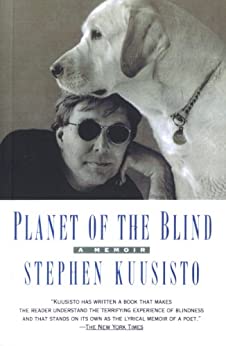
 MM:  A while back, I read The Planet of the Blind and wrote a very positive review of the book. Talk a bit about the process of writing memoir, about how one chooses what to leave in, what to take out.

SK:  This is a great question. I have a practice of writing more than I need, largely as a way to get scenes on paper. Tom Wolfe once said that nonfiction is much like the novel in that it depends at the primary level on scene writing. So I write as many scenes as I can, then decide what needs to go. In Planet of the Blind I had a long parody of the old TV Guide magazine where I took American sitcoms and turned all the characters into blind people as a kind of schadenfreude exercise. It was funny but didn’t make the book because it got in the way of more impelling moments.

MM: Both in Planet and in a later memoir, Have Dog Will Travel, you reveal family confidences, including reflections about you mother’s struggles with alcohol and your own struggles with bullying and being born with significantly impaired vision. Has your mother read the memoirs?

SK:     My mother read Planet of the Blind and was angry about it. Later she made peace with me by admitting the book was true. That took courage. She didn’t live to see Have Dog, Will Travel where I describe her violence. I was only able to be candid about that because my parents have passed away. It’s very difficult to write about trauma of any kind, whether it’s about sexual violence, bullying, drug and alcohol related distress, or the difficulties of being disabled or yes, a person of color. One often weeps while writing.

 MM: Being a lifelong owner of Labrador retrievers, I think I’ve an inkling of what it’s like to partner with a dog. But your first guide dog, Corky, was obviously so much more than that.

SK:     I’ve had four guide dogs  all of them Labradors. They’ve been equally good at guide dog work—serious, reliable, entirely great, but they’ve all been different in temperament. Corky for instance loved chasing rabbits; my second dog Vidal ate things, many of them not so good. He once at a pair of gym socks! My third dog Nira was the half-sister of Corky and was noble and sweet. My current dog Caitlyn is the one who follows me from room to room because she wants to be with me every minute. They’ve all been soulful, empathetic, and wise.

 MM: I found myself, in writing about my parents that with each draft, my critique softened. Did you experience anything similar as you edited your memoirs?

SK:     It depends on my mood and the needs of the narrative. For instance, how do you explain not getting your act together about your disability until you’re in your thirties? That’s not easy unless you tell the story of being a child of alcoholics who put his energies into a dysfunctional family. I loved my parents and I’ve tried to be generous to them—remarking for instance that they had limited educations and support in the 50’s when I was small. They didn’t know how to manage disability except to pretend it wasn’t an issue. But they were also messed up and I absorbed abuse that’s not OK. You pick and choose what to say and how to say it depending on the requirements of the story, I think.

 MM: Your father was an academic and the descendent of Finnish immigrants. I know you’ve visited Finland. What do you remember about those trips?

SK:     I travel to Finland frequently. In some respects because Helsinki is the first city I remember, the place holds a special position in my imagination. I love the cobblestones, open air markets, the glorious parks, the Baltic in all seasons. As an adult I love the classical music scene, the theaters, opera, and of course the apocalyptic rock and roll.

MM: You are also an award winning poet. Is it easier or harder to write poetry than memoir?

SK:     I can’t say whether one form of writing is easier than another. I tend to write quickly. My first drafts happen fast. Later I amend and edit. I tend to think poems (for me) come out of raw feelings—they can be tender or distressed—but prose is a bit more mediated by internal analyses. I’m not sure how to describe the difference.

 MM: Being of extremely impaired vision, what’s your process like in terms of writing? What physical process do you employ to write?

SK:     I used to write longhand with a pen and paper but I shifted to the computer. I just go into the cave of making (as Auden called it). I type and use screen reading software to read the pages back to me. For reasons I don’t understand I can’t dictate though the software for this is now exceptionally good.

 MM: In your memoirs, you’ve discussed the importance of the Americans With Disabilities Act.

SK:     I love the photo of Enrico Caruso guiding Helen Keller’s finger tips across his throat as he sings Samson’s aria about Samson losing his sight. Caruso was a peasant who grew up in poverty but, by the time of the photograph, he was as famous as Teddy Roosevelt. Helen Keller was also a public figure. There they are, having what a later generation might call a “Vulcan Mind Meld”. Whenever I think of this photo I want to be Helen’s fingertips. Imagine! Touching Caruso’s throat! Perhaps it’s an exaggeration to say that the ADA makes things like this more likely, but it’s not much of a stretch. Not long ago, I was permitted to spin the bicycle wheel that is part of Marcel Duchamp’s famous sculpture. That’s the ADA.

MM: I love this quote from Stephen King: “If you don’t have time to read, you don’t have time to write …” You must be a voracious reader.

SK:     I read voluminously, mostly by downloading books on the Mac. I read poetry, fiction, history, nonfiction, memoirs and noir murder mysteries. I just read Oscar Wilde’s “de Profundis” which he wrote during and after his unjust and cruel imprisonment. It broke him. Yet it’s a deeply affirming book about the life of the mind and the soul. I also recommend “Dostoyevsky Reads Hegel in Siberia and Bursts into Tears” by LÁSZLÓ F. FÖLDÉNYI.

 MM: My dream is to attend the Helsinki Book Festival and hawk my books to Finns. Any desire to attend the festival?

SK:     I’ll go with you!

MM: You’ve written about the importance of the Kalevala to one’s understanding of Finnish history, culture, and literature.

SK:     I talked to trees when I was six years old. There really were men inside those pines and I didn’t have to tell anyone. Years later, reading the Kalevala, I’d see I was a minor character in an ancient poem about wizardry. My job, the work of the inner life, is to never forget what the wizards have passed down. At the very least, I should distrust standard-issue transactional materialism. Even a simple pine tree is more interesting than is commonly supposed. The Kalevala is not for everybody but I know a Finnish banker who talks to a certain rock in the deep woods!

 MM: What are you working on right now?

SK:     I’m putting the final touches on a new book of poems. Here’s a poem from that book, due out later this summer:

Lamento (After Tomas Transtromer)

So much that can neither be written nor kept inside!

Such thin wrists; such brittle feelings.

I want to lie down behind the furnace

While outside springtime fusses with leaves.

 I can add more—like how the weeks go by

And how the little kit of my heart beats

 Or what avails from morning studies,   

Two moths on a sill with messages.

 I see how it is to not have much.I hear a winch groan in the next street.

 What is this whistling, birds or wires?

I want this month  to hurry.

 I write things like: “weeks go by,”

“Apple trees have sorrows too,”

 “Don’t lie about your writing…”

© 2021, Stephen Kuusisto
Posted in Uncategorized | Comments Off on A Fine Finn

Another Gem from Texas

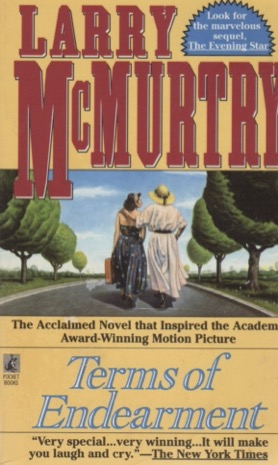
Terms of Endearment by Larry McMurtry (1975. Pocket. ISBN 978-0-671-75872)

There’s no doubt that McMurtry’s best work stands next to his fellow Texan’s, Michener’s, as some of the best storytelling and writing in American letters over the last half of the 20th century. All of us grew up watching the Oscar-winning (Best Picture, Best Actress (MacLaine), Best Supporting Actor (Nicholson), Best Director (Brooks)) film. That’s great, the fact that McMurtry’s work received even wider acclaim. But the notoriety of the movie and its success creates a problem, at least for this reader. Shirley MacLaine, more than even Nicholson, is the most memorable character in the film because of her great performance. So when reading the book forty years later, trying to get MacLaine’s Aurora Greenway out of my head and allow McMurtry’s prose to fully form the story’s iconic protagonist became an issue, though, in the end, it didn’t detract from my enjoyment of this domestic drama.

Set in Texas, the plot and setting and every other character in this morality play take a back seat to Aurora. She is a force of both nature and privilege; a woman hell-bent on charting her own course. In the process of telling her story, and the story of her daughter Emma, the author has created a classic female leading character that won’t be forgotten whether it’s due to MacLaine’s performance on film or the imagery created by the novelist’s words. The novel is stunningly brilliant with one exception.

Whereas, at least in memory (spoiler alert), the affliction that brings Debra Winger’s Emma to her final climactic scenes in the movie captures a larger role on film and, if my memory serves me, propels the plot, in the book. McMurtry introduces Emma’s illness near the end of the lengthy novel, making it seem like the author couldn’t quite figure out how to bring the story to a close. It’s still a beautiful, tortured portrayal of mother and daughter but this one small thing, in my mind, keeps the book from being on the level of perfection attained by McMurtry in Lonesome Dove. That book. to my mind, is indeed flawless in every way.

4 and 1/2 stars out of 5. If your book club hasn’t read it, it should!

Peace

Mark

Posted in Books | Comments Off on Another Gem from Texas

The Siblings …

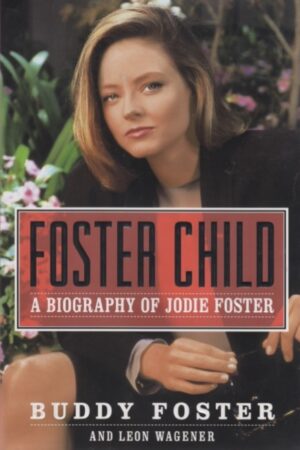
Foster Child: A Biography of Jodie Foster by Buddy Foster. 1997. Dutton. ISBN 9780525941439)

The short version of why I read this “tell all” about one of my favorite actors is that the author once appeared in my courtroom in Duluth, MN. I’ll flesh that out in a future memoir about my time as a writer and judge, but that event, along with my life-long adoration of Ms. Foster (not in a creepy way, like Hinckley but in a platonic, adulating way) compelled my curiosity. It took nearly 20 years for me to track down the book but I finally read it. Here’s my take.

The writing is fairly simplistic and without much heft, making this a breezy read. There is much repetition in Buddy’s constant drumbeat of how dysfunctional his childhood was, how absent his father was, how mean and sometimes crazed his mother was. It’s a bit distracting, reading the same allegations and failings over and over and over again, all of which makes it pretty hard to miss Buddy’s main point: Jodi Foster is tough, no-nonsense survivor, not unlike many of the characters she portrays. Given this significant flaw in the book (and the fact that Buddy had assistance from co-writer Leon Wagener in creating this family portrait) it would be easy to dismiss the book as Buddy’s attempt to earn a payday off the slender shoulders of his little sister. There might be some of that at work here. The sister was not pleased when the book was released: “I feel sad for him. Mostly, I feel sad for my 69-year-old mother, who has spent her life struggling to raise four children on her own … Buddy has done nothing but break her heart his whole life. That’s a kind of sadness no mother will ever get over.” (Quoting Ms. Foster from a 1997 CNN interview.)

As I said, there’s likely some element of seeking to regain his own fame (Buddy was the original Foster child actor; starring in both Hondo and Mayberry RFD before watching his career disintegrate and watching his sister become a household name) as well as a significant financial incentive for someone so close to a movie star to write a revelation of their shared childhood. And yet, despite all its flaws and potential conflicts of interest, the book draws you in because, well, she is Jodi Foster, a seemingly impenetrable fortress of female determination whose private life is virtually unknown while her public roles, from Taxi Driver to Silence of the Lambs to The Panic Room to The Mauritanian (2021) make it seem like we know the woman Jodi Foster has become. It is the portrait of Ms. Foster’s enigmatic nature, together with her brother’s reflections on her dedication to task, fierce independence, and intellect, all set against the backdrop of shared troubled lives (Buddy’s more so than hers) that makes this book a worthy read if you are interested in trying to discern “what makes Jodi tick”. That secret isn’t revealed in any sort of exactitude; just as the mystery of Ms. Foster’s sexual preference (or preferences), while touched upon ever-so-briefly, doesn’t lead the reader to any sort of obvious conclusion. Quite frankly, the woman is such a brilliant talent and mind, I don’t care who she loves (just as I don’t give a damn if Kevin Spacey is gay; I do care if he is a pedophile who abused his power). Her sexual orientation is her own damn business.

In the end, Foster Child is not nearly as hateful, nor revelatory as Ms. Foster’s contemporaneous remarks suggest. There’s value in what her brother has to say about their shared history. Yes, sometimes the arc of the story gets bogged down in repetition and yes, references to Jodi’s work are dated (she’s had further, great success in films following Contact, where the story ends, both as an actor and director). But there’s the gist of a story here for those who care to dive in.

3 and 1/2 stars out of 5.

Peace.

Mark

Posted in Books | Comments Off on The Siblings …

Two from Kuusisto

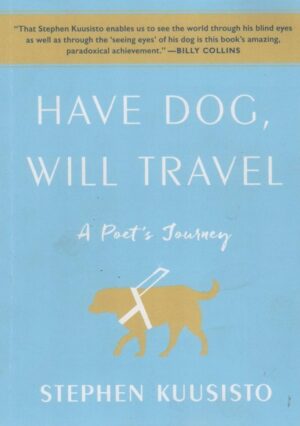
Have Dog, Will Travel by Stephen Kuusisto (2019. Simon and Schuster. ISBN 9781451689808)

And

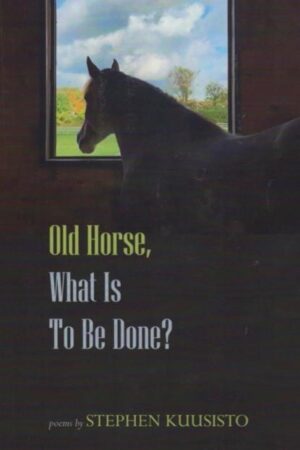
Old Horse, What is to be Done? by Stephen Kuusisto (2020. Tiger Bark. ISBN 9781732901260)


Recently, I had the pleasure of interviewing the author/poet of these two books for the Finnish American Reporter. I’d run across Steve’s work when I picked up a copy of his first memoir, Planet of the Blind (see review in the archives of this blog) and was, frankly, blown away by the man’s command of language. Here, Kuusisto is at it again, chronicling his experiences with his first guide dog, Corky, in Have Dog. Crisp, succinct in language, the depictions of a family in turmoil and parental ignorance (how else do you explain a mother insisting her blind son is able to to ride a bicycle in traffic?) coupled with Kuusisto’s admiration and love for the gift of mobility Corky provided makes for a compelling, if tragically short (for this reader, anyway!) memoir that is a fine follow up to Planet.

4 and 1\/2 stars out of 5.

Old Horse is a slender collection of poems and prose poems based, not only in Kuusisto’s imagination and the Northeast of the United States where Kuusisto hangs his hat, but also with allusions to and scenes set in his  grandfather’s Finnish homeland. Clever, tender, and with bits of Finnish wit sewn into the fabric of this short, vibrant wording of his work, Kuusisto makes reading poetry, something I rarely do, a pleasure. I only wish, as with the author’s memoirs, this book was longer so I could spend more time in blissful enjoyment of words.

4 and 1/2 stars out of 5.

Both books are solid, engaging reads in their own way.

Peace

Mark


Posted in Books | Comments Off on Two from Kuusisto

Four Quick Hitters

The Testaments by Margaret Atwood (2019. Random House Audio)

This is not The Handmaid’s Tale. It is a sequel in search of a purpose and organization. What do I mean, considering this book has been acclaimed as the conclusion of the story that was revealed in Atwood’s dystopian masterpiece? As a historian and political scientist, I’ve enjoyed reading stories of alternative societies and worlds presented by that master of fantasy, Ursula LeGuin. Atwood’s original plotting and characterizations in The Handmaid’s Tale sought and reached such lofty writerly heavens. This book does not. Since this is a snippet of a review, I’ll simply say this: The political and societal realities presented by the Gilead crafted in this sequel don’t add up in terms of military, political, and historical accuracy. With no nuclear weapons, without an air force or navy, how is Gilead, a oligarchy of misogyny, able to remain outside the former United States? That fundamental question is never really addressed by Atwood. Though the writing and dialogue are crisp and admirable, the plot, in my opinion, including the author’s failure to suspend my disbelief regarding political reality, renders this tale far less compelling that the original.

3 and 1/2 stars out of 5.

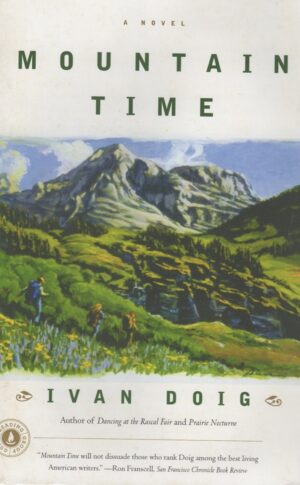
Mountain Time by Ivan Doig (1999. Scribner. ISBN 978-0684865690)

I was introduced to Doig by a Facebook friend because I’d reviewed Wallace Stegner’s work in various columns. While wandering around Kaua’i on a recent vacation from retirement, I stopped in at Talk Story Bookstore and picked up a used copy of Mountain Time. The tale of a magazine reporter, Mitch Rozier and his girlfriend is full of emotion and beautiful scenery echoing my own personal love for Montana, where most of the story takes place. A simple, yet compelling plot draws Mitch and Lexa (the girlfriend) and Lexa’s gadfly sister back to their shared home and their past. That said, this is not Stegner. Doig is a good writer, at least in this outing, but not a genius. Wallace Stegner, for me, remains exactly that.

4 stars out of 5.

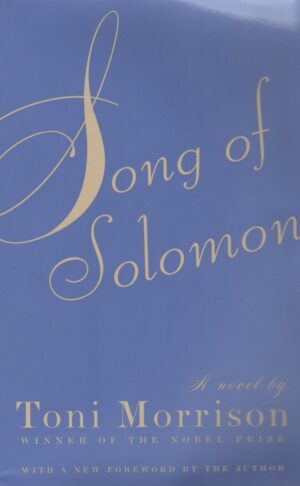
Song of Solomon by Toni Morrison (2004. Vintage. ISBN 978-1-4000-3342-3)

After plowing through all the magazines and books I’d brought along on my Kaua’i vacation, I needed a book to read on the plane coming home. I convinced my buddy Ron McVean to stop at the Womb Bookstore in Kapa’a. While the store is tiny, maybe 100 titles in all, I managed to find something to whet my readerly appetite. I’d devoured The Bluest Eye, one of Morrison’s best works, and wasn’t disappointed by Song of Solomon. Morrison’s lyrical, somewhat magical way of telling the story of Milkman Dead, a Black man on a quest to understand his past, his upbringing, and his history, is filled with compelling characters, sadness, humor, and angst. It wasn’t quite up there with The Bluest Eye but is a worthy read; one that would serve book clubs well.

4 stars out of 5.

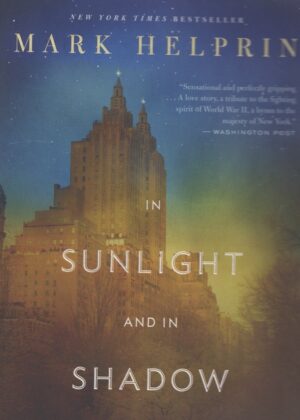
In Sunlight and In Shadow by Mark Helprin (2012. Mariner. ISBN 978-0544102606)

In terms of style and literary heft, Helprin remains one of America’s best. This tale of a Jewish veteran of WW II, Harry Copeland, and his love for heiress Catherine Thomas, is close to a masterpiece of craft, language, and story. Of all the books I read on my Hawaiian vacation, this one was the most compelling. Harry’s descent, from law-abiding business owner to criminal, takes time. The reader is required to exercise patience as Helprin slowly reveals the plot, the twists and turns of circumstance, and the inner lives of his characters. And as the skin of the literary onion is peeled away, the reader is rewarded with literature in its most elegant form.

4 and 1/2 stars out of 5.

Peace.

Mark

Posted in Books | Comments Off on Four Quick Hitters

A Treat of an Interview


INTERVIEW WITH IRINA BJÖRKLUND

Non-Finn Mark Munger interviewed Finnish actor and musician, Irina Björklund to catch up on the busy artist’s latest projects.

MM: Let’s start with your new streaming series. What can you tell readers of FAR about the ideas/themes behind Peacemaker and the character you play, Ann-Mari?

IB: Peacemaker is the most important role I’ve had far. There are different kinds of entertainment – the kind that you make for the simple reason of pleasing the audiences (comedies, horrors etc), and the kind that have a deeper goal – to generate discussion. Peacemaker is a peek into the world of peace negotiators – people who deal with crises, wars, mass graves – and try to help those affected find a peaceful solution to their problems. I play Ann-Mari Sundell, Finland’s former minister of foreign affairs, sent on a mission by the UN to help negotiate peace between Turkey and the Kurds – not an easy goal to attain.

MM: Our mutual friend, Gerry Henkel, gave me a heads’ up about Peacemaker. As a fan of Ambush and other films you’ve done, I’m glad I got a chance to watch Ann-Mari’s character unfold. Talk about the transition from being a young actor playing the romantic lead in Ambush to playing Ann-Marie a mature, confident, intelligent diplomat charged with a daunting task?

IB:  It’s funny you would mention my role in Ambush as a romantic lead since it’s a war epic. At the time (in 1998) it was my most important role to that point – as it brought the details of the Continuation War to younger filmgoers. Over 20 years have passed since Ambush; I’ve made some good and some not-so-good choices along the way.  My main objective as an artist stays the same – to concentrate on works that have a message somewhere, and to contribute to making this world a better place.

MM: Fill FAR readers in about the settings used and the cast of Peacemaker.

IB: We filmed most of the series in Gran Canaria because of the versatile landscapes the island offers. Some shorter episodes were shot in southern Spain. Ann-Mari’s home is set in the western Finnish archipelago, in Nauvo – beautiful! Other main characters include Richard Sammel (Inglorious Bastards), Louise Peterhoff (The Bridge), Mikko Nousiainen, and Kardo Razzazi.

MM: I just watched Kate Winslett on CBS Sunday Morning talk about her struggle to secure meaningful roles as she ages. She’s but one of many female actors who’ve pushed back against the lack of roles available for women of a certain age by finding their own projects to produce, by adding director to their resume, and the like. How has it been for you, both in Europe or elsewhere, in finding roles that are appropriate for your craft and talent? Have you directed?

IB: Personally, I’ve had to wait to be nearly 50 in order to start getting truly interesting proposals. Sure, there may still be more out there for younger women to play, but as in everything in life, it’s not the quantity; it’s the quality. I did feel it was important to portray a middle-aged woman who’s not afraid of showing her age. Ann-Mari carries her gray hair with pride and doesn’t use make up; her person is enough. I’ve never directed, and I don’t think I will. Acting is not my only aspiration in life. When I’m not acting, I’m working on music projects. A balance between all of those things, along with finding happiness in enjoying my family, my home, and the nature I’m surrounded by… is what I’m looking for in life.

MM: How has the public reaction to Peacemaker been? What will it take, do you think, to make the fiction of Peacemaker into reality?

IB: The message that Peacemaker sends is that an outsider alone can’t fix things. Ann-Mari is just a facilitator. As Finland’s former President Martti Ahtisaari said in his brilliant 2008 Nobel acceptance speech – “Peace is a question of will”; the parties have to find the will to come to peace. I’m just an actor. I really shouldn’t be asked about these things! But to be serious, Peacemaker has gotten a great response from people who work in the field and from audiences, too. It’s been nominated for five Golden Venlas in Finland. I couldn’t be happier.

MM: I found Peacemaker on the streaming service Topic. Are there other ways for FAR readers to connect with the series? Will there be a season two?

IB: Topic or Amazon Prime are the ways to go. I’m hopeful for a second season, but I can’t promise anything yet. If it were up to me, I’d gladly make playing Ann-Mari my personal retirement plan!

MM: You’re also an accomplished musician. Your latest album, Barely Ann-Mari reflects your Peacemaker character in song.

IB: Barely Ann-Mari is unique in that it’s written from the point of view of the character I play in Peacemaker. It reflects her inner thoughts, dreams, hopes and fears; feelings she’s not allowed to show in the series. I started writing lyrics as I prepared for the role in order to get to know the character and realized I had material for an album. The collaboration with Pauanne came about naturally, as the members of the group have been members of my own band for years. We found a new sound for this album by letting Finnish folk music portray Ann-Mari’s Finnish roots and English lyrics highlight her international expertise. As an artist, I like to explore new styles but I recognize my limits: I wouldn’t attempt hard rock or opera! 

MM: Where can FAR readers find the album?

IB: It’s distributed by Nordic Notes and available digitally worldwide through the link below. You can also find it on iTunes, Amazon, and other listening platforms. Amazon also carries the physical CD.

MM: Hopefully, someday the limitations imposed by COVID-19 will be lifted and you can perform the music from the album live.

IB: I happened to get lucky. I booked the release tour for the album (in Finland) last October. Despite the pandemic, only one show was cancelled. The venues were mostly sold out within the limits allowed. It was a touching experience – as we knew that the people who came to hear us thought it worth the risk of possible contamination to attend.

MM: You’ve recorded music, I believe, in Finnish, Swedish, French and, in Barely Ann-Mari, English. Talk a bit about the flexibility of language and how that assists in your art and your world-view.

IB: I grew up traveling with my family and living in Sweden, Finland, and France. I later spent fourteen years in California before moving back to France. I had to learn Turkish for Peacemaker. That was incredibly hard. But knowing other languages helped understand the logic behind Turkish. I enjoy playing with accents in my work. For Ann-Mari, I use the typical English accent of a Swedish speaking Finn – rather than the one of a Finnish speaking Finn. These details make a difference in the character.

MM: What’s in the immediate future for Irina?

IB: After three years spent in the world of peacemaking, I couldn’t be happier taking time off. At home in France I’m concentrating on my personal peace, which includes growing vegetables, caring for farm animals, and homeschooling our son. Ideas are brewing. I recently read David Attenborough’s A Life On Our Planet, which was life-changing. It’s a must-read for all of us. Another lovely and thought-provoking French novel I always recommend to readers of all ages is Jean Giono’s The Man Who Planted Trees. We all can make a difference for the future of the planet and humanity if we act now. Following the novel’s theme, I’m going to plant one hundred and sixty acorns next week. I dare you and the readers of FAR to do the same!

Links:

Peacemaker Topic watching link:

https://www.topic.com/peacemaker

Barely Ann-Mari album sales link:

 https://backl.ink/143068557

Peace is a Question of Will music video by Irina Björklund & Pauanne featuring President Martti Ahtisaari:

https://www.youtube.com/watch?v=MPKrTeUY47c&t=38s


Posted in Blog Archive | Comments Off on A Treat of an Interview

Five Short Shots from Verde Valley

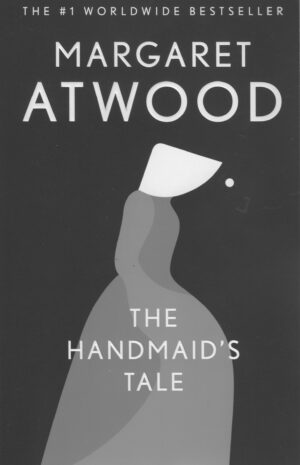
The Handmaid’s Tale by Margaret Atwood (1986. Anchor. ISBN 978-0-385-49081-8

I haven’t read sci-fi/fantasy for quite awhile. Nearly the only fantasy writer I’ve read in the past thirty years was the brilliant Ursula LeGuin. There’s been so much talk about this book, given the dystopia and dysfunction brought to America courtesy of the Orange Headed Buffoon, with more than a few commentators pointing out that Atwood’s take on misogyny propelled by religion was and still is spot on. They are right. That’s all I need to say. Excellent story, plot, and pacing. 5 stars out of 5.


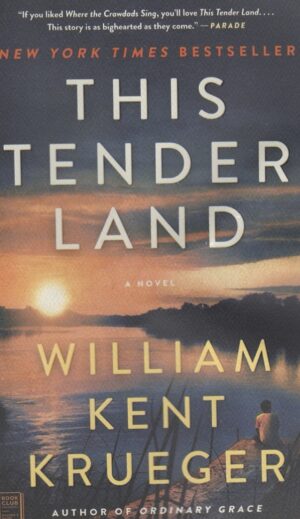
This Tender Land by William Kent Krueger (2019. Atria. ISBN 978-1-4767-4930-3.

Fair warning: Though the cover proclaims the author as the man who penned Ordinary Grace, my favorite by fair of Krueger’s works, this is not that. The story, one of four orphans, including a Native American adolescent, is engaging to be sure. But the juxtaposition of the two white protagonist brothers in a Native American boarding school in the 1930s, to me, is a copout. Why not write the tale from the perspective of Mose, the aforementioned Native American, the actual sort of fellow who suffered at the hands of the boarding house system? I wrote Esther’s Race, a story of an African American meth addict, in the first person just to force myself, as a writer, to explore what it might feel like to be embedded in a culture not my own. Doesn’t mean this isn’t a decent read but it wasn’t nearly as compelling as it might have been. 4 stars out of 5.

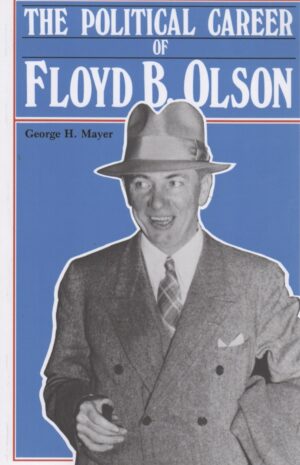
The Political Career of Floyd B. Olson (1987. Borealis Books. ISBN 978-0-87351-206-0)

I bought this book because I was interested in learning more about Olson’s connections to organized crime. Given he grew up in north Minneapolis, the same locale that notorious mob boss and bootlegger Kid Cann called home, I was hoping this volume would explore the rumors of that connection, along with the violet machine gun death of muckraking journalist, Walter Liggett. But the author pretty much sticks to the DFL mantra, one shared by my uncle Willard, that Olson was essentially, for all his faults, a good man who should have been a U.S. Senator. That said, it’s a complete biography of most of the man’s achievements, if a bit short on the information I was looking for. 3 and 1/2 stars out of 5.

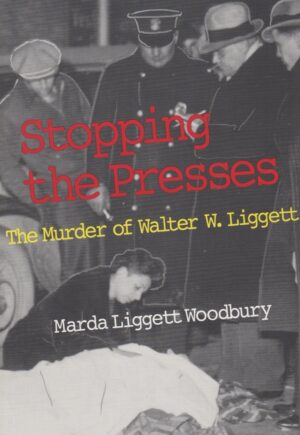
Stopping the Presses by Marda Liggett Wodbury (1998. Minnesota. ISBN 0-8-8166-2929-3)

This is the opposite of the Floyd B. Olson book. This is the story of murdered journalist Walter Liggett as recalled and researched by his daughter, Marda. Marda approaches her father’s story and death as any journalist should; from a distance. The shocking machine gun murder of Liggett, which took place in front of his wife and daughter and was suspected to be ordered and carried out by Kid Cann or his henchmen (either because Liggett kept attacking Gov. Olson, alleging Olson had ties to Cann or because Liggett was relentless in his attacks on bootleggers and mobsters, including Cann), was never really solved to Marda’s satisfaction but she does an admiral job of postulating who might have had a hand in the assassination of her father. An unknown and well written gem of Minnesota history. 4 stars out of 5.

The World Has Changed (2010. The New Press. ISBN 978-1-59558-705-3)

For any writer with a social conscience, or for those Alice Walker fans who want the inside scoop, this series of conversations between Walker and interviewers and other writers and scholars is the ticket. My only complaint is that there is a bit of redundancy in that topics are repeated, as are Walker’s responses, and the collection could have been edited a bit better to tighten that up. All in all, a worthy read. 4 stars out of 5.

That’s it! On to some new territory.

Peace

Mark

Posted in Books | Comments Off on Five Short Shots from Verde Valley

A Slender Gem

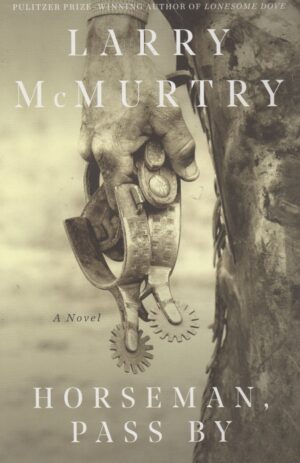
Horseman, Pass By by Larry McMurtry (1961. Liveright. ISBN 978-1-63149-355-3)

Here’s a true confession. I’m writing this review while listening to the author’s kid play some awesome Texas Americana music. James McMurtry, if he didn’t inherit his father’s gift for telling stories on paper, certainly learned the craft of oral storytelling from his Pa. Concise, precise, and to the point, James doesn’t waste words while painting images in song. That’s the key, I’ve learned, as I struggle with my own storytelling. Get in, get out. Make your point as succinctly as possible while still painting images in your readers’ minds. OK then.

This is a concise, slim tale of a novel. Weighing in at a mere 171 pages in small paperback format, Horseman chronicles a short period of time on the Brannon cattle ranch in the Texas panhandle. We follow the life and daily struggles of Homer Brannon, his grandson Lonnie, his step-son Hud, and a small cast of other characters as they try to make a go of it on a hard-luck, hardscrabble bit of dirt and dust. It’s a raw, quickly paced, morose journey that young Lonnie relates in the first person. But the prose! McMurtry was just learning his craft when this, his first novel, hit print. It’s clear that he knew what he was after and, even in this early effort, hit the mark. So much so that the movie Hud, starring a young Paul Newman in an Oscar nominated role as Hud, came to the big screen a scant two years after the novel’s debut. Though Newman lost, Patricia Neal won for best actress and the movie scored two other Oscars. But the movie’s departure from the novel includes telling the story from Hud’s perspective; not the first person story of young Lonny. That sort of misses the point behind the author’s effort, one often compared to Salinger’s coming-of-age triumph, Catcher in the Rye. It’s the young character’s struggle to understand his grandfather, their circumstances, and his own place in the world after disaster strikes the ranch that is the heart and soul of Horseman. And it’s a stark, bleak, beautiful soul that propels the story to greatness even today.

I’ve read most of McMurtry, including his Pulitzer gem, Lonesome Dove, one of my top ten novels of all time. This stands right up there with his best.

5 stars out of 5.

Mark

Posted in Books | Comments Off on A Slender Gem

Two Short Reviews

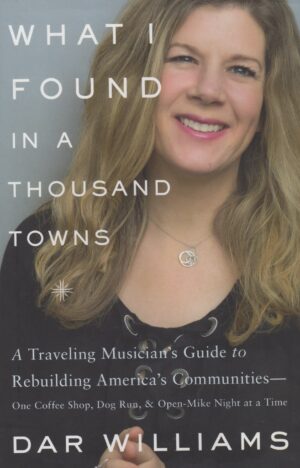
What I Found in a Thousand Towns by Dar Williams (2017. Basic Books. ISBN 978-0-4 86-09896-5)

I bought this book because Ms. Williams is a dynamite singer/songwriter. I’ve seen her numerous times in concert and she never fails to amaze. I didn’t read the blurbs or the synopsis related to this title before I bought it, thinking it would be a better read of life on the road than Bill Stains’s self-published memoir (reviewed elsewhere on this site). How wrong I was!

I don’t mean to say that Ms. Williams isn’t a very bright, articulate, smart American. She is. And her writing is crisp, direct, and informative. But this book is not a memoir, which I would have known had I done my homework. Rather, it is a discussion of “positive proximity”, a concept concerning the need to revitalize downtowns of American small cities by incorporating the arts, music, film, communities, and social conscience into a place’s fabric. In essence, it’s a handbook for urban planners based upon Ms. Williams’s experience touring the nation as a musician. Concise and well written, the book lacks what I was seeking: heart and insight into Dar Williams the human being. My fault, I know, for not looking into the book’s premise before buying it. I can’t say I flew through the prose, as tight and distinctive as it is. The going was slow, almost bringing me back to my days as a student in Dale Olson’s Urban Studies class at UMD. Again, my fault, not the author’s.

In the end, the book is a decent read for those interested in revitalizing urban America through the arts and human connections. Not what I was looking for in the read but hey, we all make mistakes, right?

4 stars out of 5. It wasn’t the author’s fault I was underwhelmed.

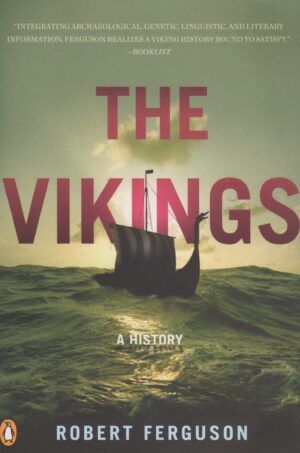
The Vikings by Robert Ferguson (2009. Penguin. 978-0-14-1801-5)

Another disappointment. Again, it wasn’t the prose. It was the style in which it was delivered. I picked this book up at a gift shop in Hayward, WI that also sells my Finnish American novels. Given I recently discovered I am 3% Norwegian (a facet of my ethnicity I attribute to roving Vikings raping some English or Welsh or Scots or Iris foremother), I thought I’d explore the history of these fascinating marauders. Ferguson certainly did his homework in terms of researching the often arcane and distant original sources of Viking lore both in print and carved in runes. But the presentation of Norsk heritage had two problems for this reader.

First, the book reads like the Old Testament book of Exodus in terms of genealogy. There are so many names of kings, both lesser and greater, that a chart of descendancy would have been much appreciated to keep things straight. Second, this is one dry and boring exposition of what was a pretty wild ride. Ferguson’s book is a perfect adjunct to lectures by a history prof at some dusk-choked university. It is not a book to enlighten the casual reader while also providing entertainment. There needed to be some life, some spirit, some common narrative theme laced throughout Ferguson’s lengthy discussions of kings and raiders and unfortunate victims. Absent that, I felt like I was readying myself for a final exam in a Nordic History course at UMD.

To be fair again, I didn’t study reviews before I purchased this title. I didn’t read the cover blurbs or explore the book’s pedigree. I simply saw it and bought it with the end result that I struggled to get through it: learning a bit but never being enlightened.

3 stars out of 5. Instructive but not inspiring.

Peace.

Mark

Posted in Books | Comments Off on Two Short Reviews

Bear Dreams

Grizzly Bear Charging


                                                            BEAR DREAMS

                                                             By Mark Munger

(Note: This piece was originally written for Montana Public Radio’s program, Reflections West (RW). RW paired a contemporary writer’s thoughts with a piece of classic poetry or literature. Sadly, while accepted for production, the show went off the air before “Bear Dreams” was broadcast.)

I’ve lived my entire life in the place the Dakota named Mnisota: “land reflecting the sky”. Most folks know that the Mississippi River begins here. But my home state is actually named after a lesser-known stream; the cloudy, muddy Minnesota River.

Rivers are a reality of this place. In addition to being “The Land of 10,000 Lakes”, Minnesota is a wellspring for watercourses flowing beneath every gravel road, two-lane, and freeway crisscrossing the state. Minnesota is also soggy with marshes, swamps, and bogs; natural filters from whence rivers, steams, and creeks are born. Unlike the West, where mountain snowfall dictates whether folks have potable water at their taps, Minnesota is eternally hydrous and does not suffer, as Wallace Stegner observed, from the perpetual aridity that plagues the American West.

One attribute that Minnesota does share with the West is piney forest—though beyond the Boundary Waters Canoe Area, Minnesota has few places untouched by tourists, fishing boats, or snowmobiles. Even so, my “neck of the woods” has healthy populations of wolves, black bears, fisher, lynx, coyotes, and bobcats.  What we do not have are grizzly bears. Recent reports of grizzlies migrating from the Rockies onto the Great Plains, seeking sustenance within their historic range, a range that once included the cottonwood groves of western Minnesota, are intriguing. But while dreams of grizzlies repopulating the Minnesota River Valley present a romantic notion, the inevitable bear versus human conflicts inherent in such repatriation cause me pause.

Munger pairs his essay with an excerpt from Saskatchewan author Guy Vanderhaeghe’s novel, The Last Crossing, selecting a scene that depicts a confrontation between English adventurer, Addington Gaunt, and a mother grizzly bear. Munger’s selection contrasts notions of historical wilderness with the reality of reintegrating apex predators into 21st century America.

Addington lifts his eyes and there is the grizzly. Powerful haunches, long hair like the quills of a porcupine that tremble as the bear rises from a carcass to stand on its hind legs with a startled, “Whuff!”

Addington takes two decisive steps to the right to present himself with a lung shot. The bear swings its dished face, its bloody muzzle towards him. Addington draws the bow, feels the fletching touch his cheek, looses the arrow. It hisses, gives a sharp click as it nicks a twig, and deflects deep into the shoulder of the grizzly. The bear grunts with surprise, bites at the shaft. It snaps in the grizzly’s jaws. Addington draws a second arrow and nocks it.

The grizzly charges, a roaring, quivering, rolling wave of fur and muscle. Addington’s head fills with the storm, the crackle of breaking branches, the yellow leaves spiraling down in a whirlwind. He fires blindly into the golden tornado.

And the bear rears, saliva drizzling from its jaws, red mouth yawning…(Addington) turns, stumbles for the river, steps into the air, plummets down the slope. A flap of bloody skin dangles in his eyes. He leaps into the water.

(© 2002 G & M Vanderhaeghe Productions. Excerpted from The Last Crossing by Guy Vanderhaeghe. McClleand and Stewart. ISBN 0-7710-8738-1.)


Posted in Blog Archive | Comments Off on Bear Dreams