A Rumination

Distance. I needed some between my recent electoral defeat to encapsulate my run for the Minnesota House. I think, to some degree, I’ve arrived at a point where I can work things out, if not orally then at least in writing. Here goes.

When my opponent (who’ll not be named in this piece given she personally attacked my reputation, integrity, and legacy during the campaign) defeated longtime Minnesota Representative Mary Murphy, a woman I have known for over fifty years and a true public servant, by 33 votes in 2022, I, like many folks in House District 3B, was troubled. And saddened. And yes, in some small way, upset. But anger cannot be a candidate’s motivation for running. Instead, a candidate should enter the political arena because he or she believes that the current occupant of the position doesn’t reflect one’s personal values. I’d like to think that, when folks came calling after my name was mentioned as a possible candidate, it wasn’t anger or ego or hubris that compelled me, after due reflection and considerable discussion with my wife and others, to “throw my hat into the ring.” Truly, I believe I said “yes” because I was and am worried about the lack of integrity, honesty, and decency in our politics. I truly fear for the future we’re leaving our grandchildren in this, the greatest modern democracy existing on earth. 

I can honestly say, though I was flattered to be asked by folks I admire and humbled to receive encouragement from public officials and friends whose judgments I trust, ego wasn’t really a motivator behind my recent run for office. When you’ve served 23 years as a District Court Judge, a position that requires you to make decisions regarding the most important aspects of the lives of your friends and neighbors, there’s really no larger stage in terms of ego. Every day judges are confronted with stories concerning their fellow citizens: some tragic, some humorous, some sad, a few happy, all of which require jurists to make determinations regarding facts, honesty, the truth, and the law. I thought my public service over a 40-year legal career as a prosecutor and judge would convince folks I could be trusted to enact legislation promoting the general welfare and enhancing the lives of Minnesotans. I was naive to believe voters would see the blizzard of negative ads launched at my judicial record (all based upon one case out of tens of thousands and nowhere near the truth) and contrast and compare that with my record of judicial prudence; service to my country; dedication to my faith and my church; years of involvement in youth athletics as a coach; decades of work with the Scouts; my deep connection to the place I’ve called home for most of my life; and simply ignore the noise. I made a choice and didn’t respond to the attacks. I also vowed I wouldn’t attack my opponent (other than calling her out regarding her legislative record). I stayed true to those commitments but I’m convinced those choices cost me the 161 votes needed to win. 

On this gray, gloomy Monday morning, I’m sitting in my writing studio overlooking the Cloquet River still processing my electoral loss. But I find myself more concerned about what transpired on the national stage. Mistakes were undoubtedly made by my party during this election cycle. The messaging from the Left wasn’t crisp, accurate, or convincing. Strategic miscalculations likely played a role in defeating a worthy, honest, smart, hard-working duo of candidates. But I will not, I cannot, concede that where we are as a nation and a people is what our Founding Fathers, my mentors, my teachers, my parents, my Scoutmasters, my Sunday school leaders, my priests and pastors, or my immigrant ancestors had in mind as a future course for America. Where we go from here is yet to be written but I know that this old bruised and battered lion won’t be running for office again. It’s time for young folks of character, integrity, and honor to step forward, pick up the torch, and do what I tried to do: make this land a better place for all of our grandchildren regardless of ancestry, race, ethnicity, gender, orientation, or religion.

As for me, it’s time to get back to writing; being a husband, father, and grandfather; canoeing the river; traveling; and chasing birds with my hunting dogs.

Peace

Mark 

((c) 2024 Mark Munger)

Posted in Uncategorized | 2 Comments

A Message to Voters

Hello fellow residents of Northeastern Minnesota! As you know, I’m running for the office of Minnesota State Representative in District 3B on a platform of integrity, passion, and purpose.

I was raised in the Duluth neighborhood of Piedmont Heights. I’m an honors graduate of Duluth Denfeld High School, UMD, and the Mitchell-Hamline School of Law. After graduation from law school and completing Army Reserve Basic Training (Ft. Dix, NJ), my wife, René, and I returned to Duluth to raise our four sons. For the past 40 years, we’ve lived on the Cloquet River in Fredenberg Township. We’re proud of our boys who’ve grown into fine young men and we’ve also been blessed with three wonderful daughters-in-law and six lovely grandchildren.

In my professional life, I was a prosecutor for 14 years, in private law practice for 18 years, and served as a District Court Judge in the 6th Judicial District (St. Louis, Cook, Lake, and Carlton Counties) for 23 years. My experiences as a lawyer, mediator, and judge give me a unique set of skills that I believe would be an asset in the legislature. During this campaign, I’ve promised to abstain from disparagement and negativity and I’ve kept my promise. No negative mailers or ads have been created, aired, or distributed by my campaign. I’ve honored my word because, as my father Harry repeatedly reminded me when I was growing up, “Mark, all you have is your word and your word is your bond.” I believe that restoring civility, decency, integrity, and common sense to our political discussions is the number one challenge facing us and I’m willing to roll up my sleeves and work to return us to a time when we could agree to disagree over issues we’re passionate about.

In my private life, I’ve been active in Scouting (I’m an Eagle Scout and currently serve on the Voyageur’s Council Advancement Committee), my faith (I’m the Co-Executive Director of Grace Lutheran Church ELCA in Hermantown), my community (I’m a board member of the Greater Denfeld Foundation and previously served on the Hermantown Community Foundation and in other organizations), and youth (25 years as a soccer and hockey coach in Hermantown). I’m the author of 14 books, the owner of Cloquet River Press, and am Honorably Discharged from the United States Army Reserve.

Public service is in my family’s DNA. René spent 15 years on the Hermantown Board of Education, 16 years as a mental health practitioner in the public schools, and ended her career as a Guardian ad Litem. Our son Matt currently serves on the Hermantown Board of Education.

I want to work hard for you, our children, and our grandchildren on issues that you’ve raised during interactions I’ve experienced at your doors and during gatherings throughout this campaign. The concerns you’ve raised include maintaining fiscal responsibility; supporting a strong system of public education; promoting economic opportunities while preserving our clean water, air, and our outdoor heritage;  finding ways to make elder care, childcare, and healthcare more affordable; and protecting a woman’s right to reproductive freedom. These are the issues you’ve highlighted. I’ve listened and I want to ensure your voices are heard in St. Paul.

November 5th is just around the corner. After a lifetime of public service and civic involvement, I believe I’ve earned your trust and your vote. I’d ask that you send me to the Minnesota House where I can begin the hard work of legislating on your behalf. Find out more at www.mmunger4mn.com.

Thank you

Mark

(This essay first appeared in the Duluth News Tribune on 10/22/2024 in edited form.)


Posted in Uncategorized | 2 Comments

A Good Read

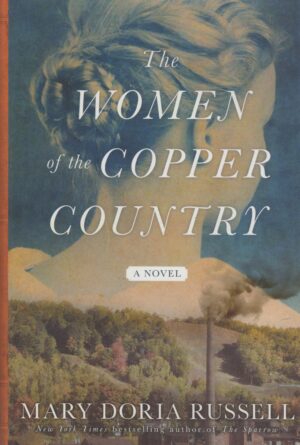
The Women of Copper Country by Mary Doria Russell (2019. Atria. ISBN 978-1-9821-0958-5)

I love the Upper Peninsula of Michigan. I’ve spent many days and nights there, attending Finnish festivals, signing books at North Wind Bookstore (formerly attached to Finlandia University), giving interviews about my Finnish trilogy, and lecturing on writing and my use of history to tell a story. The third book of my trilogy, Kotimaa: Homeland, follows much of the same historical arc as this book, though the main female character in Russell’s work doesn’t appear in mine. That’s curious, I guess. So when I saw that the Keweenaw Community Foundation was raising money for a statue to one of the UP’s most beloved and iconic women, labor leader Annie Klobuchar Clements, I had to attend. My wife and I took a break from my political campaign and stayed five nights at the Houghton, MI municipal RV park right next to the Keweenaw waterway (Portage Lake) and made the short drive to Calumet for the gala. It was a stunning event with great food, people, history, and music. This book (an author signed copy) was in the silent auction, along with a collage created by its author and I was the lucky winner!

In essence, this is historical fiction featuring Big Annie (as she was known) during the 1913 Copper Strike. It is not, as the title suggests, really about the other women involved in the labor dispute except as very minor, adjunct, characters to Big Annie. Oh, there are snapshots of other female characters inhabiting the tale but none of them occupies center stage in the manner of the chief protagonist. That’s OK. However, there’s a bit of hero worship going on here, with the author drawing Annie’s already impostng physical and moral stature even grander and more important than the role history affords her. Again, not a real issue, though the praising of Annie’s moral fiber and grit seems a bit exaggerated. So too is the main antagonist’s fate. 

James MacNaughton, the principal of the Calumet mine where Annie’s husband and thousands of other men toiled beneath ground to extract copper for their masters, is not given much in the way of characterization beyond being a greedy, evil, SOB. Whether or not his callousness and vitriol towards immigrants and their children is real or imagined, the fact that there’s not a more nuanced approach to his persona and actions seems forced. That’s my major critique of the story and the writing: with the exception of Hitler, Stalin, and some other notable historical figures, most men are not pure evil. They are more nuanced and more complex than such a simple demarcation. But it’s within an author’s purview to tell his or her story as he or she sees fit. If it’s a tad tilted against reality, so be it.

In the end, the forces of good (Annie and the miners) and evil (MacNaughton and his thugs) plays out fairly well against the reality of history. I liked the book. I wanted to love the book but that didn’t happen. Still, a worthy read.

Peace

Mark 

4 stars out of 5. A good book for a book club to read and discuss against the backdrop of today’s resurgence of unionism.

Posted in Uncategorized | Comments Off on A Good Read

A Writer’s Writer

 An Interview with Hanna Pylväinen …                                

MM:

Let’s start with the most exciting news, at least insofar as I’m aware. You were recently installed as the Finlandia National Lecturer of the Year.

HP:

Lecturer of the Year is a an especially cool honor since it means I can be invited to travel to any Finlandia Foundation chapters to do a reading or presentation or seminar, whatever the chapter wants and wherever the chapter might be. The Finlandia Foundation pays for my travel there, and the chapter covers my honorarium and accommodations in their home city—I’ll do eight of these trips this year. It’s a special pleasure to have Finnish readers and listeners—the burden of explanation comes down a lot—and of course people often have interesting stories for me in return.

MM:

Where were you born, where were you raised? What influence did Finnish culture, music, food, language, and customs play in formulating an affinity for Finnish and Finnish American culture? Have you visited Finland? If so, what impressions did that/those experience(s) leave with you?

HP:

Like so many Finns in America, I’m from Michigan—born and raised near Detroit. My mom taught me to make pulla, my uncle and father built a sauna in our basement, our cupboards were full of Moomin mugs, Marimekko patterns could be found on curtains and clothing and towels. We were musicians, we played all kinds of instruments, sometimes together, and we learned to love the outdoors, especially remote places—I would say all of these things, so to speak, are pretty Finnish. When I went to Finland for the first time in 2000, I was struck by how much I seemed like everyone else, both in terms of my looks but also things like other people’s love of music—it was almost odd. I’ve returned many times since, mostly to northern Finland in the Enontekiö region to do research for The End of Drum-Time, where I experienced more of Sámi culture than Finnish, though there, too, were Moomin mugs and Marimekko and saunas—and, of course, a love of the outdoors.

MM:

Was Finnish spoken in your home when you were growing up? How fluent are you in the language? I note from reviews of We Sinners and various interviews you’ve done, you were raised in a conservative Laestadian Lutheran home.

HP:

I don’t speak for everyone who is or has been Laestadian, of course, but for me, the experience of being raised Laestadian and then feeling it was imperative to leave it was difficult and poignant, in part because Laestadianism is a very tightly-knit community that becomes so embedded in your life, so central, it is hard to imagine life without it. There can also be huge social consequences to leaving—loss of friends, maybe family—so the pressure to stay can be huge. It’s also a religion that very much emphasizes feeling—feelings of guilt from sin and then feelings of relief from forgiveness—and this can create bodily sensations that the only way to not have sin is to be Laestadian and to be forgiven via their rituals and people. So this sets up the sense that to leave is crazy—then you’re stuck forever in the first, worse feeling—or that’s how it can seem. In this sense it’s not surprising, I don’t think, that the characters of my books think so much about what they feel—and are so swayed by their feelings—it was such an emphasis. Even the language of the church itself—there is no way to underestimate the impact of hearing the cadences of the King James Bible and the sermons every Sunday and more for the first eighteen years of my life. And while we didn’t speak Finnish at home except for bits and pieces (puuroa, miitoa, ole hyvä, prayers, etc.), there were many hymns sung at church in Finnish (that we didn’t understand), and also sermons (that were translated). In this sense, the rhythms and sounds of Finnish have always been extremely familiar to me; indeed, familial.

MM:

Authors take diverse roads to their passion. But most always, they are writers and readers from an early age. Was that true for you?

HP:

I read a lot as a kid—Laestadians don’t watch TV. I didn’t write very much, because ultimately one of my sisters would find it and, in the most painful workshop I’ve ever sat through, read my work aloud to me in mockery (once through the bottom of the bathroom door as I tried to hide). I wrote a short story for a church contest—maybe some little things here and there for school—but that’s about it; it didn’t occur to me to either be a writer or want to be one because I held them in such esteem and because most of the writers I read were dead—I used to read Anna Karenina every Christmas, and all the Austens, some Dickens, lots of old stuff. So becoming a writer did not really seem like a possible thing to do. This changed for me in college when I took a short story class as a break from a a lot of labs and science classes (I was thinking about going pre-med) and my writing professor insisted I study writing. I wrote a memoir called Unbelieving for my senior thesis and used that to get into graduate school—I felt at every turn I had no business really being there, or that I was wasting people’s time. It took quite a long time to feel like I was “really” a writer, and moreover, that I should be one.

MM:

We Sinners is, at least in my take (my men’s book club read it as our January 2024 read), a contemporary story of a Laestadian family struggling with their faith, the modern world, and current issues affecting families. What was your inspiration for the story? The novel reminds me, both in style and subject matter, of Canadian Mennonite writer Miriam Toews’s work. Any thoughts on that comparison?

HP:

We Sinners is my idea of a plausible fictional family that might have existed in my own family’s congregation; it is not actually my family. There are stories I either lived or heard of that formed the basis of a chapter, but usually by the time the story was finished the relationship to the truth was almost entirely lost. I was interested in what the arc of fiction could do for me as a writer that nonfiction could not do, both in terms of freeing me from some of the desultoriness of dailiness, but also in relieving me of the responsibility of representing real people—I love and admire my family deeply and did not want them to feel like I was writing about them. This turned out to be a little naive, since people imagine everyone I wrote to be completely real anyway. I’m okay with that these days—it’s only human—and to my mind at this point, the Rovaniemi family memebers that appear in We Sinners are their own people, with their own particular set of problems.

That said, of course, I did grow up facing many of the restrictions that the Rovaniemis face: no make-up, no earrings, no TV, no dancing, no listening to music “with a beat,” etc. These prohibitions are more or less common to fundamentalism of all kinds—part of what fundamentalist groups share are strict rules of behavior combined with a denial that these are “rules” or indeed intended to control people; everything becomes rooted in whether or not you are, essentially, morally good or pure. In this sense your behavior is never unimportant—I put it that way purposefully. I think there’s real reasons to think about why this kind of religion has historically appealed to Finns at all—and I think there’s many reasons to make a comparison to Miriam Toews.

MM:

Your second novel, The End of Drum-Time, was a finalist for the 2023 National Book Award.

HP:

We Sinners is based on what I knew about the life I had lived; The End of Drum-Time is based on what had created my life that I knew nothing about. That is to say: The End of Drum-Time tells the story of the creation of Laestadianism in the early 1850s; in it, a (fictionalized!) daughter of Laestadius runs away with a Sámi reindeer herder. It took me ten years of research and drafting and traveling to and from Sápmi to really understand what it was Laestadianism has to do with the Sámi—it turns out, a lot. As is often the case, again, by the time I was done writing it The End of Drum-Time doesn’t feel, I don’t think, much like it’s “about” Laestadianism—it’s about Willa, the daughter, and Ivvár, the reindeer herder, and it’s about complicated politics of colonial forces that led to why Laestadianism would have been appealing to Sámi reindeer herders (and poor northern Finns) in the first place. It was, as you might imagine, mind-boggling to be named a finalist—it was not the kind of thing I ever sat around dreaming about.

MM:

If a Finnish group wants to take advantage of your being selected Lecturer of the Year, what’s the best way to contact you to see if you’re available to read and discuss your work with a local group?

HP:

Zoom is a possibility, though part of being the Lecturer of the Year is that the Finlandia Foundation covers my travel to wherever your group is! I do have some LOY readings lined up: in Hancock, Michigan on April 13th; in Ithaca, NY on May 19th; and in Baltimore, MD on October 13th; and hopefully one in Sonoma, CA sometime in September or October.

MM:

Might your fans see you at an upcoming Finn Fest? Finally, without giving too much away, are you working on a project?

HP:

I’ll be giving a reading at the Fine Arts Work Center in Provincetown, MA on April 6th and a reading at NYU in NYC on April 11th, and a reading in Houghton on April 13th. I’ll also be at FinnFest. People looking for upcoming events can check my website at hannapylvainen.com.


I’m working on my next novel, which takes place in 2013 Boston. I’m very excited about it, though as far as I can tell, it has nothing to do with being Finnish, Laestadian, or herding reindeer, but you never know, these things have a way of sneaking in.

(This interview first appeared in the July 2024 issue of The Finnish American Reporter.)


Posted in Uncategorized | Comments Off on A Writer’s Writer

A Great Example

An interview with Jess and Julie Koski …

MM:

When and where did you start your journey across America?

Jess:

We took our first steps west from Schoodic Bay, Acadia National Park on July 7th, 2023. Neither of us had ever been to Maine before (one of maybe 5 states we hadn’t visited) and we were eager to experience Acadia NP!

MM:

I understand that you were walking to call attention to the epidemic of opioid addiction.

Julie:

We all have personal experiences with addiction: there is no one who hasn’t been touched by a friend or a family member’s struggle. Yet, there is still stigma associated with drug use. After 13 years as an ER nurse caring for people who overdose, it’s an issue close to my heart.   We’ve watched the opioid epidemic grow and change and become the monster that it is today. Opioid overdoses kill 80,000 people a year and are the leading cause of death of 18-to-45-year-olds. 80,000 people who could be alive due to the failure of the medical industry, from big Pharma to the local hospitals, to act and it sickens me. It’s time we accept and teach harm reduction: Naloxone is the simplest way to do this. It reverses the opioid poisoning so the person can breathe on their own and survive. Our approach of talking to people while walking was meant to open up discussion, one on one, so we could talk frankly and openly about experiences, feelings, and ideas relating to addiction and overdose. Many people we spoke with had lost someone and were interested in learning about harm reduction.  It was great to answer their questions and discuss their concerns in an informal, friendly manner. 

MM:

Jess, given your surname, you have Finnish heritage?

Jess:

I’m Finnish, as well as some other Northern European, French, and Native American blood. I’m an enrolled member of the Minnesota Chippewa Tribe and live on the Grand Portage Reservation. Some might call me a “Finndian” or “Finnishanabe”.

I visited Finland in the early 1990’s to ski in the World Master’s Ski Championships in Kuusamo, an eye-opening experience! I considered myself a competitive athlete, but regularly got my peppu kicked by much older men.

I took a Finnish language class before the trip. Prior to that, I had a vocabulary that was limited to mostly swear words.

I’ve always been proud of my Finnish heritage and took inspiration from the great Finnish running tradition. I read everything I could get my hands on about Paavo Nurmi and the other early champions. I was a young runner when Laase Viren won the double golds in Munich and Montreal. (I have a picture of myself and a few other locals with Viren when he came to run Grandma’s Marathon.)

Julie:

I’m pleased to say that I’ve enjoyed several rounds of karjalan piirakka back in the days of Hojito in Thunder Bay! But, as far as I know, I’m not Finnish. I’m adopted and not certain of my paternal side though, so you never know.  I grew up in Fargo, ND and my (adoptive) parents weren’t Finnish. My dad was a Fulbright scholar in Germany as a teen, thus we leaned to the schnitzel

MM:

Let’s get back to the walk you embarked upon last summer.

Jess:

Since doing things “the easy way” isn’t in our vocabulary, we decided to walk diagonally across the US from Maine to San Diego California. The route was very fluid and changed as we walked due to road and weather conditions. For example, we only learned about the wonderful Erie Canalway rails-to-trails path when we arrived in Maine. Consequently, we enjoyed an easy to navigate, 350-mile path free of cars. But we also had to detour away from a similar trail in Illinois due to the horrors of entering Chicago congestion.

We changed the route from Nebraska to Missouri/Kansas due to the approach of cold weather. And did so again in Colorado, detouring south into New Mexico and Arizona. These decisions turned out to be the best we made over the entire trip. Missouri has the KATY Trail; another rails-to-trails that follows the Missouri River and the route of Lewis and Clark. And New Mexico turned out to be our favorite state!

Logistically, we worked out a system where Julie would start walking each morning and I’d drive ahead, park the car (hopefully in some shade so the dogs could be comfortable), meet up, and I’d head out for my miles. We’d do this two or three times per day until we reached our daily mileage goal (15-30 miles.)

The dogs didn’t do a lot of walking. Izzy turned 17 on the walk and is mostly deaf and blind. Jessica is our year and a half old golden doodle and has plenty of energy but most often, we didn’t feel comfortable having her out on busy roads with us. I’d estimate she did maybe 150 miles of walking on dirt roads or paths. If we ever do another trek like this, Jessica would certainly be invited! Izzy will most likely be in “the happy hunting ground” by then, though we really didn’t think she’d make it to the Mississippi River: she’s actually more vigorous now than she was at the outset of the trip!

We walked from Maine to Indiana without taking a break. Then Julie went to Chicago for a music festival with some friends. We took another break for a trip home to see family around Christmas, and another for me to go to Phoenix for a 100-mile race. Yes, walking across the country apparently wasn’t enough for me!

In the end, we shifted a bit north of San Diego to Carlsbad to avoid big city traffic. We walked onto Terramar Beach and into the surf up to our shins.

Our sisu was tested when we reached Alamosa, Colorado. We were met with below freezing temps (-5F), very strong headwinds (40+mph), and high altitude (7000’-8000’.) There were a few days we just had to pack it in after seven miles, which put us further behind schedule.

Julie had surgery for lung cancer three years ago and, though she is doing great, she does have her limitations, walking over a 10,000’ pass into a howling headwind being one of them.

We’re excited to reunite with family in Minnesota and should arrive on my son, Eli’s, birthday! (We began the walk on Julie’s birthday—July 7th, and ended it on my daughter, Phoebe’s birthday, April 5th.)

MM:

Maybe let our readers in on the highlights of your trek.

Julie:

The highlight of the trip for me was the last step: right into the Pacific! The sun was shining down on us as we ran around on the beach in a giddy stupor, cheering with beers and letting the dogs bark and run wild. We’d finished without anything horrible happening. When you walk every day for months and months, it becomes part of you. The road, the trail, the highway, the wind; hours turn into days, days turn into months, miles turn into more miles. It’s hard to explain, but the process of one step after another and another quiets your mind and brings a deep feeling of peace even with semis whizzing by. 

 After walking and talking with people across this country, the idea that we’re all here to help each other still rings true. The kindness shown to us was epic. People everywhere stopped to ask if we needed help and that question usually led to a harm reduction conversation. In New Mexico, a woman jumped out of her car and ran over and hugged me. Later that day, we went to her house for dinner and to do laundry. We met a woman in Vermont with a dog like ours and when we arrived in Kansas, her sister took us out for breakfast. In Colorado, a former drug dealer gave us a beer and offered a place to camp for the night (we declined the camping spot but drank the beer).  In New York, a photographer friend-of-a-friend invited us to his studio and made a video for us. Finally, Jess had a great talk with an Amish fellow in Indiana. 

We have stories of kindness and support from every state and so many new friends who followed us on social media. There were also a few encounters with people not as open to us or our message but nothing scary.

We need to mention how grateful we are to our friends and family! For 8 months they’ve held us up, cared for our cats and plants, and encouraged us daily. What a journey! 

MM:

Will there be a chance for folks to hear and see about your epic trek either through a video compilation, lectures, or perhaps, a book?

Jess:

We’ve posted links on our website to some of the interviews we’ve done with newspapers and radio stations. Readers can find those links at: www.walkforthelove.com. Also, WITP radio in Grand Marais, MN did a wonderful job of keeping up with us. Those interviews can be accessed at www.wtip.org.

I do write (I’ve a Masters in Creative Writing from Northern Arizona University, and taught English at Hibbing Community College) so the idea of completing a book about our journey is appealing. I’ve gotten some “pre-orders” from a few people along the route, though I think maybe they’ve consumed one too many beers!  We’ll see. Maybe someone out there knows of a potential publisher?

MM:

What’s next for you two?

Jess:

We’re slowly making our way back to Minnesota and “the real world.”  Julie is pondering the next chapter in her professional life: she still has a few more years before she can join the ranks of wandering retirees.

We sometimes daydream about another walk (perhaps across Europe: the Arctic Circle to Morocco) but we also feel the need to reconnect to Northern Minnesota and spend time with our (grown) kids, siblings, and my mother.

We’re passionate about a number of issues beyond Harm Reduction, such as climate change, plant-based diet, and inspiring people to get out and move or take on a challenging physical/spiritual journey.  We met many people who said, “I wish I could do what you’re doing.”  I always replied, “You can! You don’t necessarily have to walk across the country, but you can go for a hike every day, walk or bike across your state, or commit to a daily practice of exercise, meditation, yoga, or whatever makes you feel good.”

MM:

Where can folks find out more about your walk across America?

Jess:

We’ll keep our Facebook and Instagram pages active, and I’ve promised at least one more blog post on our web site.

Thanks so much for your interest in our walk, Mark and Finnish American Reporter!

(This article first appeared in the June 2024 issue of the Finnish American Reporter)

Posted in Uncategorized | Comments Off on A Great Example

The Actor, Musician, and Comedian Strikes!

                                                INTERVIEW WITH MISKA KAJANUS

MM:

Kiitos for agreeing to do this, Miska. Let’s start at the beginning. Where were born, where did you grow up?

MK:

Thank you for interviewing me. This is an honor!

I was born in Oulu, Finland, but I grew up in Iisalmi, Finland. It is in the Northern Savo region of Finland.

MM:

So, knowing only that you are the 2024 Finlandia National Foundation Performer of the Year (courtesy of this newspaper), I ended up on your website, https://www.miskakajanus.fi/ . There, I found some hilarious videos (loved the “Brag for Finland” piece), but also some musical clips, the trailer for Insanity, a feature film, and some stand-up comedy. What was your first experience in terms of entertaining others? How old were you? Where did that first experience happen? 

MK:

Thank you!

I was quite active in sports when I was a kid, but when I was 12 years old I started to play drums a bit, and eventually I got a guitar and started my first punk band. Theatre and acting started in my teens too but entertaining started with playing guitar.

MM:

Thankfully, as a non-Finn doing these interviews, you included English language clips as well as subtitles on your website amongst the samples. You’re fluent in Finnish, I assume, as well as English. Any other languages? 

MK:

I speak a little bit of German and Swedish, but mainly English and Finnish. However, as an actor I sometimes need to play different nationalities, so I have learned various European accents. And of course I audition often for Russian parts, so I have learned to speak in Russian accent too.

MM:

Finland is considered by many to be a world leader in the education of children. Could you describe your educational experience growing up in Finland? Did you enter college or any higher education upon completing your basic public education? Have you always known you wanted to be a performer? Your first love in terms of drama, comedy, or music?

MK:

I finished my high school in Finland, and then did the military service. I was in Music Troops. Then I studied one year at the University of Helsinki. I wanted to get into the Theatre Academy in Finland, but I never got in. So, I found a school called New World School of the Arts in Miami, and I eventually got my theatre degree from that school. It is a part of University of Florida.

MM:

At some point, you left Finland for the bright lights of LA and America. When and why? How has that transition gone for you?

MK:

It was when I was 22 years old. I really wanted to become an actor, and the school in Miami opened its doors to me. After the school I have been going back and forth between Finland and the US, but now I’m finally a dual citizen, and I call Los Angeles my home.

MM:

Your webseries, “Helsinki BLVD”, has that wrapped up or is it ongoing? What was the inspiration behind it and why a webseries?

MK:

We did the 1st season a few years ago, and I would be interested in doing more. And if we get an order from a TV channel, streaming service, or any other outlet, we’ll do some. However, I’m not actively pursuing new avenues for Helsinki Blvd now, but maybe we’ll do more at some point!

The series was inspired my troubles when I went back to Finland after my theater school in America. My US student visa ended, so I had to go back to Finland even though I wanted to stay in the States.

MM:

I’d love to watch The Road (originally, Käräjävuorentie) if I could find a copy with English subtitles. Talk a bit about the movie, your role, and whether the film (from 2012) is readily available to viewers outside Finland.

MK:

I will find out from the distributor! There are a couple of other Finnish films that I am in, that I’d love to see released with subtitles in the US. The Road was my first opportunity play a lead role in a feature film, and I’m forever thankful to filmmakers Anna Peräaho and Essi Mitronen for that.

MM:

With so many creative hats atop your head, what are you working on right now?

MK:

Lately I have been focusing on getting my theatrical Performer of the Year monologue ‘My Immigrant Story’ ready. I’m also halfway done with my next feature that I am directing. It’s called Reunion, and it’s a fun comedy about a love triangle between an American couple and a Finn.

But in the middle of my projects, I audition for various other projects almost every day, and I act in them whenever I get booked. 

MM:

How do you think being the Entertainer of the Year will help your career and your connection to the Finnish American public? Have you booked any gigs through that title as of yet? Do you anticipate doing mostly standup, question and answer sessions, or maybe a little of both when you present to groups around the US over the next year as Performer of the Year?

MK:

Being Performer of the Year is a great honor, and I am looking forward to meeting all the wonderful Finnish-American communities around the US. I feel that the Performer of the year title is the biggest honor an performer can get from the Finnish-American community.

 I have already booked shows to Washington DC, Delaware, Philadelphia and Hancock MI.

 My show is a comedic monologue, which also has some songs in it. I will also have a question-and-answer session after it.

MM:

Sisu, released in 2022, seems to have taken American movie goers into the Finnish psyche, at least in terms of its box office receipts and reviews. I’ll confess: my 26-year-old son loves the film and has urged me to sit down and watch it. I have some great Finnish war films in my collection (Ambush, The Winter War) so I suppose I’ll have to watch it eventually. Your reaction? Talk about the difficulties of making a big budge, epic movie that features Finnish history and Finnish characters for the wider world.

MK:

I haven’t seen it yet, but I have heard wonderful things about it! I am looking forward to watching it. My guess is that it seems to be Finnish enough to be unique, but not too Finnish, so it still connects with American and international audiences. It’s definitely not easy to make an international Finnish blockbuster! But at the same time I also believe that very uniquely Finnish stories could connect internationally too!

MM:

I listened to a bit of your musical clip on the website. Seems as if you’re style fits in with Scandinavian metal. Is that where you’d put your music, in terms of genre? If so, what is it about the far north that triggers a love or affection for heavy metal music? Are you still making music? In a band or solo? How does that fit in with your other creative endeavors?

MK:

Thank you! My biggest inspirations to my music have been Rage Against the Machine, and even an old Finnish rap group Raptori. I am not really a good singer, but I can rap a bit and yell. And often I have featured artists in my songs who sing the melodic parts!

I think the weather and nature in the far north can be heard in Scandinavian heavy metal. As you know, winters can get quite dark in Finland.

I have recorded instruments to 2 more songs already, they are missing the vocal parts, I would love to do more music, and I will eventually release more.  But currently I am concentrating on my Performer of the Year shows and Finishing my feature film Reunion.

MM:

What sorts of Finnish traditions do you continue to enjoy here in the States? What do you miss about Finland? How often do you get back?

MK:

I have learned to bake rye bread from a starter I got from a Finnish friend here. But I don’t have a sauna yet. That I do miss! I go back 2-3 times a year. I usually get some acting or music gigs in Finland every year. So, I get to go back often enough.

MM

If you could work on a feature film here in the states as director/actor, would you prefer drama or comedy? Any scripts you’re working on right now?

MK:

I am concentrating my efforts on finishing my comedy film Reunion, which I wrote with a Finnish screenwriter Katri Manninen. But the latest thing I have written is my Performer of the Year show “My Immigrant Story”. That has been fun to put together!

MM:

Last question. If a local Finnish group wants to book you as part of your work as Finlandia’s 2024 Performer of the Year, how does it go about making that connection?

MK:

You can find all the info from here:

https://finlandiafoundation.org/programs/performer-of-the-year/

And if not, you can find my contact info on my website:

https://www.miskakajanus.fi/

I’d love to visit you! 

(This piece originally appeared in the May 2024 issue of the Finnish American Reporter.)


Posted in Uncategorized | Comments Off on The Actor, Musician, and Comedian Strikes!

A Finn with Vision

Imagine being a young Finnish boy growing up in Minnesota’s Finnish Triangle. Consider dealing with congenital hip defects and leaving the family farm outside Sebeka at age six to travel to Gillette Children’s Hospital in St. Paul for multiple surgeries. Imagine, as a consequence, spending nine months in the hospital, three months with casts on both legs, and celebrating your seventh birthday amongst strangers. Then, appreciate that the lad depicted eventually became an award-winning, Duluth-based architect.

Seventy-eight-year-old David Salmela’s quintessential tale of the American Dream began in a small hospital in Wadena, Minnesota. Because so many children were delivered the day David made his appearance, because all the delivery rooms were in use, Salmela’s mother gave birth to him in a hospital corridor.

David was raised on a small farm outside Sebeka. The Salmela place was surrounded by dozens of other Finnish farms. Once his hips mended, David found himself attending a rural school, the center of education for himself and twenty other children of Finnish descent raised in bi-lingual homes. Though¾through careful listening¾the children learned Finnish at home, they didn’t speak it at school.

“I’m usually interviewed by architectural magazines,” David related as we sat in the Salmela’s lovely home perched high above Duluth overlooking St. Louis Bay and Lake Superior. In his quiet, firm voice, David revealed an innate reluctance to boast. “I’m interviewed by newspapers. One of my goals is to stay out of the public eye …” He added, “It’s a responsibility but one that needs to be treated carefully.” With a slender laugh, he conceded that Finnish folks rarely toot their own horns: “Finns frown on that.”

Both sides of David’s family remain in contact with relatives in the Old Country. Visits “back home” have included tours of ancestral farmsteads. In fact, the heritage of one paternal farm dates back to 1770: a longevity of ownership that’s been recognized by the Finnish government.

With a smile, David explained how he, and later his children, became immersed in both cross country running and skiing. “It was a mile from the farm to the school,” he said, “and I got tired of being beat by the girls.” He added, “That’s when I started running. One mile there, one mile back. Every day.” By ninth grade, David was confident enough to try out for the Sebeka High School cross country team. He won the tryouts, made varsity, and, as a sophomore, won his first race (which took place on a farmer’s field near New York Mills). “I realized, ‘Isn’t it amazing. I’m doing this after having congenital hips and spending a long time in the hospital.’” David continued. “Not only was I crippled, but, because I lost four inches of growth due to the surgeries, everyone else was bigger than me.” Another pause. “After my senior year, maybe I could have gone to Bemidji (Bemidji State University) and run on the team. But it was over. I’d gotten what I needed … (T)hat reflected onto our kids. Cory and Chad and Tia and Kai and Brit are all runners and skiers. On a national level, even competing internationally.” David confided, “I never pushed them.” When each child was about to graduate from high school, his advice was, “Well, you know, you can always go to school. But you can’t always be young and be a competitor.” The Salmela kids pursued their sports, returning, in due time, to complete post-high school studies, including Kai who earned a master’s in architecture from the University of Minnesota, a BFA in graphic design from Rhode Island School of Design, and now works alongside his father in the family firm. “They all got into better schools than they would’ve starting out …”

Immersed from birth in the Finnish language, David observed, “My grandmother lived with us and never spoke English. Half of the conversations at home were in Finnish, half in English.” When he went to junior high school in the town of Sebeka, David noted it was “like moving from Duluth to St. Paul. It was a different world. All of sudden, there were Germans and Swedes and Norwegians!”

David acknowledged that, ingrained in Finnish American culture is the knowledge of how to solve the inherent problems of farm life. David explained that his father grew up in Vermillion Lake Township, the first white child born there. Lacking money to buy things for the house, David’s paternal grandmother crafted furniture from orange crates. “You build things with what’s available,” he noted, a sentiment reflected in the choice of building materials used in Salmela designs.

A recent example of such problem-solving involved David being asked to design a chair for Osmo Vänskä (when Osmo left the Minnesota Orchestra). As the material for the chair, David selected indigenous basswood. “The cheapest wood you can get locally. The logic, the Finnish logic, is that you use available material.” Once the chair was built and David presented it to the famed conductor, “Osmo looked at it and said: ‘That is a Finnish chair!’.” The architect’s take is that, driven by poverty and a difficult climate, “the realization of years living in the aftermath of Finnish culture, without even realizing it” culminates in such design sensibilities. He concluded, “If you look at Finnish architecture and design, it’s as beautiful as anything in the world.”

So how does a Finnish boy from Sebeka end up an award-winning architect? The answer to that question can’t be discerned by following a simple, linear path.

After graduating from high school, David, who was infatuated with architects Frank Lloyd Wright, Charles Le Corbusier, and Alvar Aalto, wanted to become an architect. He was also interested in art, attending a Modernist art exhibition in the Twin Cities that inspired him to create an abstract painting in the style of Jackson Pollack on the backside of an old quilt lining of his mother’s. “The painting hung in my parent’s living room for years. But when neighbors came over, they wouldn’t look at it!” he said with a laugh.

It was  the early ‘60s. War is in the wind. Rather than wait to be drafted, Salmela enlisted in the Army National Guard and served six months of active duty. After completing his military obligation, he enrolled at the University of Minnesota with the intention of earning a degree in architecture. But reality set in. Required to take four years of prerequisites before entering the architecture program (expending seven years in total to earn a master’s) David did the math. “How in the world will I pay for this?” he asked himself. “I’ll just take a drafting course.”

David enrolled in a four-month drafting course held above a Minneapolis drugstore. He left the class early with the intention of finding a drafting job at an architectural firm. “They all laughed at me.” Redirecting his efforts, he applied at engineering firms, landed a job, and met his wife, Gladys. The couple married and later moved to NE Minnesota because David wanted to live on his father’s farmstead near Tower. Settling on the Iron Range, David found work with various engineering firms. But the draw of architecture wouldn’t abate. Eventually, Salmela applied for a position with Finnish American architect, Eino Jyring, and was hired as a draftsman. A year later, David joined the Damberg firm in Virginia, MN. At Damberg, the first building David worked on was the White Community Hospital in Hoyt Lakes, MN. The success of that project led to David designing the IRRB headquarters in Eveleth. The success of that project led to some unexpected professional recognition. “All of sudden, architects in the Cities are saying, ‘who the heck did this?’”

“We won-on smaller projects-Minnesota American Institute of Architects (AIA) Honors Awards, which was a shock because no one outside the Cities had won one in twenty-five years.” But it wasn’t until he was asked to design a residence for Finnish American doll designer, Faith Wick, when David utilized lessons learned as a boy growing up in Sebeka. “Everything before the Wick house was Modernist, which was in keeping with where Minnesota design was at the time.” He paused. “But then I read an article about all the nationalities that came to and lived on the Iron Range. When I read that, and Faith wanted a Finnish folk house, I said ‘holy cow’…”

His design for the Wick home won an Honor Award from AIA Minnesota. Using what he learned from that process, David designed a home for photographer, Peter Kerze, again, following his Finnish sensibilities regarding materials and design. That homestead (which includes a sauna) won yet another AIA Minnesota Honor award. When asked by this Slovenian American why Kerze, an Italian-Slovenian American, needed a sauna, David laughed and said, “Because he’s a Ranger!”

David worked at Damberg for twenty years. When the firm merged with another group, David began searching new opportunities. He landed a job with a firm opening a Duluth office (necessitating the Salmela family moving to Duluth) before eventually founding Salmela Architect.

I was curious how David was able to become a registered architect without a college degree.

“I remembered there was a grandfather clause¾for those with at least thirteen years of experience but who didn’t have a degree¾and it was going to sunset. I had one year to study for the exam and get all my prerequisites in order to take the test. I passed eight of nine sections, retook the section I missed, and passed it.”

As our time together drew to a close, David referenced a collection of distinctive dwellings built into the craggy Duluth hillside surrounding the Salmela home. Studying the cluster of Salmela-designed homes, I recalled that my former law partner, Tom Clure, hired David to design the Clure house just down-slope from where we were talking. “Tom gave me this lot for my work,” David recalled. “These homes collectively won an AIA Minnesota Honor Award for urban design in 2007.”

Hoping to understand Salmela’s creative process, I asked David to explain his approach to building design. According to David, there are five key principles he considers when envisioning a project:

  1. Understand the land;
  2. Know where the sun rises and sets;
  3. Understand the means of building, which includes the materials that could be used and overall affordability;
  4. Grasp the client’s program and goals; and
  5. Appreciate the connection between the structure and the surrounding culture.

In 2007, David was granted an honorary degree by the University of Minnesota-Duluth for his amazing body of work. To date, Salmela Architect has won seventy-seven awards from prestigious state and national organizations. David’s philosophy regarding design has been written about throughout the world and his remarkable legacy is the subject of two books published by the University of Minnesota Press.

But, more importantly, despite all the attention and the accolades, David Salmela remains the same unassuming, humble Finn who decided, when girls sprinted past him at school, to improve his lot in life through hard work.

“I attribute the courage, the instinct to do what I do, to the Finnish culture. To sisu. It’s like what my ancestors experienced coming here. They didn’t have time to complain. They came here and made things work. There was no one helping them-or me-out.”

(This article first appeared in the March 2024 issue of The Finnish American Reporter.)


Posted in Uncategorized | 2 Comments

Three Short Shots

We Sinners by Hanna Pylväinen (2012. Picador. 978-1-250-3218-8)

I saw that the author of this novel was selected by Finlandia National Foundation’s 2024 Lecturer of the Year. Because I’d not read any of her work and I have an interest in Laestadianism (a branch of Lutheran fundamentalism associated with the Apostolic Lutherans in my neck of the world), I decided to make this slender novel my book club pick for the month of February. 

Pylväinen knows of what she writes, having been raised in a conservative Christian family adhering to the doctrines first pronounced by Lars Levi Laestadius in the mid-19th century when Lars, an indigenous Sami Lutheran pastor from Laplap (Arctic Norway, Sweden, and Finland), underwent a personal epiphany. The “sins” prohibited by Laestandism include dancing, alcohol, and gambling: a direct result of Laestadius’s own father’s addiction to alcohol and the family’s resulting poverty. In We Sinners, the author chronicles a contemporary Finnish American family (also struggling with poverty in spite of their piousness) adhering to this strict form of Lutheranism and, despite the introduction of strict parenting, homosexuality, doubt, alcohol use, and other sinful conduct into this family of nine children. Pyläinen renders each of the children deftly, with love, and without severe judgment for the parents or their chosen faith, though it does become confusing at times, with so many children, who she is writing about when she switches from one to the next.

In the end, this is a well-written exploration of a little-known part of the Christian faith in a fictional rendering. My one criticism of the book is that, coming in at only 189 pages while covering nine children and their parents makes the story feel more like a series of vignettes than a novel. But that having been said, it’s well worth the read: my book club universally concurred.

4 stars out of 5. 


East of Eden by John Steinbeck (2002: Centennial Edition. Penguin. 0-14-200065-5)

Steinbeck reportedly considered East to be his masterpiece. I’m not sure about that given the beauty and story of Grapes of Wrath, Of Mice and Men, and some of his other works. But I will say this: in creating Cathy Ames, the female antagonist of this morality tale set in the Salinas Valley, Steinbeck drew one of the most convincing tales of female sociopathy ever put to paper. That alone is sufficient reason to consider this work as one of the author’s most ambitious.

The plot’s basic premise is not hard to extract despite the tale’s heft and volume. Good and evil exist in this world, not only within the same family, but within the same person. Ambiguously, we never know whether Charles Trask, the roustabout and quick-to-anger son of Cyrus Trask (a heavy handed Civil War veteran who is essentially an embezzler and crook), or his kinder, gentler, more polished brother, Adam, impregnated Adam’s wife (Cathy, who wiggled her way into both men’s beds), the result of which is a set of twin boys, Caleb and Aron. The Biblical links to the story of Cain and Abel are not hard to discern in either the Charles/Adam or the Caleb/Aron plots. It’s this simplistic connection that many critics of the book found to be its deepest flaw. I disagree.

The interjection of Cathy, who leaves the twins with Adam and vanishes into the world of prostitution, into the well-known Biblical tale makes the plot sing and keeps the reader guessing. Originally released in 1952, the themes of Cathy’s life post-abdication from the Trask home, (she becomes the madam of a house of ill-repute that prides itself on fetishes and sadism) must have caught the eye of more than one censor. Tawdry, raw, and emotionally upsetting as Cathy’s life and immorality may be, it is her tale to be told and one that leaves you, in the end, without a clear resolution of the conflicting themes carried throughout the book.

Is it better than Grapes? That’s in the eye of the beholder … But it’s a book every novelist wishes he or she wrote.

5 stars out of 5.


Love and Spirit: A new Set of Eyes by Thomas R. Martin (2015. Balboa. 978-1-5043-4197-4)

Confession time (pun intended). Tom is a guitarist in the River of Grace praise band at my church, Grace Lutheran ELCA. So consider my review with that connection in mind.

This is a compelling look at what it means to be Christian (not just Lutheran) in a world full of competing faiths. The author discusses Jesus and God and the Holy Spirit in a unified, easy to follow manner, all of which has, at its core, the belief that Love is at the center of the Christian faith (and the world’s other major religions as well) and that it’s this Love (agape love, not lust or romantic love or familial love) that’s indeed behind Jesus and our redemption. 

Using the language of the Gospels, the Old Testament, and the Gnostic Gospel of Thomas, the author leads readers on a welcoming and loving journey of Faith; one in which he doesn’t shy away from such questions as, “Can a non-Christian like Ghandi, who did everything Christ-like but wasn’t a believer in the Holy Trinity, be saved by Love?”. The thoughts expressed and ideas and doctrines explored are not new: most of us have questioned, “Hey, but what about good people who haven’t heard the Word, or who have heard it, have acted in a manner Christ would approve of, are full of agape Love, but haven’t converted?” and have, like the author, struggled to find an answer to that query.

This book is a welcome addition to that discussion.

4 stars out of 5

Peace

Mark

Posted in Uncategorized | Comments Off on Three Short Shots

Brave Words for a Tattered World

A Testament of Hope: The Essential Writings of Martin Luther King, Jr. Edited by James M. Washington (1986. Harper. ISBN 978-0-06-064691)

I made a promise to myself, after attending the 2023 MLK Breakfast at the Copper Top Church in Duluth, to find a book of Dr. King’s writings, speeches, and theories regarding race relations and discrimination and read it. I picked up this very exhaustive collection from our local Barnes and Noble and, over the past year, with an eye towards completing my read by MLK Day 2024, got to work. I missed finishing the book by my deadline by a week but I am ever so glad I undertook the task.

What did I learn by reading this tome? I learned that King’s brilliance, though at times repetitive in theme, shines through his words and establishes guidelines for how we should be working towards equity amongst the races and the poor in America and the world. Along the way, King details his theories of non-violent change based upon principles pronounced in Christianity and by Ghandi; why he, as a minister of the Gospels, decided to vocalize his personal opposition to the Vietnam War; and why the uptick of violence in the inner cities of America following the passage of Civil Rights legislation was, while regrettable and not in keeping with his pleas for social and electoral change through sit-ins, boycotts, and other non-violent protest, completely understandable yet avoidable.

I came away from reading this collection convinced that not only was Dr. King a leader of a movement; he was a brilliant thinker and strategist whose lessons and thoughts are as applicable to our tortured race relations today as they were during his oh-too-short-life.

Beautiful prose and succinct reasoning.

5 stars out of 5. A textbook for nonviolence. 


No Time to Spare: Thinking About What Matters by Ursula K. Le Guin (2018. Recorded Books.)

This was another of my YMCA workout “listens”. I’ve been a fan of Le Guin since taking a political science class at the University of Minnesota-Duluth concerning utopias. I picked up one of her early science fiction titles (The Left Hand of Darkness perhaps?) as part of that class and wrote a paper on it. Here, Le Guin, very shortly before her death in January of 2018, collected a number of essays on a variety of topics ranging from literary awards, writing, science fiction, the F-word, cats, marriage, and a smattering of other seemingly unrelated topics into a fanciful, humorous, yet poignant whole. While not as thought provoking or entertaining as the best of her fiction (I still consider her Earthsea series to be the gold standard of fantasy), there’s enough in here to keep any Le Guin lover (or anyone simply interested in her thought process) entertained while walking the track, the dog, or simply chilling in the car.

4 stars out of 5.

Peace

Mark

Posted in Uncategorized | Comments Off on Brave Words for a Tattered World

A Treasure …

                                                Erik Koskinen Interview

MM:

 Let’s start with your roots, where you were born, where you grew up?

EK: My father was born in Helsinki and was adopted in Negaunee, Michigan as a young child. As an adult he traveled and lived around the United States but met my mother in Marquette, Michigan. I was born with my twin brother in Fort Collins, Colorado. By the time I started grade school, I was living in The Copper Country and my parents worked at Suomi College (Finlandia University). My mother’s family has been in the US for generations and are Irish/Scottish/British. My whole family on my father’s side resides in Finland still.

MM:

 A bio of you on the First Avenue (a famed Twin Cities music venue) website indicates you were “raised in Northern Michigan”.

EK: The Keweenaw Peninsula is a large part of my upbringing and of course I grew up with Sauna. Some of my relatives in Finland fought in the wars of the 1940’s on skis. I grew up skiing all the time. Food that was either brought from Finland or adopted by Finns in the UP was around me often. In general, Sauna, skiing, fish, stews, pasties, polka. Cussing in Finnish was a popular activity. Part of my high school was in NE New York, near Quebec, and I only met one Finn there. I took French classes, but I let everyone know I was a Finn!

MM:

 Growing up, was the Finnish language spoken around you by parents or extended family members?

EK: My family from Finland speaks English so well (maybe better than I) that my household never took it in as a necessity. My father has lots of terms and phrases he uses from the old Finn world. Many of these are now unknown to family in Finland. I heard a language program on the radio recently that mentioned that the two most used Finnish words in America are Sauna and Sisu. Sisu has strong sentiment in my world. I believe in it and I’m very proud of my heritage which has heavy influence on my daily life, including writing music.

MM:

I’m a huge folk, rock, blues, and Americana fan. One of my favorite singer/songwriters of the past several decades is James McMurtry, son of famed author (Lonesome Dove, Last Picture Show) Larry McMurtry. I hear some similarities to Jim and his austere, stripped-down songwriting and arranging (including simple yet elegant guitar work) in your songs.

EK: Interesting question. My parents are writers and teachers. They taught me about Larry McMurtry early on and I was in his hometown visiting his bookstores at the end of a tour in Texas about twelve years ago. Archer City, Texas. It’s where they filmed The Last Picture Show. Very close to where my mother was born. I wanted to visit both places.

The first time I heard of James I was on a road trip playing shows in Duluth, MN and I called my father from a payphone. It was the late nineties. He said that he just heard an interview with James on the radio and Dad said James reminded him of me. I’ve heard that more in the last 25 years than I can count. I’ve been compared to no one else more than him (in a positive way). So early on, he wasn’t an influence. But I’ve grown to love his music, writing, phrasing and the intent of his delivery. He’s brilliant. I would imagine I’ve been influenced inadvertently, but not directly. I always take it as a high compliment when someone mentions the similarities, but I feel like a novice comparatively.

MM:

In that same First Ave bio, you’re listed as currently living in Cleveland, MN. I have to confess, I’ve been to the Rock and Roll Hall of Fame in Cleveland, OH but never, at least knowingly, been to Cleveland, MN.

EK: I don’t live there but I have my recording studio there. It’s a small but grand farm town near Saint Peter, MN. Folks treat me with respect, and I do the same. I moved to the Saint Peter area from the city because of true love with my lady. Why else move? Before that I’d been in Saint Paul for a while. I play annually in Cleveland (early August) and it’s a ruckasy, fun time. Lots of people from all over Minnesota, Wisconsin and Iowa. The show has a bit of a Willie Nelson Picnic vibe. City folks, farmers, townies, hippies, musicians. Everyone gets along great and has a lot of fun.

MM:

Have you toured outside the United States?

EK: I’ve toured in Canada, Ireland, Northern Ireland, Scotland and England. I felt very at home in all of those places. In fact, I loved it and I can’t wait to go back. That side of my blood felt soothed. I really want to play Finland: it’s in the master plan. If it doesn’t happen soon, I’ll be going to visit family regardless.

MM:

The same First Ave bio indicates you spent some time in “upper New York State”. What timeframe are we talking about? Did that include time near Woodstock, where famed Band drummer Levon Helm operated and recorded at the infamous Barn? I only ask because another Munger interviewee, famed Jefferson Airplane/Hot Tuna guitarist, Jorma Kaukonen has done some work there and in fact, will be headlining a show at The Barn next April. Have you ever met or played with Jorma?

EK: The music world is like a small town: you’re always one person away from knowing the President, so to speak. But I’ve never crossed paths with Jorma. I sure hope to. I’ve seen him play but let him be at the end of the show. He’s brilliant. He’s also way more influential than he gets credit for.

MM:

Just a couple more and I’ll let you get back to making music. It looks like you’ve worked with quite a few folks based in or from my hometown of Duluth, MN.

EK: I’m pretty old school as well. I still listen to “albums” and prefer that. I hope the tradition never dies and even if it fades a bit, I believe it never will die. It will have a resurgence, which I think has already started. 

I get hired many ways as a working musician. Sometimes I’m a guitarist or a producer or an engineer or co-writer. Many times, I’m all of the above at the same time. I feel very lucky that people keep contacting me to work with them. My own Duluth history goes back almost to my beginning. It’s the first town I “toured” to. My history with Sacred Heart also goes back to the beginning. A musical mentor, Bernie Larsen, sold his recording gear to the people that started Sacred Heart. The very gear I learned to work on in Michigan made its way to Minnesota! I also recorded one of the first records ever recorded there. I was told I was part of the influence to record the first “Duluth Does Dylan” compilation record. Even though I never lived there, they included me on the record! That was all done at Sacred Heart, along with many others compilation records that involved Trampled By Turtles, Haley, Low, and Charlie Parr. Teague Alexy (from Duluth) is a dear friend. Sarah Krueger too. Tim Nelson has a lot to do with that scene. I wish I could mention everyone.

MM:

Last one. Looks like your latest, album-length recording is Burning the Deal. I thoroughly enjoyed “Big Plane” which to me, again evokes not only McMurtry, but also the Finnish folk duo (no longer so, I’ve been told), Ninni and Mika (whose great album Powder Burn was recorded and engineered by Amy Helm at The Barn). Is Burning the Deal your latest? Where can folks, including newspaper writers not of Finnish heritage, find your music?

Kiitos!

EK:

Thanks much! That’s the newest. There’s a new one coming very soon. I’ve been so busy working on musical projects for others that my own work has taken a back seat, but only to refine it slowly. I’m fine with the time it’s taken (four years). I’ve not listened to Ninni and Mika but now I will: thanks for that as well.  I was honored to play with Amy Holm once but not at the barn. Hopefully, one day …

My website, www.erikkoskinen.com has an online store and all the streaming platforms have all the records. I love to sell them at live shows. Coming soon to a town near you!  Kiitos! Kiitos!

(This interview first appeared in the February 2024 issue of the Finnish American Reporter.)


Posted in Uncategorized | Comments Off on A Treasure …