Reading is Believing…

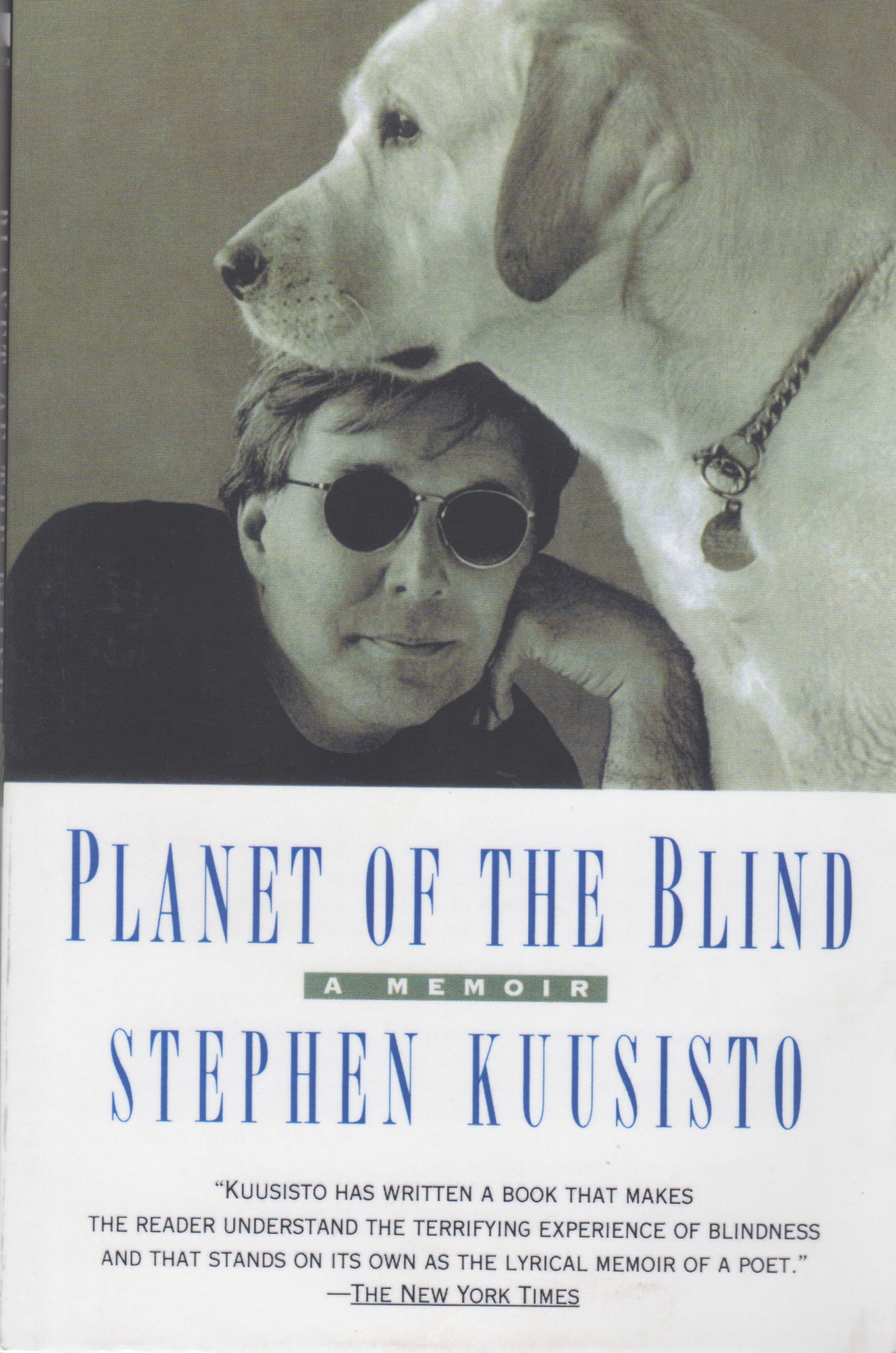
Planet of the Blind by Stephen Kuusisto (1998. Delta. ISBN 978-0-365-3327-6)

I met poet and memoirist Stephen Kuusisto over a glass of hard cider in Helsinki when we were both looking for Finnish poet, Jarkko Laine. Not really. Though, in some sense, bits and pieces of that sentence are allusions to truth. I’ve never really met the author of this fine memoir. We’ve only exchanged an email or two regarding our mutual acquaintance, former President of the Finnish Writers’ Union and Turku poet Jarkko Laine. But I was so intrigued by Stephen’s short homage to Jarkko (go to http://www.planet-of-the-blind.com/poetry/ to read the essay), well, I had to read more. Not being much a poetry guy (sorry, Jarkko and Stephen), I ordered Planet of the Blind, Kuusisto’s first memoir. I expected, from the accolades surrounding the book on Amazon, that I would enjoy the slim volume over a crisp autumnal weekend. To be honest, that’s not how it went: I devoured the book in a day. Eight hours of straight, non-stop reading happened. Many times, cover blurbs are a “bait and switch” proposition: The author knows someone who knows someone  who tells a little white lie about a book to help out the author. I’ve been burned by blurbs. I’m sure you have too. So when no less than that seminal arbiter of American culture, The New York Times, says that the book “stands on its own as the lyrical memoir of a poet”, well, I was a bit skeptical. Not to worry. That phrase is spot on in describing this great little work of non-fiction.

Using the term “lyrical” to describe prose writing can be a bit of an overstatement. But here, The Times got it right. The vignette style of Kuusisto’s storytelling sets exactly the right mood and pace for telling the life story of a blind poet. Think of that nomenclature, if you will. A blind poet. Some might quibble and point out, “Oh, Kuusisto isn’t really blind blind. He has some sort of residual seeing ability in both eyes.” Really? What circumstances define blindness if being unable to read a book or a street sign; or walk without stumbling over a crack in the sidewalk; or discern a bus from an elephant; or ride a bicycle; or watch television; or visit an art gallery and actually see the paintings; doesn’t “pass the test”? Kuusisto’s Finnish sisu is omnipresent in this story as he tries repeatedly to model such a twisted perception: as he tries very, very hard not to be blind despite his inability to see. The results are painful. And funny. And touching, as in this childhood scene:

At night I sit in the heavy vigil of personal confinement. I eat alone in my room. In my obscure corner I brood over my ugliness. I am a green and distorted mass. My eyes dart about in my head. Who wouldn’t laugh? This is my face, blubbering, cross-eyed.

Here come the villagers with their blazing torches, pursuing the Frankenstein monster to the ruined castle.

Kuusisto grew up in an era when there were few, if any, services for the disabled in public schools. His reportage of his struggles reminds me, for the first time in decades, of kids I went to school with. The physically and the mentally challenged were dumped by all the western junior high schools (there were four back then) in my hometown into two classes. Those kids, whether they were Down Syndrome of low intellect, or brilliant but blind (as one kid, a concert-level pianist at age 13 was) shared two teachers and didn’t move from classroom to classroom by subject, like the rest of us. Their entire lives were dictated by the four walls of their “special classes”. There was no interaction, no integration, with the rest of us except during lunch, when the “dummies” sat at their own table and we all stared at them as if they were freaks on holiday from a sideshow. That’s what Kuusisto lived, to some extent. That’s the heart of his story.

Still walking around, feigning sight, I step in the rain-washed gutter, brush the street sign, and make a hundred slapstick gestures…A friend calls saying she’ll meet me downstairs in half an hour. She drives a red Chrysler. I walk down the street and approach the car. I reach for the door…but it’s locked. I rap…Then I walk around to her side of the car…When I lean down to her window, I see at last the face of a genuinely terrified Chinese woman.

Exemplary writing by contemporary authors is uncommon. Despite all the books; self-published, mainstream, and digital that exist today in the American marketplace of ideas; very few of the volumes clogging our shelves or sitting in our eReader queues can be labeled works of excellence. This memoir is one of them. Rarely does a heartfelt scene reduce this trial judge to tears. But I found myself weeping as I witnessed Stephen’s transition from blindness to functionality when he took the leash of his first Seeing Eye companion, Corky.

“Go on now. Corky isn’t going to let anything happen to you…”

I tell her that I believe that Corky will prevent me from walking off the (train) platform, that I believe Corky is as good as her noble reputation…

Inwardly I am thinking, “What if the dog belongs to a suicide cult?”

Then I laugh and I exhort Corky to go forward. She yanks me backward, turns, walks me in the opposite direction until we are safely away from the tracks. Faith moves from belief into conviction, then to certainty.

The New York Times pegged this book. It is, to overuse the phrase, lyrical in the manner of fine, classic poetry.

5 stars out of 5. The perfect book to read with a roaring fire and a cup of hot cocoa.


Posted in Books | 3 Comments

9.11.2001

The following story was one of four entries to the Northwestern Ontario Writers Workshop Postcard Story Contest chosen for publication in Northwestern Ontario Writers Workshop Magazine. The premise was to create a story, in less than 500 words, based upon a photo of a bicycle leaning against a shed. You’ll usually find the story posted here under the “Other Writings” tab on the dashboard. Because today marks the anniversary of the beginning of our nation’s quest to find Osama bin Laden, I am reprinting it here. Remember this, dear readers: Canadians also died on 9/11/2001 (in the airplanes and the twin towers) and Canada sent troops to Afghanistan to bring bin Laden to justice.

Missing

(c) Mark Munger 2010

Davey left Canada in March of 2005. He’s my son. My only son. Properly, I should say he’s my husband Gregory’s son as well. But Davey is, in so many ways, really only mine. When Gregory slunk off, Davey was only six; six, goddamn it! That asshole left us, me and three little kids, behind in Thunder Bay. Davey grew up spontaneously. Had to. Had to grow up fast when Gregory ran away with a leggy student from a science class he taught at Lakehead. Chemistry was her major. Gregory and I had that once: chemistry, I mean. Then the twins, Greta and Amy, came. I didn’t lose the weight from that pregnancy fast enough to suit Gregory so he latched onto the first little co-ed who smiled at him. And then he left. Just like Davey eventually would.

Gregory moved to Winnipeg. He accepted another professorship at another university. The bitch went with him as his second wife. It was tough on Davey. He was old enough to comprehend loss. I tried not to dwell on the fact that we’d been rejected. I tried not to lean on Davey in my despair. He was so young and all. I tried to fill in the void, that deep hole that’s left when there’s no father to teach a boy how to fish, how to skate, how to ride a bike.

The bike: Not Davey’s first, but his last, rests against the garden shed out back of our house. I keep it out of sentiment, out of hope that someday my son, who wandered off to Shilo to join the Army-the 1st Horse Artillery-in that unplanned, drifting way that young men take up their life journeys at eighteen, will exit a taxi on Gertrude Street, walk up the front sidewalk, and throw his arms around my neck. The Army says that’s impossible, that remnants of Davey were found scattered over the Afghani highway leading from Kandahar. I don’t believe the Army. My son is coming home.

Posted in Blog Archive | Comments Off on 9.11.2001

The Struggle with Kids and Reading

In my self-taught, self-directed course, “How to Become a Novelist by age Sixty”, a class which has only one student, I’ve relied upon others to provide me with insight into the world of words and publishing. One of the resources I find indispensable to my education as a writer is Writers Ask, a quarterly published by the editors of Glimmer Train, a short fiction magazine that I also subscribe to. The most recent issue of Writers Ask features interviews with a number of famous authors about the value of would-be fiction writers being ardent readers. All of the pieces are good. One, author Steve Almond’s observation about reading and our youth, is great. Here’s a bit of what Steve has to say:

The generation I am seeing is screen-addicted. Technology has changed so much…(I)nstant messages, cell phones, Blackberries, internet, videos, video games, TV in myriad forms, DVDs…There are all these ways of not being in the present moment, of not being with someone in the room, not being conscious of your surroundings and the fact that you’re a human being on the earth with other human beings…They look to these screens as a way of feeling less lonely and isolated…I think it’s a false fix, but it’s very compelling, and it makes it more and more difficult for people doing the lonely, dogged work of reading.

Reading is not easy. It engages your full imagination and concentration, and as people are raised from the time they’re little kids, every two seconds there’s a new image on TV, I think it is changing the way their brains function. If you took the average human being now and transported them back a hundred years, they would all be clinically ADD. (A) hundred and fifty years ago, people didn’t fight over the TV remote; they fought over the latest installment of Dickens. And it’s not as if our brains have fundamentally changed…We’re still capable of that greater concentration and that greater sense of empathy, and having our imaginations fully engaged and activated by literary art…

((c)2012 Glimmer Train and Steve Almond)

I am going to read Almond’s entire interview to my 14 year old son tonight after soccer practice. Why? Because I am trying to raise my youngest son to be a reader. Not just because I, as a writer, need an audience, but because my love of reading, the passion that I have for good books is so ingrained, so deep in my soul, it’s nearly religious. And, like any good evangelist, I want to share the grace, the peace, the enlightenment that comes from reading the great novelists and short story writers with my youngest son.

Now if I can only find the “off” button on the X-box…

Peace.

Mark

Posted in Blog Archive | Comments Off on The Struggle with Kids and Reading

At the Fair

Judy, Lisa, Rene’, and Jack at the 2012 Minnesota State Fair

Politicians. Farm animals. Vendors. Mounted police. Food. Music. Noise. Antique tractors. We saw and heard it all at the 2012 Great Minnesota Get Together. Rene’, Jack, and I drove down to the city of my birth, St. Paul, for a short get away. My wife and I had long planned to attend the wedding of one of my fellow judges so when we learned that our oldest son, Matt, his wife Lisa, and our only grandson, A.J., were going to the State Fair, an idea was hatched. Of course, before we could meet up with Matt and Lisa and hand over Jack, who seemed OK with spending the night at Judy Streefland’s house with Lisa (Judy’s daughter), Matt, and his three month old nephew, Rene’ needed some mall time.

“I thought you wanted to go to the Mall of America,” I whined as we set a time to have lunch in the food court at Rosedale.

“Too big. Too hard to find what I am looking for,” my wife replied.

We were standing in the the middle of the Rosedale Mall, light from overhead skylights streaming in.

“You picked the one mall in America with nothing for guys,” I lamented.

It’s true: There are no electronics stores, hardware stores, music stores, bookstores, or even farm toy stores sharing space in Rosedale to pique the interest of a straight guy.

“Ya, Mom. This place is a bore,” Jack agreed.

Our collective observation had no impact on my determined wife. We made our plans to meet up for lunch and she, to her infinite delight, wandered off to shop on her own. Later, after we’d filled up on mall Chinese, we turned Jack over to Matt and Lisa in the mall parking lot and headed off to find our hotel.

The wedding took place in the 1st Baptist Church of Minneapolis, a beautiful old icon of Christianity located in downtown Mill City. The reception in Uptown was about what one would expect from an event held in such an artsy neighborhood: Trendy (and tiny!) appetizers and eight dollar beers.

Understand that Matt was bound and determined to get to the fair with his wife, new son, little brother, and mother-in-law in tow, by 7:00am on Sunday. I think I made it pretty clear to my son that his mom and I had no intention of being awake, much less at the Minnesota State Fair, so early on a Sunday morning. True to my word, I slept in. Until 6:30am. Rene’ snored on a bit longer but we both managed to watch most of “CBS Sunday Morning”, drink hotel room coffee, get dressed for the fair, have a nice hot breakfast, and talk about the wedding, without being rushed.

“I saved two bucks a ticket,” I said proudly to my better half after taking advantage of the senior citizen discount offered at the Fair ticket booth.

“The benefits of old age,” Rene’ quipped. “But I’m still not ready to join AARP.”

After several uncertain phone calls between us and the other Munger party, we met up at the International Bazaar.

“Alright,” I said to Matt, who never met a piece of Fair food he wouldn’t try, “how was the alligator on a stick?”

“Didn’t have that,” my eldest said with confidence, “but the deep fried herring on a stick was wonderful!”

When Matt was through listing the foods he’d already ingested (it was only 10:30 and the list is far too long to post in a blog), and after both Grandpa and Grandma had enough A.J. time, Rene’ and I broke off to tour the livestock barns. With swine flu running rampant, my son and daughter-in-law didn’t want A. J. exposed so they went off in search of more deep fried delights while we visited the horses and dairy cows.

Adrien James Munger at the Fair

St. Paul Mounted Police

Thankfully, it was not a typical Labor Day weekend in St. Paul. Yes, it heated up. By the end of our time wandering around on the steamy blacktop roads that wind through the fairgrounds, my iPhone told me it was 86 degrees. Hot enough for a northern Minnesota boy, I can tell you that! But there was a nice breeze and the humidity was low. Plus, I’d dressed for the weather in shorts, tennis shoes, and a short sleeve Hawaiian party shirt that has become my standard attire when in search of fun.

Still, this year’s trip to the Fair was a tad disappointing in that “Prairie Home Companion” didn’t do a show at the grandstand. Now, don’t get me wrong. Despite my wife’s criticism that I’m too predictable, that I often fall into repetitive behaviors, I’m adaptable. The fact that Garrison skipped the Fair this year, well, sure, I was a bit bummed out about that. But hey, a guy is allowed to have preferences, right? And seeing America’s greatest storyteller and humorist live, at the Minnesota State Fair, well, I prefer that, if you will, to eating deep fried frog testicles on a stick!

But we had a good day, my wife and I, looking at pole buildings and boats and campers and a host of other products for sale at the Fair that we can’t afford. See, part of the attraction of attending the Great Minnesota Get Together is the dreaming that goes with the experience. That, and, at least in my case, walking quietly through the horse barn and admiring the velvety sheen of well groomed animals standing patiently in stalls, waiting to be shown or ridden. And people watching. Now that’s a talent my wife, with her very large brown eyes, is an expert at and I’ve only become proficient at under her tutelage. Of course, with peepers like Rene’s, sometimes, when her gaze becomes too elongated, she gets caught in what the object of her inquiry might consider to be a rude stare. My wife’s not rude. But one might get the wrong impression if her eyes are locked on you like a falcon diving on a robin.

The Crowd at the 2012 State Fair

“Where are you guys?”

I was using my iPhone to locate Matt and his party after Rene’ and I had seen most everything at the Fair we wanted to see.

“By the International Bazaar.”

I’d figured out how to use the GPS mapping feature of the phone while wandering around the Fair. Slow learner, I’ll admit. I’ve had the phone for over six months and I just figured out it has GPS! Well, that’s better than the tailgate on my Pacifica. I drove my first Pacifica until it was demolished in a collision with a drunk driver and never once, during that nine month span, did I ever figure out that the tailgate had a remote control key-less release. It was only after I bought my second Pacifica that I figured out what that extra button on the key fob was for. So discovering GPS not even a year into owning an iPhone shows my technological progress. Really.

“That’s all the way back where we came from.”

Rene’ and I turned around and waded back through the crowd. After reclaiming our youngest son, who, as the first picture on this blog attests, visited most of the Liberal political booths at the Fair and got to meet Senator Amy Klobuchar, and saying our goodbyes to A.J., his parents, and his maternal grandma, we headed back through the crowd towards the car. As we passed the “Vote Yes” booth, where well-intentioned folks were lobbying the crowd to have marriage in our state defined as being between one man and one woman, Jack couldn’t resist parading in front of the booth with his “Vote No” placard. Others holding “Vote No” signs were already engaged in spirited debate with the folks manning the booth so Jack’s silent protest went largely unnoticed. But I’m quite sure Jack’s Great Uncle Willard was smiling.

Peace.

Mark
 

Posted in Blog Archive | Comments Off on At the Fair

Blue Moon Putt Putt


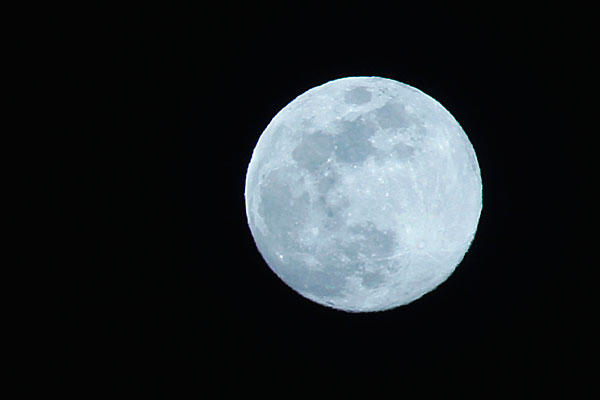
I’ve written about blue moons before and explained that, in common parlance, the term is meant to apply to the second full moon in a month: a somewhat rare occurrence. Well, that’s not exactly accurate. According to both Wikipedia and SkyandTelescope.com, the term originally meant the third of four moons in a season. Why is that unusual? Most seasons of most years have only three full moons. Whichever definition you apply has some accompanying issues. So why not apply both? (See http://www.skyandtelescope.com/observing/objects/moon/3304131.html for more details.)

I’m telling you this because those of us living in the north country experienced our own blue moon on Friday night. In celebration of that somewhat rare occurrence, my wife had an idea.

“Let’s take the boat out for a ride to the Island Lake Inn.”

We don’t live on Island Lake. We live a mile and a half below the Island Lake dam on the Cloquet River. To take a boat trip to the aforementioned local tavern and restaurant, we have to hitch up our trailer and boat to the Pacifica, drive ten minutes or so to the public landing, and launch the boat. I was tired from a day at the courthouse but, knowing it was going to be a blue moon evening, I agreed to Rene’s suggestion.

Jack, our fourteen year old son, wasn’t all that enthusiastic. In fact, he objected until we were across the big water and slowly negotiating the shallow channel that runs through big Norway and white pines along the north shore of the lake. It was a calm, peaceful night with no bugs and few competing boaters as the old Force 35hp two-stroke pushed us towards the tavern. Don’t get the idea that we motored in luxury: Our fishing boat, while it does have cushioned seats and a steering console, is over twenty years old. So is the motor. But the Force is generally liable. Remember that adjective.

It took quite a while to get our food. Jack and Rene’ shared an enormous pepperoni pizza. I had a cheese burger and a couple of draft beers. The place was packed. It was anything but a quiet night out in a sleepy country bar. Just as I was paying the bill, a guy wandered in and started setting up amps and cords and a music stand. As we were leaving, the guy (dressed in a leather vest and a black cowboy hat) began picking on his six string acoustic, signing a countrified version of an old Bob Seger tune in a tentative, slightly off-key voice.

Give the man credit, I thought as I walked behind my wife and son.

“He’s doing what I do when I’m sitting in a book stores signing books, ” I said as we walked through the gravel parking lot.

“There’s the moon,” my wife commented, ignoring my reference to my stagnant authorial career. “It’s a blue moon.”

“I forgot it was a full moon,” I said as we followed the slope of the land towards the water.

It took only a few minutes to get the Force fired up and the boat underway. We passed one boat in the narrow cattail lined channel sneaking behind half million dollar homes lining the lake shore. It was a big pontoon boat filled with revelers on their way to more beer: there wasn’t more than a foot of space between the boats as we went our separate ways. Free of the shallows, I opened up the throttle on the ancient outboard.

“Weeds,” I said, looking at the GPS speedometer. We were stuck at 13 miles per hour, about six miles per hour slower than true cruising speed. “Must have weeds wrapped around the prop.”

My mind urged me to stop the boat, tilt the motor up, and remove the weeds. But my heart: My heart told me to keep going under the brilliant iridescent night sky, the yellow circle of Earth’s one natural satellite lighting the way across velvety water.

Half way across the main lake, the engine coughed and came to a stop.

“Out of gas,” I explained.

I didn’t study the faces of my wife and son who, at least by the tone of their conversation, weren’t put out by our brief delay. I poured gas from the spare can into the tank. With a half tank of gas for the big motor, we were good to go. I sat behind the wheel and fired up the Force. The engine responded as if new. We were soon flying across the flat, dark water with vigor. Then motor coughed again, shut down completely, and refused to start.

“I’ll have to use the trolling motor,” I said apologetically.

My passengers finally voiced concern.

“You got enough gas to get us all the way in?” Jack asked.

I opened the cap to the little two horse Honda’s fuel tank, dipped a finger in, and found that there was about 1/3 of a tank of gas.

“Plenty,” I lied.

We took one wrong turn as the Honda putt putted towards shore.

“I could swear there used to be a streetlight marking the boat launch,” I said as we loaded the boat back on the trailer.

My passengers said nothing as the Pacifica pulled away from the landing, our old boat and its inert motor in tow as the blue moon cast amber light on other motorboats racing across the lake.

Peace.

Mark

Posted in Blog Archive | Comments Off on Blue Moon Putt Putt

The Synergy of the Web

The Late Jarkko Laine of Turku, Finland

I was bopping around the Internet yesterday, trying to figure out a publishing and marketing strategy for my manuscript-in-progress, Sukulaiset: The Kindred. I was looking into possible funding sources and seeking out experts regarding the themes of the book (Karelian Fever, WWII in Finland, Estonia), when I came across a story about Jarkko Laine. You likely have no idea who Jarkko Laine is. Am I right?

I had no idea either until Olavi Koivukangas, the director of the Institute of Migration in Turku, Finland invited Jarkko, other Finnish literary types, and a reporter from the Turun Sanomat (the largest newspaper in Turku) to attend a reading and discussion of Suomalaiset: People of the Marsh I gave at the Institute in December 2006. Much of what I conveyed during my talk had to be done through a translator but, in the end, Jarkko liked my book well enough: Well enough to promise he’d help translate the novel into Finnish and get it published in Finland. As the former head of the Union of Finnish Writers, I figured he had the know-how and the clout to get the job done. We had a nice chat, corresponded a bit after I came home, but sadly, Jarkko Laine died in August of 2006 before the translation project ever got off the ground.

I’m letting you know all this because, as I said, I came across a brief blog by American poet and essayist, Stephen Kuusisto, about a similar connection he had to Jarkko. You can read Steve’s short essay about Jarkko at:

http://www.planet-of-the-blind.com/2011/10/i-learned-yesterday-while-nosing-around-the-internet-that-the-finnish-poet-jarkko-laine-passed-away-five-years-ago-i-knew-ja.html

I liked what Steve had to say about our mutual acquaintance, who I remember as a generous and kind hearted man with a very serious streak. So I emailed Steve who is far better known than I am: He’s actually been on NPR’s “All Things Considered” with his work! He emailed me back and now, according to Steve, we’re Internet friends. Cool.

Here’s the thing. My connection to Steve wouldn’t have happened but for the generosity of Olavi and Jarkko, two men of a certain age trying to help an American novelist they’d never met get a book published in Finland. Didn’t happen with Suomalaiset. But maybe, with some luck and some well intentioned folks in my corner, Sukulaiset might find a home in Finland.


There’s a direct link to Stephen Kuusisto’s website under the “Links” section found on the right side of this blog. Listen to his essay about nearly being hit by a bus in New York. You won’t be disappointed.

Peace.

Mark



Posted in Blog Archive | Comments Off on The Synergy of the Web

4:30AM and Thinking of Uncle Willard

He’s boxed up and resting comfortably in my basement, his impressive life reduced to words stored in several hundred cardboard cartons. It’s peaceful and relatively quiet in what used to be my oldest son Matt’s room. Jack, our fourteen year old, uses the room of Uncle Willard’s repose to play table and floor hockey. But that’s about all the activity the room sees these days, what with the three older Munger boys emancipated and living on their own. You might think that it would be sort of creepy for Jack, playing hockey in a shrine. Not really. I mean, Willard’s remains aren’t really stored in our basement: Only 1,500 copies of his biography are.

I made a slight miscalculation. OK, a major business blunder. For years, folks came up to me at craft fairs and book events and asked me if I was related to State Representative Willard Munger. Of course, since he was my uncle and mentor, I was pleased when strangers made the connection. Time after time, well meaning Liberals and environmentalists and history buffs told me, “You know, someone should really write Willard’s story.” This was while the man was still alive. So when he passed away from cancer in 1999, the longest serving member of the Minnesota House and the last of the old Farmer Laborite politicians remaining in office, well, I thought some non-fiction writer out there with an interest in history would pick up Willard’s remarkable story. Born in a log cabin a month before President Ronald Reagan. Son of a poor Otter Tail County dirt farmer. Only a high school education. Began working for the Nonpartisan League in the late 1920s and became a powerhouse in that party, one of the predecessors of Minnesota’s Democratic Farmer Labor Party. Ship building foreman during WW II. Businessman. Environmental icon. Legend in Minnesota’s political circles. But no one picked up his story. So I did.

Was it hubris? Love? Stupidity? Or was it an overly optimistic nature, a flaw of character, that compelled me to think that I could write a concise, heart warming, thorough story of the man who changed Minnesota’s environmental and conservation ethic beginning with his first term in the legislature in 1954? Think about this: Rachel Carson’s epic tome on the dangers of DDT, Silent Spring wasn’t even a manuscript, let alone a best selling book, when Willard Munger began his quest of environmental activism in the Minnesota House. His first effort to clean up the St.Louis River, the paternal river of the largest fresh water lake in the world, was launched in 1954, the year I was born. I started working on Mr. Environment: The Willard Munger Story in 2004; five years after Willard died. Unlike working on novels, which are my first love, researching and writing a biography of a real person is much more work and much less fun. Maybe that comes through in the book and that’s why it has never sold like I thought it should. All those folks, those Liberals and environmental types and Minnesota history buffs who suggested that someone write Willard’s life story somehow died with Willard. That’s why he’s sitting boxed up in my basement, silent carton stacked upon silent carton waiting: Waiting to be released into the world as a tribute to a man who gave much to and asked so little from his native state.

I’ve reduced the price of the book as the years have rolled by. You can now pick up a copy of this 260,000 word epic for a mere five bucks. Ten if you buy it here because it costs five bucks to ship it. Creative pricing hasn’t made a dent in the wall of cardboard keeping Jack and his shinny hockey playing buddies company in the cellar. I’ve sent out flyers on multiple occasions to every environmental and conservation group in the state, offering to come to their organizations and talk about Willard in hopes of selling a few copies. One group, the Duluth chapter of the Izaak Walton League, took me up on the offer. One.

So here I am sitting at my keyboard in my cedar paneled writing studio overlooking the Cloquet River, inky darkness surrounding me, cloaking the pasture outside the windows like a shroud. It’s 4:30am and, with Willard resting comfortably in the room beneath my feet, I can’t sleep. As I type, I’m thinking of the foolish pride of an author who writes about an old man, a man of another generation, whose only real  attributes were electoral longevity and dedication to task. Visions of boxes of Willard books being ripped apart and recycled jolt me out of slumber and force me to begin writing an hour before my normally scheduled shift. I grab a cup of coffee, plop my ever widening rear into my writing chair, fire up the iMac, and begin. Somewhere in the still black morning air, a loon flying between lakes objects to my melancholy. Or maybe he or she is simply agreeing that it’s time to move on.

The Cloquet River: One of the Rivers Willard Saved


If you have a creative idea as to how to get Willard’s life story into the hands of more readers, I’m all ears. I don’t need anymore sleepless nights thinking about recycled biographies.

Peace.

Mark


Posted in Blog Archive | Comments Off on 4:30AM and Thinking of Uncle Willard

Nostalgic Grisham with a Point

Bleachers by John Grisham (2003. Doubleday. ISBN 0-385-51161-2)

Better. Much better. I was troubled earlier this week by my review of Grisham’s latest, Calico Joe. I was pretty hard on the attorney-turned-wordsmith. But I try in this blog,  just like when I’m at my “real” job on the bench, to call ’em like I see ’em. I was not impressed with Calico Joe, the story of two baseball players and how their lives intersect one fateful day. As the title to this review alludes, Bleachers has more heart, more soul, more point,  and more quality writing in its first 30 pages than Calico Joe does in its entirety.

Neely Crenshaw was one of the stars of the Messina High Spartans football team coached by Eddie Rake. The ex-quarterback had a brief college career with a few highlights thrown in before losing it all. Fifteen years later, he’s still trying to find himself, trying to understand what it is about the sport of football and life he learned from the tough talking Coach Rake all those many years ago. It’s important for Neely to think about such things because the ex-quarterback is back in his hometown, waiting with other former players, for their old coach to die.

Grisham’s writing style is simple, concise, and straight on. The tale is constructed around a very simple premise: Yes, you can go home but you can’t change the past. If that seems a bit maudlin and predictable, well, it is. But unlike Calico Joe, where the dialogue and writing seems crafted for a juvenile audience, which made reading the book a bit of a chore, Bleachers flows nicely, with believable dialogue, characters and a well crafted setting in the imaginary southern town of Messina. There are a couple of plot twists to keep the reader on his or her toes: nothing earth shattering or dissonant but these moments make the book all the more poignant and worthwhile.

As leaves outside turn brittle and take on color, as morning air begins to hold the night’s cold, those of us that played high school football understand fully what Grisham is trying to recreate here. He’s done an admirable job of it and there’s enough of a story beyond the sports connection (Note: the play-by-play tape of one of Neely’s biggest games is rivetingly recreated by Grisham and is one of the highlights of the book) for those who never put on the pads (including the fairer sex) to hold their interest.

All in all, a fine summer read.

4 start out of 5.


Posted in Books | Comments Off on Nostalgic Grisham with a Point

Not Grisham’s Best

Calico Joe by John Grisham (2012. Doubleday. ISBN 978-0-385-53607-3)

Today’s statistics: Laman’s River  by Mark Munger ranks 1,648,432nd  on Amazon.com. Calico Joe by John Grisham ranks 1,198th. There’s little reason for a modest (in terms of sales, not ego) regional writer like me to pick a fight with one of America’s best selling and most widely read novelists. But, I did it with my review of Grisham’s short story collection, Ford County (see above under “Reviews” tab  and the subtab, “Books”) so, what the hell. I might as well have my say.

First off, if you aren’t a baseball fan, you might not like this book. I’m gleaning this from the other reviews posted at Amazon.com. Many of the one star ratings posted there are from folks who don’t like or appreciate America’s pastime. Quite frankly, I am puzzled why someone would buy this book if that’s the case. There may be things to criticize about this slender bit of fiction but false advertising isn’t one of them. Grisham tells you, Doubleday tells you, that this is a story about baseball and not the legal system. So complaining about the subject matter makes little sense. Besides, what better way to spend a hot summer Sunday afternoon (which is what I did yesterday) than reading a novel about baseball?

Well, here are the problems as I see it. First off, this isn’t a novel at all. Using basic math, counting the words on a page of this anorexic tome and multiplying that by the 198 pages of the book, I count 40,000 words to the story, give or take. To me, that’s a novella, not a novel. So, to be honest, Doubleday and the author should have included this story as the centerpiece of a short fiction collection and not charged $16.00 for this mislabeled novel on its own. But, as I said, having read Ford County and not been impressed, and knowing that, even for top shelf fiction authors like Grisham, short fiction collections always fall short of corporate sales expectations, maybe that’s why my latest book is where it is on the charts and why Calico Joe is where it is: The folks at Doubleday and Mr. Grisham are a hell of a lot smarter than me when it comes to marketing.

The second deficit with the book is the writing itself. Not unlike a novel I just read for my position with the Rural Lit R.A.L.L.Y., Country People by Ruth Suckrow, Calico Joe reads like a young adult book and not like a story for mature audiences. I’m not talking about sex or lust or violence or other adult themes here: I’m talking about the overall quality and sophistication of the prose. Grisham has always been a relatively simple storyteller. He uses ordinary phrasing, punctuated with regional references from the South in many of his tales, to great effect. Hemingway was similar in that he rarely resorted to wordsmithery (hope that’s a word!) when crafting a story: He used common, everyday prose in a way that was unique, entertaining, and revelatory. But the writing in Calico Joe is simply too bland, too uninteresting, to rise to that same level of quality. Simple is better unless it’s just simple.

Then there’s the plot and the characters. In a story as truncated as this, we don’t learn a whole hell of a lot about the main character of the story, broken down major league pitcher Warren Tracey except that he’s a bastard. To his wife. To his kids. To his teammates. To opposing players. Creating a villain with only one dimension to his character is tiring after a few pages. There’s no nuance, no tension between the good and the evil that lies in the heart of every man, be he St. Paul or Hitler. And without that tension, any story of redemption will fall flat. Here, the author gives us little reason to believe in Warren’s “come-to-Jesus” awakening because:

1. There were no glimpses of such a conversion displayed earlier in the book; and

2. The change in the bad guy takes place with little, if any, explanation as to why Warren tries to make amends.

Then there’s Joe Castle, the ultimate target of Warren’s nastiness. Again, because of the juvenile level of the prose used to tell this tale, there’s precious little revealed about Joe as a human being. Oh sure, we know he’s a fantastic baseball player, probably the best hitter baseball has seen since Ty Cobb. But we learn nothing beyond this about Calico Joe. Couple this lack of depth to the tale’s “hero” with the implausibility of the statistics the author attaches to the young man’s major league debut and you have, as I said, a fine young adult morality play but little else.

Finally, the ending. I won’t go too deep into it here so as not to spoil it all for those of you who, despite this review, simply must read the book. Suffice it to say, the predictability factor to the book’s conclusion is extremely high.

I haven’t been satisfied with Grisham’s writing since he penned An Innocent Man in 2006. That’s when he took on a nonfiction project, the railroading of a broken down ex-ballplayer for the rape and murder of a cocktail waitress he didn’t commit. That book was a masterful bit of storytelling and Grisham proved, as he did with his literary novel, A Painted House, that he is an American writer of note beyond the legal thrillers that made him famous. Rather than waste your money on Calico Joe, I’d urge you to pick up a copy of An Innocent Man which was just re-released in paperback.

My next project? To read Grisham’s Bleachers and close the last page of the book with a smile on my face. We shall see.

2 and 1/2 stars out of 5.

Posted in Books | Comments Off on Not Grisham’s Best

Of Lobsters, the Sea, and Men


A Part of the Main by Edward “Ted” M. Holmes (1976. University of Maine Press. ISBN 0-89101-031-9)

Ted Holmes is a writer of his place. His prose is so bound up in the salt air of the Maine coastline and the hardscrabble lifestyles of its people, to try to separate place from story would result in thin air. I picked up this fine collection of Holmes’s short fiction (he only wrote one novel, Two if by Sea) when my family was on a road trip from Minnesota by way of Canada to Bar Harbor, Maine. As I said in my reviews of books by Vermont writer, Howard Frank Moser, I love buying fiction, either novels or short story collections, when I am on the road. Fiction, to my mind, gives a reader a better sense of place and the people who inhabit that place, then nonfiction books and so, in an effort to understand the places I visit, I buy regional fiction from local booksellers. I picked up A Part of the Main one early evening in Sherman’s Books and Stationary in downtown Bar Harbor. I am glad I did.

Holmes writes in the dialect of his people. Though born in New Jersey, Ted Holmes spent his professional life teaching English in various colleges throughout the State of Maine. (See http://fenceviewer.com/site/index.php?option=com_content&view=article&id=41106:Edward%20M.%20Holmes&catid=969:obituaries&Itemid=142 for more about Ted). Sadly, he passed away in 2010 at the ripe age of 99!) There is much to be admired about the language, the dialogue, and the characters Holmes conjures up in these short snippets of make believe. We tag along as rough necked lobstermen and handymen and local elected officials go about their daily lives on the islands off, and in the tiny hamlets of, Maine’s Atlantic coast. Alternating between first and third person retelling of these tales, the author gives us the harsh reality of life lived out-of-doors, amongst the elements. “Drums Again” is an award winning piece. It lives up to its reputation. But there are so many other gems in this collection, including “Aunt Mae Lewis Comes Home”, the story of a senile old woman who, after decades, returns to claim her home on one of the off shore islands only to argue that the home she’s shown cannot possibly be the one she owns; and “Kneel Down”, a children’s reflection of Christmas spent against the brutal backdrop of Maine’s climate.

My only criticism of the collection and Holmes’s storytelling is that, with a few exceptions, the tales center around the men of the coastline and give short shrift to the women who live alongside those men. Oh, as indicated, there are a few tales here where a woman protagonist is given center stage (“Aunt Mae” being one), but, by and large, these are stories exclusively about men. That’s not a deal breaker because Holmes’s prose is so well crafted, you won’t get bored plowing through these very short and succinct pieces despite this deficit. Still, in the hands of a writer of Ted’s ability, a few more female protagonists would have made the collection more well rounded and complete.

A worthy introduction to a regional author who knew his craft.

4 and 1/2 stars out of 5.

You can visit Sherman’s Books and Stationary at: http://www.shermans.com/.

Peace.

Mark


Posted in Books | Comments Off on Of Lobsters, the Sea, and Men