The Synergy of the Web

The Late Jarkko Laine of Turku, Finland

I was bopping around the Internet yesterday, trying to figure out a publishing and marketing strategy for my manuscript-in-progress, Sukulaiset: The Kindred. I was looking into possible funding sources and seeking out experts regarding the themes of the book (Karelian Fever, WWII in Finland, Estonia), when I came across a story about Jarkko Laine. You likely have no idea who Jarkko Laine is. Am I right?

I had no idea either until Olavi Koivukangas, the director of the Institute of Migration in Turku, Finland invited Jarkko, other Finnish literary types, and a reporter from the Turun Sanomat (the largest newspaper in Turku) to attend a reading and discussion of Suomalaiset: People of the Marsh I gave at the Institute in December 2006. Much of what I conveyed during my talk had to be done through a translator but, in the end, Jarkko liked my book well enough: Well enough to promise he’d help translate the novel into Finnish and get it published in Finland. As the former head of the Union of Finnish Writers, I figured he had the know-how and the clout to get the job done. We had a nice chat, corresponded a bit after I came home, but sadly, Jarkko Laine died in August of 2006 before the translation project ever got off the ground.

I’m letting you know all this because, as I said, I came across a brief blog by American poet and essayist, Stephen Kuusisto, about a similar connection he had to Jarkko. You can read Steve’s short essay about Jarkko at:

http://www.planet-of-the-blind.com/2011/10/i-learned-yesterday-while-nosing-around-the-internet-that-the-finnish-poet-jarkko-laine-passed-away-five-years-ago-i-knew-ja.html

I liked what Steve had to say about our mutual acquaintance, who I remember as a generous and kind hearted man with a very serious streak. So I emailed Steve who is far better known than I am: He’s actually been on NPR’s “All Things Considered” with his work! He emailed me back and now, according to Steve, we’re Internet friends. Cool.

Here’s the thing. My connection to Steve wouldn’t have happened but for the generosity of Olavi and Jarkko, two men of a certain age trying to help an American novelist they’d never met get a book published in Finland. Didn’t happen with Suomalaiset. But maybe, with some luck and some well intentioned folks in my corner, Sukulaiset might find a home in Finland.


There’s a direct link to Stephen Kuusisto’s website under the “Links” section found on the right side of this blog. Listen to his essay about nearly being hit by a bus in New York. You won’t be disappointed.

Peace.

Mark


Posted in Blog Archive | Comments Off on The Synergy of the Web

4:30AM and Thinking of Uncle Willard

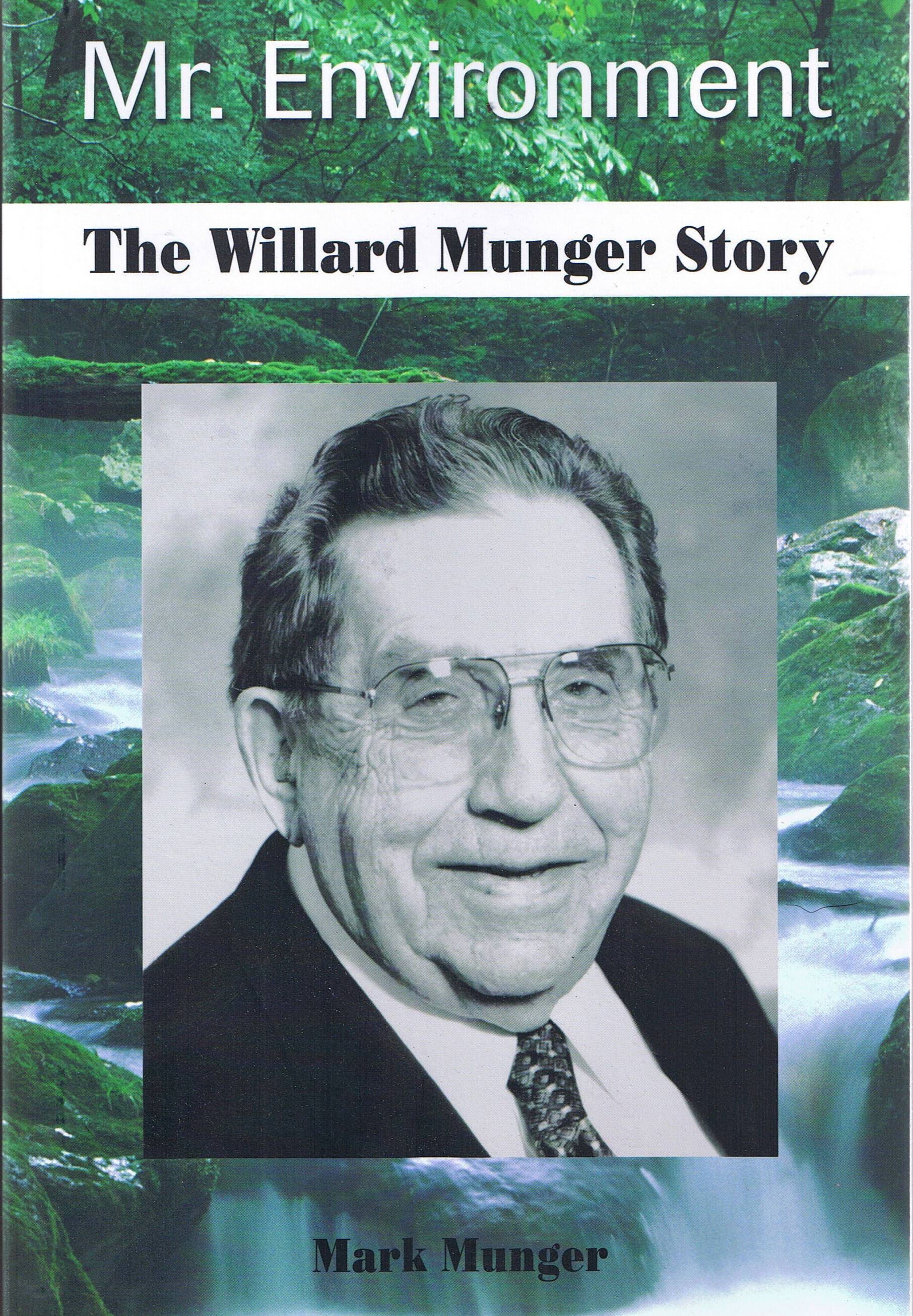
He’s boxed up and resting comfortably in my basement, his impressive life reduced to words stored in several hundred cardboard cartons. It’s peaceful and relatively quiet in what used to be my oldest son Matt’s room. Jack, our fourteen year old, uses the room of Uncle Willard’s repose to play table and floor hockey. But that’s about all the activity the room sees these days, what with the three older Munger boys emancipated and living on their own. You might think that it would be sort of creepy for Jack, playing hockey in a shrine. Not really. I mean, Willard’s remains aren’t really stored in our basement: Only 1,500 copies of his biography are.

I made a slight miscalculation. OK, a major business blunder. For years, folks came up to me at craft fairs and book events and asked me if I was related to State Representative Willard Munger. Of course, since he was my uncle and mentor, I was pleased when strangers made the connection. Time after time, well meaning Liberals and environmentalists and history buffs told me, “You know, someone should really write Willard’s story.” This was while the man was still alive. So when he passed away from cancer in 1999, the longest serving member of the Minnesota House and the last of the old Farmer Laborite politicians remaining in office, well, I thought some non-fiction writer out there with an interest in history would pick up Willard’s remarkable story. Born in a log cabin a month before President Ronald Reagan. Son of a poor Otter Tail County dirt farmer. Only a high school education. Began working for the Nonpartisan League in the late 1920s and became a powerhouse in that party, one of the predecessors of Minnesota’s Democratic Farmer Labor Party. Ship building foreman during WW II. Businessman. Environmental icon. Legend in Minnesota’s political circles. But no one picked up his story. So I did.

Was it hubris? Love? Stupidity? Or was it an overly optimistic nature, a flaw of character, that compelled me to think that I could write a concise, heart warming, thorough story of the man who changed Minnesota’s environmental and conservation ethic beginning with his first term in the legislature in 1954? Think about this: Rachel Carson’s epic tome on the dangers of DDT, Silent Spring wasn’t even a manuscript, let alone a best selling book, when Willard Munger began his quest of environmental activism in the Minnesota House. His first effort to clean up the St.Louis River, the paternal river of the largest fresh water lake in the world, was launched in 1954, the year I was born. I started working on Mr. Environment: The Willard Munger Story in 2004; five years after Willard died. Unlike working on novels, which are my first love, researching and writing a biography of a real person is much more work and much less fun. Maybe that comes through in the book and that’s why it has never sold like I thought it should. All those folks, those Liberals and environmental types and Minnesota history buffs who suggested that someone write Willard’s life story somehow died with Willard. That’s why he’s sitting boxed up in my basement, silent carton stacked upon silent carton waiting: Waiting to be released into the world as a tribute to a man who gave much to and asked so little from his native state.

I’ve reduced the price of the book as the years have rolled by. You can now pick up a copy of this 260,000 word epic for a mere five bucks. Ten if you buy it here because it costs five bucks to ship it. Creative pricing hasn’t made a dent in the wall of cardboard keeping Jack and his shinny hockey playing buddies company in the cellar. I’ve sent out flyers on multiple occasions to every environmental and conservation group in the state, offering to come to their organizations and talk about Willard in hopes of selling a few copies. One group, the Duluth chapter of the Izaak Walton League, took me up on the offer. One.

So here I am sitting at my keyboard in my cedar paneled writing studio overlooking the Cloquet River, inky darkness surrounding me, cloaking the pasture outside the windows like a shroud. It’s 4:30am and, with Willard resting comfortably in the room beneath my feet, I can’t sleep. As I type, I’m thinking of the foolish pride of an author who writes about an old man, a man of another generation, whose only real  attributes were electoral longevity and dedication to task. Visions of boxes of Willard books being ripped apart and recycled jolt me out of slumber and force me to begin writing an hour before my normally scheduled shift. I grab a cup of coffee, plop my ever widening rear into my writing chair, fire up the iMac, and begin. Somewhere in the still black morning air, a loon flying between lakes objects to my melancholy. Or maybe he or she is simply agreeing that it’s time to move on.

The Cloquet River: One of the Rivers Willard Saved


If you have a creative idea as to how to get Willard’s life story into the hands of more readers, I’m all ears. I don’t need anymore sleepless nights thinking about recycled biographies.

Peace.

Mark


Posted in Blog Archive | Comments Off on 4:30AM and Thinking of Uncle Willard

Nostalgic Grisham with a Point

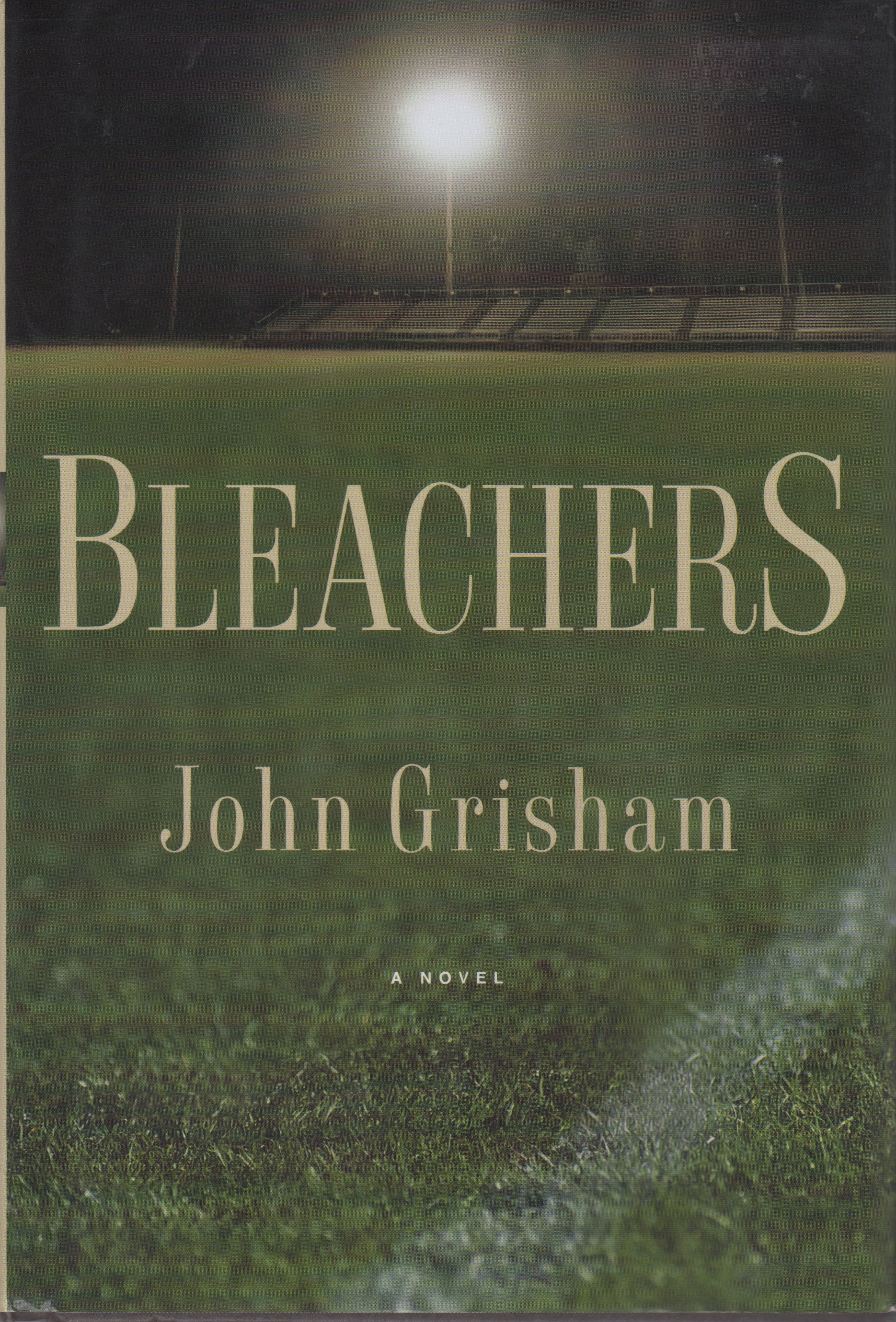
Bleachers by John Grisham (2003. Doubleday. ISBN 0-385-51161-2)

Better. Much better. I was troubled earlier this week by my review of Grisham’s latest, Calico Joe. I was pretty hard on the attorney-turned-wordsmith. But I try in this blog,  just like when I’m at my “real” job on the bench, to call ’em like I see ’em. I was not impressed with Calico Joe, the story of two baseball players and how their lives intersect one fateful day. As the title to this review alludes, Bleachers has more heart, more soul, more point,  and more quality writing in its first 30 pages than Calico Joe does in its entirety.

Neely Crenshaw was one of the stars of the Messina High Spartans football team coached by Eddie Rake. The ex-quarterback had a brief college career with a few highlights thrown in before losing it all. Fifteen years later, he’s still trying to find himself, trying to understand what it is about the sport of football and life he learned from the tough talking Coach Rake all those many years ago. It’s important for Neely to think about such things because the ex-quarterback is back in his hometown, waiting with other former players, for their old coach to die.

Grisham’s writing style is simple, concise, and straight on. The tale is constructed around a very simple premise: Yes, you can go home but you can’t change the past. If that seems a bit maudlin and predictable, well, it is. But unlike Calico Joe, where the dialogue and writing seems crafted for a juvenile audience, which made reading the book a bit of a chore, Bleachers flows nicely, with believable dialogue, characters and a well crafted setting in the imaginary southern town of Messina. There are a couple of plot twists to keep the reader on his or her toes: nothing earth shattering or dissonant but these moments make the book all the more poignant and worthwhile.

As leaves outside turn brittle and take on color, as morning air begins to hold the night’s cold, those of us that played high school football understand fully what Grisham is trying to recreate here. He’s done an admirable job of it and there’s enough of a story beyond the sports connection (Note: the play-by-play tape of one of Neely’s biggest games is rivetingly recreated by Grisham and is one of the highlights of the book) for those who never put on the pads (including the fairer sex) to hold their interest.

All in all, a fine summer read.

4 start out of 5.


Posted in Books | Comments Off on Nostalgic Grisham with a Point

Not Grisham’s Best

Calico Joe by John Grisham (2012. Doubleday. ISBN 978-0-385-53607-3)

Today’s statistics: Laman’s River  by Mark Munger ranks 1,648,432nd  on Amazon.com. Calico Joe by John Grisham ranks 1,198th. There’s little reason for a modest (in terms of sales, not ego) regional writer like me to pick a fight with one of America’s best selling and most widely read novelists. But, I did it with my review of Grisham’s short story collection, Ford County (see above under “Reviews” tab  and the subtab, “Books”) so, what the hell. I might as well have my say.

First off, if you aren’t a baseball fan, you might not like this book. I’m gleaning this from the other reviews posted at Amazon.com. Many of the one star ratings posted there are from folks who don’t like or appreciate America’s pastime. Quite frankly, I am puzzled why someone would buy this book if that’s the case. There may be things to criticize about this slender bit of fiction but false advertising isn’t one of them. Grisham tells you, Doubleday tells you, that this is a story about baseball and not the legal system. So complaining about the subject matter makes little sense. Besides, what better way to spend a hot summer Sunday afternoon (which is what I did yesterday) than reading a novel about baseball?

Well, here are the problems as I see it. First off, this isn’t a novel at all. Using basic math, counting the words on a page of this anorexic tome and multiplying that by the 198 pages of the book, I count 40,000 words to the story, give or take. To me, that’s a novella, not a novel. So, to be honest, Doubleday and the author should have included this story as the centerpiece of a short fiction collection and not charged $16.00 for this mislabeled novel on its own. But, as I said, having read Ford County and not been impressed, and knowing that, even for top shelf fiction authors like Grisham, short fiction collections always fall short of corporate sales expectations, maybe that’s why my latest book is where it is on the charts and why Calico Joe is where it is: The folks at Doubleday and Mr. Grisham are a hell of a lot smarter than me when it comes to marketing.

The second deficit with the book is the writing itself. Not unlike a novel I just read for my position with the Rural Lit R.A.L.L.Y., Country People by Ruth Suckrow, Calico Joe reads like a young adult book and not like a story for mature audiences. I’m not talking about sex or lust or violence or other adult themes here: I’m talking about the overall quality and sophistication of the prose. Grisham has always been a relatively simple storyteller. He uses ordinary phrasing, punctuated with regional references from the South in many of his tales, to great effect. Hemingway was similar in that he rarely resorted to wordsmithery (hope that’s a word!) when crafting a story: He used common, everyday prose in a way that was unique, entertaining, and revelatory. But the writing in Calico Joe is simply too bland, too uninteresting, to rise to that same level of quality. Simple is better unless it’s just simple.

Then there’s the plot and the characters. In a story as truncated as this, we don’t learn a whole hell of a lot about the main character of the story, broken down major league pitcher Warren Tracey except that he’s a bastard. To his wife. To his kids. To his teammates. To opposing players. Creating a villain with only one dimension to his character is tiring after a few pages. There’s no nuance, no tension between the good and the evil that lies in the heart of every man, be he St. Paul or Hitler. And without that tension, any story of redemption will fall flat. Here, the author gives us little reason to believe in Warren’s “come-to-Jesus” awakening because:

1. There were no glimpses of such a conversion displayed earlier in the book; and

2. The change in the bad guy takes place with little, if any, explanation as to why Warren tries to make amends.

Then there’s Joe Castle, the ultimate target of Warren’s nastiness. Again, because of the juvenile level of the prose used to tell this tale, there’s precious little revealed about Joe as a human being. Oh sure, we know he’s a fantastic baseball player, probably the best hitter baseball has seen since Ty Cobb. But we learn nothing beyond this about Calico Joe. Couple this lack of depth to the tale’s “hero” with the implausibility of the statistics the author attaches to the young man’s major league debut and you have, as I said, a fine young adult morality play but little else.

Finally, the ending. I won’t go too deep into it here so as not to spoil it all for those of you who, despite this review, simply must read the book. Suffice it to say, the predictability factor to the book’s conclusion is extremely high.

I haven’t been satisfied with Grisham’s writing since he penned An Innocent Man in 2006. That’s when he took on a nonfiction project, the railroading of a broken down ex-ballplayer for the rape and murder of a cocktail waitress he didn’t commit. That book was a masterful bit of storytelling and Grisham proved, as he did with his literary novel, A Painted House, that he is an American writer of note beyond the legal thrillers that made him famous. Rather than waste your money on Calico Joe, I’d urge you to pick up a copy of An Innocent Man which was just re-released in paperback.

My next project? To read Grisham’s Bleachers and close the last page of the book with a smile on my face. We shall see.

2 and 1/2 stars out of 5.

Posted in Books | Comments Off on Not Grisham’s Best

Of Lobsters, the Sea, and Men


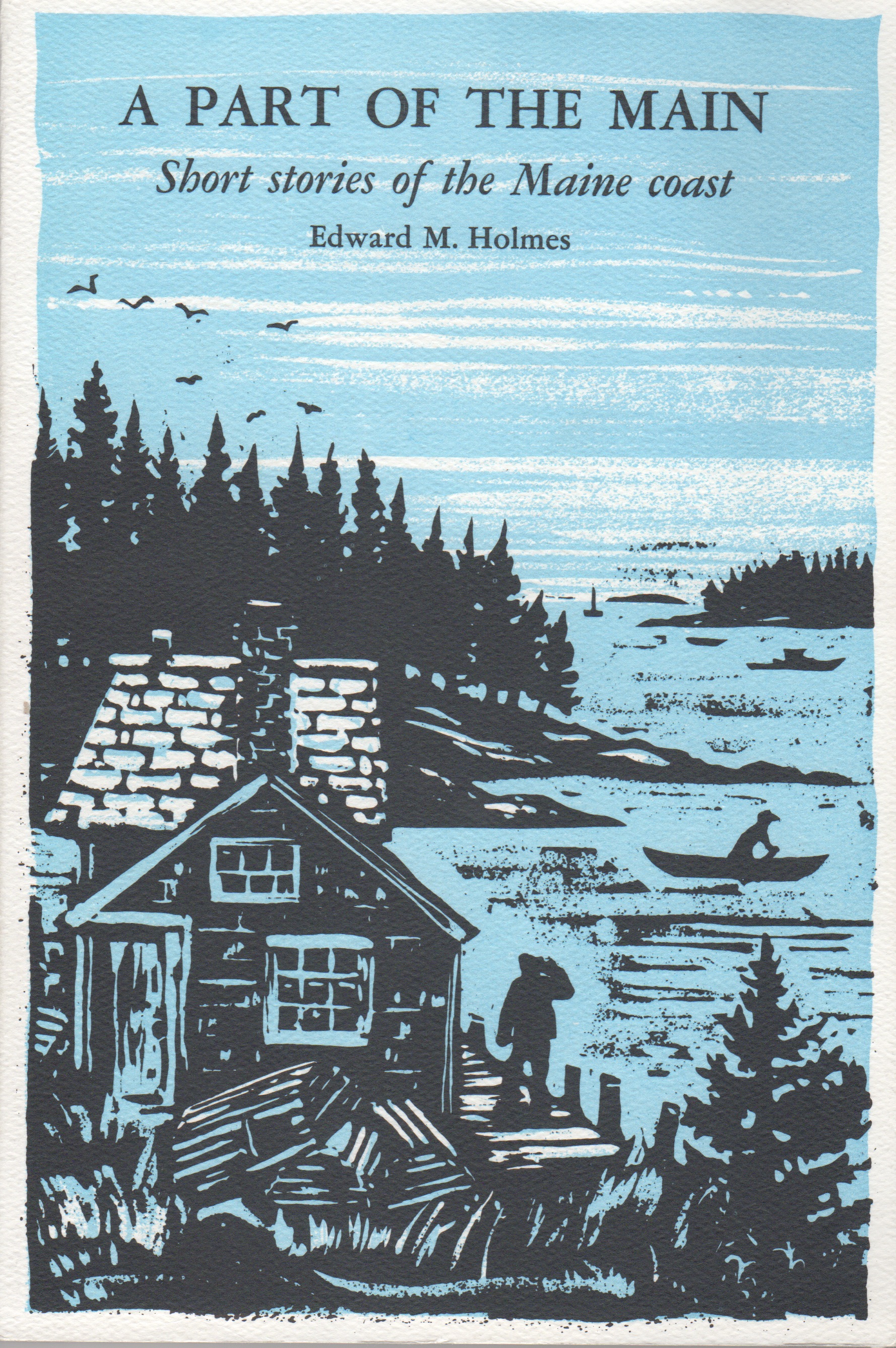
A Part of the Main by Edward “Ted” M. Holmes (1976. University of Maine Press. ISBN 0-89101-031-9)

Ted Holmes is a writer of his place. His prose is so bound up in the salt air of the Maine coastline and the hardscrabble lifestyles of its people, to try to separate place from story would result in thin air. I picked up this fine collection of Holmes’s short fiction (he only wrote one novel, Two if by Sea) when my family was on a road trip from Minnesota by way of Canada to Bar Harbor, Maine. As I said in my reviews of books by Vermont writer, Howard Frank Moser, I love buying fiction, either novels or short story collections, when I am on the road. Fiction, to my mind, gives a reader a better sense of place and the people who inhabit that place, then nonfiction books and so, in an effort to understand the places I visit, I buy regional fiction from local booksellers. I picked up A Part of the Main one early evening in Sherman’s Books and Stationary in downtown Bar Harbor. I am glad I did.

Holmes writes in the dialect of his people. Though born in New Jersey, Ted Holmes spent his professional life teaching English in various colleges throughout the State of Maine. (See http://fenceviewer.com/site/index.php?option=com_content&view=article&id=41106:Edward%20M.%20Holmes&catid=969:obituaries&Itemid=142 for more about Ted). Sadly, he passed away in 2010 at the ripe age of 99!) There is much to be admired about the language, the dialogue, and the characters Holmes conjures up in these short snippets of make believe. We tag along as rough necked lobstermen and handymen and local elected officials go about their daily lives on the islands off, and in the tiny hamlets of, Maine’s Atlantic coast. Alternating between first and third person retelling of these tales, the author gives us the harsh reality of life lived out-of-doors, amongst the elements. “Drums Again” is an award winning piece. It lives up to its reputation. But there are so many other gems in this collection, including “Aunt Mae Lewis Comes Home”, the story of a senile old woman who, after decades, returns to claim her home on one of the off shore islands only to argue that the home she’s shown cannot possibly be the one she owns; and “Kneel Down”, a children’s reflection of Christmas spent against the brutal backdrop of Maine’s climate.

My only criticism of the collection and Holmes’s storytelling is that, with a few exceptions, the tales center around the men of the coastline and give short shrift to the women who live alongside those men. Oh, as indicated, there are a few tales here where a woman protagonist is given center stage (“Aunt Mae” being one), but, by and large, these are stories exclusively about men. That’s not a deal breaker because Holmes’s prose is so well crafted, you won’t get bored plowing through these very short and succinct pieces despite this deficit. Still, in the hands of a writer of Ted’s ability, a few more female protagonists would have made the collection more well rounded and complete.

A worthy introduction to a regional author who knew his craft.

4 and 1/2 stars out of 5.

You can visit Sherman’s Books and Stationary at: http://www.shermans.com/.

Peace.

Mark


Posted in Books | Comments Off on Of Lobsters, the Sea, and Men

Mom’s Book Club

You are wondering, “What the hell has gotten into Munger that he’s displaying a package of licorice gum on his blog?” Am I right? Well, there’s a story behind that package, one I’m gonna tell you right now.

A few months back, my mom called me.

“Mark, my book club is OK with doing Laman’s River as one of our books. How about August 21st, around 6:30? At Barb Forbert’s house. I’ll get you the details as the date gets closer.”

“Sure,” I said, always willing to share my work with a group of women, no matter what age. “Just make sure you get me directions.”

The truth of the book business is this: Women buy and read novels. 80% of books sold in America, someone once claimed, are bought by women. 80%. And the percentage is higher if we’re talking about fiction. Oh sure, men buy the occasional John Sanford or John Grisham novel. And there a few outliers like me, men who love fiction and devour it, well, like a woman. But, generally, if a man buys a book, it’s usually non-fiction: a biography, a how-to, a political tome. So any opportunity for me to connect with female writers is like gold. Even if the sponsor of the connection is my mom. So, after Mom called, I wrote the date and time on my events calendar (and on the calendar for this blog). I was set.

Almost.

The night before the event, Mom called again.

“You remember we’re doing book club tomorrow?”

“Yup.”

“It’s at 6:30.”

“I’ll be there by 6:00,” I said.

“See you then.”

Tuesday, I rushed home from work, grabbed some copies of my books, printed out the first chapter of my novel-in-progress, Sukulaiset: The Kindred, changed into my author clothes, and sped off after saying a quick goodbye to my wife and son. There was no time for dinner in the equation if I wanted to make it to Mom’s by six.

You see the problem already, don’t you? I’d forgotten that the book club was meeting somewhere other than Mom’s house out in West Duluth. I’ve done her book club twice over the years and it’s always been at her house. And, truth be told, when she called to remind me of the event, she never mentioned the event’s location. I just assumed that it was at her house. And she assumed I knew otherwise. I think the blame falls squarely on Mom, don’t you?

“Rene’,” I said, calling my wife at home after I arrived at Mom’s to a locked house and no cars in the driveway, “I think there’s a problem. Mom’s not home, there’s nobody here, and she’s not answering the phone. Can you get me her cell phone number?”

Rene’ found the number. I called, and, like so many older folks who own a cell phone, Mom didn’t deign to answer.

I was stuck. I was sitting in my mom’s driveway in my Pacifica with boxes of books and no book club to talk to. Inspiration struck. I called a husband of one of the women in Mom’s book club. When I explained why I’d called, he laughed.

“Oh, Mark,” Carl (that’s the guy’s name) said. “They’re at Barb’s waiting for you.”

He gave me his wife’s cell phone number.

“Call me back if she doesn’t answer.”

Of course, being that she’s an older person, Carl’s wife never picked up.

“How about I just give you directions?” Carl said once he stopped laughing again.

Carl gave me directions and I found the place. But the surprises didn’t end.

See, my mom’s book club is typical in the way of book clubs: eight or nine women get together to chew on lettuce, sip wine, and occasionally talk about the assigned book. Some women, I’ve found through the years, never even buy or read the books their club is reading. For those women, book club is just a night away from the mister, an excuse to get out and gab. Other book clubs are deadly serious about reading and discussing literature. Those women can be pretty intense, and at times, have offered daunting critiques of my work. Mom’s book club falls somewhere in between these extremes. I was prepared to read a passage or two from Laman’s River; answer some tough questions about the plot, characters, and the writing process; read from Sukulaiset; and enjoy a glass of wine (preferably not poured from a cardboard box!) all in a cozy setting. When I walked into the community room of the Coffee Creek Apartments, I was shocked. The room was full of folks: Barb had invited anyone with an interest in reading to attend. There were over forty men and women sitting patiently for the very late author.

Shit I thought as I carried boxes of books into the room. I don’t have anything really prepared for a big group like this.

Luckily, as folks chatted and drank coffee and ate bars, I had time to collect my thoughts, jot down a few notes, and steel myself against panic. And you know what? In the end, once I made sure everyone knew I was late because Mom didn’t remind me of where the book club was meeting, the night turned out just fine. There were succinct and well thought out questions. There was praise (something authors always welcome). And I sold a few books. The only downside? There wasn’t any wine.

Oh. You’re wondering about the gum? Well, one of the ladies in attendance handed it to me during my talk as a small gift. Black Jack chewing gum is a clue to the killer in Laman’s River. You’ll have to buy a copy of the book and read it to find out what that’s all about.

Peace.

Mark



Posted in Blog Archive | Comments Off on Mom’s Book Club

Classic Black Lit

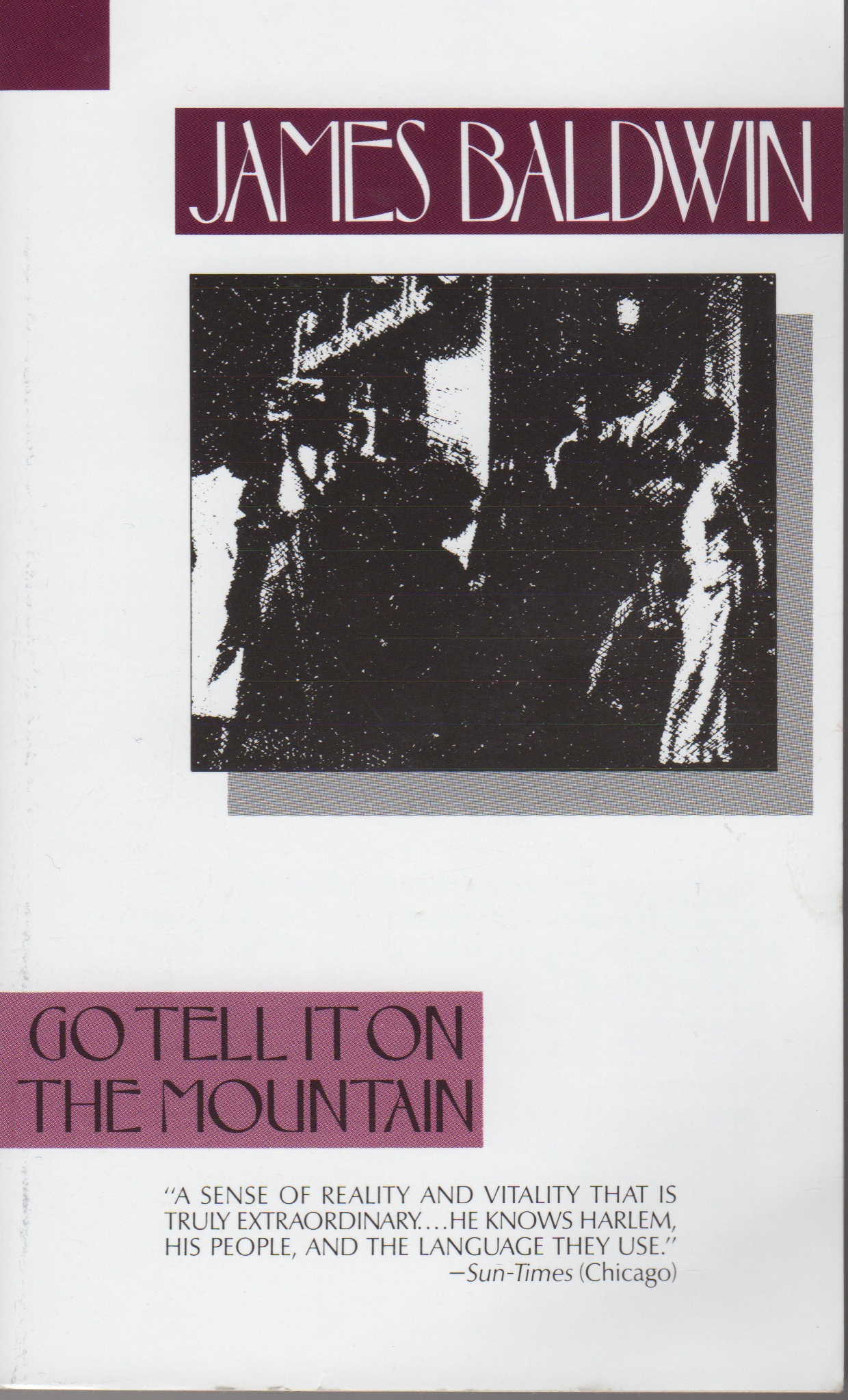
Go Tell it on the Mountain by James Baldwin (1952. Bantam. ISBN 978-0-440-33007-3)

The term “angry black man” has a pejorative tone to it these days. There is, in a certain segment of our American population, a brooding fear of inter-city youth of color who wear their pants on the ground, ball caps unbent and cocked to one side, and show the waistbands of their boxer shorts as a badge of honor as they walk down the hot sidewalks of summer. James Baldwin, one of America’s premier literary figures of the last half of the 20th century, was black. He also wrote one hell of a debut novel, Go Tell it on the Mountain, revealing and reflecting nearly sixty years ago (just before the U.S. Supreme Court issued its decision in Brown v. Board of Education)  on where some of that anger comes from.

The novel depicts the life of Johnny, his younger siblings, their mother, and their father, a fire and brimstone preacher. Within its slender confines (the book comes in at 262 pages in mass market paperback; maybe 60,000 words), Go Tell it on the Mountain doesn’t seek to answer all the questions about race in America. And it doesn’t attempt to explain the forces behind black migration from the south to the urban centers of the north. But what it does do is depict the frustration, anger, resentment, and complex religious tension of African Americans as they sought a better life away from the geographic roots of their enslavement.

This is a complex familial story filled with intensely drawn characters, believable plotting, and great dialogue. The evolution of Gabriel (the preacher) from scalawag to man of God beneath the scrutinizing eyes of his sister Florence, is masterful and memorably wrought; revelatory without being predictable.

A true American classic. For more about the author, James Baldwin, go to http://www.pbs.org/wnet/americanmasters/episodes/james-baldwin/about-the-author/59/.

5 stars out of 5.

If you’re interested in reading literature set around African American characters, you might want to follow up a reading of Go Tell it on the Mountain by buying a copy of my novel, Esther’s Race either from this website or from the usual suspects. You can read more about Esther DuMont under the “Books” tab on the dashboard above.

Peace.

Mark


Posted in Books | Comments Off on Classic Black Lit

The Travelin’ Trio

Hackensack Art and Book Festival (8/18/2012)


Friday evening. The Pacifica is jammed to the ceiling with my wife’s mosaic benches and tables, cartons of Munger books, and plastic bins. It’s all I can do to save a spot for Jack behind the passenger’s seat. For the first time in years, our teenager is accompanying his crazy aging parents on a sales trip. Our destination: exotic Hackensack, Minnesota for the annual Northwoods Art and Book Festival. Chris, our third son, will be checking on the house while we’re gone and taking care of Jimi Hendrix. Yes, I know, Jimi the musician passed on quite a few years back and likely doesn’t need much looking after at this point. The Jimi I’m talking about is a very neurotic seven-year-old miniature Dachshund, who, if left alone in the house while we’re on the road, would likely pee in every corner of every room to make a point. Hence, the respite care provided by Chris.

After a short detour at the intersection of Highway 2 and 200 that takes us a few miles north of where we want to be, the Pacifica flies over new blacktop down 200 through Jacobson, Hill City, and Remer. We roar past the shores of Leech Lake, into Walker, hang a left on Highway 34, and then pass through Akeley and Nevis before pulling into Park Rapids.

“I’m not sure if I made the reservation at the AmericInn or not,” I say to my Rene’ as I exit the van.

There was a bit of  a dust up before we left home because I couldn’t find the copy of my Expedia reservation for the hotel. I said some recriminating things to my spouse and youngest son before realizing that I’d left the paperwork in my dad’s car. There was no apology in the wind, only a cessation of the accusations. Turns out, we were at the right hotel. After leaving our luggage in the room, we traipse off to downtown Park Rapids in search of food. We find a good meal at the Good Life Cafe,  a funky little eatery that also has Guiness on tap. What’s not to like?

Rene’ and Jack at the Festival

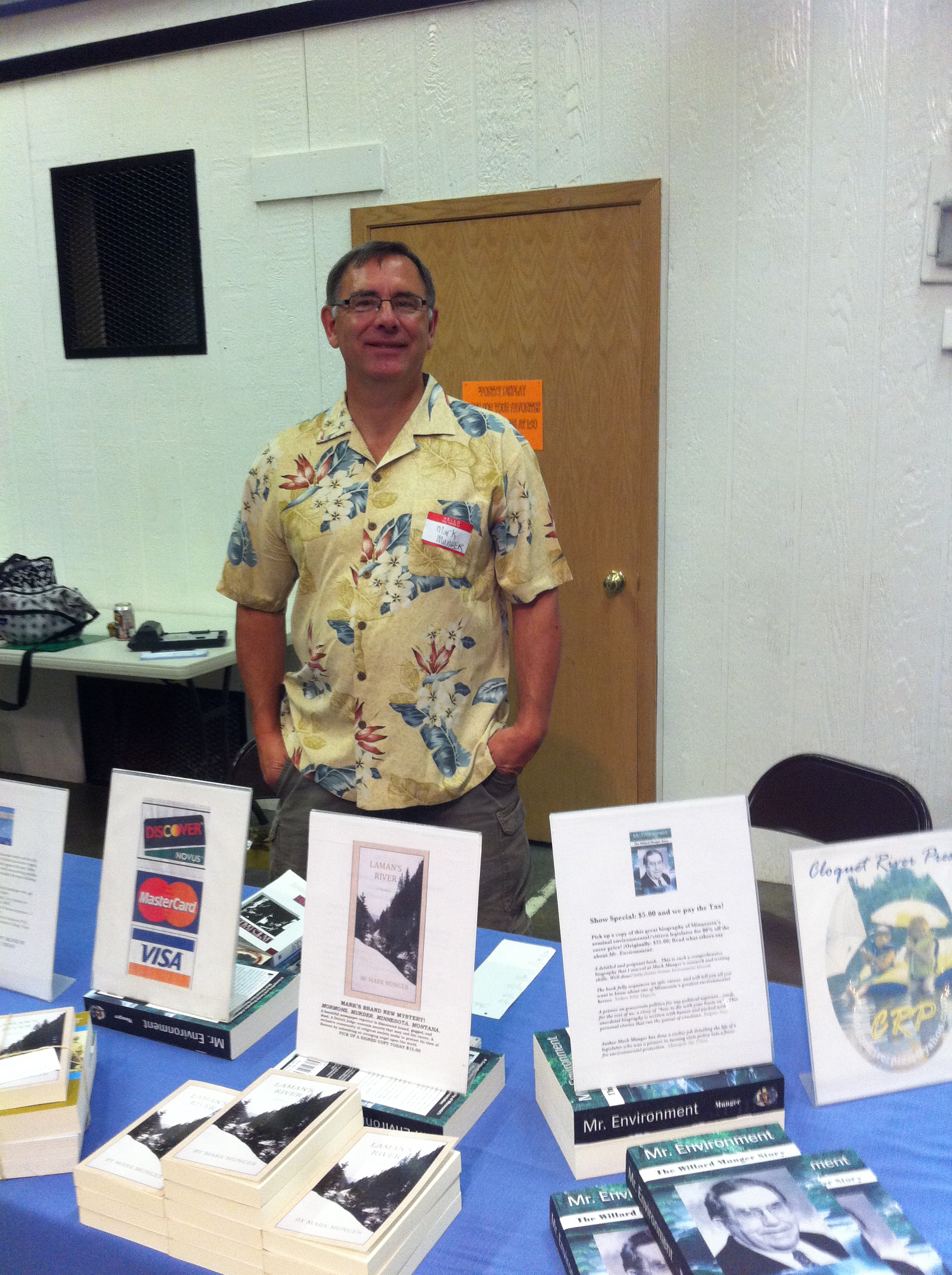
Mark at the Community Center, 2012 Hackensack Festival


Saturday morning. 6am. Rene’ gets up and, uncharacteristically for her, is groomed, dressed, and at the breakfast table on time. Our reluctant fourteen year old, however, takes  a bit more “convincing” to get him up and at ’em.  Eventually, all three of us pile into the Pacifica and head east on 34 towards Hackensack. I’m miffed that we’ll be late, that we’ll encounter sour looks and worse from the perennial ladies who are in charge of such things wherever craft shows are held. Not to worry: we arrive under blue skies and a light breeze with more than 45 minutes to set up our respective displays.

We work as a team and, well before the nine o’clock starting time, Rene’s benches and my books are ready for customers. Jack wanders off to work on his foot skills with a bright blue soccer ball he bought in Montreal a few months back. Rene’ and I sip hot coffee and wait. In between glances at early bird customers, most of whom are just browsing, I dive into Go Tell it on the Mountain, the classic novel by James Baldwin. After a few pages I understand why the book was immediately considered to be a “must read” in American letters. I want to go deep into  Harlem of the early 20th century as painted in prose by Baldwin but darn it, customers actually start wanting to buy books from me!

The day putters on. I sell and sell and sell. Rene’ is having a tougher time getting customers to bite and actually take the plunge and fork over $100-$150 bucks for her work. She hands out many business cards and takes several orders for custom work before finally selling one of her pieces to a local couple. Jack and I help the guy lug the heavy concrete top and legs to his car. “Thank yous” are said and the folks drive off, eager to install a Munger original in the garden of their lake home.

Hackensack Art and Book Festival (2012)

Past customers of mine stop by as I chomp on hotdogs cooked to perfection by the local Elks club. Jack devours two “tacos in a bag”. Rene’ downs a brat before knitting contentedly, working on another sweater for our new grandson, A.J. Between mouthfuls of wiener, I talk to folks who’ve read my books and like what I do. Some buy Laman’s River, my newest book. Others simply want to tell me how much they’ve enjoyed my words. I take such compliments as genuine: There’s no reason for someone who was disappointed in one of my books to search me out and tell me a lie. At least, that’s been my thinking over the twenty years I’ve been doing this writerly thing.

“Oh that Suomalaiset,” an older woman says as she stands in front of my display with her husband, speaking in a very thick European accent that I can’t quite decipher. “That’s the best book I’ve ever read.”

A lump forms in my throat and I stammer out a “thanks”.

By three o’clock, as the show winds to its conclusion, heavy rain is rattling off the metal roof of the community center. Jack and Rene’ and I scurry through the deluge to load the car. Speed is not easy when lugging concrete but eventually, the Pacifica is packed and we’re headed for home after a very successful Saturday in Hackensack.

Peace.

Mark


Posted in Blog Archive | Comments Off on The Travelin’ Trio

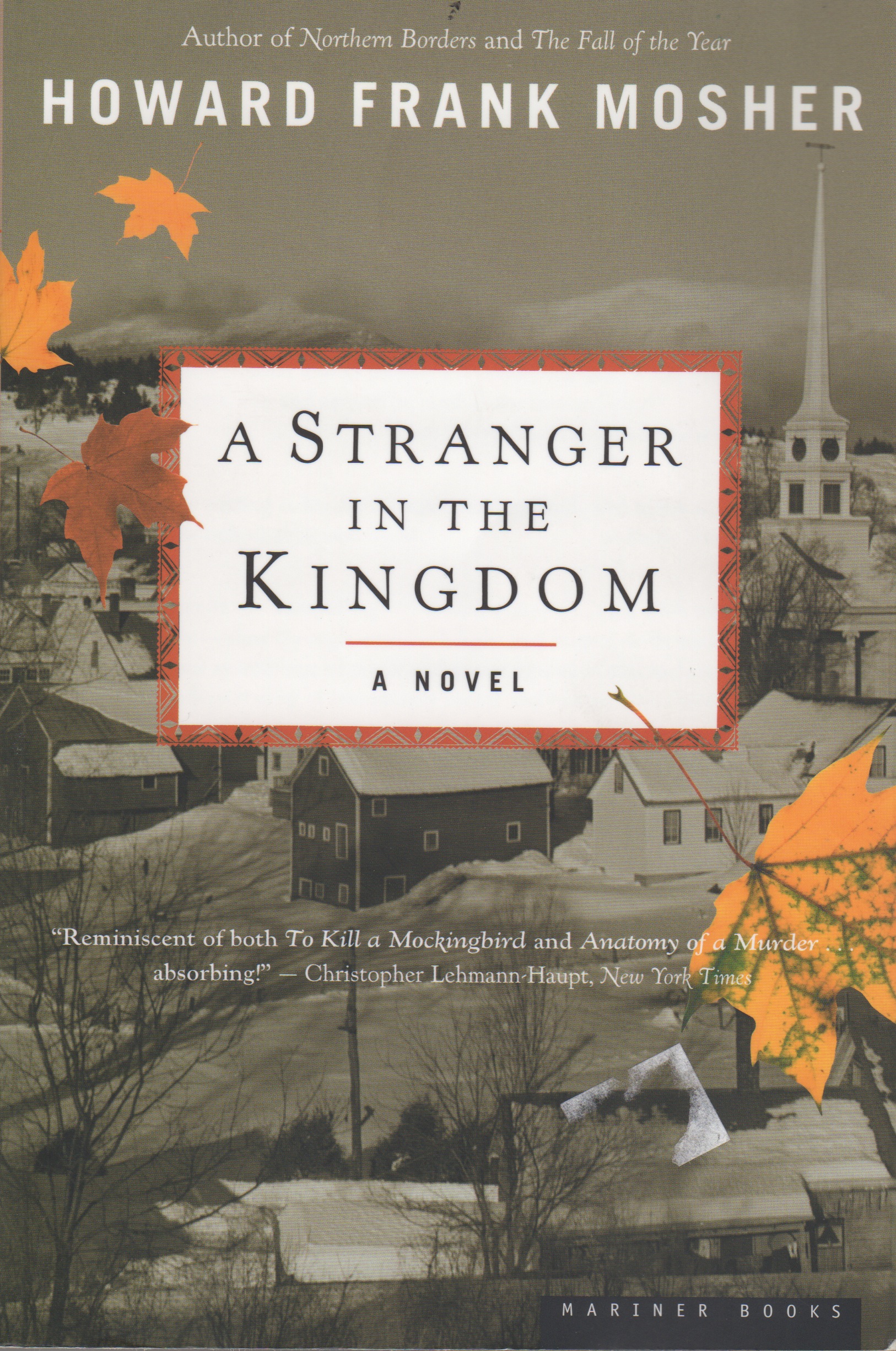
Another Winner from Vermont


A Stranger in the Kingdom by Howard Frank Mosher (1989. Mariner Books. ISBN 978-0-618-24010-4)

As I said before when reviewing Where the Rivers Flow North, Mosher’s short story collection that I also picked up at Green Mountain Books and Prints in Lyndonville, VT on a recent road trip from Minnesota to Maine, I love to buy local fiction when I travel. Sometimes I am disappointed by the quality of the writing. But, often times I am amazed that the author I’m reading hasn’t become more widely known. Mosher falls somewhere in between those two sentiments: His work is well known amongst fans of literary fiction and Vermontaphobes (new word alert!) but not so much by mainstream readers or flatlanders like me. In any event, he is, now that I’ve had the chance to read both his short story collection and his seminal novel, A Stranger in the Kingdom, a writer on par with Faulkner or Cather when it comes depicting landscapes as character.

Here, Mosher puts us smack dab in Kingdom County in the 1950s. Quiet, bucolic, a land of fluttering maple leaves turning crimson amongst the rounded old mountains near the Quebec border, the County would seem to be about as impossible place as there is to find good old fashioned racial tension during the time before Brown v. Board of Education. But when Rev. Walt Andrews, a black Presbyterian minister and his son, Nat, arrive in Kingdom to minister to the local congregation, well, some of the residents of the County aren’t particularly hospitable to the stranger who doesn’t look at all like the residents whose families have lived in the Green Mountains for generations. An exception is Charles Kinneson, editor of the local newspaper and an elder in the church, and his immediate family, including Charlie, his namesake and the town’s playboy, roustabout, and defense lawyer. There’s a cast of other Kinnesons in the story; including the narrator and youngest son of Charles, Sr., Jimmy; and Ruth, wife of Charles, Sr. and mother of the two Kinneson boys; as well as other memorable human characters.

With deft precision, the novel’s plot begins as an unassuming narrative of life in the mountains and ends as a fast paced courtroom drama. There’s the obligatory victim of a heinous crime, Claire LaRiviere, whose brutal death is predictably pinned by Mason White, the rangy, craggy faced do-nothing sheriff bent on re-election, on the County’s only black man. Always the black man. That’s an obvious plot twist any reader will spot coming from a mile away so I’m not spoiling anything here by revealing it. But the arc the story takes once Rev. Andrews is arrested makes for entertaining and fascinating reading despite its predictability.

This is regional literary fiction at its best: not only because of the memorable characters major and minor who are brought to life and propel the story by Mosher’s great skills as a writer; but because the landscape behind the people looms as the overriding character in the tale. A fine piece of writing.

4 and 1/2 stars out of 5.


Posted in Books | Comments Off on Another Winner from Vermont

Saying Goodbye…And Hello.

Four Generations of Munger Boys


A very few of you know I had a pretty bad day a couple of weeks ago. Nothing like illness, or a death in the family. Just a speed bump on the road of life which threw me for a loop for a few days. I tried to grab for the brass ring, so to speak, but like an off balance gymnast, I missed. Anyway, after careening into the ditch (metaphorically), I thought maybe I’d lay low, not attend some functions I’d planned on attending. After suffering disappointment, I wasn’t in the mood for crowds of people, if you know what I mean.

I’d signed up to attend a retirement event for Minnesota Supreme Court Justice Helen Meyer. I don’t know Helen well but, a while back, when the supreme court came to Hibbing High School to hear oral arguments on a case (part of the court’s state-wide outreach), Rene’ and Matt and Lisa and I had the pleasure of sitting with Helen, for dinner at a gathering sponsored by the Range Bar Association. Just the Justice and the Munger Family dining together. She was so gracious, interesting, and kind, well, when I heard she was retiring from the high court and that she was going to be honored at the law school we both attended (William Mitchell in St. Paul), well, I just had to go. And given that my dad also graduated from Mitchell (Class of ’56) and hadn’t been on campus since my graduation (1981), I thought, “What the hell. Why not take the old man on a road trip?”

As I said, I nearly backed out of the deal but, in thinking it through, and given my old man is nearly 85 and doesn’t get out to see his old legal buddies (the few that remain with us), I figured I owed him a trip down memory lane no matter how uncomfortable it might make me feel to be around folks. Turns out, we had a wonderful day.

We arrived early and were given a guided tour of the campus (much changed since my graduation and completely new to my father). Then we stood in line to shake Justice Meyer’s hand, stood in line again for a soda (the old man went with something a bit stronger!) and stood in line for food before the speeches began. Dad reconnected with an old running mate from his day’s as a trial lawyer, talked at length to another Twin Cities attorney with Duluth roots, and met most of the current and former supreme court justices in attendance. I could tell from the omnipresent smile on Dad’s face he had a great time.

After we said our goodbyes and I punched in an address in Fridley, we zoomed off in my Pacifica to attend another event, the retirement of musician, friend, and fellow district court judge, Don Venne. There was only one glitch: Maggie, my ever faithful built-in GPS, steered us to the “new” Central Avenue NE when the Shoreview Supper Club is located on the “old” stretch of Central. The detour wasn’t long: I actually did the unthinkable for a male-I asked someone for directions! In any event, we said hello to Judge Don, ordered a libation, and sat and had a wonderful conversation with Judge John Hoffman and his wife about politics in present-day America, a topic my old man could expound upon for hours.

As the sun was setting behind the western treeline, casting oranges and reds over the lake next to Highway 65, the Pacifica pulled out, heading north, towards home. I was glad I’d swallowed my pride and taken the ride with Harry. In the process, we honored two very fine jurists and made some memories between father and son. And that’s never a bad thing to do.

Peace.

Mark

Posted in Blog Archive | 2 Comments