A.J.’s Big Adventure, Part 2.

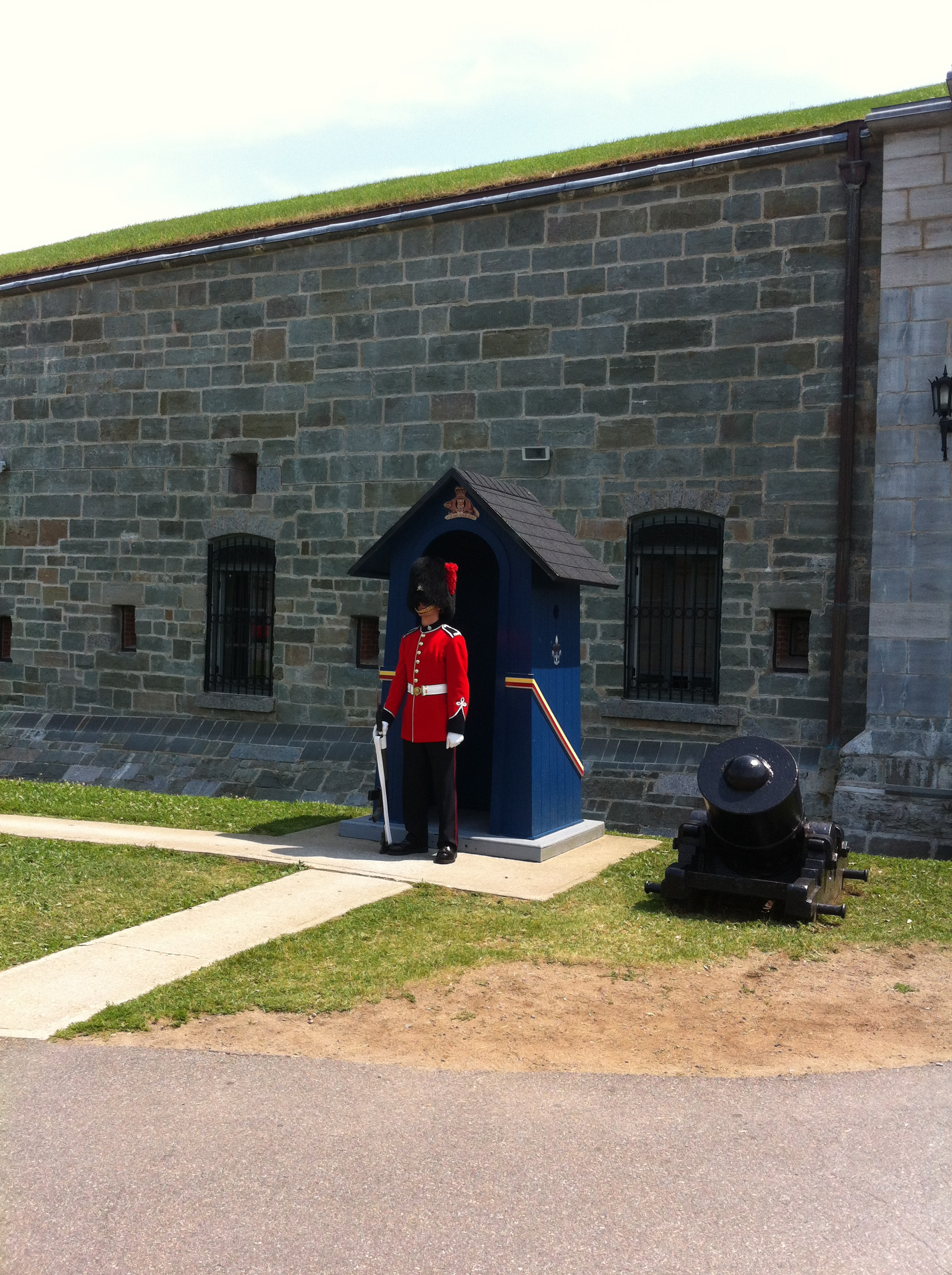
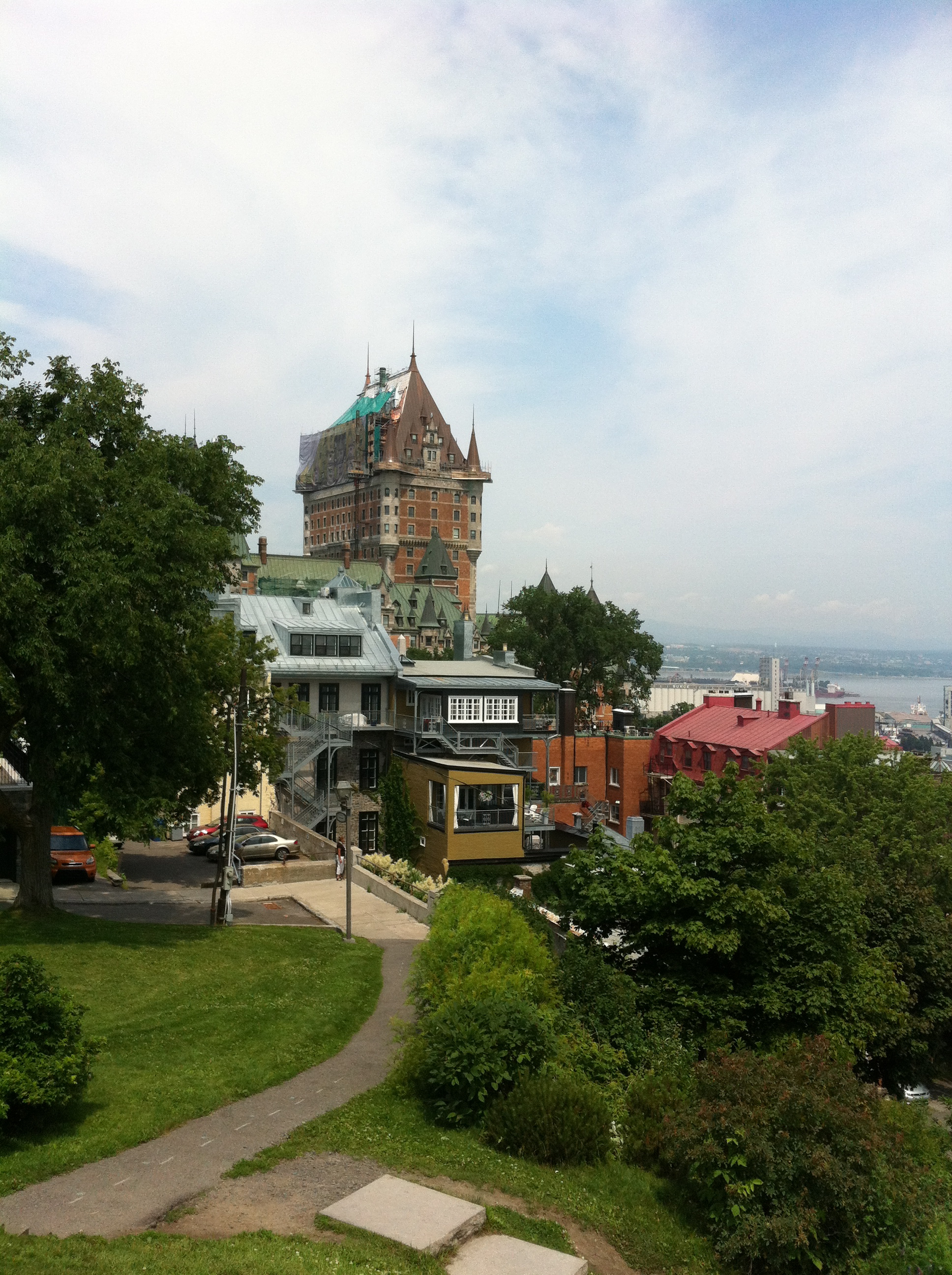
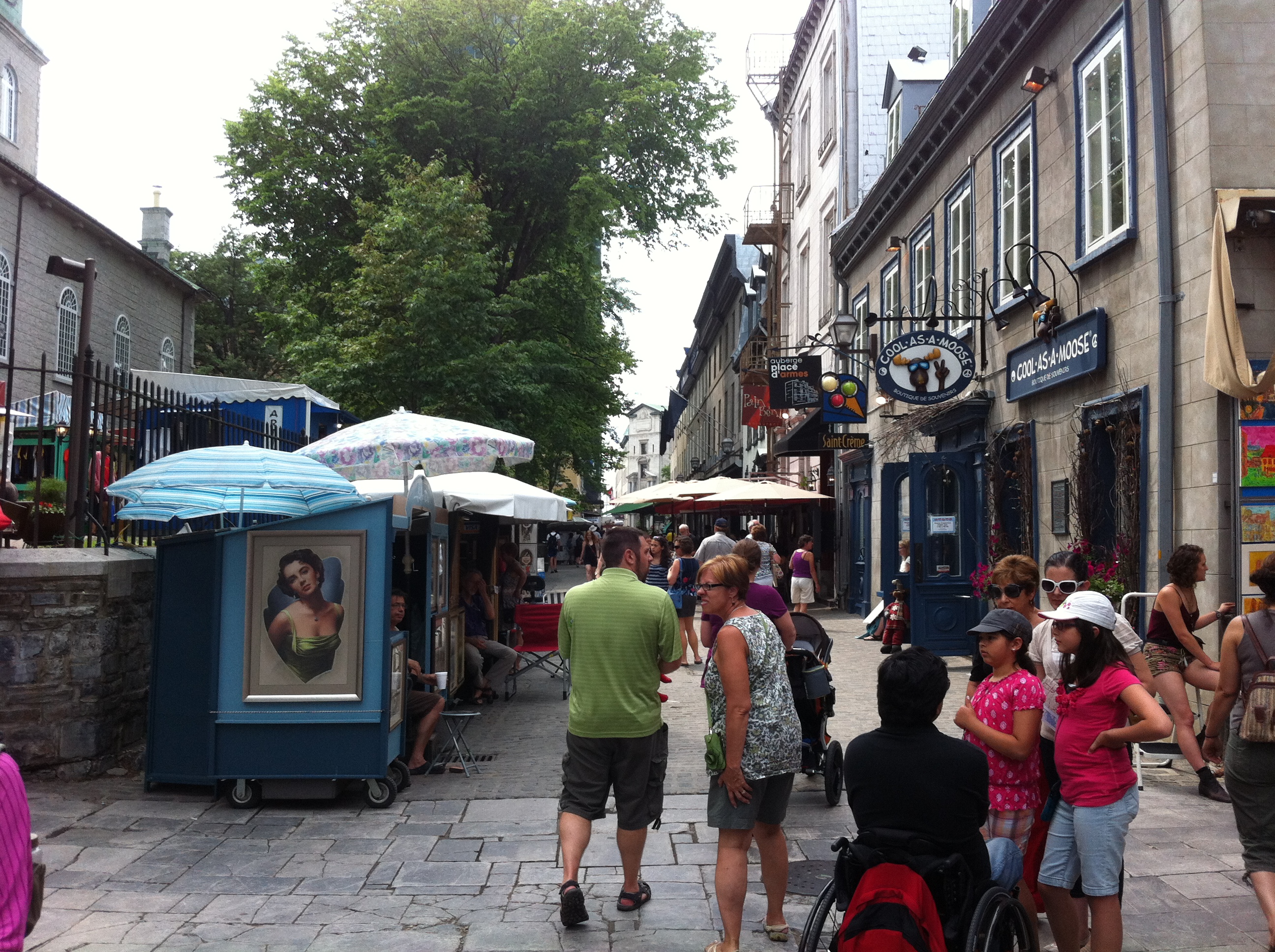
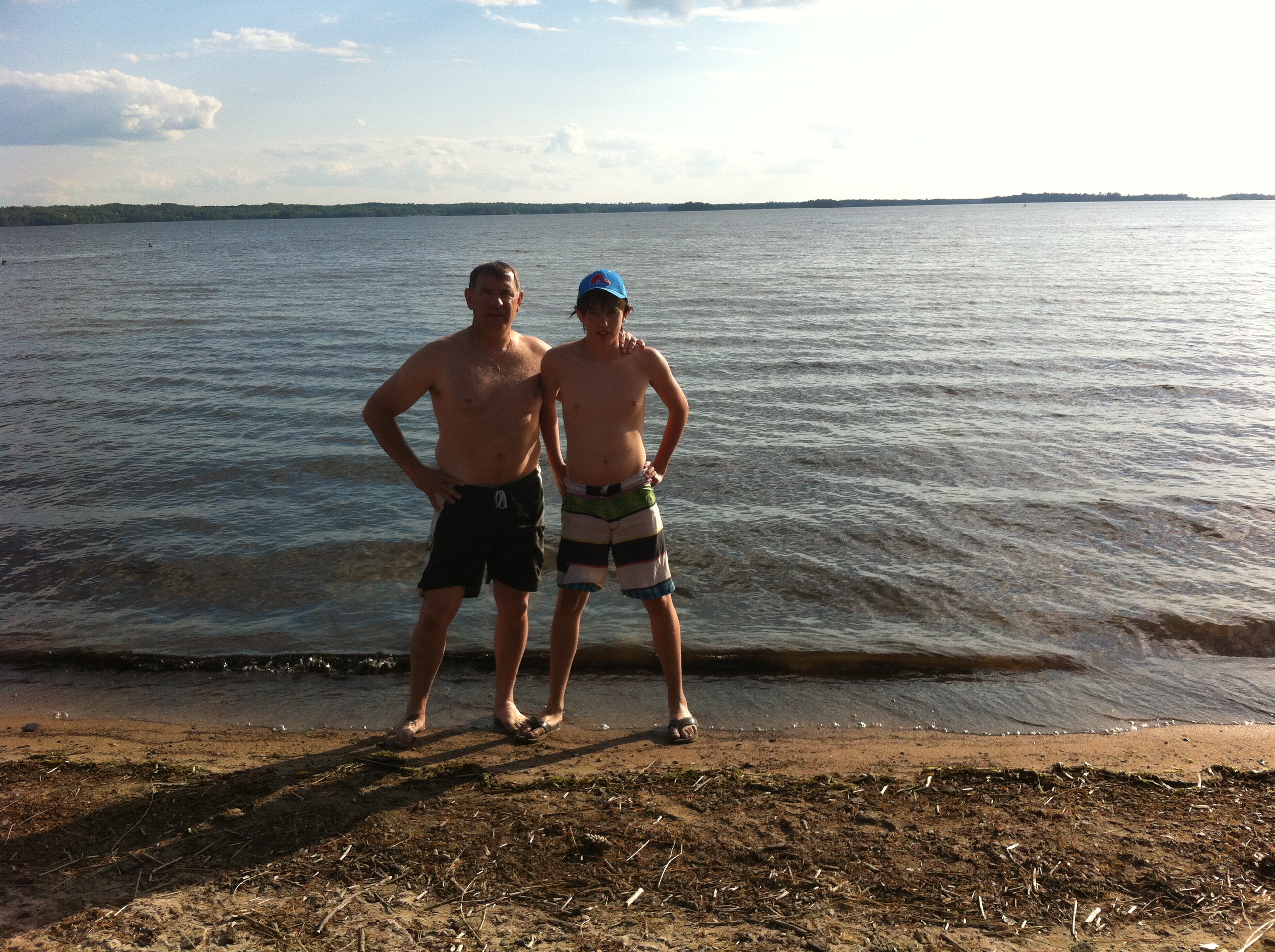
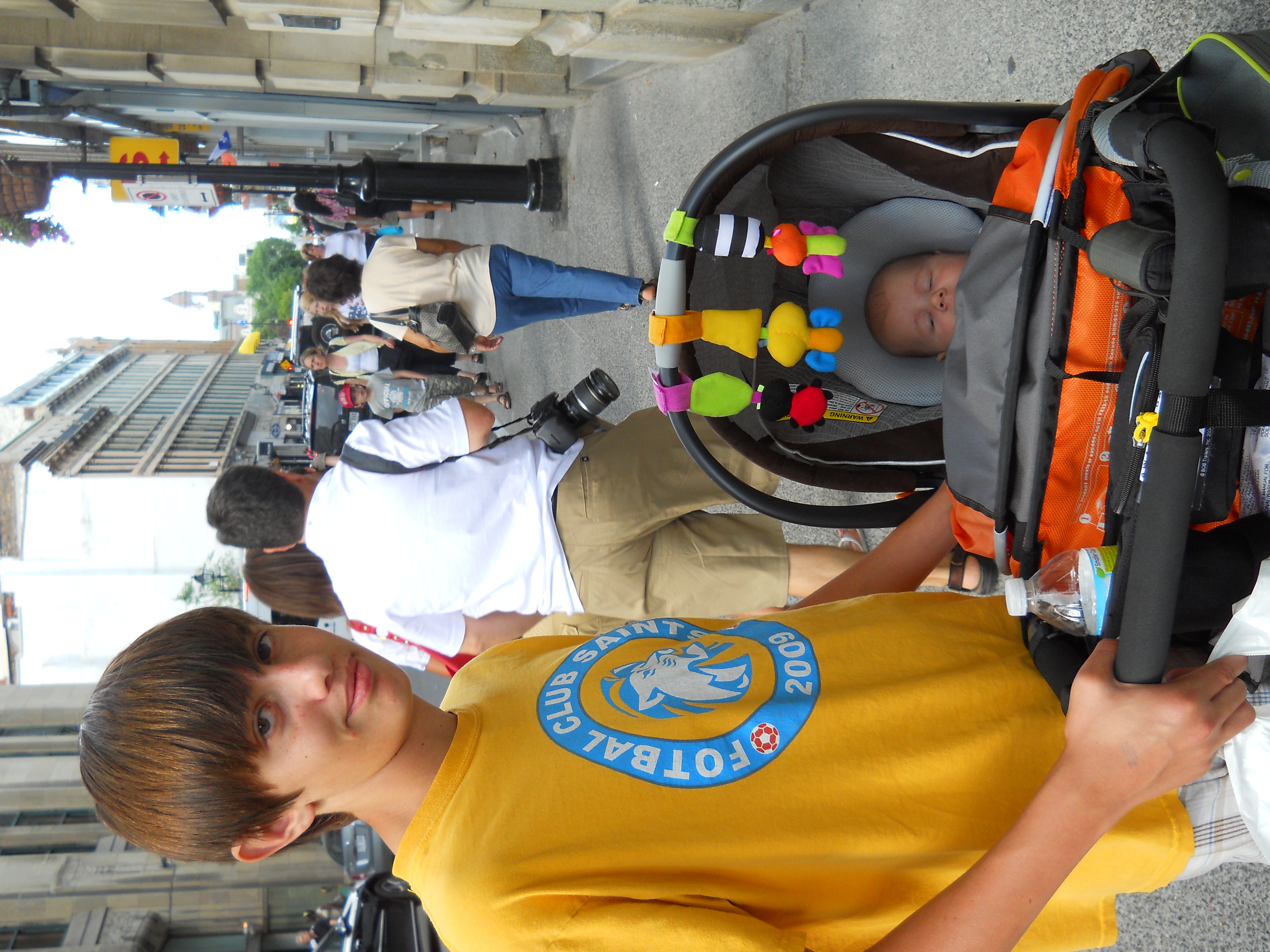
Uncle Jack and A.J. in Montreal


Leave it to me to find a bookstore in the middle of rural Vermont. Really, it wasn’t intentional. It’s just that, well, when Rene’, Jack, and I stopped for lunch in tiny Lyndonville, Vermont (population 1,227), Green Mountain Books and Prints (http://www.greenmtnbooks.com/), the old retail space crammed to the ceiling with used and select new books from the region, well, I just had to stop.

“Mark, where were you?”

Rene’ had wandered off down the street looking for food. Now, to be clear, I did tell her I was going to “check out” the store. So you would have thought she understood that meant, “browse long enough to buy a book or two.’ Apparently there was a miscommunication.

“At the bookstore,” I said, holding up a paper sack with two new regional novels I’d just purchased from the store’s owner. “I told you…”

“There’s a restaurant across the street,” my wife said with disdain. “I’m hungry.”

Jack shook his head when I looked to him for help. He’d been in the store too but hadn’t bought a thing. I was looking for backup. I got nothing.

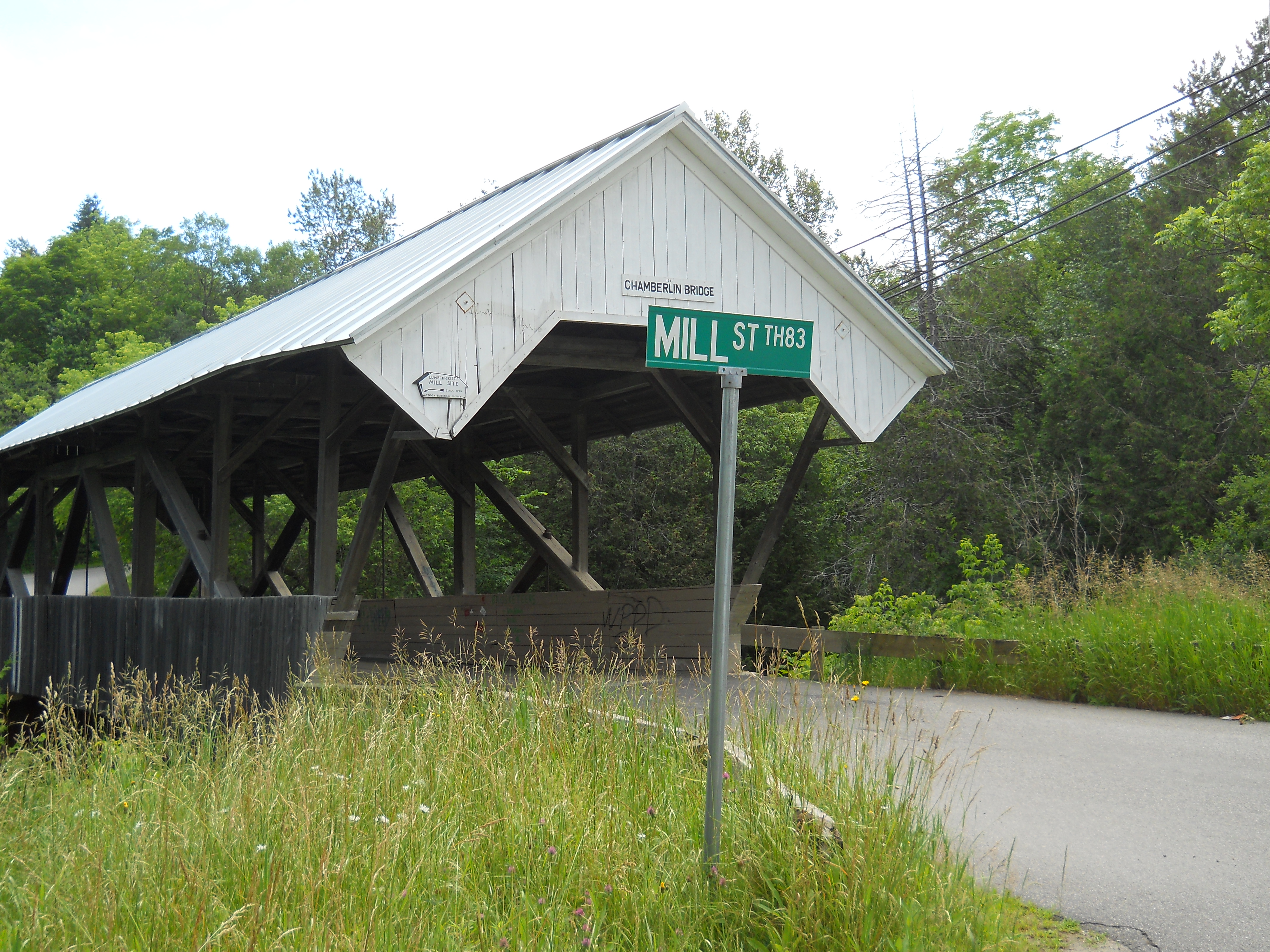
Being touristy in Vermont requires at least one stop at a covered bridge. After connecting with Matt and Lisa in the Suburban (their GPS took them through New Hampshire on the way to Maine; Maggie insisted we drive through Vermont), we found a bridge just outside of Lyndonville and snapped a few quick photos.

Covered Bridge, Lyndonville, VT

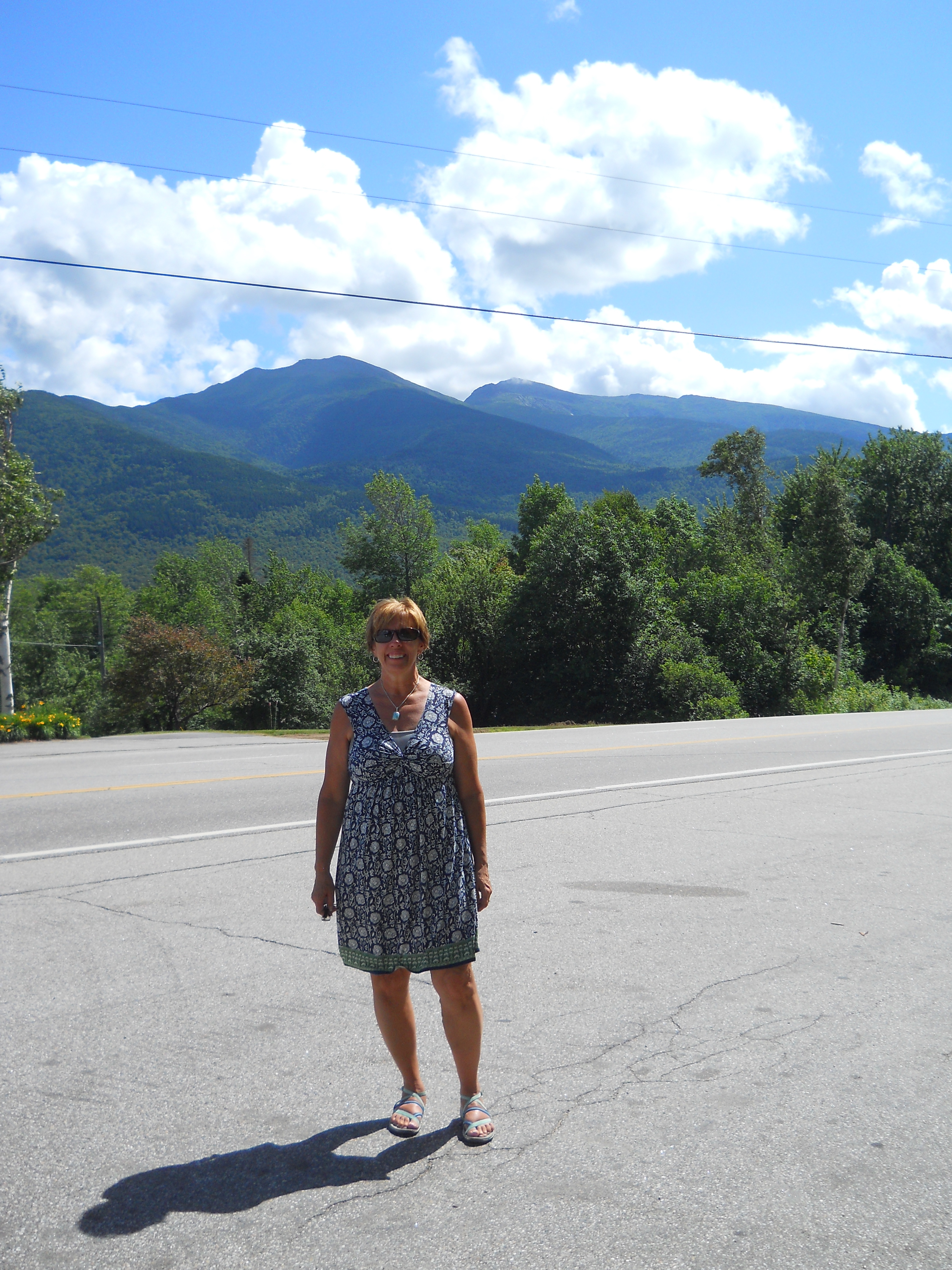
The drive south took us over two-lanes that wove in and out of the peaks of the Green Mountains and into the White Mountains of New Hampshire. Along the way, we slowed for towns, villages, the occasional small city. We crossed streams, and creeks, and, on occasion, rivers. The scenery was breathtakingly beautiful and the day was clear and bright: A great day to be on the open road in America.


Rene’ in the White Mountain

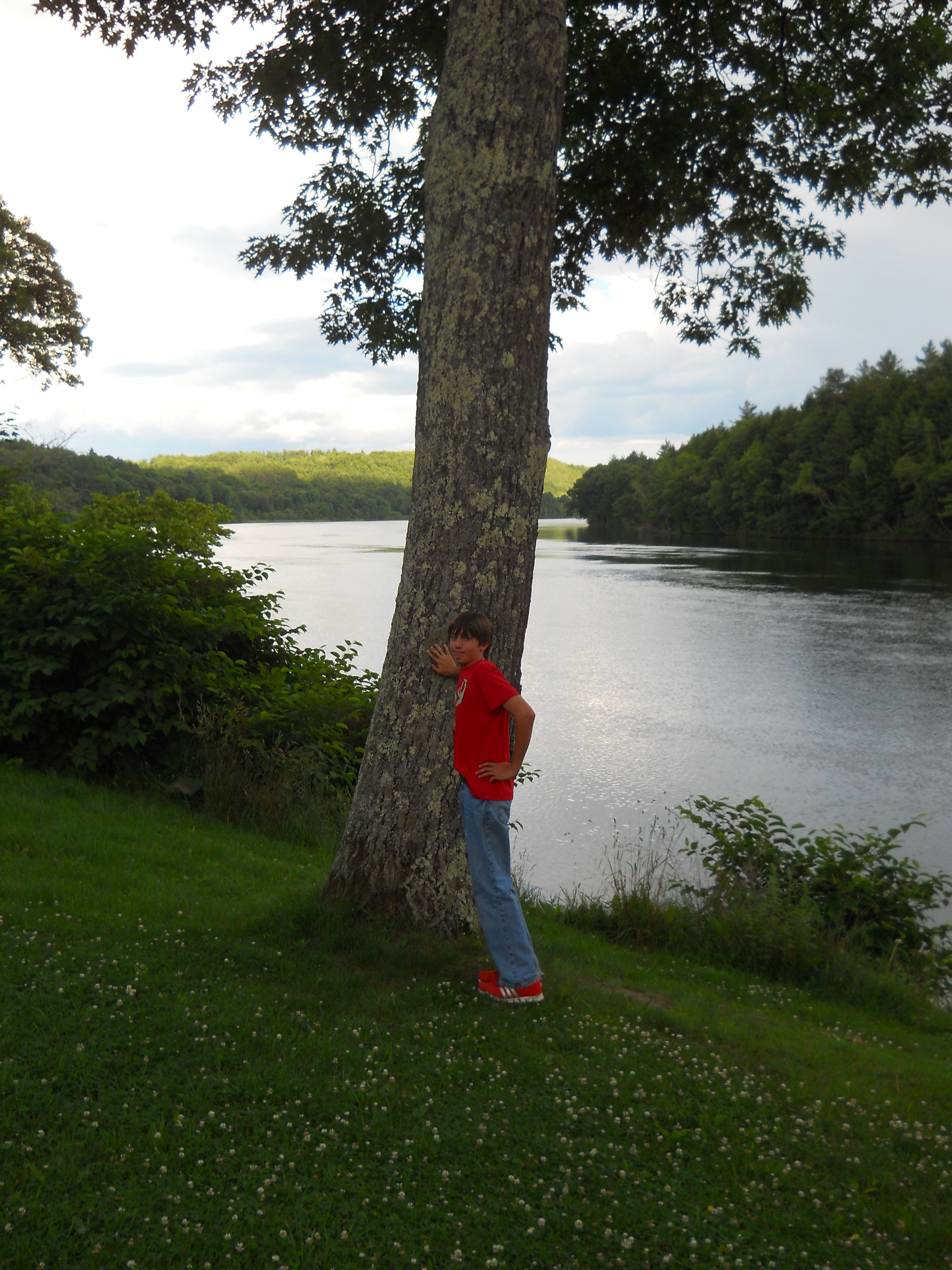
Jack and a very big oak, Androscoggin River, NH

“Where are you guys?” Lisa asked over the cell phone as we were tooling south, on the only patch of freeway on the drive between the border and Bar Harbor.

“Somewhere between Bangor and Bar Harbor,” Rene’ replied. “Where are you guys?”

“At the KOA.”

My wife turned to me with a puzzled look, as if to say, How did they make it there before us? After all, they have a baby to contend with and you, Mark, you have your beloved GPS paramour, Maggie, to guide and direct you. How is it they beat us to the campground?

Rene’ didn’t really say those things, but, after nearly thirty-four years of marriage, I knew what she was thinking.

“Tell them we’ll be there in a half-hour,” was all I said.

The Kamping Kabins at the Bar Harbor KOA were definately top of the line. Matt and Lisa’s Kabin was equipped with a full kitchen, bath, living room, and front porch. Ours didn’t have a full kitchen but did have a full bath, a bunkroom for Jack, a main room with a king sized bed, and a screen porch. Even better, both came with their own fire rings and picnic tables overlooking the Atlantic Ocean. Though not in the town of Bar Harbor, we soon learned, after trying to park Matt’s Suburban in the tiny oceanside resort town full of Independence Day revelers, that the good folks of Bar Harbor supply free bus service to town from all the area motels, inns, and campgrounds. Driving into town became obsolete.

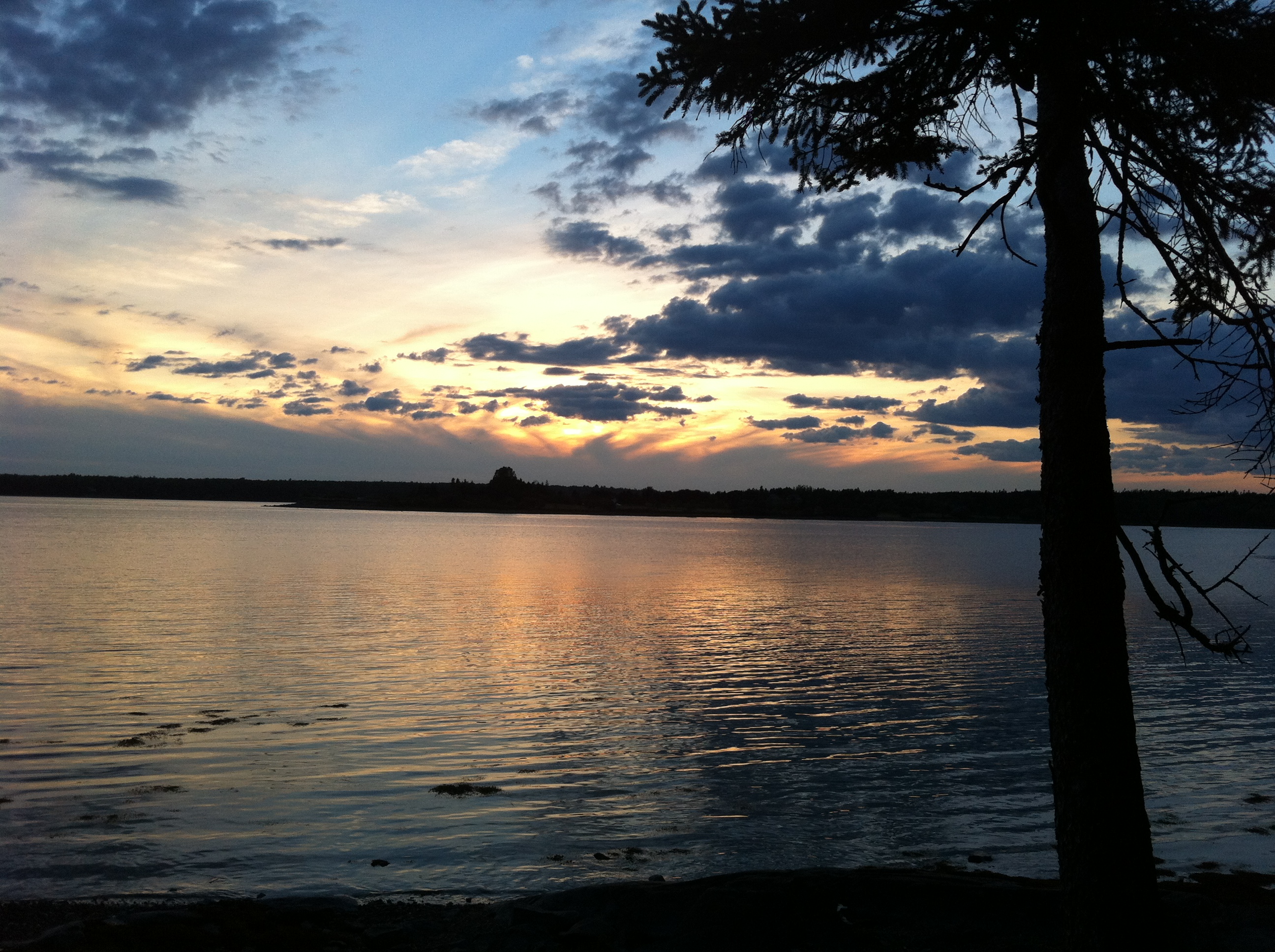
That night, Matt and Lisa treated us to a meal of grill cooked steaks, fresh corn on the cob, cold Maine beer (soda for Jack, of course!), and baked beans. I bought firewood from the KOA store and stoked the fire as the sun set right in front of our cabins over the receding tide of the sea.

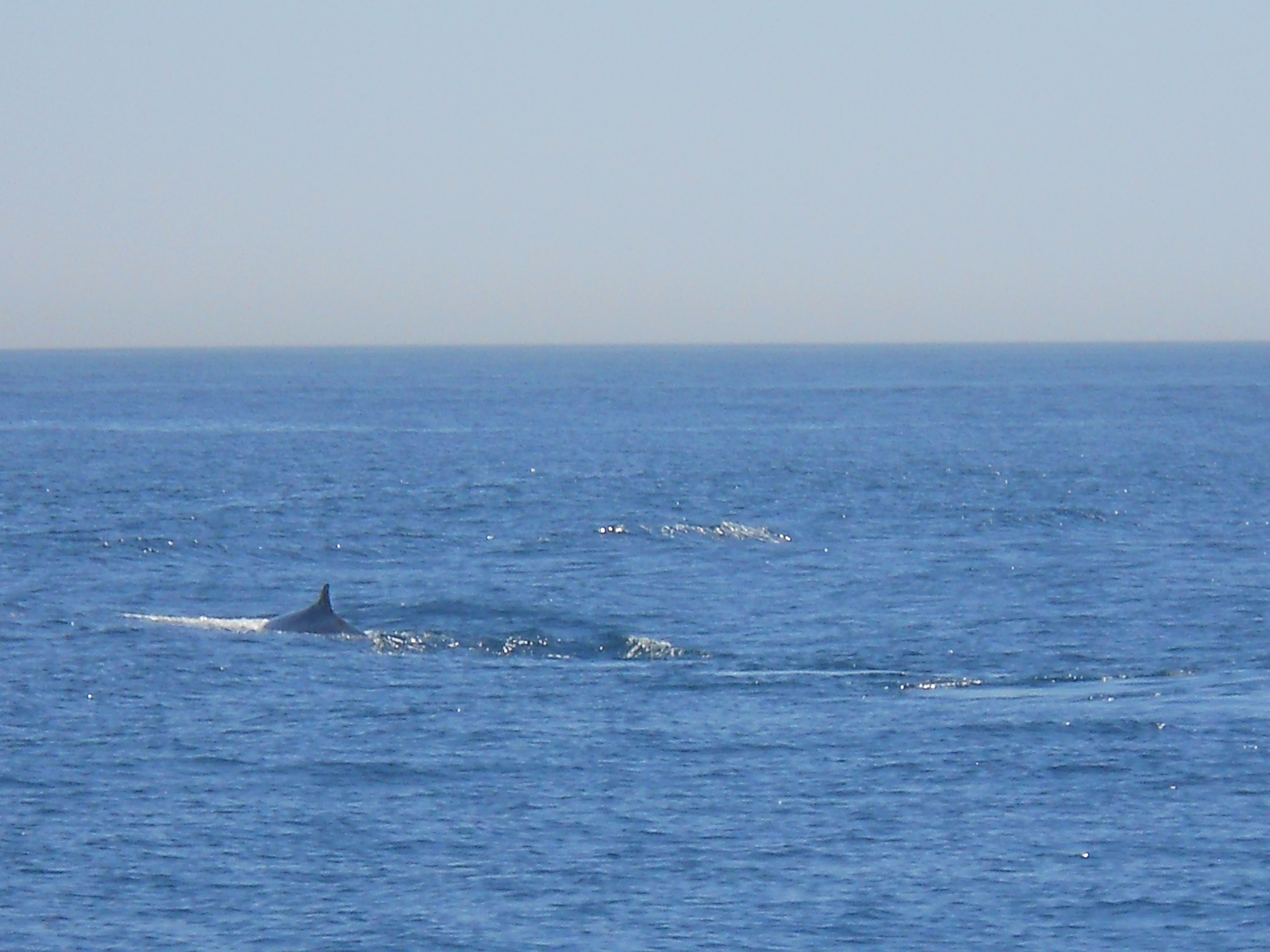
Where to start. Over the next few days, we ate great food (Matt found the lobster he’d been craving at Lobster Fest on the 4th of July in downtown Bar Harbor and even photographed the unfortunate crustacean for posterity!), hiked Acadia National Park, went whale watching (spying a beautiful finback whale, dolphins, seals, and assorted sea birds: Matt and Lisa (with A.J. in our charge) took a separate boat and also saw a humpback whale display its tail), played miniature golf (Dad won, though Jack gave it a go), and took in the beauty of the Maine coastline.

Finback Whale, Atlantic Ocean

“Why are you going this way?” Rene’ asked on the day we drove into Acadia National Park. “The signs for Cadillac Mountain point the other direction.”

I had a plan. I always have a plan. Sometimes I share my plans with my wife and kids; sometimes not. I drove on, remaining silent, which, of course, didn’t end the questions.

“Ya, Dad. The road to the top of the mountain goes the other way,” Jack added, his ability to read roadsigns confirmed in his insistence.

I kept driving.

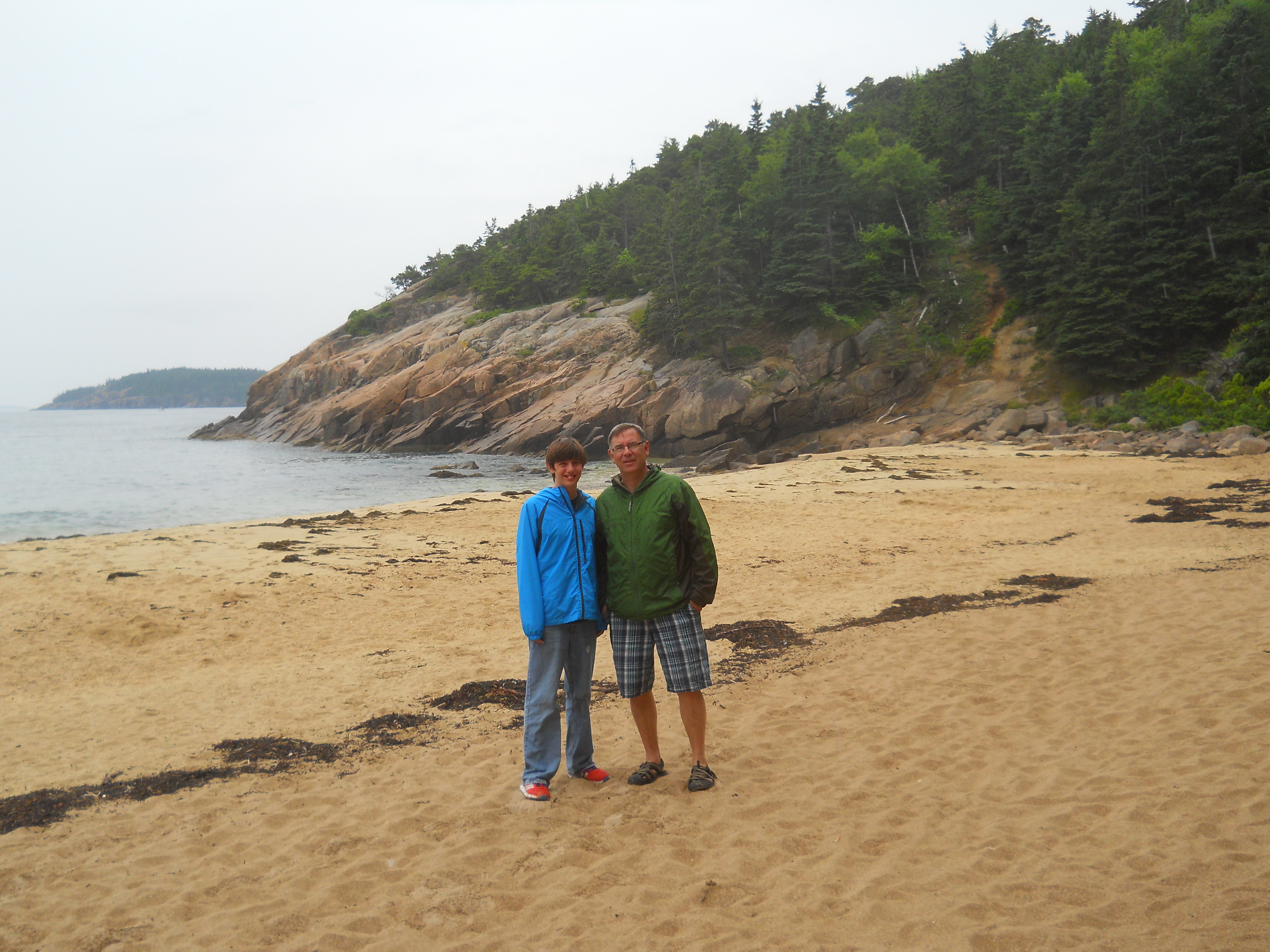
Jack and Mark at Sand Beach, Acadia National Park

Like I said: I had a plan. I wasn’t lost or confused. I wanted to check out Sand Beach, which, in all the brochures was labeled as a “don’t miss” attraction of the park. The brochures were right. On a foggy, cool, misty day, walking the moist sand of the beach was indeed well worth the detour.

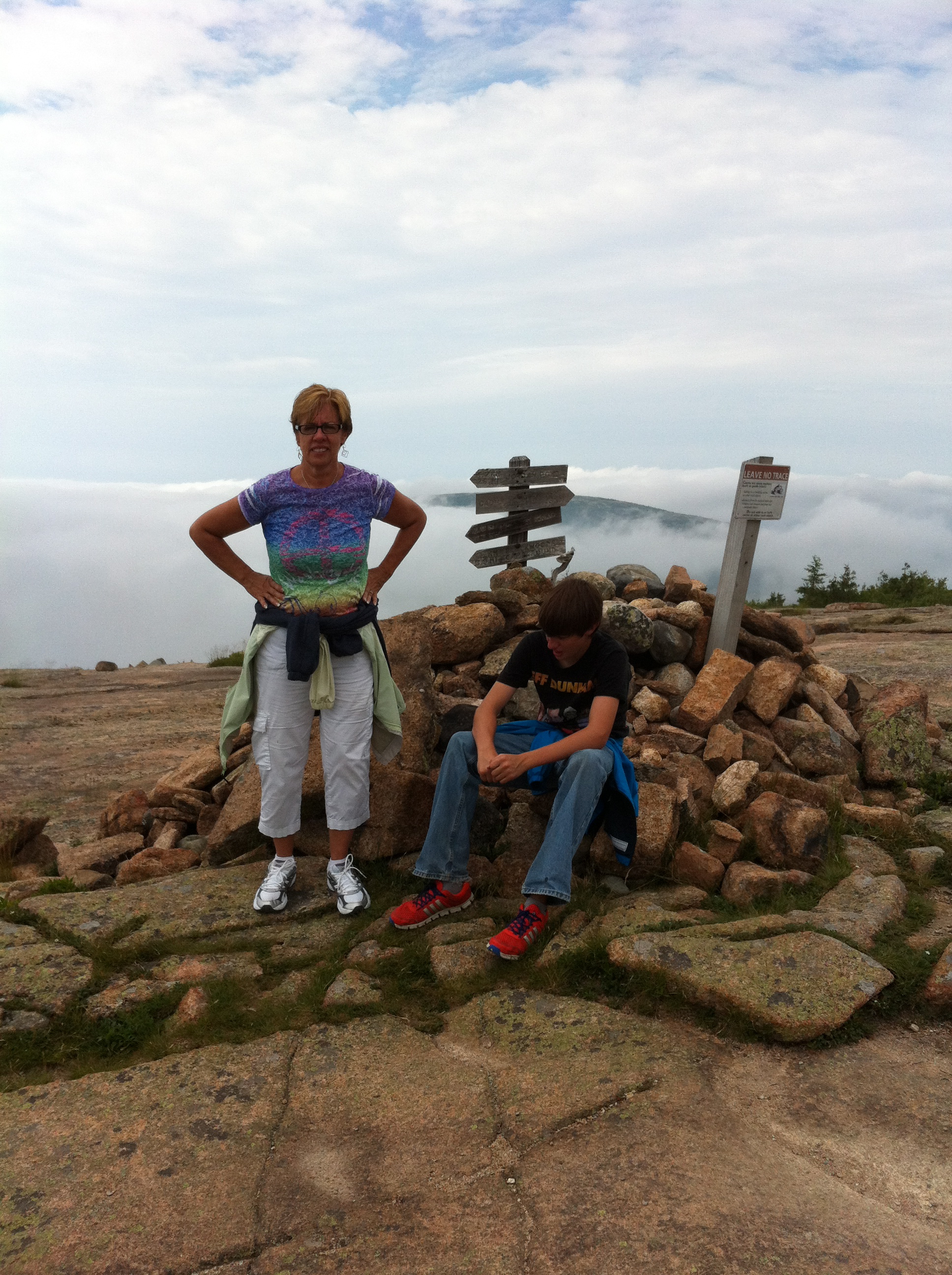
“See?” I said to the skeptics in my Pacifica as we walked past two college aged kids sweeping sand off the stairway to the beach. “Isn’t this cool?” My wife and son didn’t disagree. After a half hour studying the beach and the surrounding hills, it was off to Cadillac Mountain. We took a long hike along the precipice of the peak through barren, rocky terrain, the sun hidden behind thick fog and ponderous clouds until, just as we labored our way back to the car after a four mile trek, the sky began to break and the sun began to assert its power.

Rene’ and Jack, Cadillac Mountain, Acadia


That evening, Matt and Lisa and A.J. opted to watch the 4th of July fireworks from a boat out in Bar Harbor. Rene’, Jack, and I chose to dine at a little bakery and coffee shop off the beaten path before making our way to Bar Harbor’s town square to watch the display. There was a very real possibility that, given the return of the fog, the fireworks would be cancelled. But, in the end, though there was a thin veil surrounding the town, the show did go on. And, with the fog defusing the exploding rockets, what a show it was.


Bar Harbor, ME 7/4/2012


Bar Harbor, ME 7/4/2012


The Author: Looking for Whales

In the morning, we loaded up our cars and began the long trek home by way of Quebec City, North Bay, and Sault Ste. Marie. But more on that in the last installment of “A.J.’s Big Adventure!”

Peace.

Mark


Posted in Blog Archive | Comments Off on A.J.’s Big Adventure, Part 2.

A.J.’s Big Adventure; Or, “Oh Canada!” (Part 1)

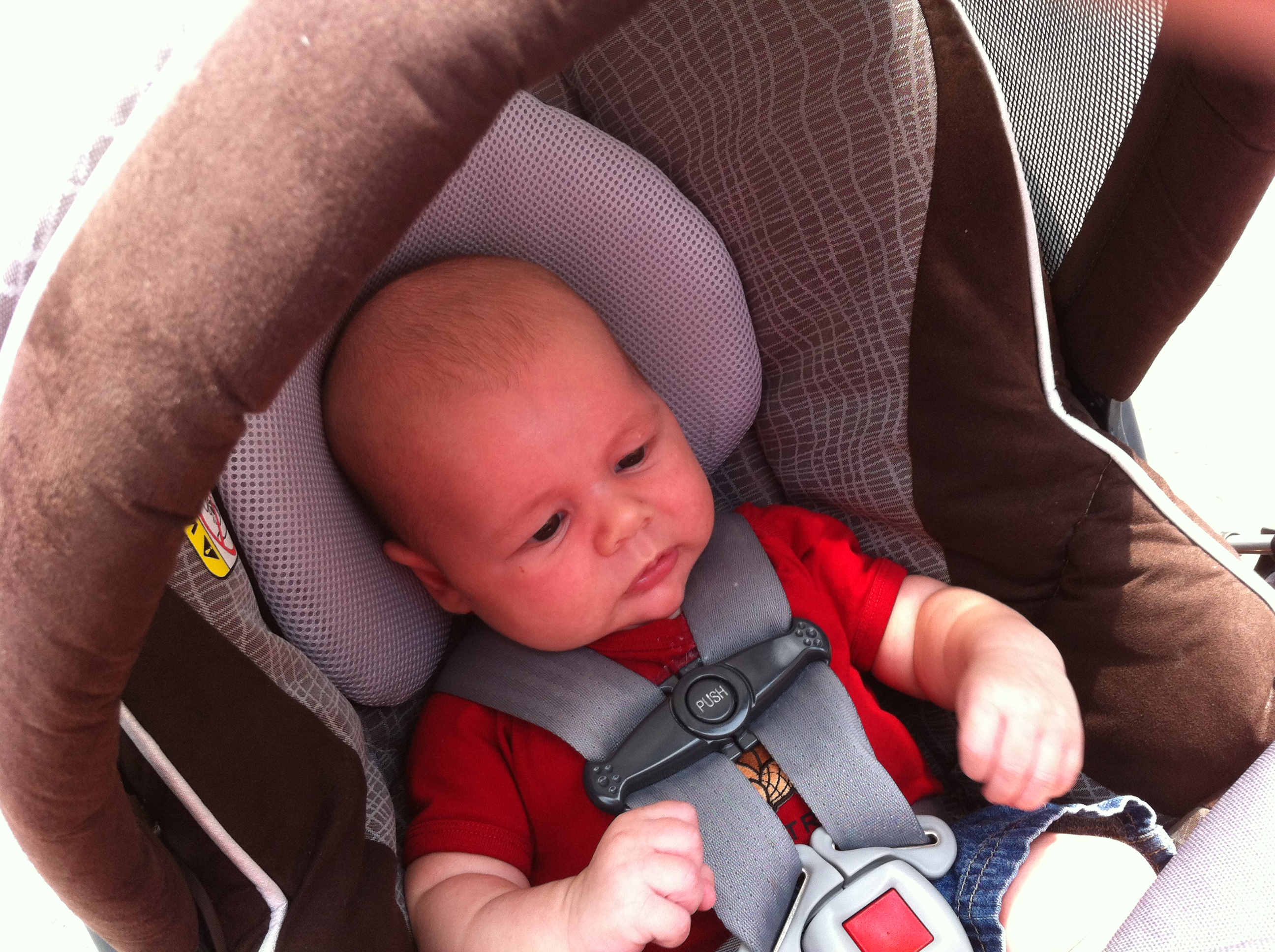
A.J. Gets Ready for his Big Adventure

That’s my grandson, Adrien James Munger, anticipating his first road trip beyond the limits of the state line. From the serious look on his face, he’s obviously worried about traveling with his parents, his paternal grandparents, and his Uncle Jack in two separate vehicles on a journey that will take him through two Canadian provinces and six American states. But, as it turns out, other than a little glitch in Quebec City, A.J.’s concerns proved unfounded.

When my wife Rene’ and my daughter-in-law Lisa came up with their “big idea” to take a road trip through Ontario and Quebec to Bar Harbor, Maine, well, I have to say, A.J. wasn’t the only one who viewed the adventure with a skeptic’s eye. In fact, given that the trip was being planned during the ugliness of this past winter and my grandson wasn’t even out of the womb, I believe that I, not my grandson, was the original critic of this planned excursion.

“Two cars.”

“How’s that?” my wife asked as we considered the route and the cities we’d visit on the trip.

“I will love my grandson or granddaughter to death in the confines of a rocking chair,” I advised, “but I am not driving three thousand miles in a car with an infant. Been there,” I asserted, referencing our own four boys and the countless road trips we’d taken as a family. “Done that.”

So it was that, with A.J. newly arrived and in the process of being breast fed, that the six of us began our journey north, towards Sault Ste. Marie, Ontario. We were shooting for an early departure. There were two problems with our plan: A.J. was hungry and needed to be fed. And so did his dad, my eldest son Matt. So the first leg of our collected trip (Matt and Lisa and A.J. drove their first leg from Hibbing to Duluth) ended at the Duluth Grill in Duluth’s West End. Our tummies and gas tanks filled, we left town a few hours behind schedule.

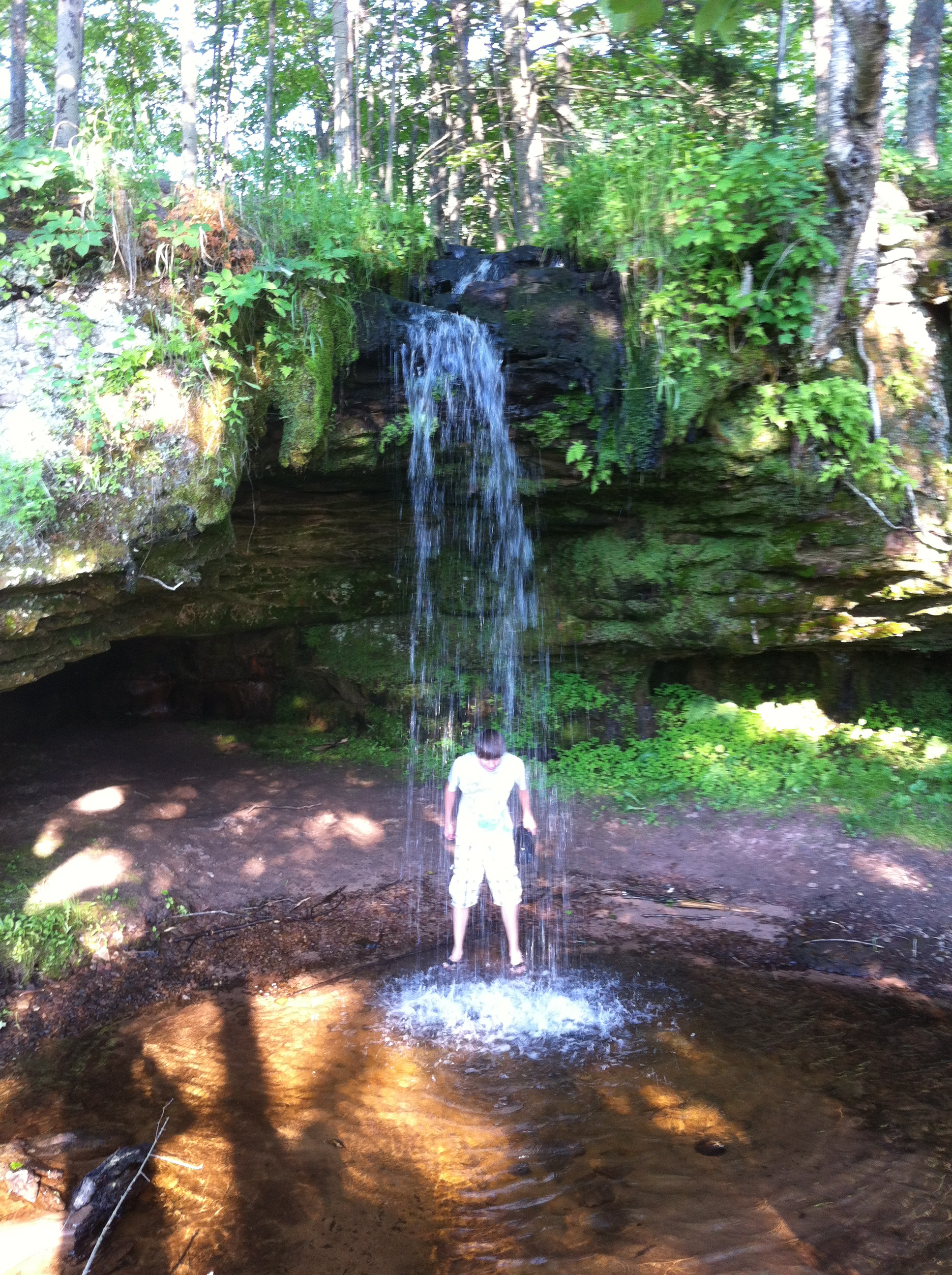
Near Bruce Crossing, MI we chanced upon a tiny stream with a remarkable waterfall that begged inspection. Jack, never one to avoid the water, decided it was a great place to take a quick shower…with his clothes on!

Jack’s Unscheduled Shower

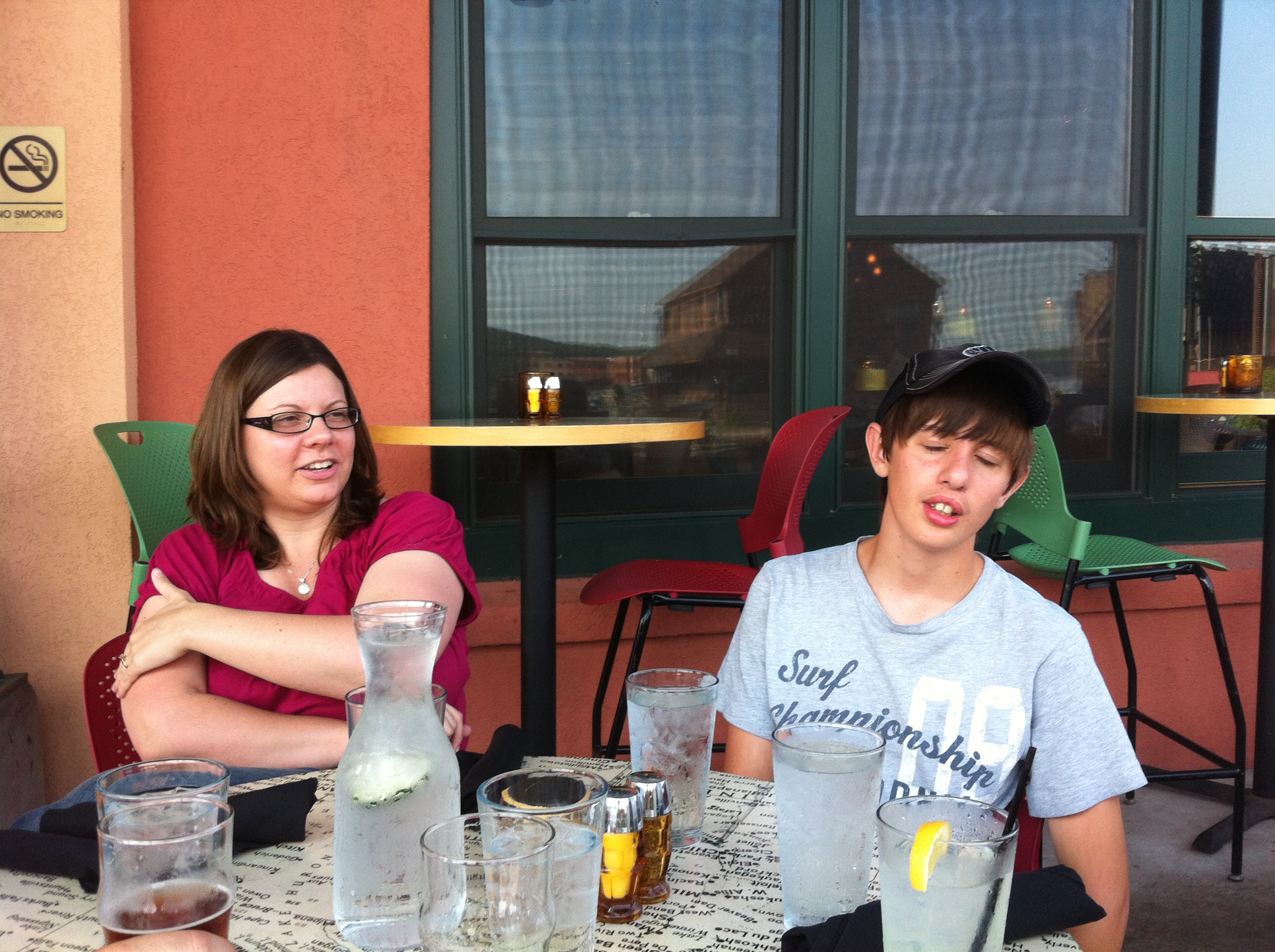
Lisa and Jack at a Bistro in Marquette, MI

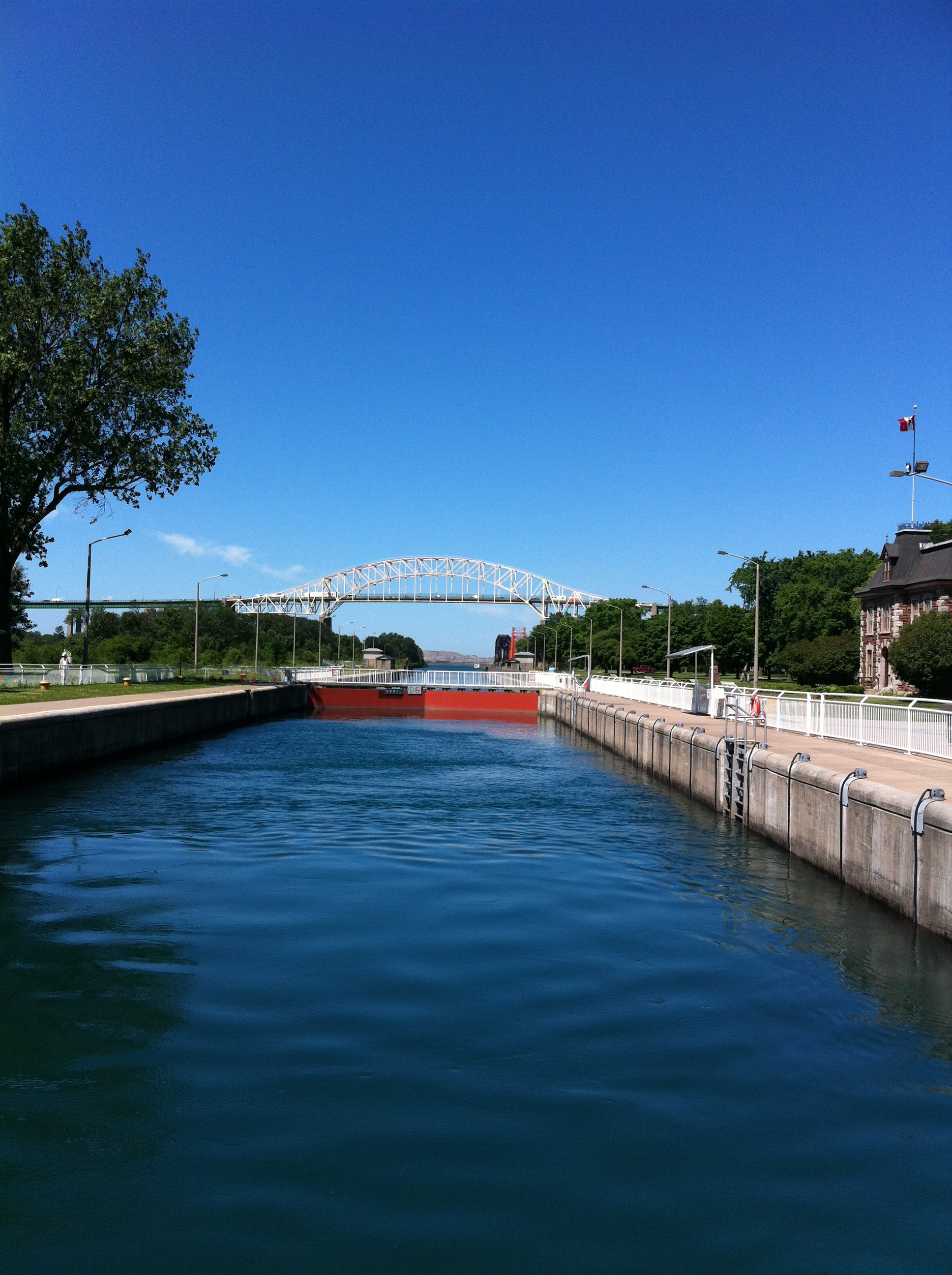
We stopped again in Marquette and spent some time in the park along the waterfront before eating at a local bistro in the quaint old downtown. Then it was back into the Suburban (Matt’s car) and the Pacifica (mine) for the long drive to Sault Ste. Marie. After crossing the International Bridge in a line of cars composed mostly of Canadians returning home, we pulled into the KOA and our waiting Kamping Kabins three hours behind schedule. After a night of rest and a quick shower followed by a MacDonald’s breakfast, Rene’, Jack and I took in the Canadian locks on the St. Mary’s River and walked the adjacent Ojibwe wildlife sanctuary while Matt, Lisa, and A.J. got an early start on the drive to North Bay.

The Canadian Locks at the Soo

North Bay, Ontario proved to be surprising, both in its size and its beauty. I’d never been that far north in central Ontario, and certainly had never stopped at Lake Nippissing.

The town is built right up to the white sand shores of the lake, a body of water that, through the St. Francis River, empties into Lake Huron. We met Matt, Lisa, and A.J. at the Terrace Suites just east of town, our arrival delayed additionally by Maggie’s reluctance to cooperate.

Maggie? Who’s Maggie, you ask? Well, my Pacifica has a built-in GPS display which, in most situations, proves to be accurate. I’ve named this helpful tool, Maggie. Or, when she’s non-compliant and I want her attention, I’ve been known to be call her “Margaret”: As in, “Where the hell are you taking me, Margaret?” In any event, using a GPS that has 2007 data (I assume that’s the age of the information stored in the thing;the car is a 2008 model) doesn’t always jive with present reality. It took several cell phone calls to Matt to sort out just where the Terrace Suites of North Bay was actually located. In the interim, we had a lovely tour of North Bay following Maggie’s lead and Jack learned a few new words from his father.


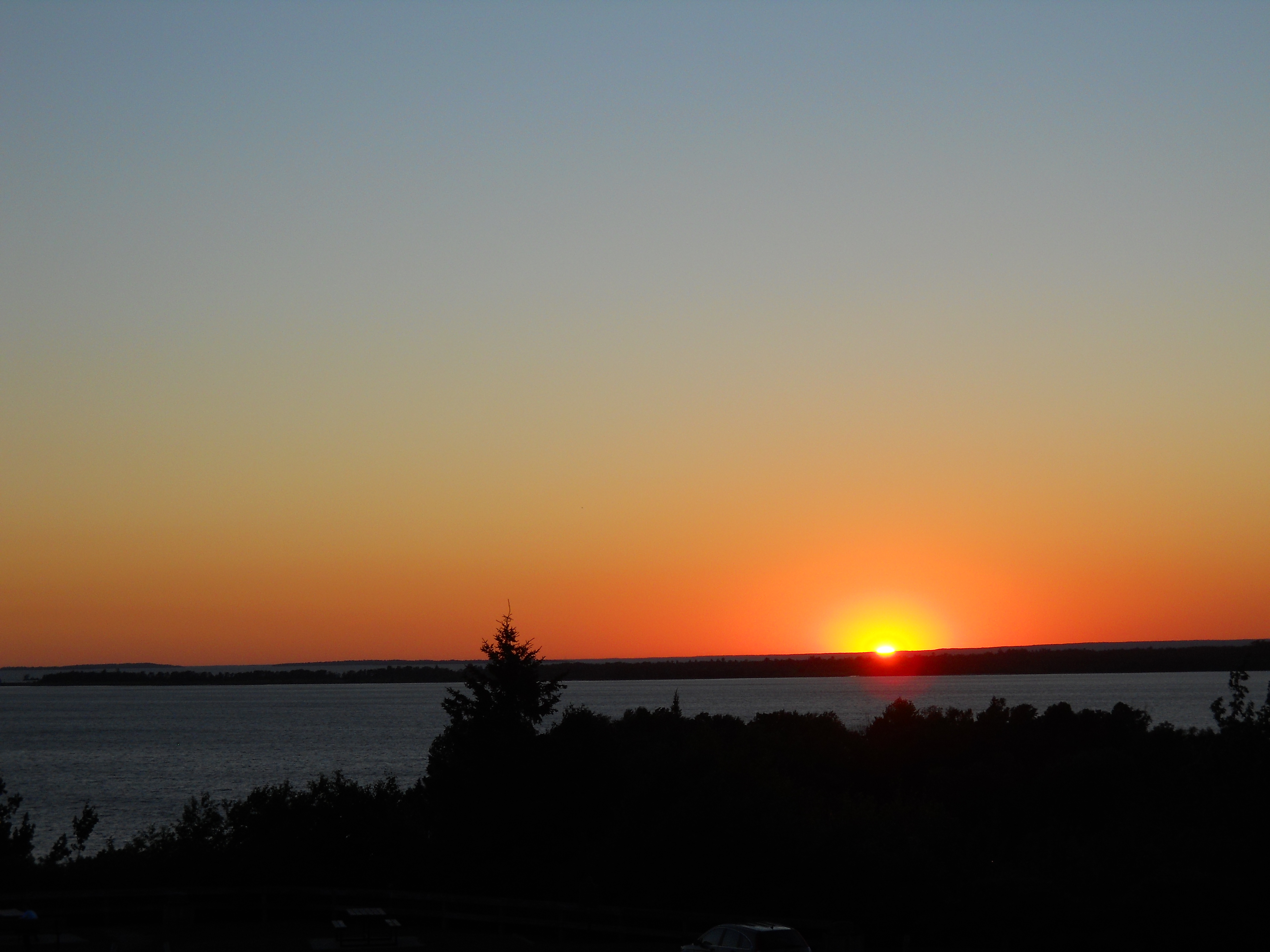
Sunset over Lake Nippissing, Ontario

The next day we covered the remainder of north central Ontario and part of western Quebec before arriving in Montreal. Once situated at the Best Western on the outskirts of that truly international city, Rene’ talked to the desk clerk (thankfully, most folks speak passable English because none of our crew speaks French…a fact which will become important later on in this tale of adventure) and that helpful mademoiselle gave us directions to the nearest subway station.That evening, our third of the trip, while exploring Montreal, we learned the following: We had landed in one of the largest cities in Eastern Canada smack dab in the middle of preparations for Canada Day so there were hordes of people everywhere; and we also learned that Lisa isn’t all that fond of crepes.

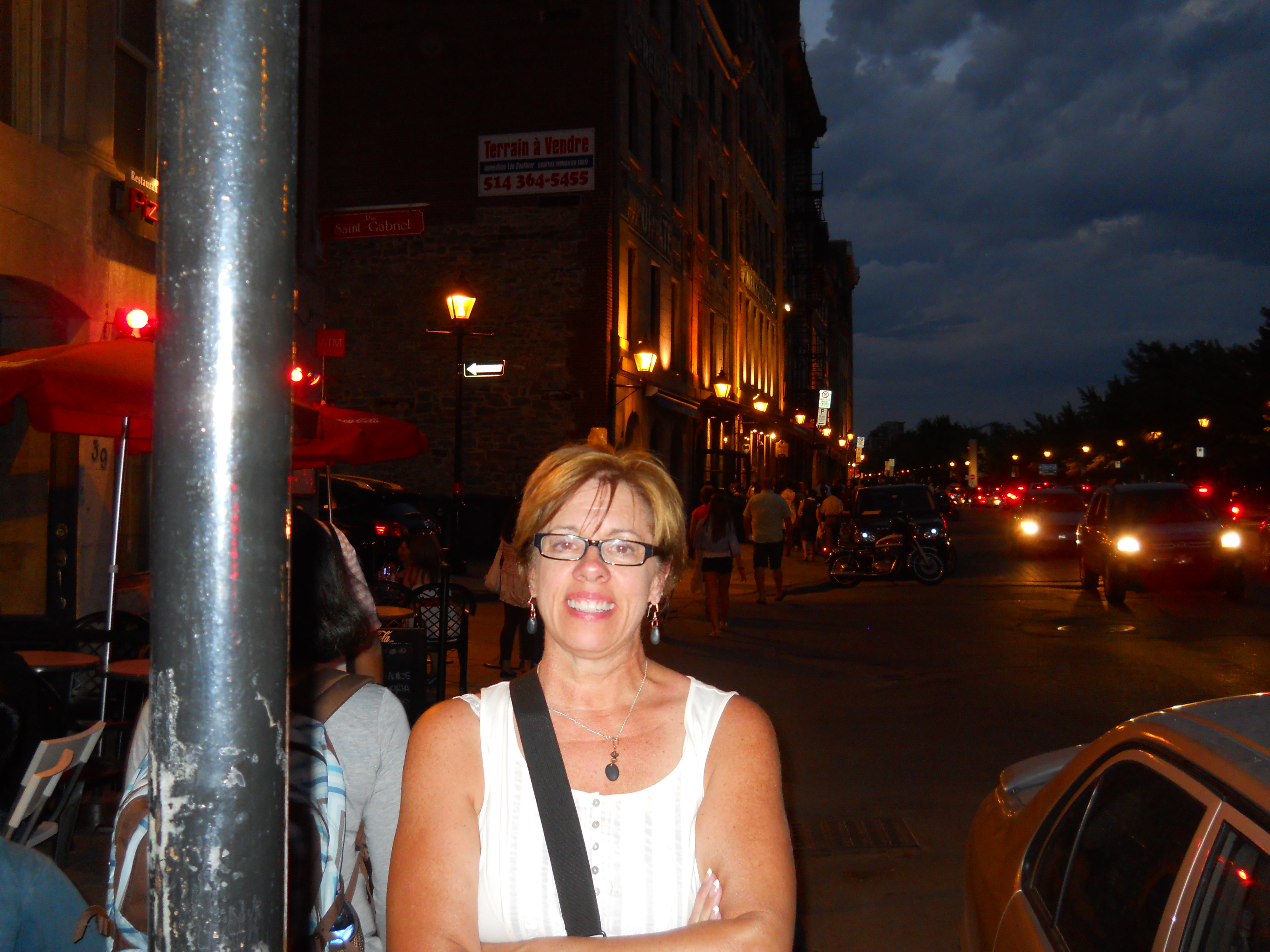
Rene’ in Old Montreal at Night

Why is it that some big cities are smart enough to include rail service, either subways or trains, from the ‘burbs to the center city? My family, on various trips over the four decades we’ve been parents, has taken trains in Montreal, Chicago, Washington D.C., and, with the addition of the light rail in the Twin Cities, from Bloomington to the Dome for Twins games. It’s an easy way to avoid parking headaches and, as you’ll learn in part two of this travelogue, something that would have saved us grief in the capitol city of Quebec. Even traveling with a newborn, the subway in and out of downtown Montreal, on a night filled with drunk Canadians (including a group on the train who were downright obnoxious) getting tuned up to celebrate their nation’s freedom from the Queen, mass transit was definitely the way to travel.

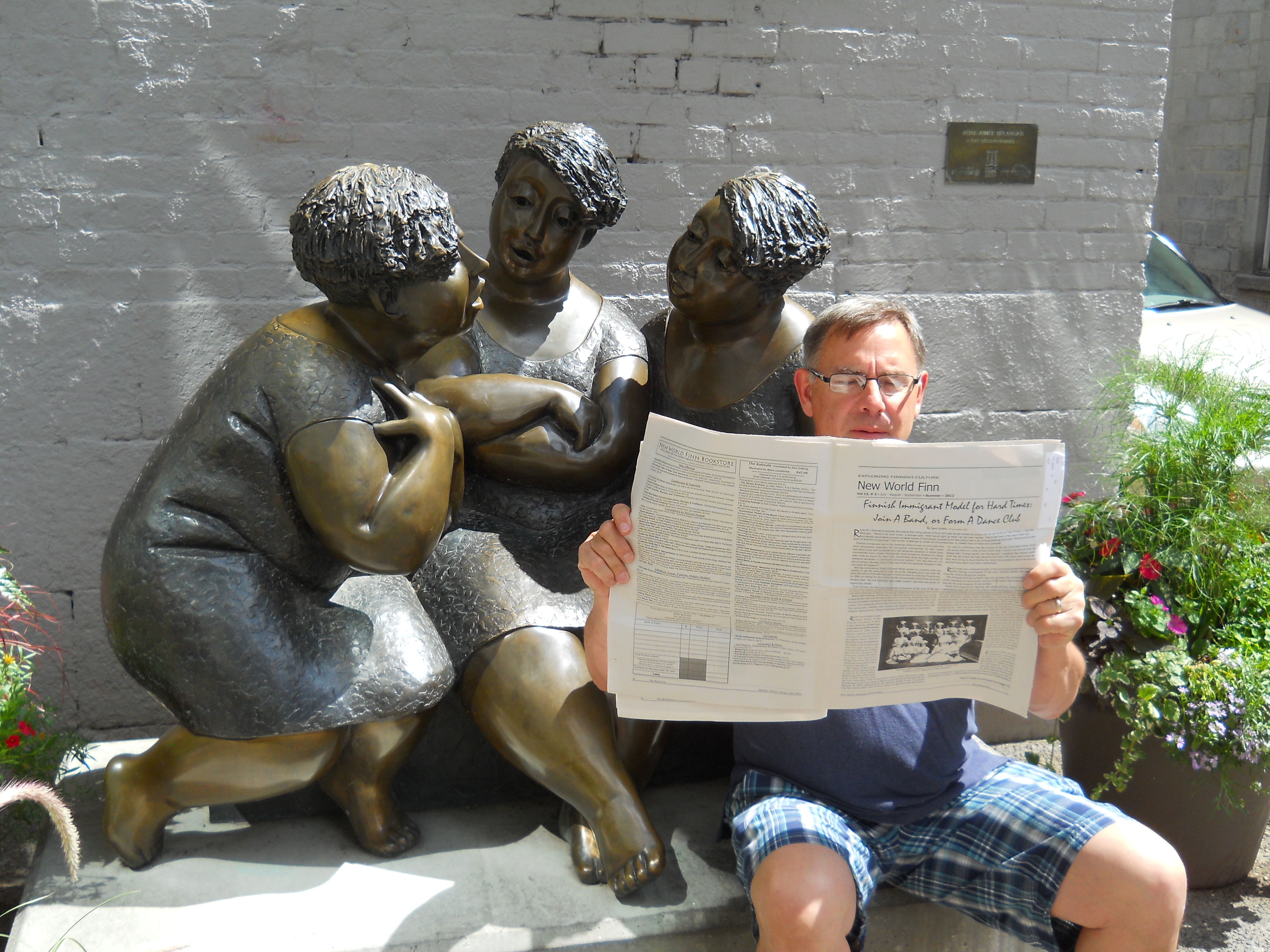
In the morning, we went back into the city on Canada Day. There were mimes and characters on stilts and speeches and food covering every square inch of old downtown, all engaged in the festivities and open for business despite the fact it was Sunday. Taking a break along the harbor front, I had Rene’ snap a photo of me reading New World Finn, a great little newspaper that I just happened to have in my back pocket as we sat down for coffee. I gathered, as the photo will attest, quite a crowd as I perused the news.

Mark Reading “New World Finn” in Montreal

It was a hot, full day in the old city. Despite the still, heavy air and throngs of people, we managed to maintain our composure as a group and take it all in without incident. Of course, there were ample opportunities for Rene’ and Lisa to shop. In fact, there were so many shops lining the cobblestone streets that there was no way the women could visit them all, though they made the boldest of attempts to do just that! Jack was content to buy a couple of soccer balls, neither of which, by the way, had even the remotest connection to Canada or Montreal. Go figure.


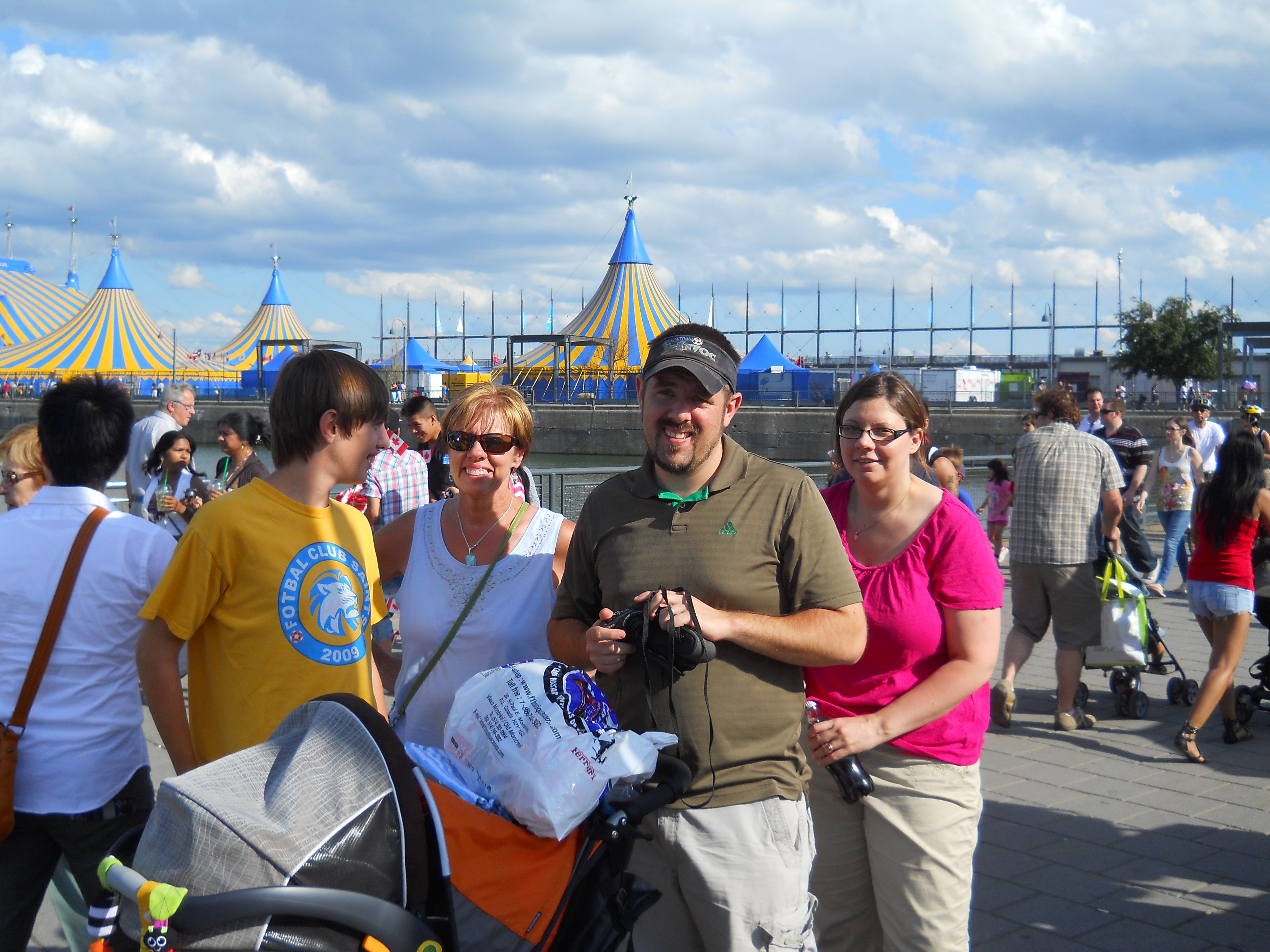
The Mungers (minus the patriarch) in Montreal on Canada Day

The next morning, we were back in our cars, headed for Bar Harbor, Maine to spend three days and nights (including Independence Day) on the coast of the Atlantic Ocean. But that’s the subject of the second installment of this blog.

Peace.

Mark


Posted in Blog Archive | Comments Off on A.J.’s Big Adventure; Or, “Oh Canada!” (Part 1)

Still an Enigma

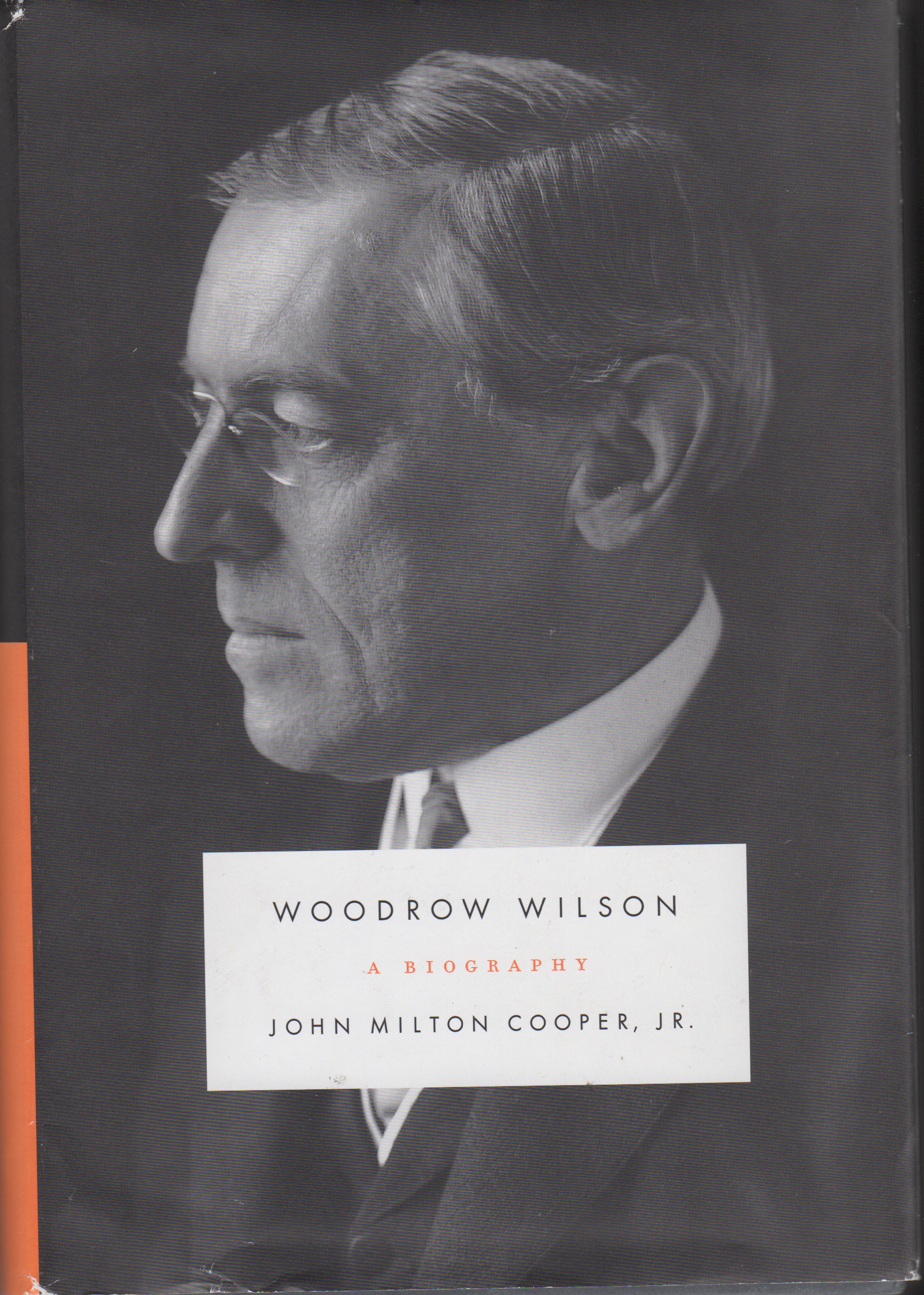
Woodrow Wilson by John Milton Cooper, Jr. (2009. Knopf. ISBN 978-0-307-26541-8)

His name was Thomas Woodrow Wilson and his earliest friends and his relatives called him “Tommy”. That’s something I learned early on in this mammoth (702pp) work by John Milton Cooper which chronicles our 28th President’s life and legacy. Many of us learned in grade school that Wilson was our president during “The Great War” (WWI) and that he had something to do with the founding of the ill-fated League of Nations. History and political science buffs like me probably also remember that, despite Wilson’s sponsorship of the proposed forerunner to the United Nations, the United States never joined the League. Between Wilson’s birth in the South (Virginia) and his death after a stroke (the stroke occurred in 1920 and he lived three years in virtual seclusion, including the last year of his Presidency due to the malady’s impact on his mobility and intellect), Wilson lived a life that bridged the Civil War and the Roaring 20’s. He was the first post-Civil War President born in the South; the son of a Presbyterian minister and a Progressive Democrat who spent little time in elected office prior to ascending to the highest office in the land. He was a professor, a lawyer, and president of Princeton. In many ways Wilson’s political pedigree, as portrayed by Cooper, bears a striking resemblance to that of Barack Obama, with one major exception. Despite early support from Black voters, who believed Wilson was  Progressive on the issue of racial equality, Woodrow Wilson never embraced integration of the races in his heart, a failing that is glaring in Cooper’s reportage of interactions between Wilson and African American leaders of the early 20th century.

Written in a crisp, matter-of-fact style, this biography paints a puzzling picture of our 28th President. Intellectually brilliant; open to compromise with Progressives from the Republican side on issues such as tariffs, taxes, the creation of the FTC, and the popular election of U.S. Senators; able to work for peace in Mexico and in Europe; Wilson struggled to understand the nuances of party politics and, to his detriment, ended up entering a war that he had worked hard to avoid. I always had the impression that America’s entry into WWI was due to circumstances forcing Wilson’s hand and in some ways, that’s true. Germany’s resorting to unrestricted submarine warfare in 1916, and the resulting loss of American lives on merchant ships and ocean liners flying under foreign flags, was the “straw” that finally broke Wilson’s resolve to remain neutral. But unexpectedly (for me), Cooper ensures that Wilson’s legacy as a war president is remembered as one of firm resolve. Once Germany forced Wilson’s hand, he never looked back. This despite the fact that he was appalled by the notion of trench warfare and American boys dieing in a war not of our making.

All of Wilson’s considerable domestic successes are chronicled here in great detail. So too are his failures with respect to racial equality, civil rights for war dissidents, and women’s suffrage. Curiously, despite his wife and daughters being suffragettes, Wilson was a late comer to the notion that American women should be allowed to vote. He was also, unexpectedly given his Presbyterian upbringing, against Prohibition, though by the time of its passage, his power to influence Congress was hampered due to his strong support of a peace with Germany that included the League of Nations.

My only criticism of the book is that it lacks the soul and vibrant human drama that A Team of Rivals (see review below or in the Book Review Archive). It would be hard to compare Wilson’s story to that of our 16th President, though Lincoln is the president, according to Cooper that Woodrow Wilson sought to emulate. But there is something to be said for giving literary treatment to factual information as was done in Goodwin’s retelling of the Lincoln story. A bit of that style in retelling the life of Thomas Woodrow Wilson would have elevated this book to a higher plain.

In the end, if you are a student of politics or interested in the current deadlock between our two political parties, this book is a required read. The deadlock between Wilson and Congress over the League of Nations reads eerily familiar to those of us reading the newspapers today.

4 stars out of 5.


Posted in Books | Comments Off on Still an Enigma

Missing Heart and Narrative Context


Through Dakota Eyes: Narrative Accounts of the Minnesota Indian War of 1862 Edited by Gary Clayton Anderson and Alan R. Woolworth (1988. Minnesota Historical Society Press. ISBN 0-87351-216-2)

I picked up this nonfiction study devoted to the Sioux side of the 1862 conflict in Minnesota because I was interested in writing on a novel about the so-called 1862 Sioux Wart. Partway into my research, I decided that there had been too much written on the skirmish (it really wasn’t much of a war) but despite the fact I abandoned the project, I continued to read Through Dakota Eyes for pleasure. Candidly, there was very little about this book that gave me satisfaction as a reader or a historian.

My main point of contention is that there is so little narrative from the editors, the book meanders and wanders aimlessly, bumping into aspects of the conflict along the way like a pilot-less ship bumping into shoals. Narrative, putting the snippets of essays and reportage from the Indian combatants and participants on both sides of the uprising in context and would have added nuance and personal experience to the history most Minnesotans already know. Sadly, the editors provide very little such context or structure and the entire book reads like a master’s thesis in need of editing.

Then too, the individual reports and stories of the Indians wander in and out of view like a drunk on a bad binge. For whatever reason, the editors chose to interrupt one person’s story with another person’s version of the same event before continuing the first narrative dozens, sometimes hundreds, of pages, further into the book. This again is, in my humble view, a very poor way to tell a story; even a non-fiction one attempting to portray history in a scholarly light.

Overall, this book was extremely unreadable and is of value only as a collection of narratives perhaps not compiled in any other single source. Through Dakota Eyes is not a cohesive or compelling read, which, had the editors and publisher done some major re-writing of the tome, it could have been.

2 and 1/2 stars out of 5.


Posted in Books | Comments Off on Missing Heart and Narrative Context

The Levee Didn’t Break

If it keeps on rainin’, levee’s goin’ to break,

If it keeps on rainin’, levee’s goin’ to break,

When The Levee Breaks I’ll have no place to stay.

Mean old levee taught me to weep and moan, [X2]
Got what it takes to make a mountain man leave his home,
Oh, well, oh, well, oh, well.

((c) Led Zeppelin)


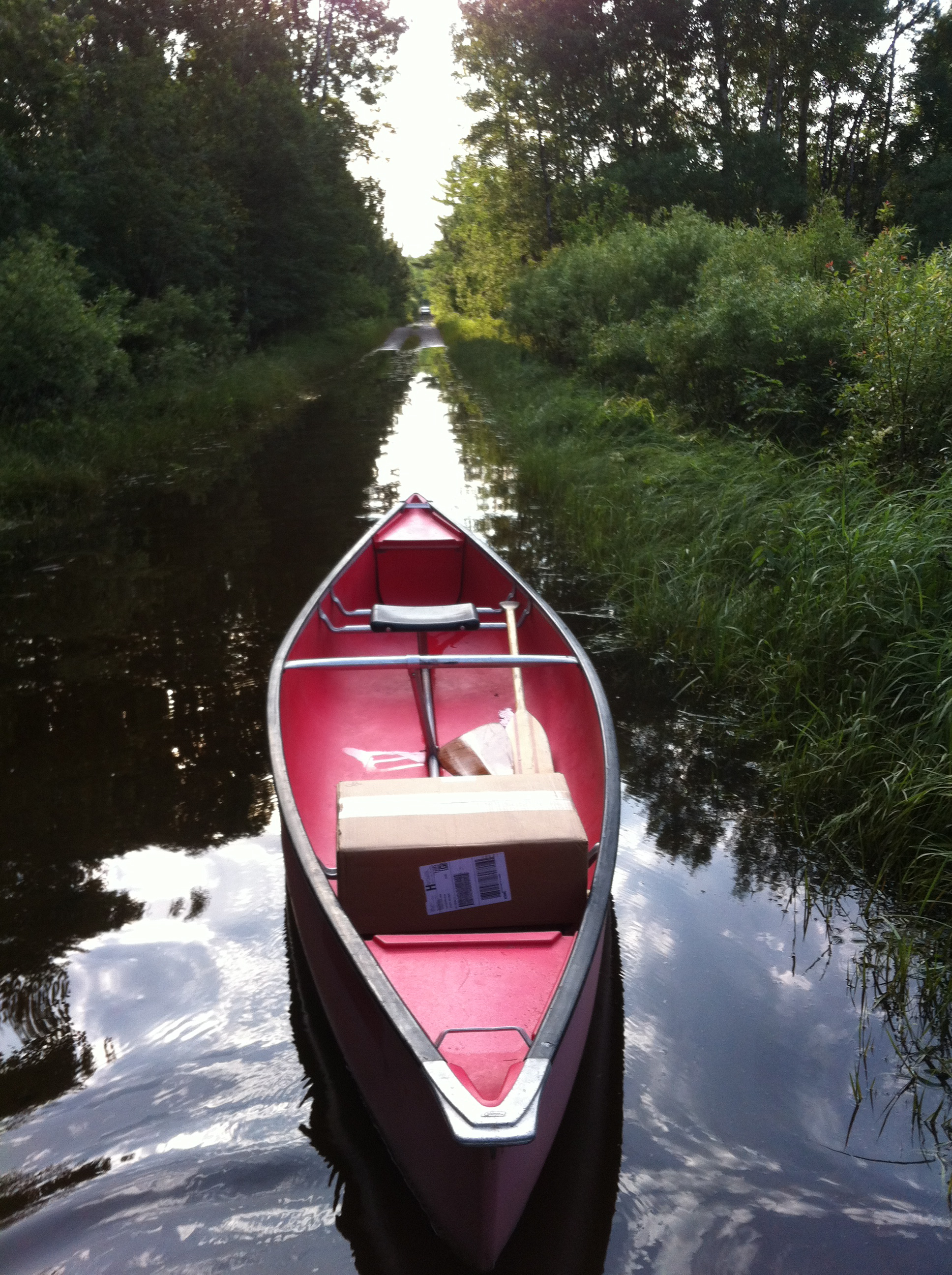
Canoe with Book Order (06/27/2012)


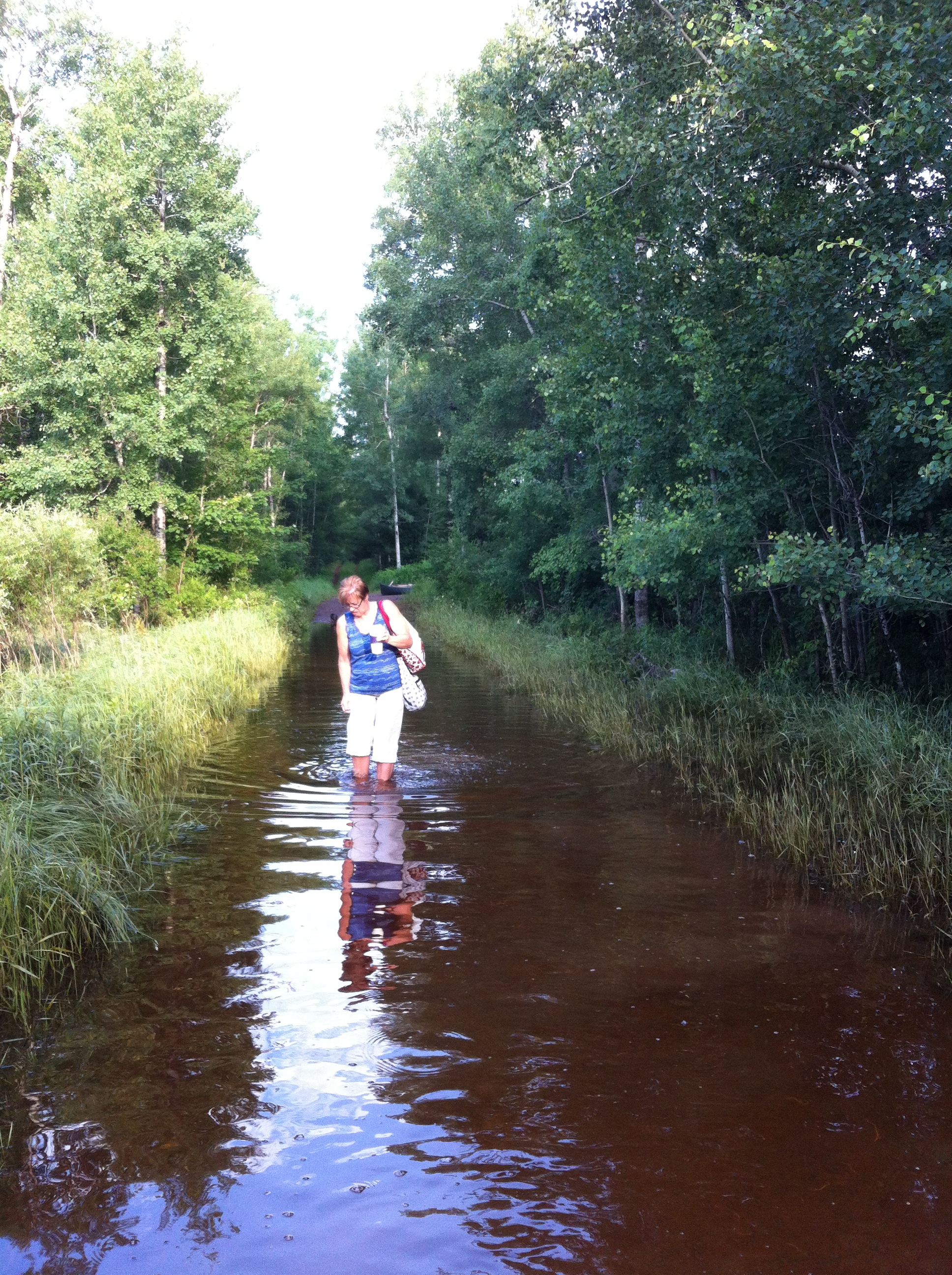
My distributor Partners wants copies of Laman’s River. An entire carton, which is a good thing. It’s 7:00am and Rene’ and I are once again on our way to work. It’s my wife’s 55th birthday and, because the water is finally receding from our road and the river is slowly going down, we can’t canoe to work today. We have to wade.

Rene' Munger's Birthday Bath in the Flood Waters of the Cloquet

As the title to this essay says, the Island Lake Dam held together during the 500 year storm. I didn’t coin that phrase: Someone else did. We thought, when we built our new home downriver from our old place on the river in 1999 that the water coming up to the top of the bank in front of the hole being dug for the new house’s foundation was the highest it would ever go. They (whoever “they” is) called that storm and resultant runoff, the “storm of the century”. Maybe it was the storm of the 20th century and the one we just experienced is the storm of the 21st century? Or maybe “they” are right and the past week’s diluvial onslaught was indeed the storm of this half of the millennium. Whatever. The point is, the levee (in this case, the Island Lake Dam) didn’t break and we were extremely lucky. Unlike thousands of other Northlanders, who suffered extreme damage to, or the total loss of, their homes and possessions, my family was merely inconvenienced by the weather and the our isolation.

In any event, we wade out to the borrowed van at the end of our road, books high and dry in the Coleman canoe; the water too high to drive through but too low to canoe.

“I’m out here to wish you a happy birthday, Mom, but there’s no one here to greet me except my wiener dog,” Chris, our third son says when he calls Rene’ as we’re driving home.

“We’ll be home soon,” Rene’ promises before hanging up the phone.

“Did you ask him if the water is low enough to drive in?”

“I forgot.”

I call Chris back on my iPhone and get the details.

“Sounds like we can drive in,” I say optimistically, spinning Chris’s more cautionary words into words of promise.

By the time Rene’, Jack, and I arrive home after a long day of work and a youth soccer game (Jack’s team won, by the way, showing some real mettle in the contest against a team that had beaten them handily a few weeks back), the water is indeed low enough for us to navigate safely in Pauline’s borrowed van.With Chris’s help, we get the canoes squared away, the paddles put back in the storage shed, and Jack tackles the push mowing while I climb on our rider and begin cutting grass that has had far too much time to grow.

It’s 9:30pm and nearly dark by the time I’m done and wander into the house for dinner. But it’s a sure bet that the Great Flood of 2012, though over, will live long in stories told by the Munger clan.

Peace.

Mark


Posted in Blog Archive | Comments Off on The Levee Didn’t Break

It’s Time to Stop the Rain

Only love
Can make it rain
The way the beach is kissed by the sea.
Only love
Can make it rain
Like the sweat of lovers’
Laying in the fields.

Love, Reign o’er me.
Love, Reign o’er me, rain on me.

((c) P. Townsend)

Leaving for Sister Wolf Books 6/23/2012

In the photograph above, you can see that our access road is still under water. It’s been nearly a week since the rains started and the water surrounding our place hasn’t receded. Oh, Minnesota Power tried. They shut some of the gates on the dam upstream from us. That lasted until it started to rain again. The water went down a foot. It’s now back up. So, if Rene’ or Jack or I want to go anywhere, it’s still by canoe. My dad’s significant other, Pauline, volunteered her Chrysler van for our use. Otherwise, we’d be completely without transportation. The van’s parked at the far end of our road, out of the water…at least for now.

9:30am. Saturday. I’m up and in my swimsuit, sandals, and T-shirt again for the paddle out. I’m supposed to be at Dorset, Minnesota, at a funky little independent bookstore just a stone’s throw from Park Rapids, Sister Wolf Books, for their annual gathering of  Minnesota authors. Despite some success as a regional novelist, when I sent out promotional materials announcing the release of Laman’s River, my new mystery, only three bookstores responded with offers for me to come and sell and sign books. Sister Wolf was one of them and so, despite the Great Flood, I am duty bound to go.

The other thing you can see in the above photograph is that it’s raining. That’s right: As I paddle down our driveway, the sky is once again cryin’. No, that’s not quite right: The sky is absolutely weeping. That blue object in the center of the canoe? It’s a waterproof plastic bin filled with copies of Laman’s River, Esther’s Race, Suomalaiset, and Mr. Environment. The bag at the bow? That’s holding my dry clothes.

Pauline’s van is crowded with authors as it chugs west on Highway 200 towards Dorset. Stephen King, Maurice Sendak, John Updike, Billy Collins, James Baldwin, Norman Mailer, David Sedaris, Philip Roth, Richard Price, Joyce Johnson, Allen Ginsberg, Fran Lebowtiz, and David Rakoff are all crammed into the Chrysler for the ride. No, not literally: In spirit, silly. I’m listening to NPR’s Terry Gross interview the above-listed literary and poetry giants on CD, on Fresh Air: Writers Speak (2004. Highbridge Audio. ISBN 1-56511-918-5).  No matter how many books a guy has written, there’s no end to the learning involved in the writing process.

Leech Lake (on the way to Dorset)

I pass by Leech Lake on HIghway 200, the rain finally stopping, the sun shining. Back home, I know my wife is headed towards the Park Point Art Fair with her friend, Nancy. Rene’ will canoe to the highway where Nancy will pick her up. When you’re surrounded by angry water, it helps to have more than one canoe. I call my wife repeatedly until she finally picks up. We chat. We say our goodbyes. The Chrysler rolls on.

When I pull into Dorset, the little burg is jumping. There are cars parked up and down the county highway splitting the town in two. Folks are wandering from store to store, restaurant to restaurant, enjoying the emerging sun. I park behind an Italian restaurant, dig out my bag, and wander into the place, the rump of my swimsuit still wet with rain. I change into dry clothes, dry sandals, and a clean shirt before enjoying a pretty good meal of spaghetti and sausage. After paying the tab, I cross the street and introduce myself to Sally, the manager of Sister Wolf Books. The little store is crammed to the shelves with books, patrons, and, most importantly, authors. I see Will Weaver, a northern Minnesota writer of some note I’ve corresponded with but never met, across the room, and saunter up to him and introduce myself. Then it’s two o’clock, time for my two hour shift at a little table in the front of the store.

Sister Wolf Books

Folks come and go in droves. Women enter the front door of the bookstore in pairs and, at times, in packs. I learn that some of the groups are book clubs on the prowl for a new book to read. Several of the women check out my books as possible reads. Some buy from me, some don’t. But, for a tiny town and a tiny store, the action is, in a word, constant. I share my iPhone pictures of the canoe carrying books with customers, Sally, and some of the other authors. All of them are cognizant that Duluth and the surrounding area have been hit hard by the recent weather. There are a few other writers from Duluth who have personal stories of near-disaster that they also share with the patrons. After selling and signing a fair number of books, it’s time to pack it all back into the Chrysler and head east.

The ride home is uneventful. I stop in Remer for an ice cream cone and gas. Rene’ and I talk via cell phone. It rained nearly all day at the Art Fair in Duluth. I tell her that the weather in Dorset, weather which is headed towards the Cloquet River, is bringing sun and clear skies. Driving through Floodwood, I can see that the nice weather is now over Duluth; that the rain has finally stopped.

When I park the van at the end of our road, I see Jack paddling towards me in our Old Town. Our pink Coleman canoe is at this end, upside down and immersed in a foot of water. When I left for Dorset in the morning, I left the Coleman high and dry. The water has come up at least two feet during the day.

“What’s up?”I ask my son as he clambers out of the Old Town.

“I’m bored,” my fourteen year old says. “I’m gonna run to the Minno-ette for a movie.”

And he does. Literally. He runs three miles round trip and paddles a half mile to bring back a DVD for the evening.

“Marcus.”

It’s my friend Bruce, on the telephone just as I sit down to dinner.

“Hey, Bruce.”

“Jan and I are coming over to see how you’re faring.”

The Larsons are old and dear friends. Jan and I have known each other since kindergarten. I’ve known Bruce since we both tortured Miss Eck, our piano teacher, in elementary school.

“You’ll have to use the canoe. The road is underwater.”

For a moment, I forget that Jack is still on the road in search of a movie. If Bruce and Jan use the Old Town, there’s no way for Jack to paddle home. I hustle down the driveway, climb in the Coleman, and paddle like hell to the end of the water.

“We need to leave that one for Jack,” I say, pointing to the green canoe.

“I thought that was him on the road,” Bruce says as he and Jan climb into my canoe. “But I couldn’t figure out what he was doing by himself at the Minno-ette.”

“He’s getting a video.”

The Larsons laugh.

The Larsons Come to Visit

We make short work of the waterway and land the canoe on asphalt. Rene’ greets us and we show the Larsons the results of the Great Flood of 2012. Later, while talking and enjoying a glass of Rene’s homemade wine in the house, Jack wanders in with a movie. We talk some more and then as dusk settles over the Cloquet River Valley, the Larsons take their leave. They begin their paddle out just as the sky opens up again.

The Waterway at the End of Our Drive (Note the Cart and the Waterproof Bin Full of Munger Books!)

Peace.

Mark


Posted in Blog Archive | Comments Off on It’s Time to Stop the Rain

The Water’s Still Wide…And Deep Too!

Canoeing to Work, 6/21/2012

That’s our access road you see in the photograph.  Really. I took the shot yesterday at about 7:00am. I’m heading due east, towards the Taft Road, to meet up with my son Chris. He’s high and dry where he lives, in rural Rice Lake Township. My Pacifica and my wife’s Toyota Matrix unfortunately can’t negotiate four feet of standing water. Since that’s the case, I resorted to the methods of the folks who once walked and hunted this land: Like the Ojibwe (and the Sioux before them), I paddled to work. Fifteen minutes later, my third son picked me up at the end of our road in my swimsuit, flip flops, and T-shirt (I was carrying a change of clothes more appropriate for the courtroom). After a brief tour of some of the destruction (including passing two cars stalled in water near the Wells Fargo branch near the Mall), Chris dropped me off at the Duluth courthouse.

“Mark: Matt and Lisa and the baby are coming by to pick us up.”

That’s the call I received later in the day from my wife, Rene’. Our oldest son, his wife, and their one-month-old son, A.J., were hell bent on coming down to Duluth to see what nature had wrought. I’d called my old man earlier in the day and made arrangements for him to drive me home at four; in plenty of time to meet my son and his wife.

Dad showed up right on time. After a brief stop at Super One so I could do some grocery shopping, we drove out to our place.

“I could drive you in.”

We were sitting at the end of our road watching Jack and his pal Nathan paddle towards us in a green Old Town canoe. I had left our pink (used to be red until the sun bleached it out) Coleman canoe near the highway so I had a means of getting home.

Jack and Nate Sich Canoeing the Driveway


“Are you crazy?” I replied. “The water would be halfway up the hood of your Tahoe.”

Now, maybe Harry was teasing. He does have a pretty good sense of humor. But maybe, just maybe, he was serious.

You see, I remember one winter’s day before we built our new house and the road you’re looking at was improved (it was only a logging trail at the time) when Dad wanted to show Judge Jack Litman the Minnesota Power land he and I had recently bought. I told him, “No, Dad, you can’t take your Suburban back on that road. It hasn’t been plowed and you’ll just get stuck.” His response was, “That’s what four wheel drive is for, Mark.” Sure enough, as Rene’ and I watched my old man and the judge tool off down the tote road, he made it about fifty feet before he had his big rig stuck up to the axles in new snow. It took my little Dodge Dakota 4×4 and a whole hell of a lot of digging by a much younger me to get the Suburban back onto solid ground so Dad could back his way out.

So when my father said he was thinking about trying to make a run through the river that had claimed our road, maybe, just maybe, he was serious. I’ll leave it to you which way he was leaning as he surveyed the expanse of black water in front of his Tahoe.

But instead of gunning the engine and tempting fate, Dad sat patiently behind the driver’s wheel as I loaded bags of food, milk, juice, and dog food into the Coleman for the paddle home.

“Thanks.”

With a wave of his hand, the old man backed the Tahoe out onto the highway and roared off. I’m pretty sure he was disappointed I didn’t let him make a go of plowing water with the SUV. But I’m also pretty sure he’ll thank me tomorrow for being the voice of reason.


Rene' Canoeing her way to A & Dubs

As soon as I got home and Rene’ put the groceries away, she hustled me back  out the door.

“Matt’s a few minutes away,” she explained. “We’re supposed to meet them out on the road.”

Rene’ and I climbed into the Coleman. Jack and Nathan claimed the Old Town. In a few minutes time, after dropping Nathan off at his home (he hadn’t been able to get to his house since Monday evening), we were on our way with Matt, Lisa, and A.J. (who was grumpy and wanted to be fed) to town. We took in Lincoln Park (where cars were stopped and folks were snapping photos of the plume of brown water shooting up from the sliding rock); the Lake Superior Zoo (where it was obvious that water had destroyed many of the exhibits and left slime and mud behind as an added insult); and Gary-New Duluth (when we couldn’t go any further due to barricades, we drove over the Oliver Bridge and took in the massive sheet of butterscotch water flowing beneath the span: a volume of water I’ve never seen flowing in the St. Louis River in my lifetime). And then, we stopped at Rene’s favorite fine dining establishment: A & Dubs in Duluth’s West End.

You’ll note I didn’t call the neighborhood where my wife and her siblings were raised (and where I went to junior high) “Lincoln Park”. Lincoln Park, my friends, is an actual place. We drove Lincoln Park Drive through the park on our way down the hill. A & Dubs drive-in is in Duluth’s West End. End of discussion. In any event, while A.J. slurped his meal in the front seat, the rest of us ate burgers and fries and onion rings and corn dogs (the West End’s version of health food) and sipped cold, sweet root beer. Lisa handed A.J. to me so she could finish eating. He immediately objected to the scary old man holding him, necessitating Grandma Rene’ taking over grandchild duties. In the end, the rocking and rolling of the Suburban put the kid to sleep. We stopped on the Munger-Shaw bridge over the Cloquet, the water nearly lapping at the driving surface, to take one last peek at the river before heading home.

The Cloquet in High Flood

Another View

Later, as I read a biography of Woodrow Wilson, Jack read Night  by Elie Wiesel, and Rene’ worked  the News Tribune’s  crossword puzzle, the telephone rang.

It was my old man.

“You need a ride to work tomorrow?”

I had arranged to use my law clerk’s car to get from the courthouse in Duluth to the Carlton County Courthouse tomorrow but I’d forgotten to take into account that I needed another ride into town.

“I do. Can you pick me up at eight?”

“Sure.”

Here I am nearly sixty years old and my father is driving me to work. Oh well, it could be worse: Harry could be stuck in the middle of the flood in his Tahoe.


Peace.

Mark


Posted in Blog Archive | Comments Off on The Water’s Still Wide…And Deep Too!

Coda?

Long as I remember the rain been comin’ down
Clouds of mystery pourin’ confusion on the ground.
Good men through the ages tryin’ to find the sun.
And I wonder still I wonder who’ll stop the rain.

((c) John Fogerty)

Jack Munger and Nate Sich (The Great Flood of 2012)

As usual, I was wrong. The river is still rising out here in Fredenberg. If you read the last blog, you’ll remember the 16″ of bank we had left protecting us from the Cloquet River. Well, that 16″ of dry land is somewhere beneath the two boys in the photo above. And there appears to be more water coming downstream. I got the boys, who are both stuck here because there’s no way to leave our place, to help me move the canoes, duck boat, and lawn furniture out of harm’s way. That’s why the next photo you’ll see is one of a naked canoe rack. Hide your eyes if such things offend you! The second picture is of Jack and Nate wading the road leading from our house to the county highway. You can see that the only way to get through is to wade, swim, or paddle.

Naked Canoe Racks

Jack Munger and Nate Sich Wading the Road to Nowhere!

Nate and Jack Coming to the end of a Very Wet Walk

Out on the main road, I picked up the mail from our mailbox and tucked it into my shirt along with my wife’s camera (the one I used to snap these shots) and Nate’s iPod. I told the boys that they’d be hauling our two-wheel garbage bin back home through the water and there wasn’t much disagreement. Give kids the chance to try something unusual, like plowing water with a garbage can on wheels, and they’ll generally get on board.But before heading back home, we walked over to the Taft Road bridge to get a better view of the torrent. Man, that slow moving, lazy sonofagun summer river I know so well was no where to be seen. The past few summers have been so dry, you’d scrape rocks canoeing this stretch of the Cloquet even in June. It’s pretty clear that rocks wouldn’t be the problem today, folks.

The Author Standing on the Taft Road Bridge Looking Downriver

One of the really neat things about our house becoming an island is that every bird for miles around has decided our place is a refuge. Today, I’ve seen mourning doves, goldfinches, cowbirds, catbirds, hummingbirds, an osprey, a sand hill crane, a blue heron (twice), bluebirds, robins, barn swallows, ducks, and a mature bald eagle who was sitting in the white pine next to our canoe racks until the boys and I descended upon his tranquility.


The Boys at the Taft Road Bridge


Looking Upriver, The Great Flood of 2012

Looking Downriver, The Great Flood of 2012


We made it back from our excursion to the bridge a little wetter but much wiser. The boys struggled with the garbage bin, mostly because of inattention and not physical strength. From the giggles I heard as they splashed along behind me, I think they enjoyed their time away from our island home.

So long as the water begins to recede by morning, I’ll be content to chalk up the past day off work as another life experience I needed to go through to grow as a person. But if the clouds continue to cry, maybe I’ll have to Google John Fogarty, find his phone number, give him a call, and see if he ever found an answer to his question.

Heard the singers playin’, how we cheered for more.
The crowd had rushed together tryin’ to keep warm.
Still the rain kept pourin’, fallin’ on my ears
And I wonder, still I wonder who’ll stop the rain.

((c) J. Fogerty)


Peace.

Mark

Posted in Blog Archive | 4 Comments

The Sky is Cryin

The sky is cryin….
Can’t you see the tears roll down the street
The sky is cryin….
Can’t you see the tears roll down the street
I’ve been looking for my baby
And I wonder where can she be

(Elmore James as channeled by Stevie Ray Vaughan)


Duluth, MN Target Store under water due to Miller Creek Flooding (Photo by Matt Munger)

Wow. So far, we’ve been lucky out here in Fredenberg Township. We’ve had a lot of rain (duh!) and the Cloquet River is as high as it’s been in the 25 years we’ve lived here. But we’re not affected to the degree that the citizens of Duluth are. Take a look at the photo above that my son Matt took earlier today. That’s the intersection to the west of Target on the Maple Grove Road. It’s under four feet of water! Though Rene’ and I can’t leave the house due to the river being backed up into Knudsen Creek, which in turn, has flooded the road into our home, we’re safe and (cross your fingers and say a prayer for us and all the other folks living on the river) the rising water is not yet near the house.

Daisey and Our Access Road


This is a view of our driveway. When I stopped to take the photo there was a blue heron standing knee deep in the water. The bird was apparently camera shy and flew off before I could react. Still, this picture gives you a sense of why my wife and I didn’t make it in to work today. I’ve been around nearly seven decades (closing in on sixty, folks) and I’ve never, I repeat, never, been in the middle of a sustained downpour like the one we experienced yesterday and today. There was thunder that nearly knocked me off my tush and lightening that seared the sky from horizon to horizon. There was rain so hard and so constant, our downspouts shook like a drunk in need of a nip. Now, I’ve been in the Yucatan during a tropical rainstorm in an open Jeep. I’ve been in Florida during a six inch cloud burst that came and went during a four hour time span. But I’ve never been in such a sustained, violent deluge. As I type this, there’s a lull in the storm and blue sky is trying to overcome the gray.


The Cloquet in Full Flood Stage (6/20/2012)

There are a couple of seasonal cabins beyond our place that are accessed from our driveway. One of them was recently remodeled. A sauna building has been added to the property and the place was shaping up quite nicely. But no one asked me if I thought the old cabin should be rebuilt. Had the new owner asked, I would have counseled against it. The last time the river was this high, June of 1999, Lakehead Trucking was digging the basement for the house we live in. The Cloquet rose so high and so fast, Greg Kaneski from Lakehead had to leave his backhoe here until the flood subsided. The condition of the little cabin at the end of the road during that flood? The water reached the cabin’s eaves. I think we’re headed in that direction again.

Cabin and Sauna on the Cloquet Under Water (6/20/2012)

Cabin and Sauna: Another View (6/20/2012)


That’s my crazy Labrador mix, Daisey in the water around the cabin and the sauna. What you don’t see in the shot is that I had to wade in water up to my knees to take the pictures. Also missing are the clouds of hungry mosquitoes that the flood waters have unleashed. Then too, I’ve left out the capsized portable john that was floating nearby. Let’s hope it doesn’t sail on down the Cloquet and end up going over the Thompson dam!


Now, I’m no climatologist. And I know that the next time I tune into “Garage Logic”, the callers and Joe will poo-poo the idea that these violent storms we’ve been having have anything to do with man. Joe will argue that these storms are simply the result of a natural weather cycle. Fair enough. But let’s suppose, just for a second, that a portion of what’s happening, climate-wise, has something to do with man’s influence on Earth. See, here’s the rub: If 90% of what’s happening is God-made and 10% is man-made, well, I’d sure like to see that 10% addressed. Why? Well, take a look at the margin of safety my family has against the rising waters.

The House as Seen from the South


Looks pretty high and dry, doesn’t it? Well, let’s take a look from the north, where the Cloquet River flows next our property.

The Edge of the Bank (6/20/2012)

On the right of the photo, is the Cloquet River. On the left, a puddle of rainwater that formed in our field. Between the two, there’s about sixteen inches of elevation and less than a foot of separation. Now if we could just eliminate that hypothetical 10% man-made climate factor, I’d rest a bit easier because another 10% in my favor would keep the water from breaching the bank. Here’s the thing: In the end, I think we’ll be fine out here in the country. The rain has stopped and the water is flowing swiftly to the west, where the Cloquet will join the St. Louis, dumping all the excess water into Lake Superior. Of course, there’s a price to be paid downstream: I understand the western reaches of Duluth, where the St. Louis carves its way to the Bay, are under water. That’s not a good thing and I’m praying that everyone downstream comes out of this OK. Join me in that prayer, would you?

Car Abandoned Alongside Miller Creek (Decker Road and Mall Entrance: Photo by Matt Munger)


Whether you agree or disagree with my thoughts about man’s influence on our climate, here’s something else to ponder. Forty years ago, my dad, Harry Munger, fought tooth and nail to stop the paving over and filling in of wetlands surrounding the Miller Mall. During the 1960s, Miller Creek had been restored to a functioning, productive, urban trout stream that sustained a native population of brook trout without the need for planting hatchery raised fish. But when Target was built, followed in close succession by the Mall, and many other retail stores in the floodplain of the creek, my father sounded the alarm. The warming of the water caused by the added parking lots alongside the creek pretty much killed off the restored fishery. Then, in the mid-1970s, a horrific rainstorm caused millions of dollars of damage in Duluth because, with all the marshes and swamps paved over at the top of the hill, there was no where for the rain to go but downhill. Piles of sand that were stockpiled along Piedmont Avenue for the construction of I-35 ended up crashing through the storefronts along Superior Street in the West End. Roads were ruined. Homes were flooded. But no one really listened to my dad. Think about what a remarkable place the Mall area could have been had folks listened to my old man and used just a bit of vision to preserve the creek’s floodplain: building around the trout stream in a way to enhance both the esthetics of the shopping experience and the fishing opportunities for kids. Sure, efforts were later made to resurrect what was lost. Trees were planted and retention ponds were built along Miller Creek. But, if you look at the photo above, it’s pretty clear this change in Duluth’s collective philosophy regarding development was too little and too late. And that’s a shame.

Stay dry and say a prayer for those who were affected by the cryin’ sky.

Peace.

Mark


Posted in Blog Archive | Comments Off on The Sky is Cryin

Rewards


I’m on vacation. Now, like most American males in a committed relationship, that statement doesn’t imply that I am spending my days away from the courthouse sitting on my tushy reading Tolstoy. OK. I did manage to watch the classic version of Anna Karenina starring Greta Garbo on TCM. But cut me some slack, folks. It was pouring out! And the very next day, as the inclement weather continued making it impossible for me to tackle the chores on my “Honey Do” list, I managed to watch three Dorothy McGuire black and white classics as I cleaned the house. Don’t get too excited, ladies. I’m not as great a catch as that sounds. You see, Rene’ and I’ve had a division of labor for much of our married life. We share the outside chores. Inside the house, I do the vacuuming, dusting, and wash the floors: She does the laundry, the grocery shopping, the bills, and the bathrooms, including the boys’ bathroom on the lower level. Any of you moms reading this who have sons understand what an ugly task that is and that I’m getting off pretty easy in this deal!

Yesterday. After sleeping in a bit (Jack and his buddy Dom and I took in the late showing of The Avengers in 3D Thursday night), I was up. So, to my chagrin, was the sun, meaning I could no longer dodge the work I’d been avoiding. The first task on my list was to replace the netting on the soccer goals in our back lawn. How many kids get to practice their moves overlooking a wild and scenic river, with eagles and osprey wheeling overhead and bluebirds chirping their alarm? Not many I’d guess. Anyway, once I’d cut free the old netting and secured and trimmed the new, it was time to get serious about things that needed doing around the place.

Roses. Oh, I’ll grant you that they’re beautiful to look at. But when you have a bed of perennial roses that hasn’t been attended to, well, the result is a tangled mess of thorns, weeds, and stalks. I took a look at my chore list and decided, with my wife gone to town and the boys still asleep, that I’d tackle the roses. It was a moment, I am convinced, of poor judgment.

“How’s that going?” Rene’ asked when she returned from her errands.

“Not so good.”

I’d been pruning for the better part of an hour and I’d made only a small dent in the easiest part of the rose bed. The thicker, more ornery part of the mess loomed ahead. The sun was high, the deer flies were out, and my arms and legs were a mass of shallow cuts and scrapes from the thorns.

“Thanks for doing this.”

I muttered a reply not suitable for a family blog and plunged on.

I took a break for lunch and, as a diversion, I spent an hour putting in a new dog door so that our outside dogs, Kramer and Daisey, can go in and out of the garage at their leisure. Smarter men would have gone to Home Depot and bought a new utility door with a dog door already installed instead of trying to fit a new dog door in an old aperture. Not me. My effort seemed destined to fail. Rene’ was eager to stop the invectives. But I eventually got the new door installed.

A little bondo, caulk, and paint and it will be as good as new!

In between lunch and going back into the rose thicket, there was a slight disaster. Wind had pulled one of our hummingbird feeders free of the porch ceiling, spilling sticky red liquid all over the front porch. I’d cleaned the mess up on my hands and knees a few days back. Rene’ had refilled the feeder. As I climbed the ladder, feeder in hand and raised it above my head to settle it on a hook, the bottom of the feeder let loose and covered me in red. The words and accusations against my better half again can’t be printed here. But the mess got cleaned up again and, within a half hour, I was back at the roses.

To make this story shorter than its destiny, I finished pruning and weeding and cleaning up around six. I’d spent the entire day (except for the noted diversions) assaulted by thorns.

This place is a lot of work.

I’ve thought that line more than once over the quarter center we’ve lived in the country and the remedy to my post-chore exhaustion is always the same: I climb down stairs leading to the river and, oblivious to the cold, I dive in. The black water of the Cloquet always restores me. Yesterday was no exception.

Later, as Rene’ and I stood on the front lawn talking, the real reward for our work fluttered around a Canadian Lilac planted in Rene’s flower garden.

Swallowtail on Canadian Lilac

The lilac was covered, absolutely inundated, with dozens and dozens of golden yellow swallowtails. I walked over to the tree with my wife and stared in awe at the confusion. Amidst all the gold, there were also a solitary orange monarch and dozens of smaller moths and butterflies and bumble bees lapping nectar.

“Wow!” Rene’s said.

“I’ve never seen anything like it,” I admitted.

A Pair of Yellowtails on Lilacs.


This morning, as I write this piece, a thought occurs to me.

I wonder if the Russian berries are ready yet?

Not too many folks grow Russian berries in this part of the world. They’re the fruit of a bush that’s related to the honeysuckle. The flavor of the berries, somewhere between the sweetness of a blueberry and the tang of a crab apple, is a great accent to cereal. After the bone-tiring toil of yesterday the thought of a few ripe, purple berries on my cornflakes seems a just reward. I stop typing, slip on my sandals, and, still in my jammies, shamble out to our vegetable garden under clear skies and a bright morning sun to check out the berries. I am not disappointed.

Russian Berries Fresh off the Biush

Peace.

Mark


Posted in Blog Archive | Comments Off on Rewards