Pappy’s Tree

Pappy's Tree

Pappy’s Tree

It started out innocently enough. At the suggestion of my life-long best friend, Eddie, and his wife Sue, Rene’ and I agreed to try out Jim Pappas’ Christmas tree lot on Morris Thomas Road in Duluth. I grew up with a couple of Jim’s kids. Ann and Andy Pappas were classmates of mine at Piedmont Elementary School. Jim was my first scoutmaster at Troop 67 located in the old Piedmont Community Center. Both the troop and the center are long gone. But I discovered, as Rene’ and I searched for Pappy’s Trees on a below zero winter’s Saturday night, our 19-month-old grandson A.J. in tow, our bellies full of Bridgeman’s burgers and malts, that Jim and his wife hadn’t left the old homestead. (Did I mention that the Piedmont Elementary School I went from kindergarten to 6th grade with the Pappas kids is also long gone, replaced by a gleaming new building?). Anyway, when we spotted the sign “Pappy’s Trees” tacked onto a post, we knew we were at the right place. Rene’ got out of her car. I climbed in the driver’s seat to keep A.J., who was safely tucked in his car seat in the rear, company. I left my Pacifica idling and watched as Rene’ studied rows of trees leaning against 2×4 frames, the evergreens bound in plastic mesh, an orchestra of floodlights illuminating Pappy’s front yard. Through the windshield of my wife’s Matrix I watched my wife. After five minutes or so of scrutiny (you keep a marriage going for 35 years by yielding certain tasks to your partner. I am not the guy you want picking out the family Christmas tree!), I watched Rene’ approach the front door, knock, and engage in a brief conversation with a familiar looking old man.

“I found one,” my wife said upon her return.

“Which one?”

“The last one in the last row. I’ll take A.J. home if you pay for the tree and load it into your car.”

“OK. I wanted to say ‘hello’ to my old scoutmaster anyway.”

I had a pleasant few minutes talking to Jim Pappas, the first conversation we’ve shared since the 1970s. Quite frankly, he hadn’t changed much. He was still diminutive and sinewy in stature, spoke with a slight stutter, and had a marvelous twinkle in his eyes. At 86, he’s still cutting and selling trees to neighbors, an impressive feat for someone half his age. After catching up on family news, I said my goodbyes, lugged the tree to the back of my van, opened the tailgate, rolled the balsam into the cargo area, closed the hatch, and roared off into the night.

Normally, we watch It’s a Wonderful Life as we decorate our Christmas tree. Because the tree was so cold, we let it sit a day to allow the bows to descend. Sunday evening, Jack lugged bins of ornaments and lights up from the basement. I sawed the base of the tree. The three of us, with minimal curse words, got the balsam secured in the tree stand. Rene’ looped lights around the conifer’s girth. The two of us set about placing ornaments on the springy branches of the tree. We watched a forgettable Christmas movie on Hallmark as we worked. George Bailey’s story of redemption would have to wait for another night.

Pappy’s tree did well for two weeks. The only minor difficulty was that both Kena (pronounced Keena), our energetic Labrador pup, and Jimi, our severely paranoid miniature Dachshund, discovered the water in the tree stand and decided it was their own personal watering trough. Try as we might, the humans in the house were unable to keep the dogs away from the tree. Finally, tired of drying out the tree skirt because of the dogs’ shenanigans, Rene’ left the skirt partially open as an accommodation. Things seemed to be going smoothly. Pappy’s Tree had acquitted itself quite nicely.

Yesterday morning. I woke to the radio at 5:00am, my normal routine on a work day. I generally spend an hour to an hour and a half working on my writing. Every other morning, I follow the writing up with exercise. I’m a religious patron of “Body Electric” on PBS. I’ve been working out with Margaret Richards for over twenty years. She hasn’t aged a bit (the ageless magic of re-runs) but I certainly have. Anyway, in the midst of neck stretches, I yelled down to Jack to get him up and into the shower for school. Rene’ had already showered, dressed for work, and was in the kitchen sipping coffee as the credits rolled on “Body Electric”. Kena had eaten her breakfast. Jimi had gorged on water I put out to dissuade the dogs from drinking from the tree stand. I clambered up to the master bath and was seated on my throne surveying my kingdom with Kindle in hand, finishing another, more delicate, portion of my morning ritual and reading Under Two Flags, when my sanctuary was disturbed.

“Mark, get down here!” Rene’ yelled. “Kena knocked over the tree!”

It took some doing but I eventually arrived on scene. There was Pappy’s Tree toppled into the couch, ornaments scattered, some broken, some not, lights still blazing, my wife standing over the mess in perplexed anger.

I wasn’t in the mood to be righting a Christmas tree in my boxers. Words were exchanged. Threats were uttered regarding Kena’s demise. Jack vamoosed to his bedroom.

Long story short. We managed to tilt the tree back into something akin to straight.

“We can deal with the mess tonight,” I said to the back of my wife’s head as she left the house. Things had started to calm down when I discovered that Jimi had puked up all the water he’d ingested, leaving a nice pool of water, stomach acid, and yesterday’s kibble on the hardwood floor.

“Shit,” I cried out as the door shut. “The damn dog puked on the floor.”

There was no response from my departing wife or my secretive son.

I muttered some more bad words and proceeded to clean up the vomit with paper towel. As I walked into the kitchen to toss the mess into the garbage, I found another surprise.

“Shit,” I repeated. “The damn dog puked on the carpet.”

This time, my cursing had an audience. Jack was eating his cereal at the kitchen counter when I made my second discovery. Wisely, Jack made no response.

My son finished breakfast and padded back to his room to dress for school. I pulled out the carpet cleaner, a bucket of hot water, a rag, and commenced to clean up another puddle of puke. For good measure, I moved an arm chair and foot stool, got out the Dyson, and sucked up what needles I could from the great tree disaster of 2013. Being OCD, I’d normally try to get the entire great room shipshape before leaving but Jack was already late for school and I still hadn’t taken my morning shower. I left the vacuum in the middle of the carpeting, confident that the stains from Jimi’s indigestion had been bested.

Speaking of Jimi, I’d tossed both him and Kena outside after Rene’ witnessed the toppling of Pappy’s Tree. As I moved towards the stairs to the upper level to take my long-delayed shower, Jimi scratched at the front door. I stepped from hardwood onto a rug near the front entry intending to let the dog in. I was wearing socks and I stepped right into a pile of dog shit.

More bad words were said. I didn’t kill the wiener dog (the deposit was clearly his) though I was sorely tempted to end his miserable little life. I muttered more epithets as I peeled my shit-covered-sock off my foot. If Jack heard the cursing, he ignored it. I left Jimi outside and began to clean another mess.

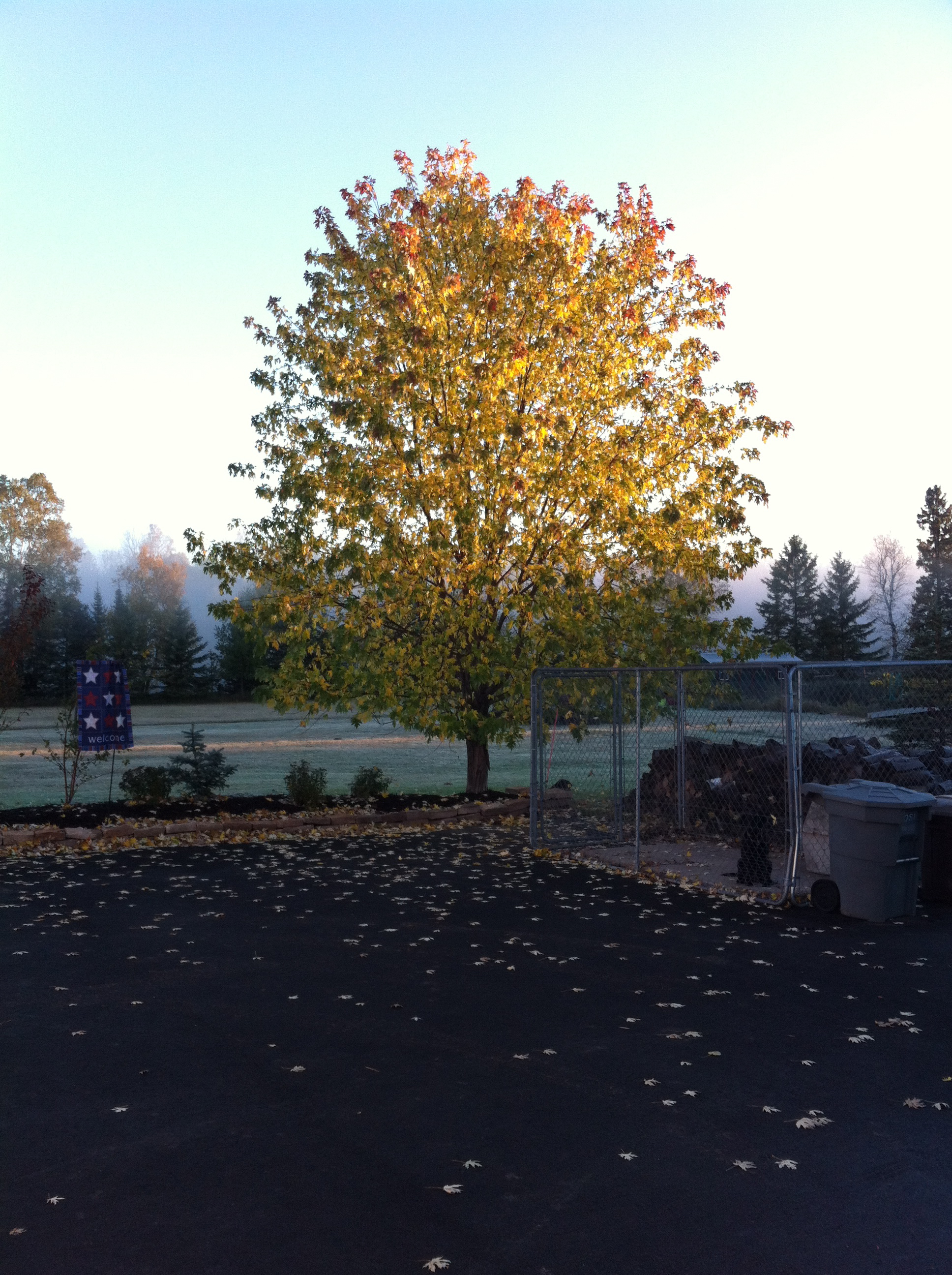
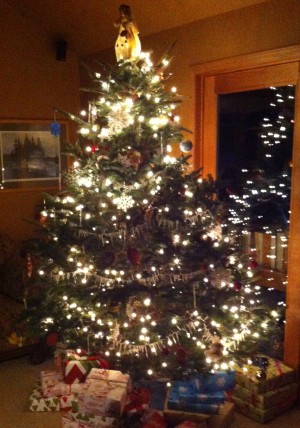
As you can tell from the above photo, which was taken after Rene’ repositioned the tree ornaments and lights later that same night, all is once again well with Pappy’s Tree.

At least until Kena gets thirsty.

Merry Christmas.

Mark


Posted in Blog Archive | Comments Off on Pappy’s Tree

Size Doesn’t Matter

Cellist


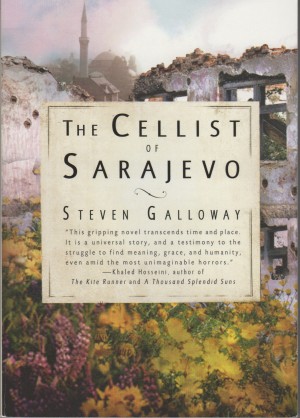
The Cellist of Sarajevo by Steven Galloway (2008. Riverhead Books. ISBN 978-1-59448-365-3).

I was asked to read Galloway’s novel of war torn Bosnia/Herzegovina’s capital city as a precursor to the book being selected for the area “One Book, One Community” program of our local library. I’d heard whispers about this novel but had not yet picked it up. Sally Anderson at the Bookstore at Fitger’s put a copy aside for me. I was a bit surprised when I picked up The Cellist in that I was expecting something weighty and thick, on the order of my own war novel about Yugoslavia, The Legacy, or Hemingway’s For Whom the Bell Tolls. Instead, the volume I walked out of Fitger’s with is best described, in terms of its physical presence, as a novella longing to be a novel. But the tale’s diminutive size was and is deceptive. There is one whale of a tale hiding inside the guppyesque stature of The Cellist.

Galloway, who is a teacher of creative writing at the University of British Columbia, transports us into the Bosnian capital city during the siege of that city by Bosnian Serbs. He doesn’t, as I often tend to do, bog the fictional tale down with historical details or dwell on the misplaced historical perspective of the attacking forces. He leaves it the reader to explore the why behind what took place between 1992 and 1996 in a valley of the Dinaric Alps and very simply (yet eloquently) tells the story of four very different inhabitants of the encircled city. There is no one protagonist in the tale, though the cellist, who explores the same tune every afternoon amidst the ruins of the city in memory of an atrocity that occurred on the very spot where he plays, forms the central figure in the lives of the other three Sarajevoians Galloway profiles. Much like The Red Badge of Courage (Stephan Crane’s brilliantly terse and compact fictional account of the American Civil War) The Cellist of Sarajevo leaves much to the imagination and discovery of the reader as it guides its audience into a once beautiful and graceful mountain city now wrecked and torn by insidious destruction and hate. There is no preaching, no pontificating to be found within the 231 pages of this tale; only the examination of struggle and the day-to-day dread of civilians constantly harassed and under threat of ethnic cleansing and extinction from the Serbian irregulars hunkered down in the surrounding hills.

Brilliantly conceived. Excellently executed. You will remember the end of this novel, a haunting scene worthy of portrayal by our best young actress in a film adaptation, for the rest of your life.

Incredible.

5 stars out of 5. I urge you to pick the book up and participate in the upcoming One Book, One Community event!


Posted in Books | Comments Off on Size Doesn’t Matter

What’s Wrong With Us?

Gander Mountain Advertisement from DNT

I know the adage.

Guns don’t kill people; people do.

As a life-long hunter and gun owner I know there’s truth behind that oft-recited 2nd Amendment mantra. Before a firearm can turn on humanity, it needs to be held in the “cold dead hands” (Charlton Heston’s words, not mine) of a homo sapien. It’s a simple premise really, one that isn’t debatable.

Except…

Tomorrow marks the beginning of December, a month that marks two milestones for me personally and philosophically when it comes to the issue of gun violence.

Two years ago, I was presiding over a criminal trial in Grand Marais, Minnesota. A jury convicted a professional boxer of criminal sexual conduct with an underage teenage girl. I was standing in the middle of the courtroom, the jurors still in the jury box, engaged in an “after the verdict” dialogue with the jurors when the sound of a metal pan being dropped outside the courtroom startled me. I heard three or four more distinct “pops” after the clatter and I knew instantly what was happening.

“That’s a gun,” I said in unison with one of the jurors.

I directed the bailiff (a former law enforcement officer) into the hallway to deal with the shooter. Though the defendant in the rape case had behaved impeccably throughout the trial, I suspected he was behind the attack. As the bailiff scurried out of the courtroom, I locked the doors and ushered the jurors into the jury deliberation room. It was not native quick-thinking that led me to take action. I’d been trained in mass shooting protocol through the Department of Justice’s Safe Schools program, an initiative that arose after Columbine. The training is pretty simple: Flee, Hide, or Fight in that order of preference when confronted by an active shooter scenario. Not knowing where the shooter was headed, not  knowing if we were dealing with a lone gunman, I chose the second option for the twelve souls under my charge. There wasn’t a lot of time to think things through. I reacted and made a choice, a choice that has haunted me every day since December 15th, 2011. At one point, as the jurors were huddled in the locked deliberation room, as I talked to the two clerks working with me that day (who were frantically trying to dial 911 but the telephone lines were all busy) I stepped into the judge’s chambers to ensure that a door to the outside was locked. It was a foolish move on my part. I mean, the door is mostly glass: nice to look out but not very good at stopping bullets. Standing next to that door, I came as close as I would that day to confronting the gunman.

As I looked through glass, I saw the young prosecutor in the rape case across a concrete portico, her hands raised in supplication. She stood forty feet away in the doorway leading to the county attorney’s offices. The door to her office was also open and I was able to hear her. I thought I she was pleading for her life. Turns out, she was pleading for the life of her boss, the county attorney who had been shot three times. I didn’t know it at the time, but as my mind stumbled around options, the bailiff was advancing behind the gunman, pistol raised, seeking to end the conflict. Like I said, I didn’t know this. What I saw was a young woman pleading, saying something to the shooter like, “Don’t do it., D_ _, you know I have children.” I later learned that she actually said, “Don’t do it, D_ _, you know he has children”. She was referencing her boss, the county attorney, who was struggling to keep the shooter out of her office.

The choices confronting me were: Do I call out to her, bringing attention to the fact that I’m still here, behind a pane of glass, along with fourteen other souls, which may well visit the wrath of the shooter upon us? Or do I leave the door open (after all, it’s only glass) as a possible escape route for the young woman? Or do I rush into the fray and try to be the hero?

Again, I chose the middle ground. Unable to connect with 911, I left the door to the chambers open in hopes the young woman could, if necessary, flee the gunman. In hindsight, my decision seems questionable. But I was determined to find a telephone, to call for help. That meant leaving the courthouse since no calls were getting out. In my panic, I was oblivious to the fact that my cell phone was in a pocket of my overcoat an arm’s length away. I left my staff and my jurors and flew down a back stairwell, out into the cold afternoon, clad in a short sleeved dress shirt, loafers, a tie, and dress slacks. I banged on the door of a nearby home. A kid gave me his cell phone. The 911 operator asked for details. I had few to give. She told me that help was on the way. I heard sirens. I hustled to the law enforcement center still uncertain as to exactly what was taking place in the courthouse.

Thankfully, no one died. Both victims of the shooting; the father of the victim in the case (shot by the defendant as a target of opportunity) and the county attorney, survived. The young lady and the bailiff? They are heroes. When the shooter made his way into the attorney’s office, a life-and-death struggle ensued over the bailiff’s handgun. But the county attorney, the young female lawyer, and the bailiff managed to subdue the gunman until a state trooper arrived.

Early reports into the law enforcement center (where I sat on a stool while hubbub swirled around me) drove me to tears. It was reported that the young lawyer standing in the doorway had been shot, was in critical condition, and was on her way to the local hospital. My heart sank. I felt the greatest shame I have ever felt in my life. I considered myself to be a man’s man, to be someone who would, if need be, sacrifice himself for others. I learned on December 15, 2011 that I’m not as stalwart a soul as I thought. My shame is the most significant lingering impact of the shooting and no amount of counseling (I’ve had plenty) or comforting words (folks have been ever so kind) can erase the psychological scars of the event. Understand: I know I am not alone in dealing with the PTSD caused by the shooting. There were fourteen other folks in the courtroom and the court offices that day who experienced the trauma with me, along with the two shooting victims, the young female attorney, and the bailiff. That’s eighteen folks permanently affected by the actions of one man with one gun on one day in NE Minnesota.

There is, however, something to be thankful for beyond the fact that no one died that day.

Imagine, if you will, the same scenario but with a different weapon in the shooter’s hands. A man bent on dealing death armed, not as the attacker was that day with a .25 caliber pistol, but with a Bushmaster assault rifle, the gun depicted in the advertisements at the top and the bottom of this essay. A weapon capable of accepting magazines holding thirty rounds. Thirty bullets instead of six. Imagine that same man turning his rage and upset not on the county attorney, but on the peers of his community that convicted him and the judge who let it happen. He opens the door to the courtroom. The judge, his back to the door, the bailiff sitting in a chair off to the side, twelve innocent citizens trapped by the wooden rails of the jury box, are his targets. There is no escape. It’d be like shooting ducks in a swimming pool or pigs in a pen. Imagine the shooter having not one, but five magazines as depicted in the advertisements. One hundred and fifty rounds at his disposal. Imagine.

You don’t have to. On December 16, 2012, a year and a day after my experience in Grand Marais, twenty children and six adults at the Sandy Hook Elementary school in Newtown, Connecticut faced that horror, that destruction, that evil. One mentally unbalanced young man. One Bushmaster. Multiple magazines. A tragedy of unspeakable proportions in a place, a building, established to educate our babies, our future.

In the aftermath of the Cook County shooting, panels regarding courthouse security were convened. Security became a topic of conversation. But with every proposal for increased police presence or metal detection equipment or single point-of-entry into our state courthouses, came the inevitable response from government: “We don’t have the money to do what they do at the federal courthouses. We don’t have money to pay for security at every door manning metal detection equipment.” Despite such responses, things have changed. There is more, if imperfect, security at our local state courthouses. However, there was, after the Cook County shooting, no real discussion of the shooter’s easy access to weapons or gun control. The circumstances of that particular episode didn’t seem to merit it.

In contrast, following the tragedy at Sandy Hook Elementary there was a flurry of activity seeking to reinvigorate a debate regarding the availability of assault weapons. On the heels of the carnage wrecked with a Bushmaster in Newtown, I sent a letter to President Obama and Vice President Biden offering my experience as part of the discussion. I heard from the Vice President’s office via email and contributed what I could. I had a lengthy discussion with Senator Klobuchar’s Chief of Staff. I received a letter from Senator Franken. I wrote a blog focusing on the bravery of the teachers and aides who died at Sandy Hook. But in the end, the federal initiative to curb the sales and marketing of assault weapons and expanded magazines, including modest proposals requiring background checks on private firearms sales and gun show purchases, went nowhere. There was no political will, in the face of the NRA’s vitriolic belief in the right of every American to arm himself or herself with whatever firearm suits a citizen’s fancy, to do anything at all with respect to gun violence in America. So, when the dust settled and nothing had changed, I went about my life figuring I’d done what I could to make my voice heard.

Then I saw the advertisements at the top and the bottom of this page in the Duluth News Tribune. They were both published less than a month before the anniversary of the Newtown massacre.

Now, I understand you may find fault with me linking these two completely unrelated events. On the surface, you might argue that the actions of a disgruntled litigant in Grand Marais (using a cheap pistol to shoot two people in anger) really doesn’t have a whole hell of lot to do with a madman wielding an assault rifle and executing children and staff in an elementary school. But I disagree. As we’ve seen time and time again, in Littleton, Paducah, Blacksburg, Red Lake, DeKalb, Oakland, Huntsville, Sparks, and a host of other places there is a societal need to try and address the underlying reasons and motivations behind mass shootings in public spaces, places where all of us go to do business with the hope of safety and security. Some of the folks who’ve done terrible things (like the killer in Newtown) were mentally ill. Others were simply alienated, angry young men with chips on their shoulders and axes to grind. In this way, the perpetrators of mass school violence, or theater violence, or mall violence have much in common with the Cook County shooter. They were all angry men, feeling aggrieved, with ready access to firearms. How many hours of violent video games did each of them watch? How many times were they (at least in their own minds) humiliated, disrespected, or bullied by peers? How much did the culture of violence depicted in our theaters and on television fuel their desire to “even the score”? We’ll never know.

But I do know this. I’ve owned rifles and shotguns all my life. I’ve hunted from the moment I completed gun safety at the age twelve. I have four sons. Three of them are hunters. My dad is a hunter. My grandfathers were both hunters. One was a game warden. I’ve served in the United States Army Reserve. With all that background and experience around firearms I can tell you this with a certainty; the rifles depicted at the top and the bottom of this page were designed for one purpose and one purpose only: combat. They are not weapons of personal defense. A loaded semi-automatic handgun, wielded by someone who’s spent time on the firing range, will do that job just fine. You don’t need a Bushmaster for target practice. A .22 pump or semi-automatic is more than adequate to keep your shooting eye keen.  Assault weapons are impractical for hunting. A Winchester or Marlin lever action 30-30 is a far better choice. If you can’t hit a deer with the first five rounds, you shouldn’t be hunting. We require duck and goose hunters to plug their shotguns: They only get three chances to down a bird. Why do we protect migratory waterfowl better than we do our children? Bushmasters with multiple thirty round clips sold at a discount to the general public by big box retailers aren’t sporting weapons. They have no practical use. They’re nothing but tragedies in the making, pure and simple. And it won’t harm your or my 2nd Amendment rights one iota if Congress imposes some modest, adult restrictions on assault weapons, just like it once did through legislation that was inexplicably allowed to expire.

What can one person do about the corporate greed and insensitivity displayed by retailers running ads that shout discount pricing for weapons of personal mass destruction? Well, he or she can stop spending his or her hard-earned money at those stores. That’s just what I intend to do. You can join me if you want, or not. It’s your choice. But something’s gotta give.

Peace.

Mark

Dunham’s Advertisement from DNT.


Posted in Blog Archive | 4 Comments

God and Garrison

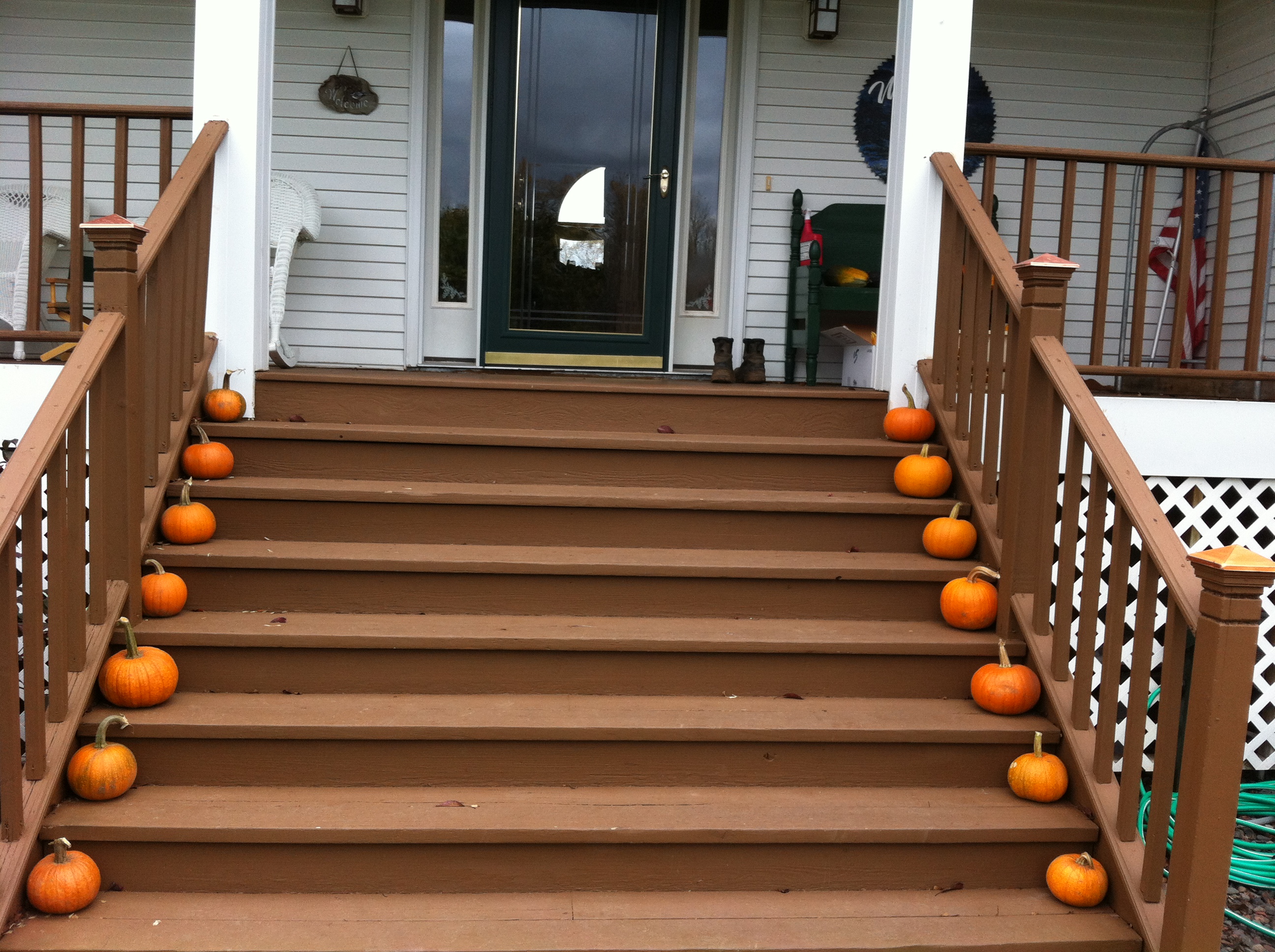
2013 Pumpkin harvest

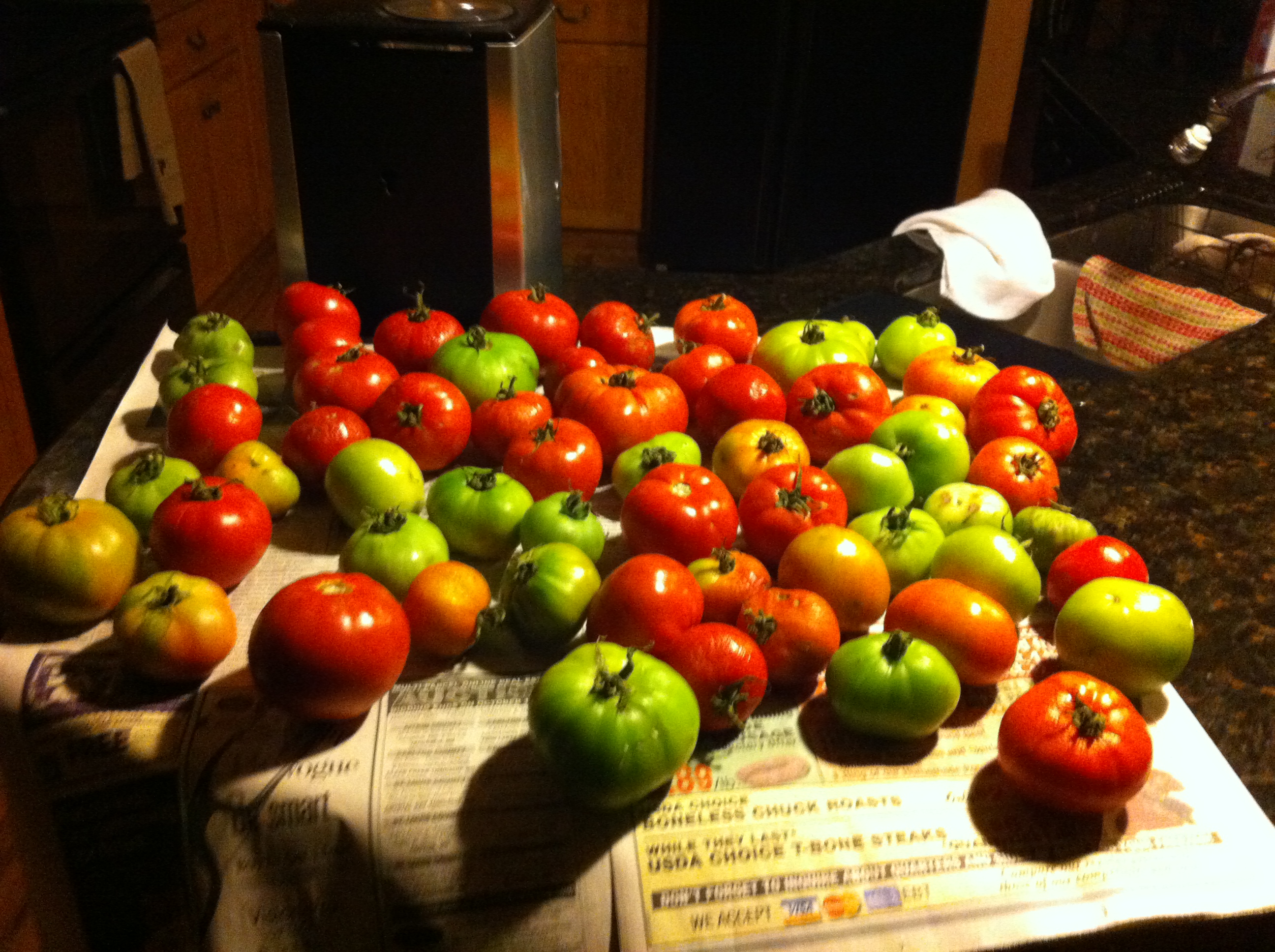
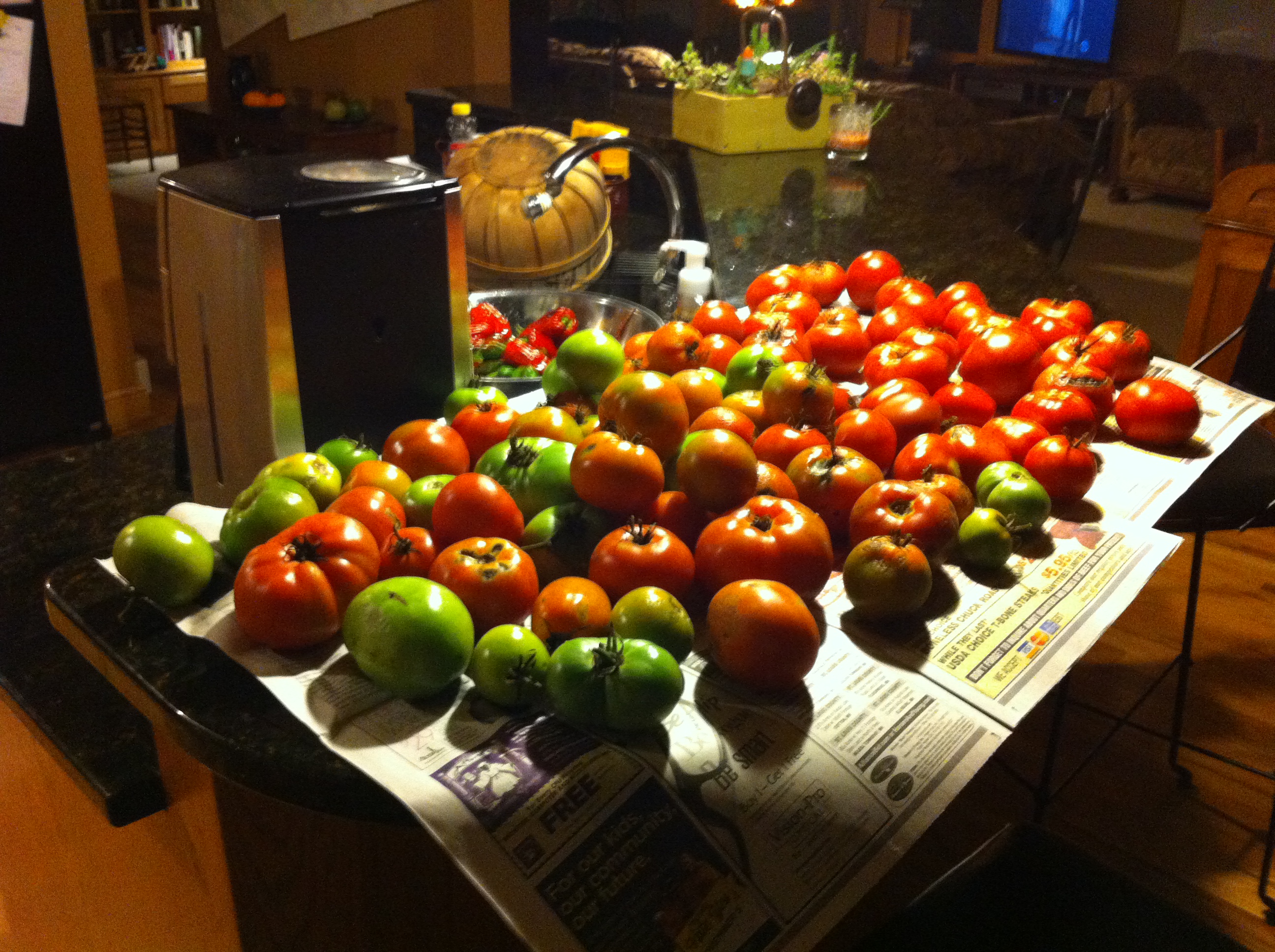
As the light fades and the pumpkins orange, it’s hard not to look back on the summer and wonder how it passed by so quickly. Oh, this year, I was a little better at getting away: I managed two fishing trips to Canada, one with my aging father and one with my ever-sprouting teen. Even with a multitude of complex trials at work and Jack’s soccer games and tending the vegetable garden and all the rest, I found space to enjoy life. But that space seems, in retrospect, awfully short-lived. Up here in the North Country, one senses, all scientific data aside, that time compresses from May through September and enlarges and extends and seemingly slows to a crawl when the seasons shift, when the sun’s rays seem to dwindle, when the harvest is done. Of course, this isn’t so. A month is a month, whether it’s gauged against summer or autumn or winter light. Still, I stand by my observation. Thirty days in July leaves one feeling short-changed, cheated. Thirty days in October, despite the glory of nature’s color scheme, feels elongated, extended. The suspension of time that arrives with falling leaves is a harbinger of winter’s inexorable crawl. Even the extension of the growing season this year, which saw crops a full month behind schedule, did little to alter the whirl of the hands of the summer clock. Hell, as I write this piece, the last of Rene’s very large tomato crop ripens on our kitchen counter, the green skins reddening months after harvest. But even with reminders of August lingering into November, this summer seemed to rush past me like an unexpected grouse taking flight.

Ripening tomatoes.

Life, unfortunately, mimicks this phenomenon. All of us, I am certain, remember the summers we spent as kids. I’m sure the emotions I recall are universal. As children, we could not wait; we fairly sprinted for the doors when school let out in early June. Freedom, blessed freedom, and the promise of bike riding, trench ball, fishing at Engwall’s pond, pick-up softball games, Saturday matinees at the Grand or the Norshor or the Lyceum or the West or the Granada theaters, or golf outings at Enger followed by dips in the murky but cool waters of Twin Ponds, awaited us as the doors to Piedmont Elementary slammed shut. By mid-July, once the shine of summer had been worn off by frenzy and familiarity, we were bored, listless, done in by the heat and extended time. Our thoughts began to migrate to the upcoming school year and to the onset of autumn when we would enter a new grade, meet new friends, and share new experiences. By January, as snowbanks rose to cover window sills, as temperatures plunged below zero, as night fell within an hour of our release from school, the slow, dawdling advance of the calendar forced us to look ahead. We couldn’t wait for spring, for the coming of the rains and the mud and the greening, and with it, the promise of Little League, and games of marbles played with vigor on the way to and from school, and for renewed contests of four-square, hop scotch, trench ball, dodge ball, and tag.  The wet, drizzly, cold spring seemed to last forever until, miracle of miracles, it was June and we were again released from bondage to contemplate a universe of freedom, at least until the cycle of midsummer boredom returned. Between each change of seasons, time seemed, in the throes of childhood (to resort to a cliche’) to stand still.

Adulthood doesn’t follow a similar pattern. At least not for me. Though it’s not universal and I do not feel the acceleration of time every day or every hour, there being times when things do indeed slow down and mirror the calendar of my youth (such as when I’m on vacation, away from work, the house, and responsibility), most days and weeks and months, the clock feels to be churning ahead at an ever-increasing rate. Why this is so, I can’t say. But I know I am not alone in chronicling this feature of maturity. Sometimes, when considering this conundrum, I Imagine what time must be like for dogs. After all, even the smallest ankle biter, the sort of canine that lives an inordinately long dog life, gets at best, fifteen years. That’s a fifth of the time we humans typically exist. Do dogs know this? Do their limited life spans begin with the same slowly patient youth only to lurch forward with ever-increasing velocity? I have no idea but I have  the suspicion that Kena, our new Labrador pup, isn’t thinking in those terms. She seems far more interested in dragging dead deer parts home than engaging in philosophical contemplation.

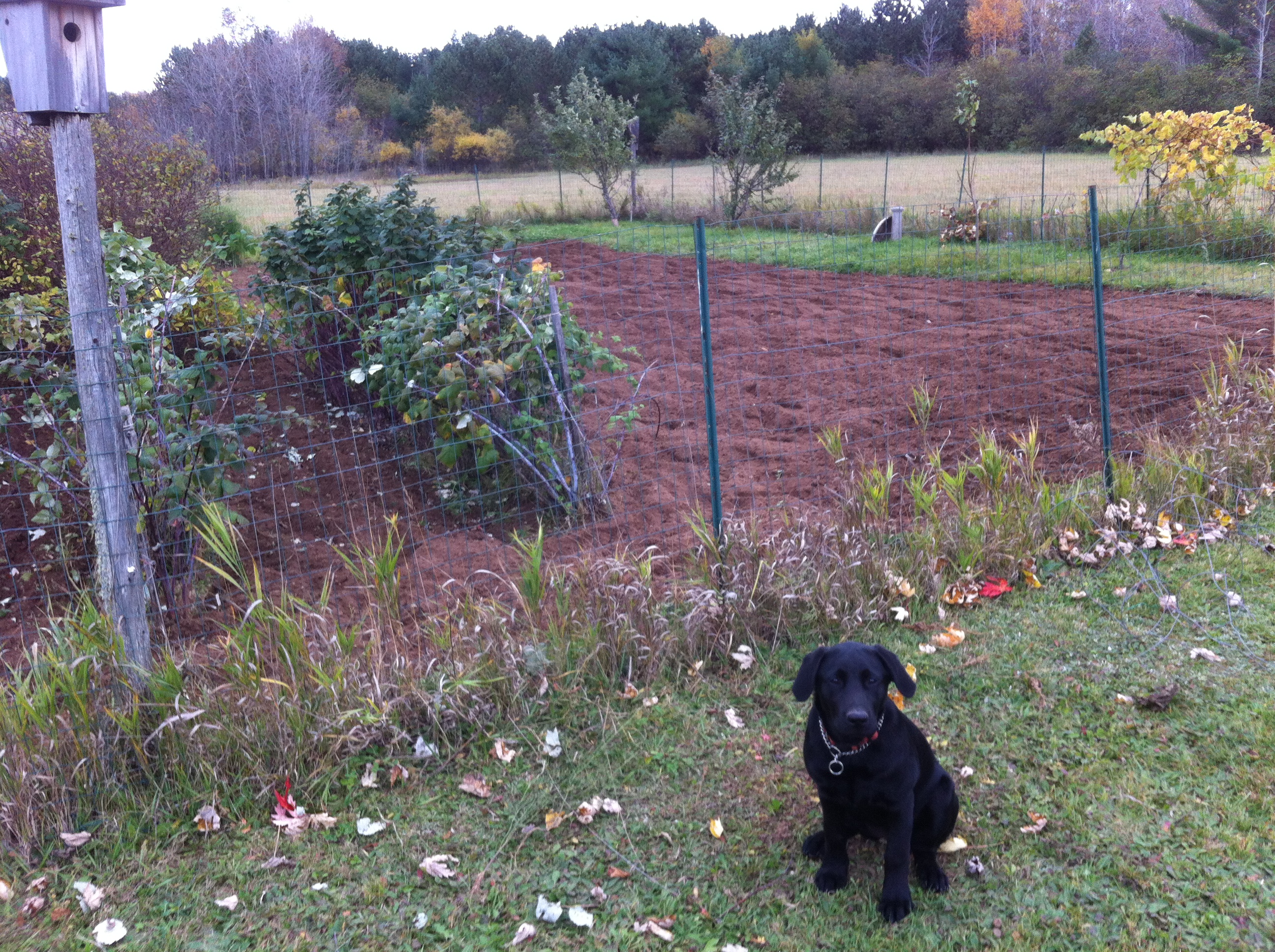
Kena and the sleeping vegetable garden.

I had a dream last night that some bit of my writing, a piece I didn’t recognize and likely haven’t written yet, was being recited by Garrison Keillor on A Prairie Home Companion. Given the maudlin tenor of this essay, I doubt the great sage of Minnesota letters will be wrapping his heart around this piece and reading it in public. It really wouldn’t fit in with the cheery vibe of his show. And while it’s highly unlikely that a man I’ve only met once in my life, whose bookstore has never invited me within its walls for a book signing or reading, knows who the hell I am or cares one iota for my prose, that scene, where Keillor was reading to America from a Mark Munger original, when scrutinized under the flickering  light of rapidly advancing time, intrigues me.

Is God sending me a message?


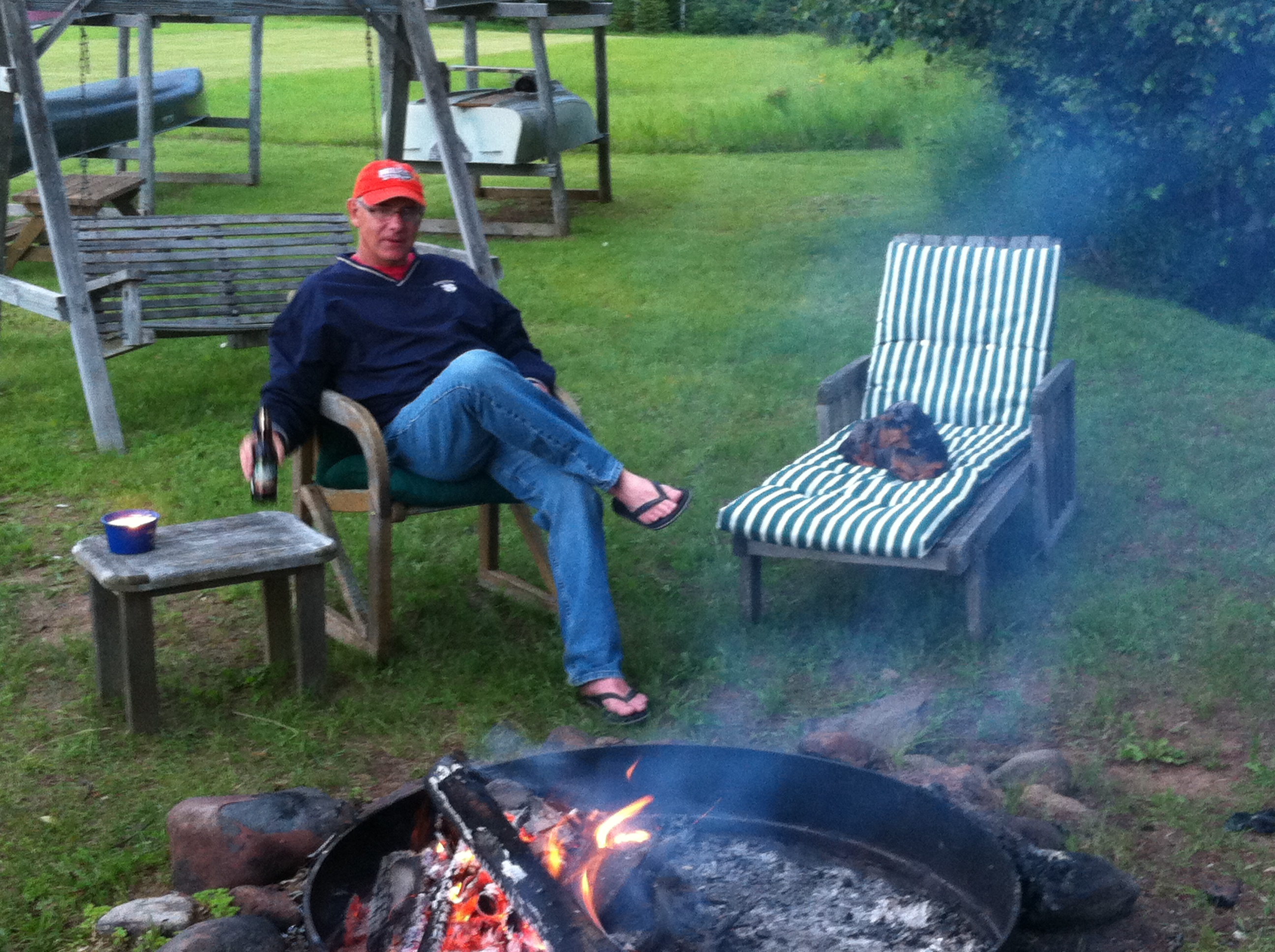
A summer day when time slowed down…


There are any number of explanations for such dreams. Wishful thinking is at the top of the list. Too much taco salad for dinner resulting in indigestion, a cause ascribed by Scrooge for his immersion in ghosts, might be another. But maybe my dream, in the face of seasonal melancholy, was truly a message from the divine, an invitation to set aside my trepidation of an accelerating internal clock and simply be. That’s right. Be.

As I write this, as I listen to Mountain Stage (being broadcast from Grand Marais, Minnesota I might add) and try to place one word ahead of the next in coherent order, plucking and pasting photos from the iPhoto program on my iMac to highlight my thoughts, things are slower than they have been in quite a while. I find myself straining, over the music and the tapping of the keyboard, straining to hear just what it is Garrison is reading. I think I hear the beginnings of a story I knew once, that I intended to write but haven’t yet put to paper. The experience of listening to the future, to my future, unfolds unhurriedly.  Canada geese call from the river below my window. A blue jaw caws. The autumn sky stands folded like a quilt over a silent,  monochromatic land. I hear a small, clear voice inside my head. I have no idea if it’s God’s or Garrison’s.

There is time.

I don’t really care who’s talking to me. I just need to listen.

Peace.

Mark


Posted in Blog Archive | Comments Off on God and Garrison

Jack’s First Hunt

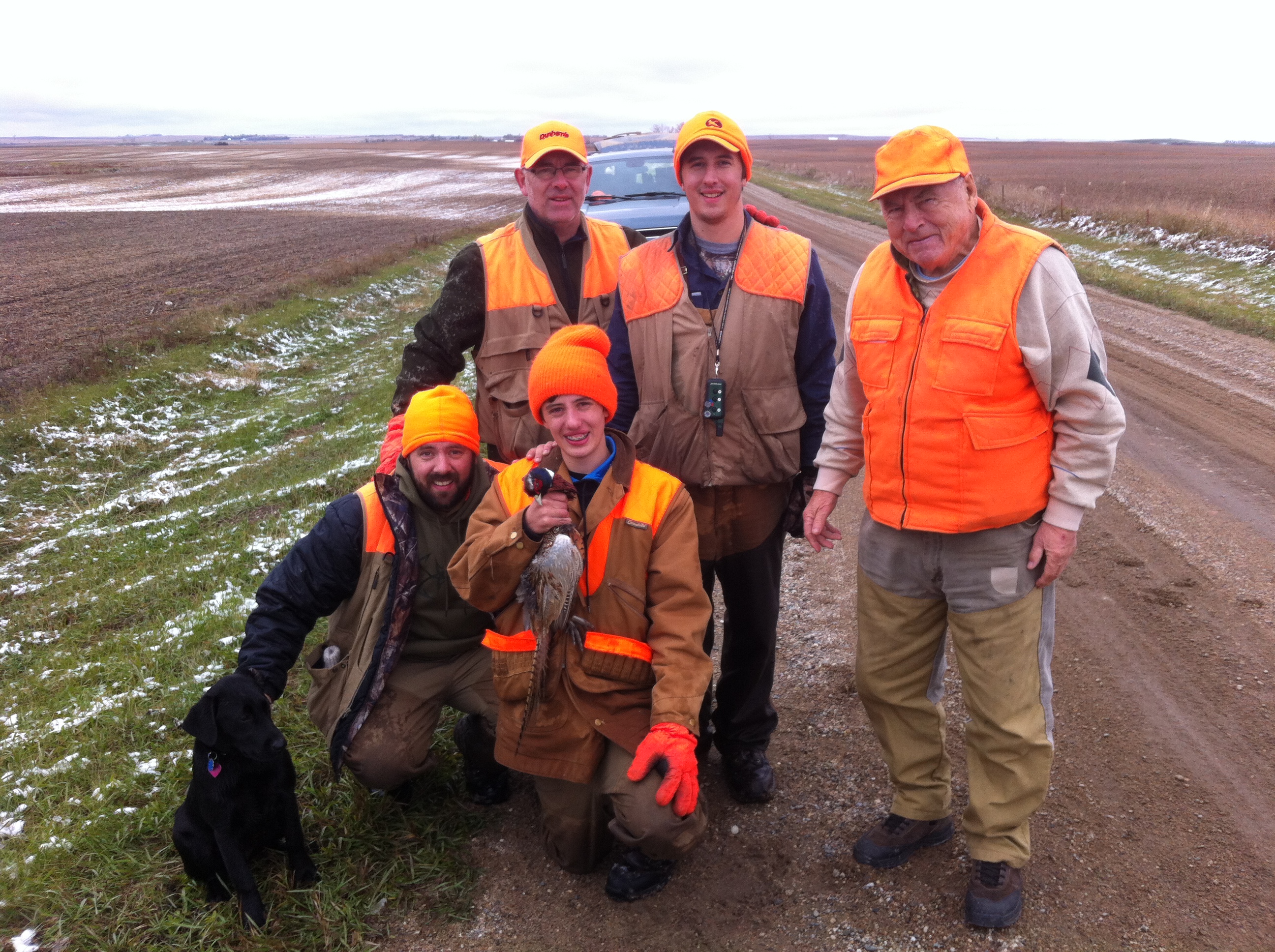
Matt, Mark, Chris, Harry, and Jack Munger.

Ashley, North Dakota. My old man, Harry, who is scheduled to enter his 87th year on this earth in a few days, and his buddy Bruce, have been coming to the Dakotas to duck and pheasant hunt for at least twenty-five years. Over time, they made the tiny hamlet of Ashley, the county seat of McIntosh County, their home base. A few years’ back, Dad asked if my eldest son Matt and I would like to go. We went, had a great time, and the next year, Chris, my third son, came along. We’ve been coming back to Ashley, renting small houses in town and hunting the wide open prairie landscape, ever since. This year, Jack, my sixteen year old son, came with. It was his first bird hunt of any significance beyond poking around the woods surrounding our home on the Cloquet River in hopes of surprising a grouse.

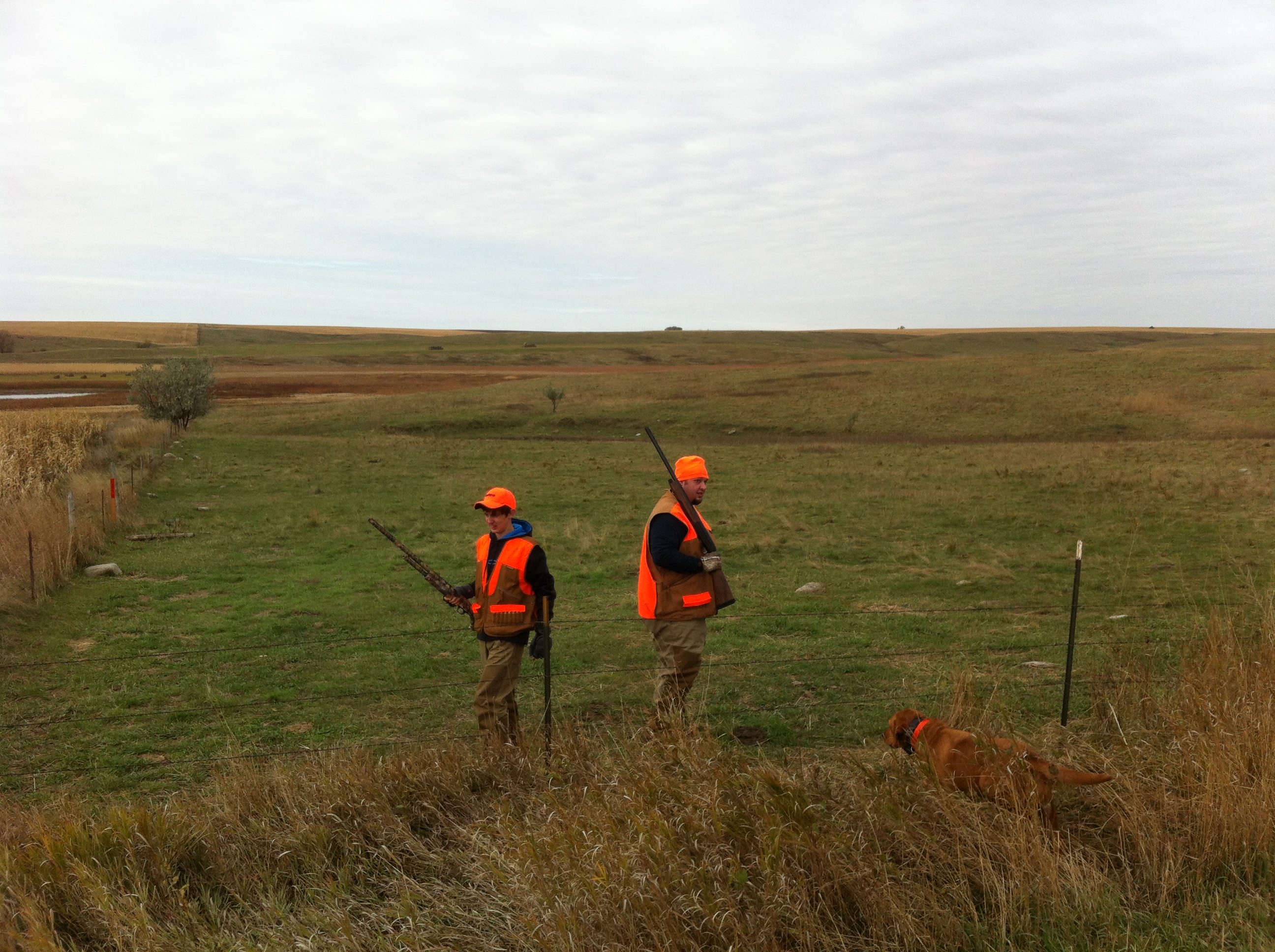
Saturday and Sunday of the non-resident opener were dismal. We saw few birds. I took four shots at big roosters that flushed forty yards out and that was the only shooting I experienced during the first two days of hunting. The sky spit rain and snow. The wind howled. Sandhill cranes, their cranky voices audible even though they were flying a thousand feet above the land, formed and reformed above us like buzzing bees, their dance constituting the beginning act in the month-long play of cranes, swans, geese, and ducks from the potholes of Saskatchewan and Manitoba seeking warmer climes. The lack of rooster pheasants for us to shoot didn’t deter our little group from scouring the sparse, flat landscape for birds. We knew, before making the seven hour drive west from Duluth, that the pheasant population on the Plains had taken a big hit during the wet, cold, snowy spring. But we were optimistic that diligence and hard work, along with the noses of Windsor, a borrowed spaniel, Lexi, Matt’s Labrador, and Kena, Jack’s four month old Labrador pup, would produce some shooting. We were wrong.

Jack Munger and Reid Amborn with Lexi.

It must be said here that the Munger clan, particularly the males of the family, are loud, opinionated, politically correct (in our own minds), and somewhat disagreeable. These traits require anyone who accompanies us on a fishing or hunting trip to be of thick skin and sound debating skills. Matt’s friend, Reid Amborn, fit that bill. He drove out with Matt and Chris in Matt’s Suburban and the banter, bickering, teasing, and derisive humor that is the hallmark of a Munger gathering didn’t bother him in the least. He gave as good as he got. In a word, he fit right in. Even when we buried Harry’s Tahoe, the bald tires of the rig unable to follow Matt’s Suburban through a muddy mess, Reid took our grousing and complaining in stride.

After trying to rock the rig onto wooden timbers, I sent Matt to town in search of a tow strap. We were in a treeless field, mired to the doors in muck, and our efforts to move the Tahoe had been completely unsuccessful. All Dad and I could do was sit in the idling Tahoe and wait for the boys to return. Far sooner than expected, the Suburban was back, plowing down the muddy two lane track followed by another Tahoe. Turns out, the owner of the other Tahoe was prepared. He had a tow strap along just in case. Using the borrowed strap, Matt’s Suburban pulled Harry’s Tahoe sideways until it was on firm ground. We thanked the boys from Indiana. What could have been several hours or more of an ordeal was remedied in short order. More importantly, we heard a similar tale of woe from our new Hoosier pals: They’d seen three birds in two days of hunting. The news didn’t put roosters in our game pouches but made us feel less inept.

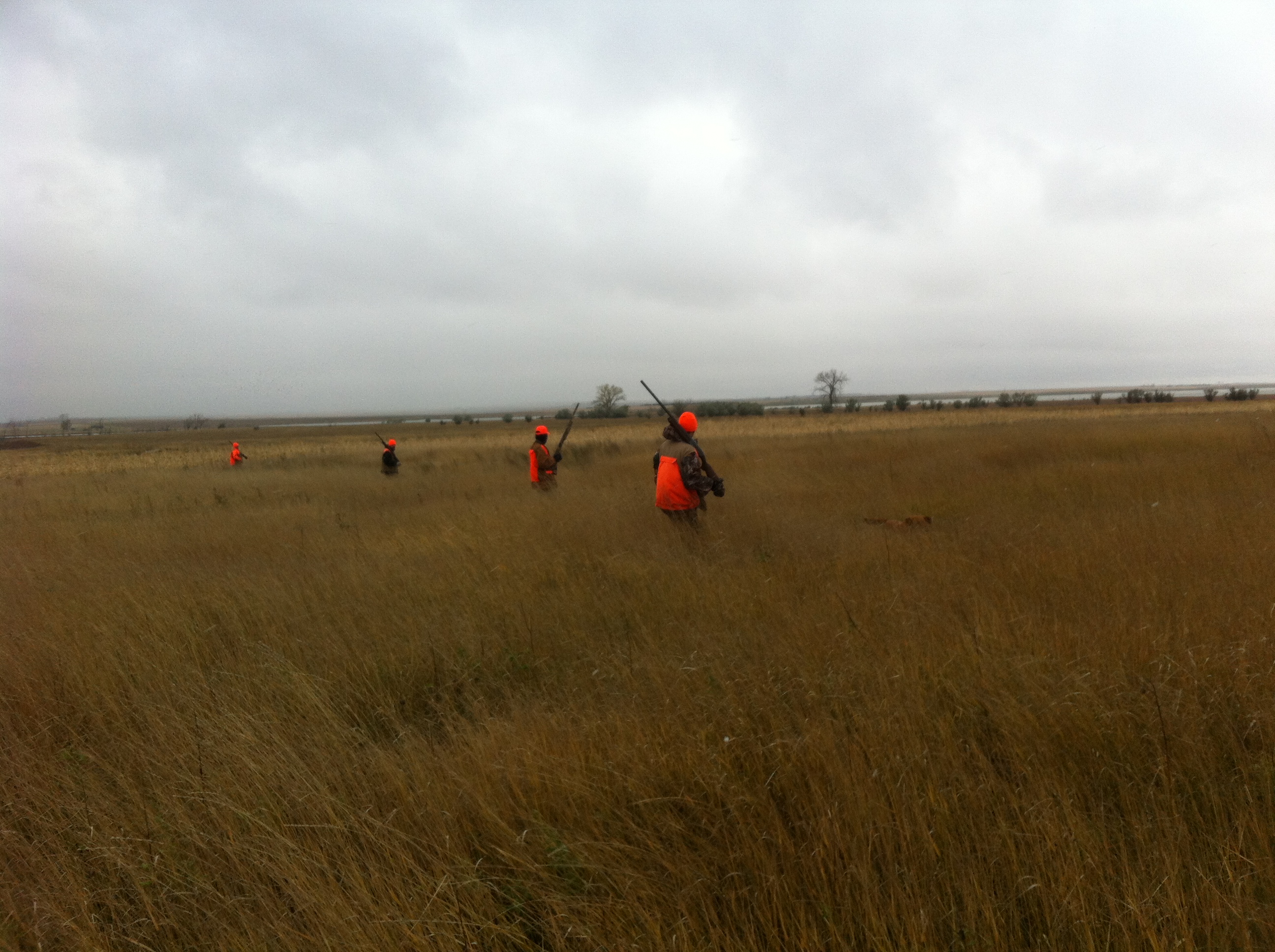
In the field.


Monday, the weather cleared a bit. The sun came out. The dogs, including Kena, who had very little understanding of her role but who began working patterns in the grasses and cut corn and soybeans and sunflowers in mimicry of the older dogs, her nose snuffling, her tail wagging, didn’t stop their efforts to flush pheasants. But despite the hard work of men and dogs, we’d only had two or three quality shots at fleeing birds and we’d missed them all. My old man spent Monday back at the little house in Ashley, preparing turkey dinner; the feast we’d consume watching the hapless Vikings on Monday Night Football.

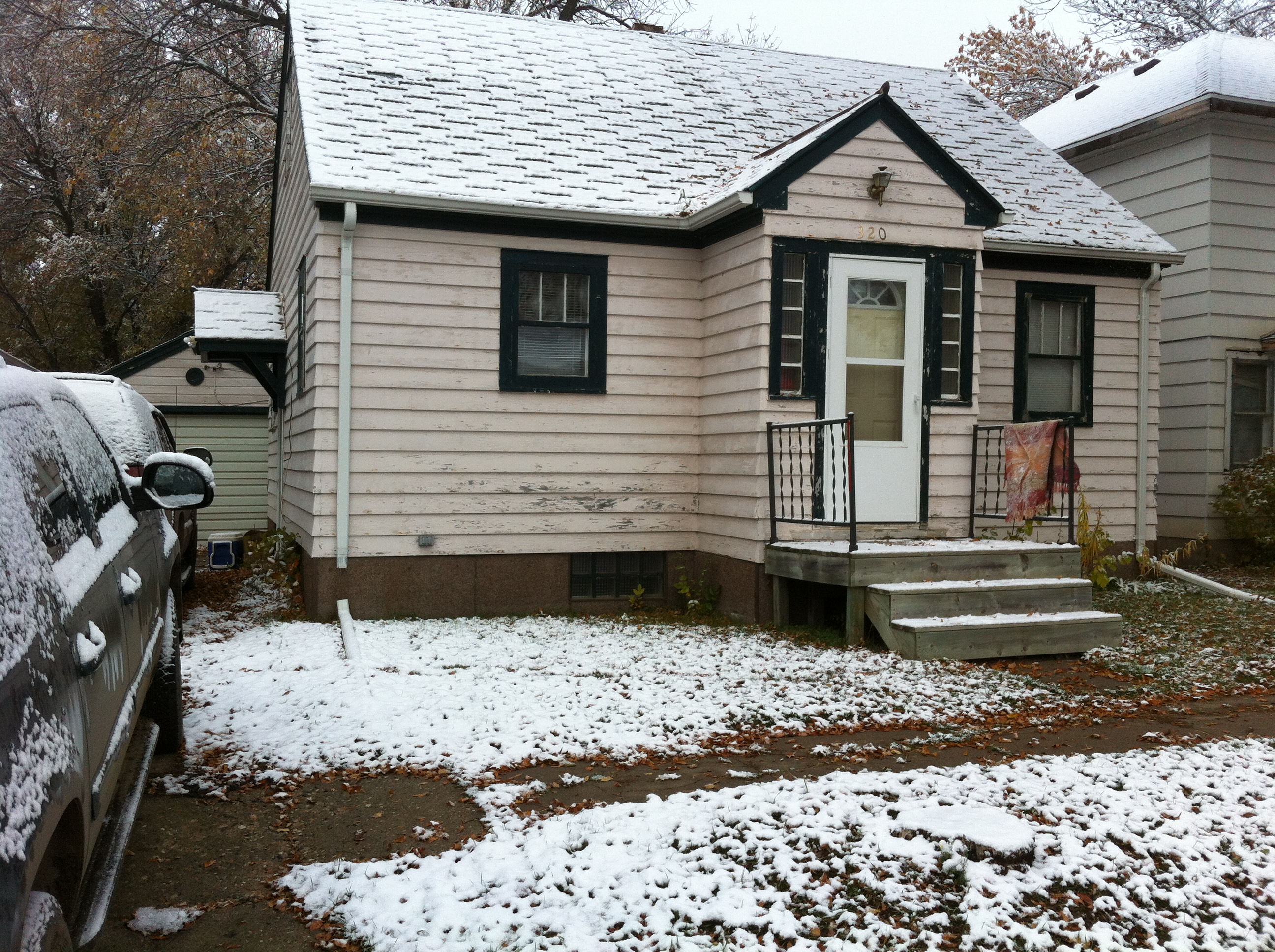
The house.


“Look at the ducks,” Matt said as we worked the edges of one of our favorite spots.

The water of the adjacent lake was dotted with the black forms of mallards and teal and other migrating ducks bobbing on the wind rippled surface of the prairie pothole.

Time and time again, as we stalked roosters along the margins of the high grass and brush surrounding the lake, corn fed pot roasts on wings would slash across the open sky, offering themselves as easy targets against the stillness of a bright Dakota sun. But we weren’t duck hunting and the birds passed our gauntlet safely, put on the brakes, and landed with slight splashes out in open water.

“Great, Matt,” Chris replied. “But we’re not here to shoot ducks.”

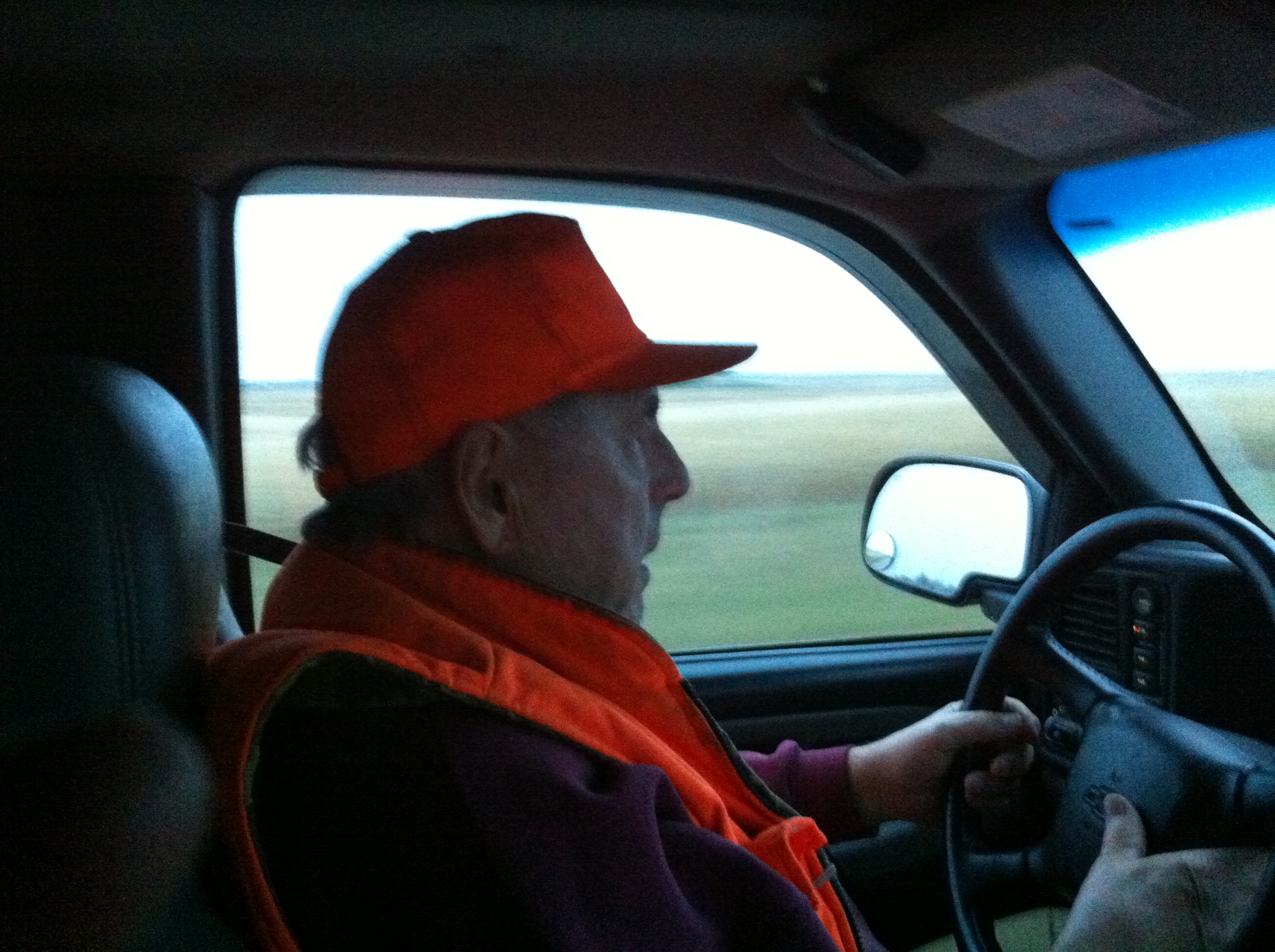
Most days in the field, Dad drove his Tahoe with Jack and I riding shotgun. As we looked for huntable land, I spent a lot of time thinking about my old man, mostly because Dad’s buddy Bruce didn’t make the trip. Harry without Bruce in the field is sort of like Abbot without Costello, Bogart without Bacall, Batman without Robin. It’s unsettling. But there’s not much one can do about the progression of time and the changes that life brings other than to accept the end result with grace and supplication. Still, every time I cast a casual glance in Harry’s direction while he was driving, I knew his heart. I knew that he’d trade one more day on young legs scanning the land through clarion eyes with his beloved Labrador Cleo by his side for a year of earthly existence.

Grandpa Harry driving to the field.


The less that’s said about the Vikings game, the better. Suffice it to say, the turkey, stuffing, potatoes, and biscuits were superb and that, after cleaning the kitchen, doing the dishes, and having the turkey kick in,  I was asleep by nine.

During our Monday hunt, Chris likely had the one and only truly easy shot, a rooster rising from a slough that took wing just in front of him. Normally our most reliable gun, Chris fired three times, nicking the tail of the rooster, loosening a feather or two, but didn’t drop the bird. I knocked one down during the same drive but, because I was using steel and the shot was about thirty-five yards out, the bird was able to run and the dogs weren’t able to find it. By Tuesday, our last day, we were five pheasant hunters who’d bagged no game. In fact, Reid and Jack hadn’t even fired their shotguns. Matt had taken a single shot. I’d thrown up five or six “Hail Marys” at long distance birds, including the one I’d hit. Chris had about the same success. To say we were collectively despondent isn’t quite accurate. But there were rumblings, mostly from Matt, that maybe South Dakota was a better option for next year. Seeing as how Ashley is but a mile or two north of the North Dakota/South Dakota border and that the birds we were chasing didn’t likely know the difference, I wasn’t convinced that a change in jurisdictions (to use a legal term) would bring success.

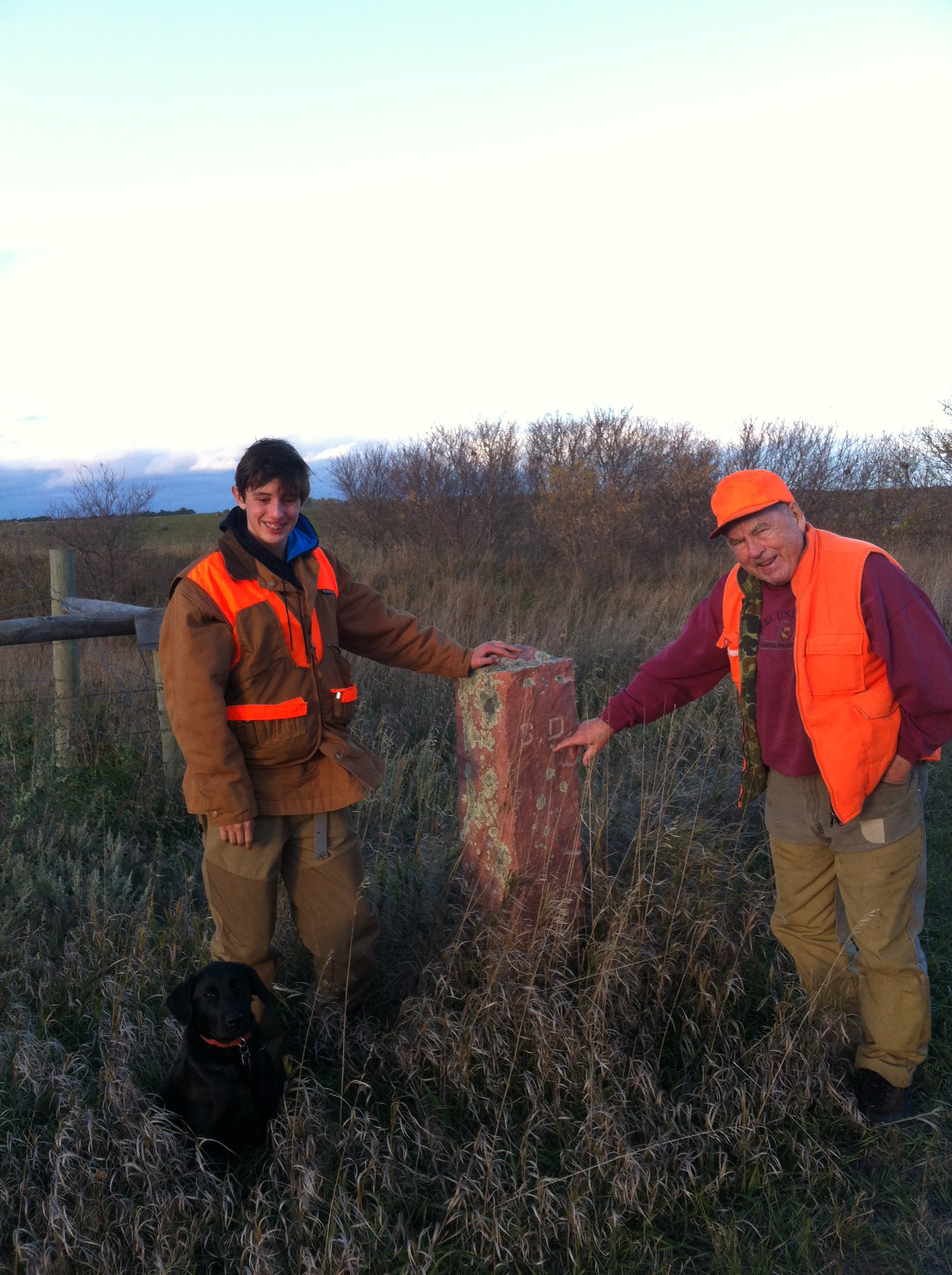
Jack. Kena, and Harry at the South Dakota border. Note the lack of pheasants in the photo!

Tuesday blew in cold. There was snow on the ground when we tromped across a cut soybean field towards a marsh surrounded by empty land. The dogs worked the thick swamp and sedge grass, snuffling here and there, finding old roosts left by departed birds.

“Jack, move to the outside. You’ll likely have a better shot there.”

My youngest son shifted to the extreme right wing of our line as we moved. To the east, on gravel road, Harry drove the Tahoe back and forth, impatience, a trait my father has gifted me, apparent in his actions.

“Watch Windsor,” Chris yelled out as the spaniel stopped on a dead point.

“Get the bird,” I said.

Windsor moved forward. A bird erupted from a clump of weeds between Jack and me.

“Hen,” I yelled.

We watched the bird set its wings and fly off.

“There’s likely more in here,” I said.

Less than five minutes later, Windsor was again locked on a bird. This time, there was no need to coax the dog into action. A brilliantly hued rooster, resplendent in red and green and all manner of color, exploded from bulrushes at Jack’s feet.

I watched Jack hesitate. The bird flew low and to the east, with the wind.

“That’s your bird, Jack. Take him.”

The borrowed twelve gauge rose. The gun barked. Once. The rooster fell, hit but not dead.

“Get the bird, ” I yelled.

Windsor sprinted through the marsh and caught the rooster on open ground. In less than a minute, Jack had a nice young male pheasant snug and secure in the game pouch of his hunting vest.

I couldn’t stop smiling.

“I can’t believe it,” Chris said. “His first trip. His first shot. His first bird.”

“And I didn’t really aim,” Jack replied.

“Don’t tell me that,” Chris admonished. “I don’t want to hear that again.”

It was a beautiful shot. Thirty-five to forty yards out. A great beginning to a long pheasant hunting career.

In the end, we ran into a few areas that were holding birds. But our shooting didn’t improve much, though Chris did manage to take two roosters, one of which I missed, one of which Jack missed, in a single drive.

Near sundown, in an open grassy field that rolled out like a golden, waving ocean for thousands of acres, as the wind was settling and the sun disappearing on our last day of hunting, we ran into more pheasants than we’d seen all week. Roosters and hens started popping up and flying away from us, the dogs madly chasing the scent trails of dozens and dozens of birds in a confused frenzy of smells. Reid finally fired and winged a rooster but it ran and couldn’t be found. Matt fired and missed. In fact, Matt ran out of shells and had to retrieve more ammunition for Grandpa’s Tahoe. In the end, Reid finally hit a big rooster and dropped it in the tawny prairie grass. That bird was dead. It didn’t get away. Windsor brought it to Reid and our hunt was over.

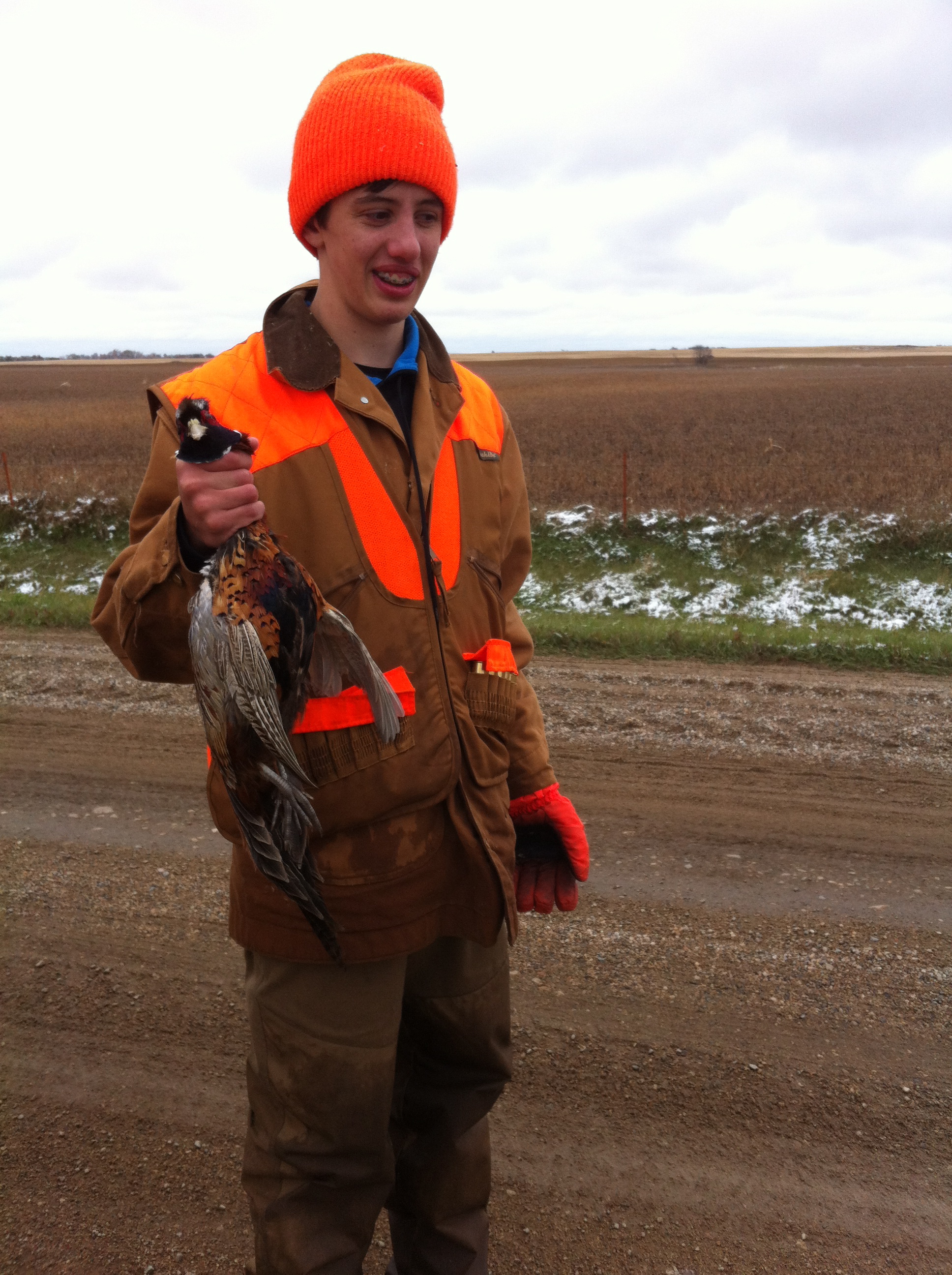
Jack’s first rooster.

Many thanks to my son, Matthew Leonedes Munger, for planning and organizing the trip! You rock, son!

Peace.

Mark


Posted in Blog Archive | Comments Off on Jack’s First Hunt

“Take All Leaves” Something on the Table


Take All to Nebraska by S. K. Winther (1976. University of Nebraska Press. ISBN 9780803258310)

As part of my involvement with the blog, Rural Lit R.A.L.L.Y., an organization that has its purpose in preserving and studying rural-flavored novels from the late 1800s and early 1900s, I was asked to read and dialogue about Take All to Nebraska on the blog site,  http://rurallitrally.org/. This is the fourth or fifth book that I have read and discussed with my fellow board members and others interested in prairie literature of the past. Here’s my take on Take All.

I found the language of “Take All to Nebraska” less lyrical in voice than the works by Ostenso and Krause. To me, Winther was trying a bit too hard to write in a simple, immigrant’s voice even in the narrative sections of the book and the overall tone of the story seemed to lack the poetry of “O River Remember!” by Ostenso and Krause’s best works, “The Thresher” and “Wind Without Rain”. The author certainly portrays the efforts of the immigrant Danes in this story with authenticity but, as stated, I wasn’t “swept away” by the prose.

I was also a bit distracted by Winther’s odd literary slight of hand in not laying out the Grimsen children by name and birth order at the beginning of the tale. I found myself constantly trying to remember which child fit in where and what that character’s traits were. Even after closing the book’s cover upon finishing, I was still unsure of how many children populated the story and what their names were.

Additionally, Peter Grimsen, like so many of the male protagonists in hard times/prairie immigrant literature, finds himself thrust into a struggle with the owner of the land he’s farming. Yet, while this conflict between the haves and the have nots should be a major component of the story, the tension between tenant and landlord gets little attention and, in fact, seems to disappear as a part of the plot after being advanced to the stage. I wanted to read more about Grimsen’s travails and his relationship with the human forces that held him captive through the tenant farmer system dictating the direction of his life.

In the end, “Take All to Nebraska” was a bit simplistic and not nearly as engaging as the other works I’ve read as part of my involvement with Rural Lit R.A.L.L.Y.
3 and 1/2 stars out of 5.

Posted in Books | Comments Off on “Take All Leaves” Something on the Table

Run Away from this Mess!

Tropic of Capricorn by Henry Miller (1994. Grove Press. This review refers to the Kindle version of the book.)

Maybe I should just let the words of a seventeen year old reviewer on Amazon say it for me:

I am 17 and I got this book at the school library. I have found three main themes the author seems to be putting out: the main character tells the story of a tragic death, the main character complains incomprehenisibly about America, the main character rates the female anatomy in relation to it’s personality. This book has absolutely no plot or even a story line, it is simply the ramblings of a sexually disfunctional (sic) person.

That’s as concise a review as anyone can write about this inflated, overrated, contorted mess of words. Not mess of a novel. Not mess of a memoir. No, this collection of extended sentences, weirdness, the repetitive use of the c-word and the f-word for effect, tortured psychology, and obvious misogyny is not, in any sense of the word, a comprehensible, readable, enjoyable story. Whether fact or fiction, whether based upon the real exploits in bed (and on tables, floors, in cars, and beneath lampposts) of the flesh and blood Miller, or completely invented tales from a warped man’s libido, this book is simply trash. It’s a wonder that I didn’t simply stop reading and move on to something else, something with characters that engage, a plot that travels in a linear path to a conclusion, and a message, whether light, dark, or somewhere in between, that leaves me thinking, “Wow, that was something!”

Well, this tortured exercise of prose is something. It’s just not something worth reading.

1 star out of 5. Save your nine bucks and buy something for your Kindle or Nook or Kobo that has a point of view, a narrative, and a perspective that warrants your precious time.

Posted in Books | Comments Off on Run Away from this Mess!

Change

Munger Farm, Autumn 2013.


I’ve been accused by many friends, family, and colleagues of being entrenched in the present, or worse yet, riveted in the past. There’s a grain of truth to the notion that I’m not the most adaptable person in the human herd. And my avocation, looking back at events and history, real or imagined, to create fiction, well, that doesn’t lend itself to dreaming about rocket cars and robot prostitutes, now does it? There was a time in my young adulthood when I was a future thinker and reader. I inhaled science fiction and fantasy, being partial to the works of Ursula LeGuin and Frank Herbert, and dreamed of where my life might be headed, on what distant shore my boat might land. Well, here I am, approaching sixty, living within a half-hour of the neighborhood that formed my persona. The wind has died. My boat is languishing in the doldrums. I have stepped onto familiar shores, set my anchor, put the LeGuin and Herbert books on the shelf, rolled up my sleeves, and organized a pretty simple life around a few acres of trees and pastures just outside of town. Did I dream of such a rooted existence? Was the path I stumbled onto and steadfastly followed my own or one that society, life, and/or God chose for me? I often wonder how it is I came to be to where I am. Not that I’m disappointed, you understand. I have a wonderful wife, four handsome, intelligent, good-natured sons. Notice I used the present tense in that sentence. See, I’m not tied solely to the past. At least, I don’t think I am.

These sorts of maudlin thoughts are not unique to me as I watch the advance of colors across the landscape of northeastern Minnesota. The gradual sweep of orange, yellow, red and deep brown begins low to the ground where clinging vines and youthful maples flash early scarlet. The inevitable progression touches the sculpted tops of ruler-straight tamaracks, transforming green to shimmering gold, and afflicting Northland residents with a sense that the march of seasons in our neck of the woods is unstoppably upon us. Of course, there’s a scientific basis behind why foliage turns color, why leaves drift to the ground, why we are left to consider a landscape of gray and brown splattered with dashes of evergreen. But I don’t care to learn the science behind the art. I have no desire to understand the perpetual change of the advancing seasons. I only want to stop and think about the bigger picture and how God, family, death, love, and unfinished books and stories fit into the equation of my life.

Front yard, Autumn, 2013.

Despite my noted stubborn opposition to change, I realize, as I sit listening to West Coast Live on KUMD via live streaming on my iMac, typing this piece, momentarily distracted by the antics of a four-month-old black Labrador who as imperiously claimed the cushioned chair next to my writing desk, that there’s not a hell of a lot I can do to stop the colors from changing, dogs from aging, or a myriad of other alterations that time has and will foist upon me.

Three shots ring out from the river below the house as I type. A duck hunter has likely brought down a wayward wood duck, perhaps a male resplendent in color, from concealment. Hunting too, as I understand it, is undergoing change. Few young people are following the traditions of their ancestors and taking up arms to harvest game.

What does the future hold for hunters, for hunting?

Another question with no answer, at least, not from me. A mandolin sings. Fingers fly. Kena chews a rope toy, her Labrador brain content in the present, regaling in the fact that I haven’t booted her off the chair. As a young father and dog owner, I would have made her leave the furniture.

Dogs don’t belong on furniture, is what I would have told my sons.

Now I consider such admonitions a waste of time. There’s no future in worrying about whether a young Labrador wet from an autumnal swim in the Cloquet River will harm an old chair. She’s family. I let her be and smile as she tosses her toy in the air and catches it with her mouth, completely unaware that I am writing about her.

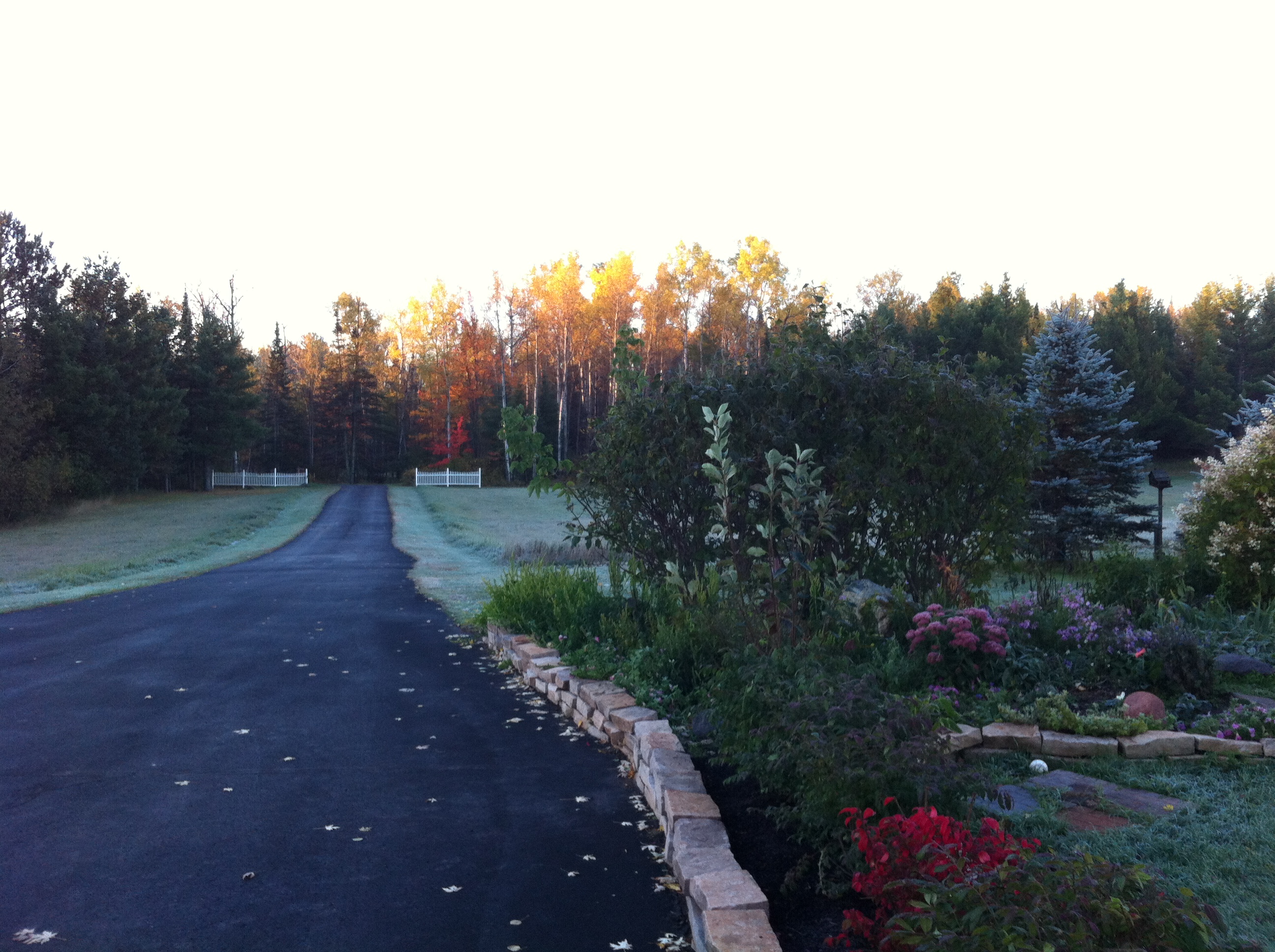
Driveway, Autumn 2013.

My future, my wife’s future, will be unexpected. Oh, some things about where we’re headed are predictable. There’s the same destination, the same village at the end of the road for all of us. But the journey from here to there, a journey of color and light and story and song and dogs and canoes and fishing trips and grapes and deer and Russian berries and gleaming jars of tomato sauce fresh from the garden and grandchildren and great-grandchildren is not yet charted. The details are not yet known. There will be some things that remain constant and, assuredly, there will be change. There already is.

Years back, my father and I purchased tracts of land abutting the Cloquet River in Fredenberg Township. Rene’ and I built a new home on the smallest parcel, a fifteen acre pasture that’s now the center of our small, present-sense universe. The other wooded parcels we own are sliced by trails that our family, our friends, and neighbors enjoy throughout the changing seasons. For the better part of fourteen years, we’ve been insulated and isolated from the world at large, tucked into the woods on our private little parkland. But that’s changing.

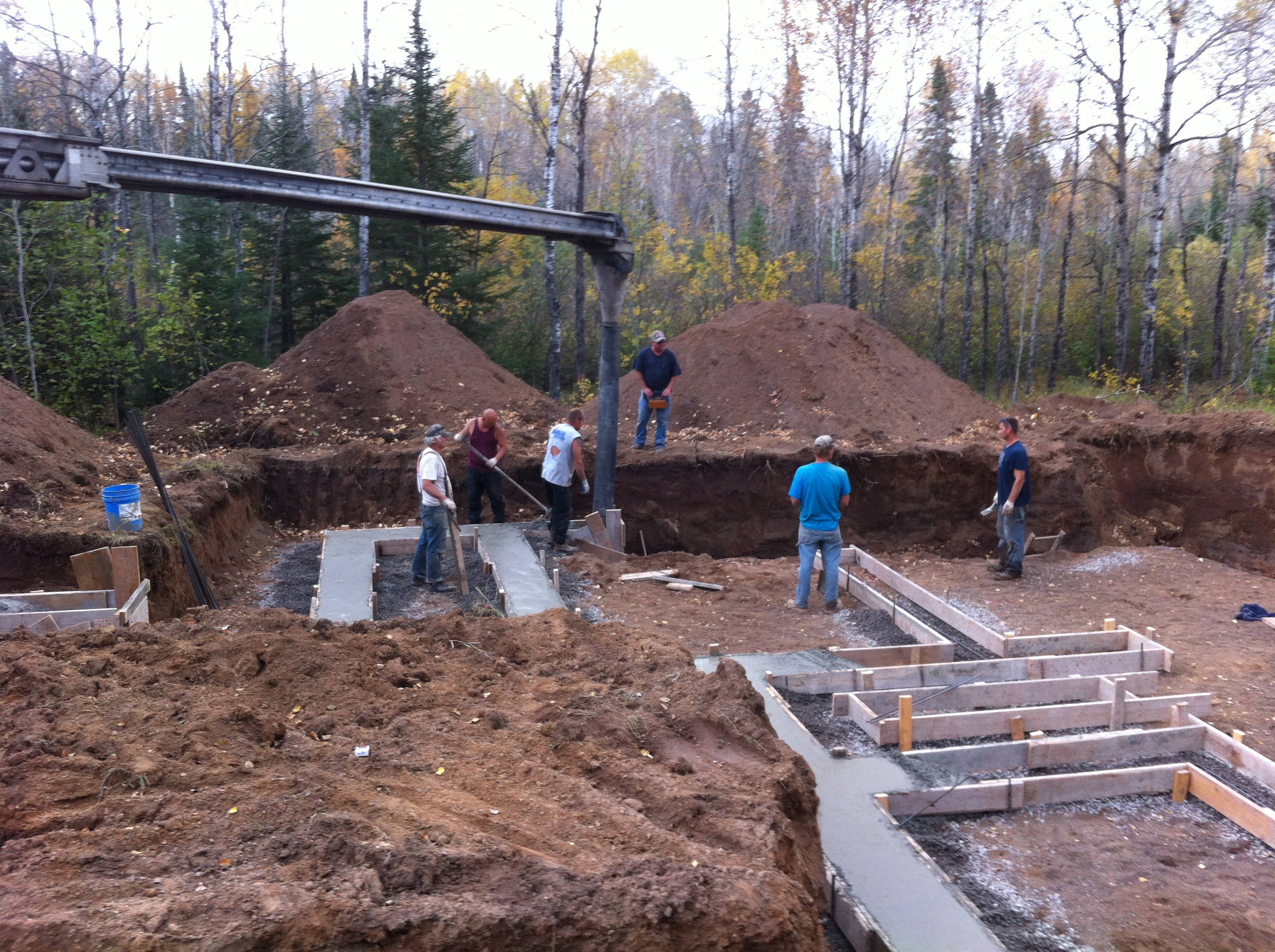
Matt and Lisa’s house gets a basement.

Our eldest son Matt, his wife Lisa, and their son (our first grandson) A.J. recently bought 20 acres from us to build a new house. Matt grew up in the country and wants the same experience for his children. (Note that I wrote “children”, not “child”. That much about the future I am reasonably certain of!) Due to weeks of dismal weather, other than punching through a new driveway, not much progress (another future word) has been made towards erecting  Matt and Lisa’s house. As days passed, as an idle bulldozer sat next to the rough gravel drive, I began to ponder the change that was taking place. I love my kids. Love my eldest son. But the property my father and I share has been a refuge from others, a place of quiet contemplation and consideration. I realized, as I drove by the newly dozed earth, that things weren’t going to be the same. I knew this before Rene’ and I said “yes” to Matt and Lisa’s suggestion that they buy land from us. But the yellow dozer sitting next to the newly carved driveway brought the reality of their plans, their future, our collective future, into focus. I wasn’t troubled by that reality. It didn’t rise to that level of concern. But there was an aspect of uneasiness that afflicted me every time I drove by the bulldozer and wondered how it would all work out.

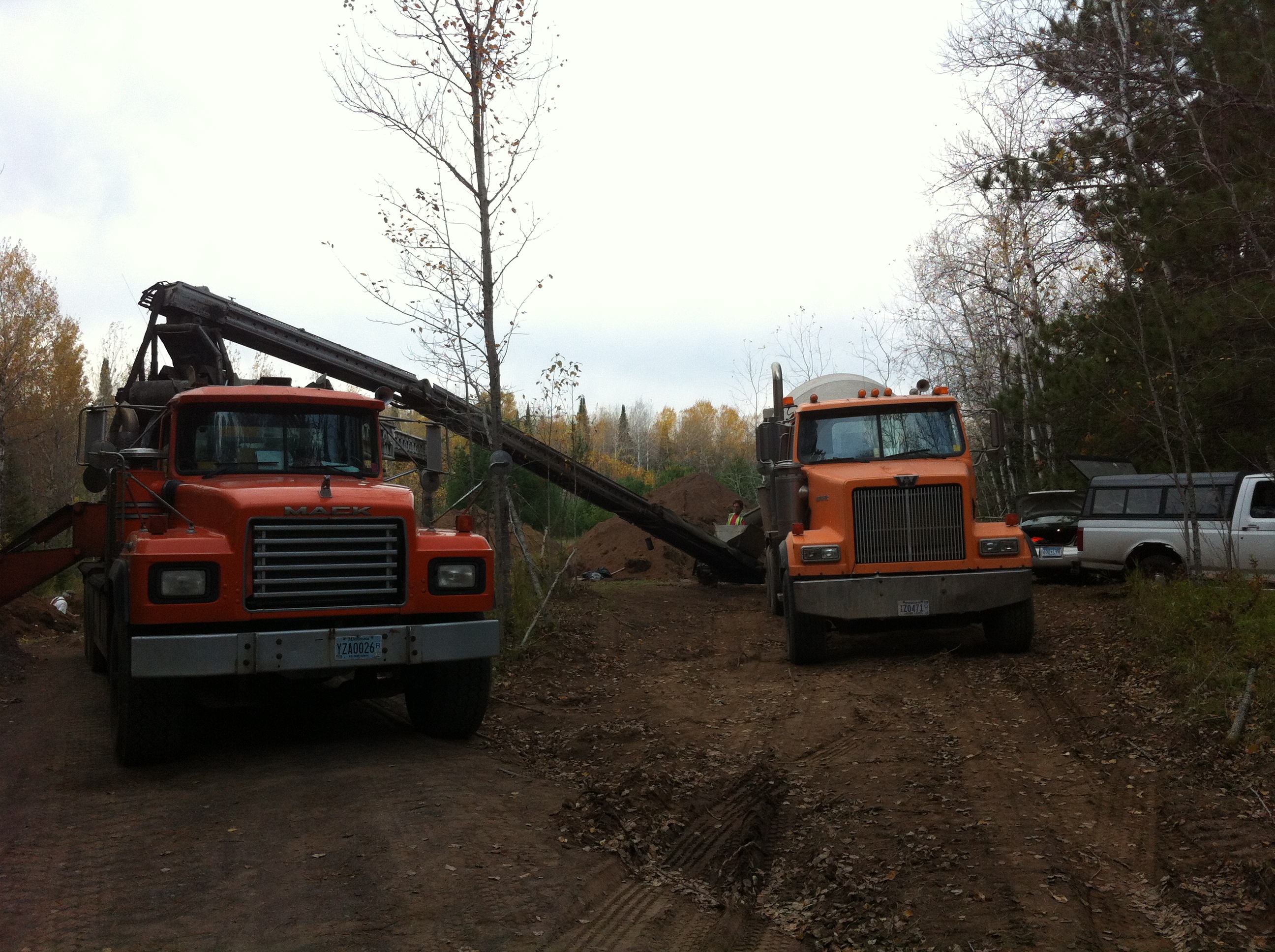
Yesterday, the leaves still holding color, a gray sky hanging low over the land, a collection of trucks and heavy equipment caught my eye as I drove home. A cement truck, it’s backup beeper sounding an alarm, was trying to exit Matt and Lisa’s driveway. I stopped beyond the entrance to the building site, waited for the truck to leave, and then drove in. I parked my Pacficia, opened the door, a slight drizzle falling from close clouds, and approached a guy sending concrete from a big rotating hopper onto a conveyor and into a gigantic hole in the ground where a handful of men worked like ants guiding slushy cement into wooden forms; forms that will hold and sustain a house in the woods for our grandchildren.

Pouring the forms.


That’s a change, a future, that even an old historical novelist can accept.

Peace.

Mark


Posted in Blog Archive | Comments Off on Change

Harvest

Tomatoes ripening on the kitchen counter.

Rene’ and I have lived in the country for nearly thirty years. We’re city kids by heritage, folks who never raised a carrot or a pea or a potato until we wandered out to Fredenberg Township in 1984 on the off-chance that the Sears house described in a “for sale by owner” ad in the local paper might be big enough to hold our growing family. We were living in a neat and trim little bungalow on St. Marie Street a stone’s throw from UMD and had been looking for a bigger place for the better part of a year. We toured dozens of homes, made an offer on one or two, but providence must have been on our side because the offers we made, offers which would have kept us in town, were all rejected. That first visit to the Drew place (a country home retains the name of the last family who lived there) I brought Matt, our eldest son, who was four years old at the time, along. Gerry and Ruby Drew gave us a tour of the house, old dairy barn, garage, chicken coop, and the seven acres that made up the farm. A neighbor, Charlie Davidson, happened by while Matt and I were there. Charlie stopped in to deliver a load of mulch for the farm’s impressive raspberry plot. I think it was the black water of the river flowing by the house, more than the home’s history of having arrived in crates from Sears and Roebuck, or the well-worn interior of the house itself, or the vegetable garden that led me to conclude This is the place. The next day, I dragged my very pregnant wife out to see the farm and within a week, our offer to buy the place was accepted.

It took a while to get the details of hobby farming down. Failed attempts to raise strawberries. Dusting potatoes for potato bugs. Figuring out how just how many beans and peas we really wanted to eat in a year. Deciding that blanched corn-on-the-cob in February doesn’t hold up all that well; that corn-on-the-cob is best enjoyed fresh, right out of the garden and that the only way to eat it in February is after removing it from the cob and smothering it in butter. These are things we learned as we went along. But, unlike most of our neighbors, whose attempts to fence out marauding deer generally met with disaster, our vegetable garden remained, until very recently, untouched by antlered foe. Our black Lab mix, Daisey (and before her, a litany of other Labradors) have kept hoofed invaders at bay. But age has crept into Daisey’s bones and she no longer has the gumption to challenge deer. More about that later

After we bought the Drew place and moved in, I approached Gerry about buying a 15 acre pasture he owned down river from the Sears house. We came to an understanding and the land was added to our hobby farm. For the fifteen years we had horses, the pasture provided hay to feed the animals through winter. But every time something would go wrong with the aging Sears house or whenever Rene’ sat in repose looking across Knudsen Creek at the vacant hay field, I knew we were getting closer and closer to building a home. It happened. We sold the Drew place, which became the Munger place as soon as we left, and moved down river. The weird thing is that, even before the first spade of sandy loam was turned for the foundation of our new house, we tilled and planted a vegetable garden at the new site. And it didn’t take long for the deer to discover the plot. So, when we moved in, I built a fence around the vegetable garden, which, along with our Labradors’ patrols, seemed to do the trick. Then, two years ago, crows discovered our corn as the ears ripened in the July heat. The birds made short work of the golden kernels and, for good measure, pulled up all the newly germinated seeds of the other garden plants, eating the seeds and leaving leafy evidence of their foul deed behind. Jack, our youngest son, tried to reproach the flying pests with pellets and BBs to little effect. Netting tossed over critical plants didn’t seem to help.

Russian berry harvest, 2013.

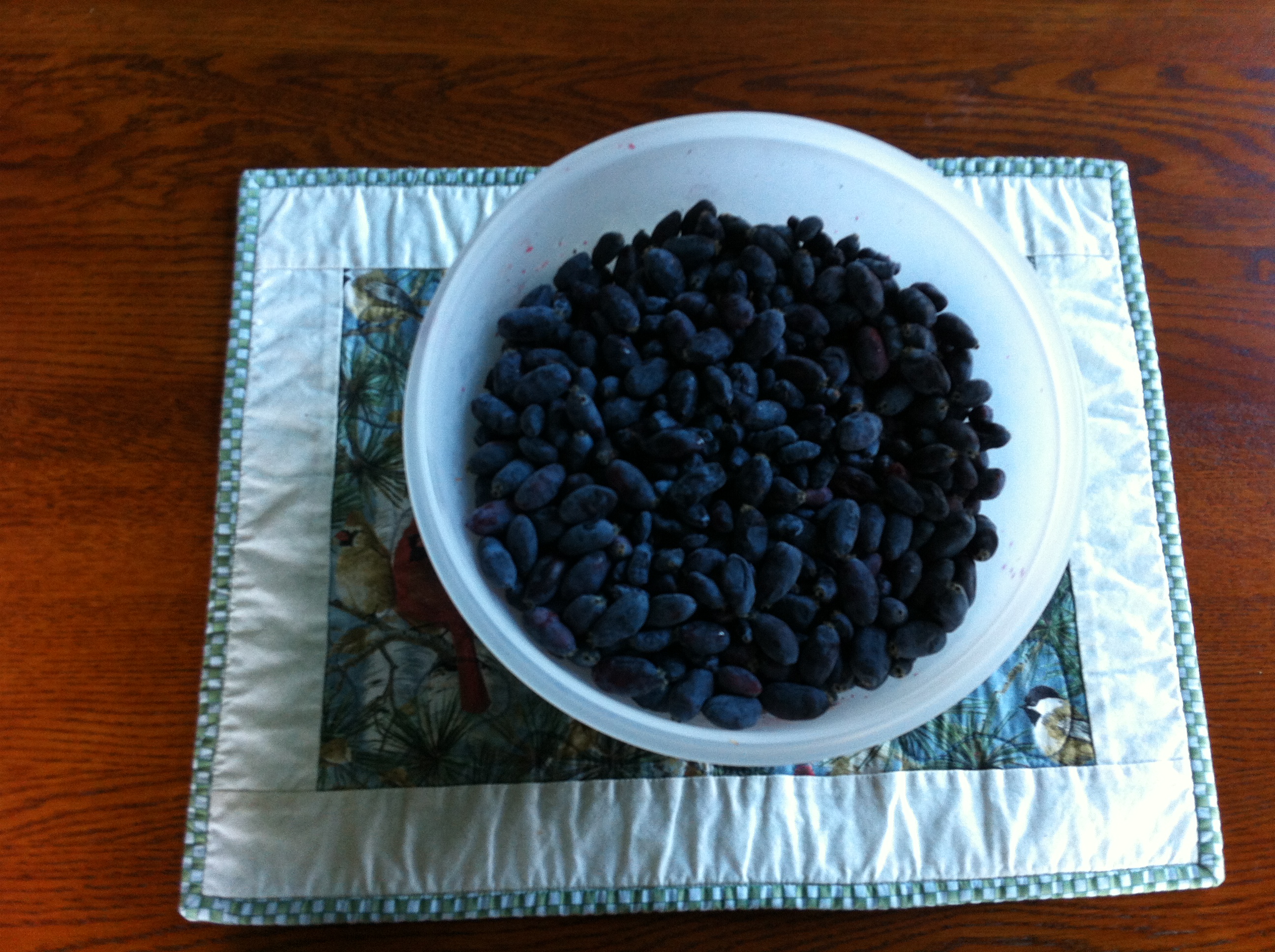
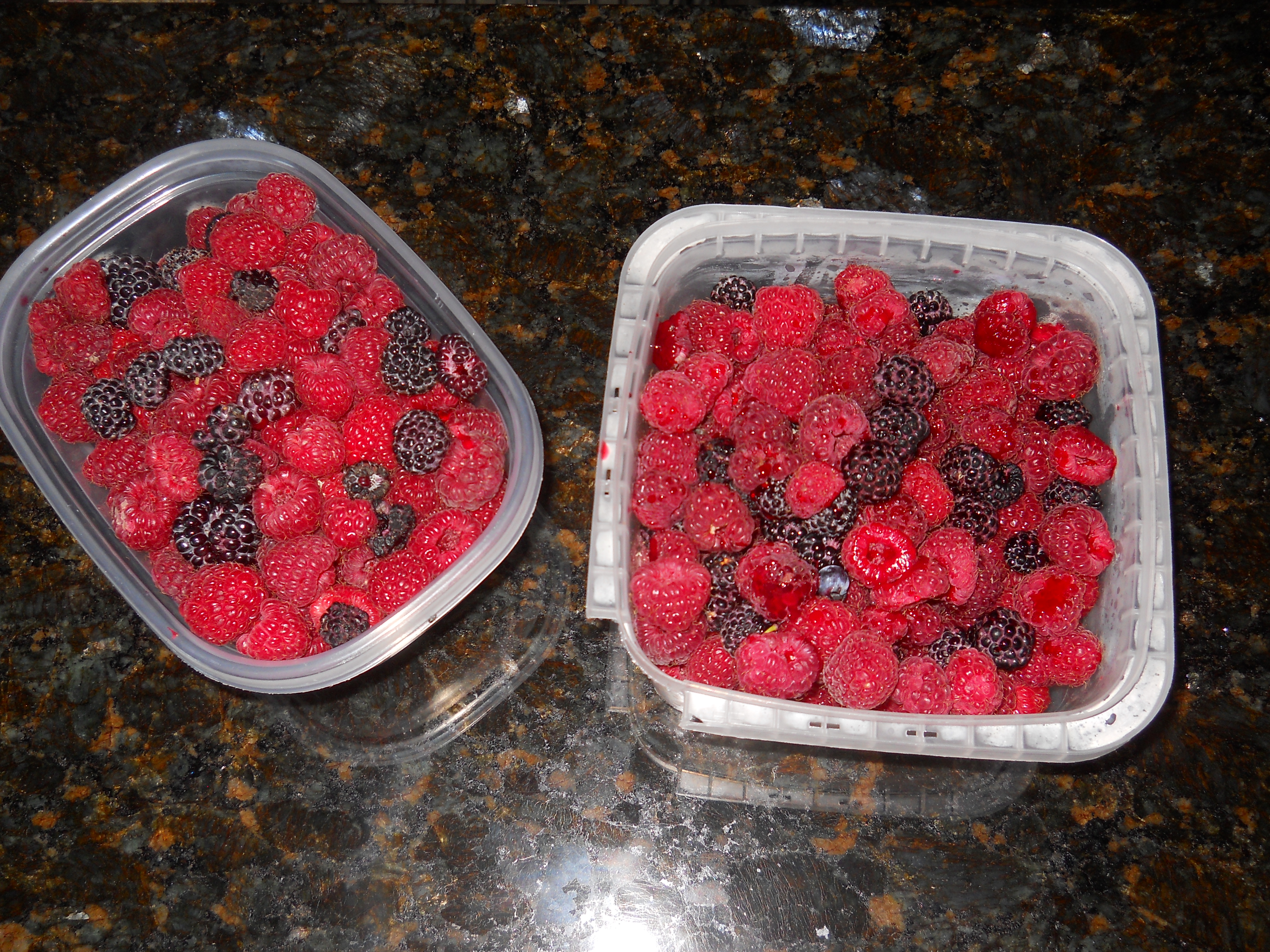
This summer, the corn never germinated and, cognizant of the crows, I didn’t replant. Instead, I filled the vacant rows with extra tomato and potato plants. True to the season, though a full two weeks’ behind schedule, the first crop we harvested this year was the Russian berries, a sweet, full flavored berry that grows on bushes. Next, the red and black raspberries, normally harvested in early June, but full on the cane this summer until mid-July, turned glorious red and deep black under the sweltering sun. I picked raspberries for weeks.

Red raspberry harvest, 2013.

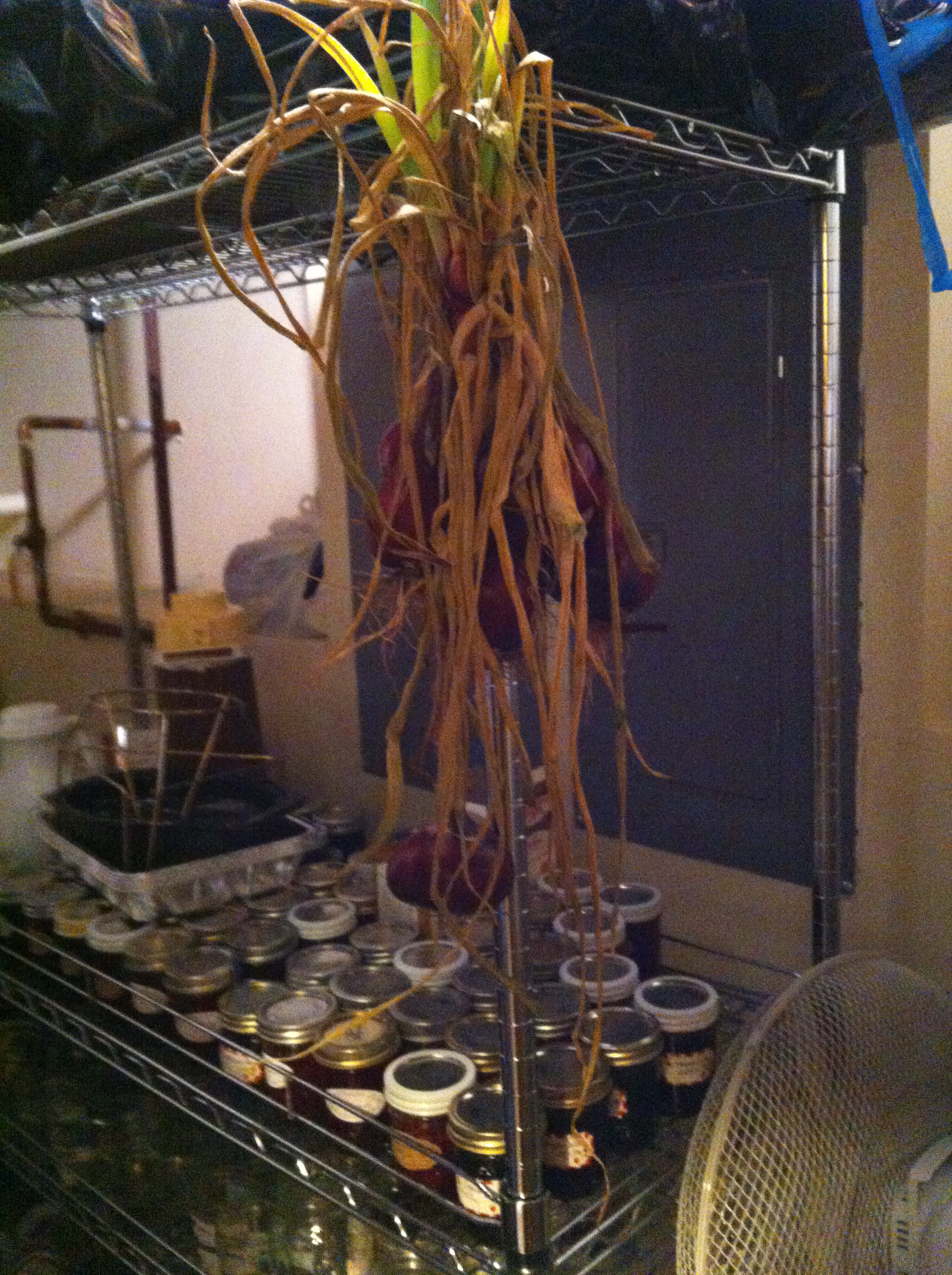
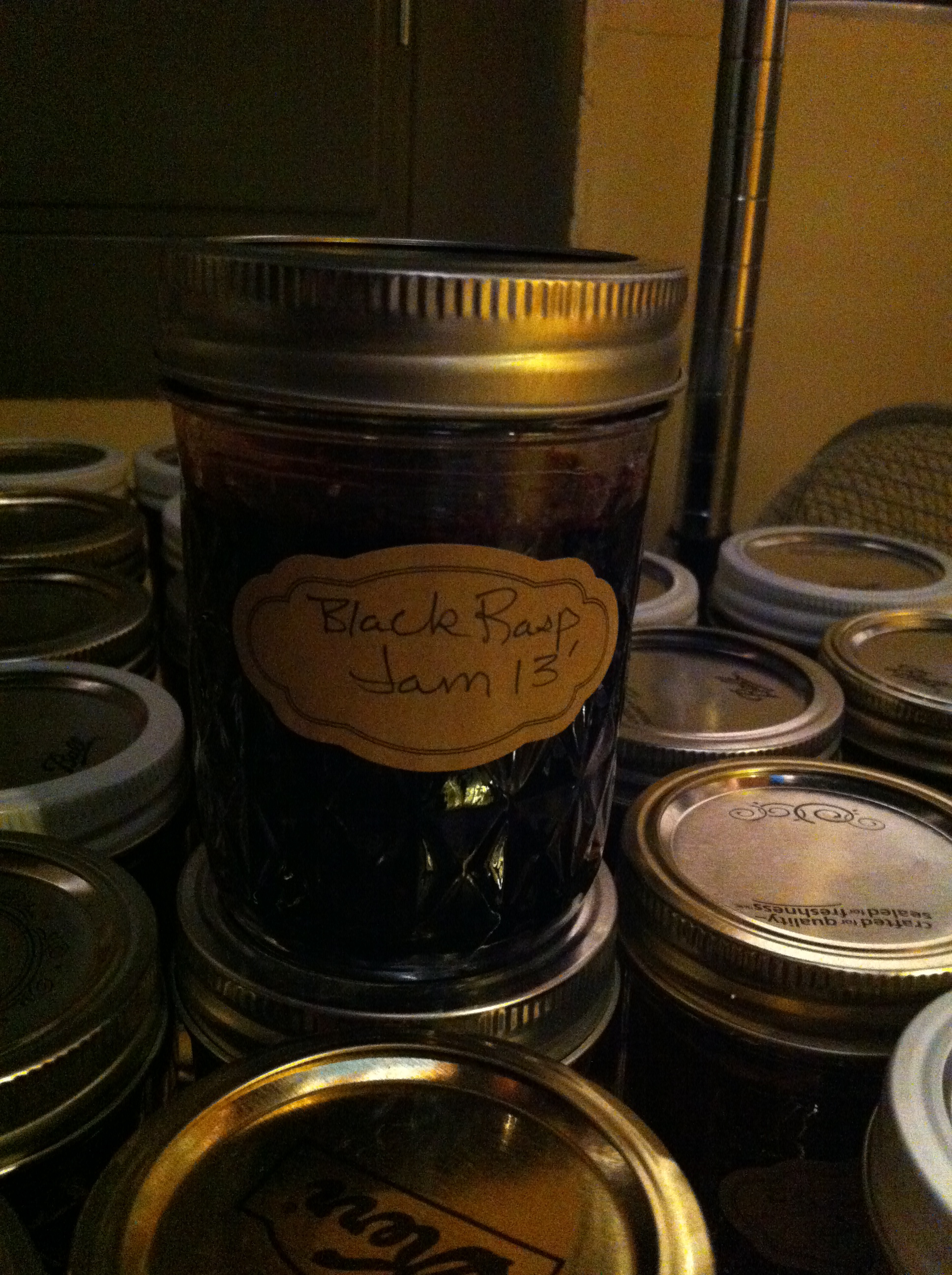
In August, Rene’ took in the potatoes and carrots. Not an over abundant cornucopia of root crops but enough for some good meals. She cleaned the potatoes and stored them in bins and blanched and froze the carrots. I should have suspected something was amiss when she brought in the carrots. There were no tops to the tubers. The deer had hopped the four-foot-high fence and nipped the tender green caps off every single plant. But the carrots themselves were unharmed and made for an impressive display on the counter once they were all sealed in plastic and ready for the freezer. My ever diligent wife then took the berries we’d harvested, along with blueberries she and I picked at a commercial farm, and canned over 60 pints of blueberry, Russian berry, black raspberry, and red raspberry jam. She also hung onions from the garden in our basement for use in making her famous spaghetti sauce and salsa.

Onions and canned jams, 2013.

Black raspberry preserves, 2013.

I was gone on a Boy Scout outing to Canada when Rene’ did all this work. By the time Jack and I came back from Ontario, all that remained in the garden were some football-sized orange and green zuccini, assorted peppers, a few isolated tomatoes, and the pride of my green thumb: clusters of ripening grapes. That’s right, grapes. I know, I know. We’re a bit far north to get serious about becoming vintners. Where it normally takes three years to get a grape vine to produce fruit, up here in the great white north, it’s taken ten years to see success. That’s right: the grapes we grew this year began as shoots a full decade ago. When I returned home last weekend from another out-of-town trip, the first thing I did was to amble over to the vegetable garden and check out my grapes. I bit into the darkest blue grape I could find.

Still not quite ripe.

My plan was to let the grapes ripen on the vine and then harvest bunches of beautiful dark blue fruit for use in jelly and maybe, just maybe, a bottle or two of wine. Rene’s been into wine making for a few years but has always gone to the local wine crafting store and used kits to start her wine. It looked to this neophyte vintner that we’d have enough grapes for a few bottles of home brew and the two of us were giddy with excitement to try and ferment our own grapes into soft, delicate red wine.

You know what? Turns out that deer really like grapes. Those bastards are very good at nibbling clutches of purple grapes right off the vine. While Daisey nursed her hips, and the sun ripened the clutches of blue into deep velvet, those damned cloven hoofed devils were planning and scheming to rob us. Yesterday when I came home from work intent on harvesting (excuse the cliche’) the fruits of my labor, I found only a quarter of the grapes remained on the vine. Nearly every big, lush, beautiful bunch had been eaten. I nearly cried. I picked what I could, a paltry, dismal harvest, and lugged the basket of grapes and some random, ripening peppers back to house.

I need to raise the height of the fence so this never happens again.

The best laid plans…

Peace.

Mark

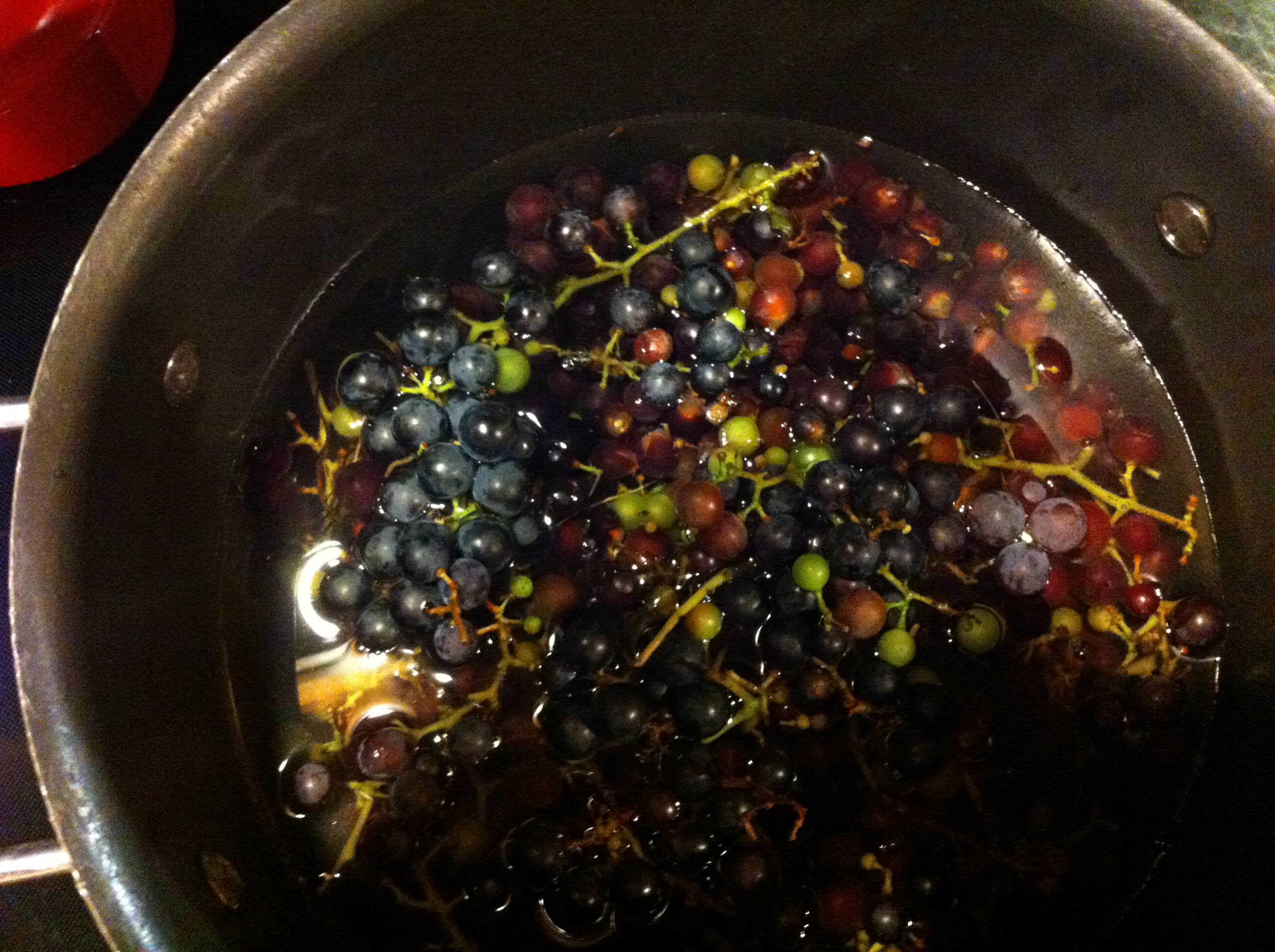
Grapes boiling on the stove, 2013.


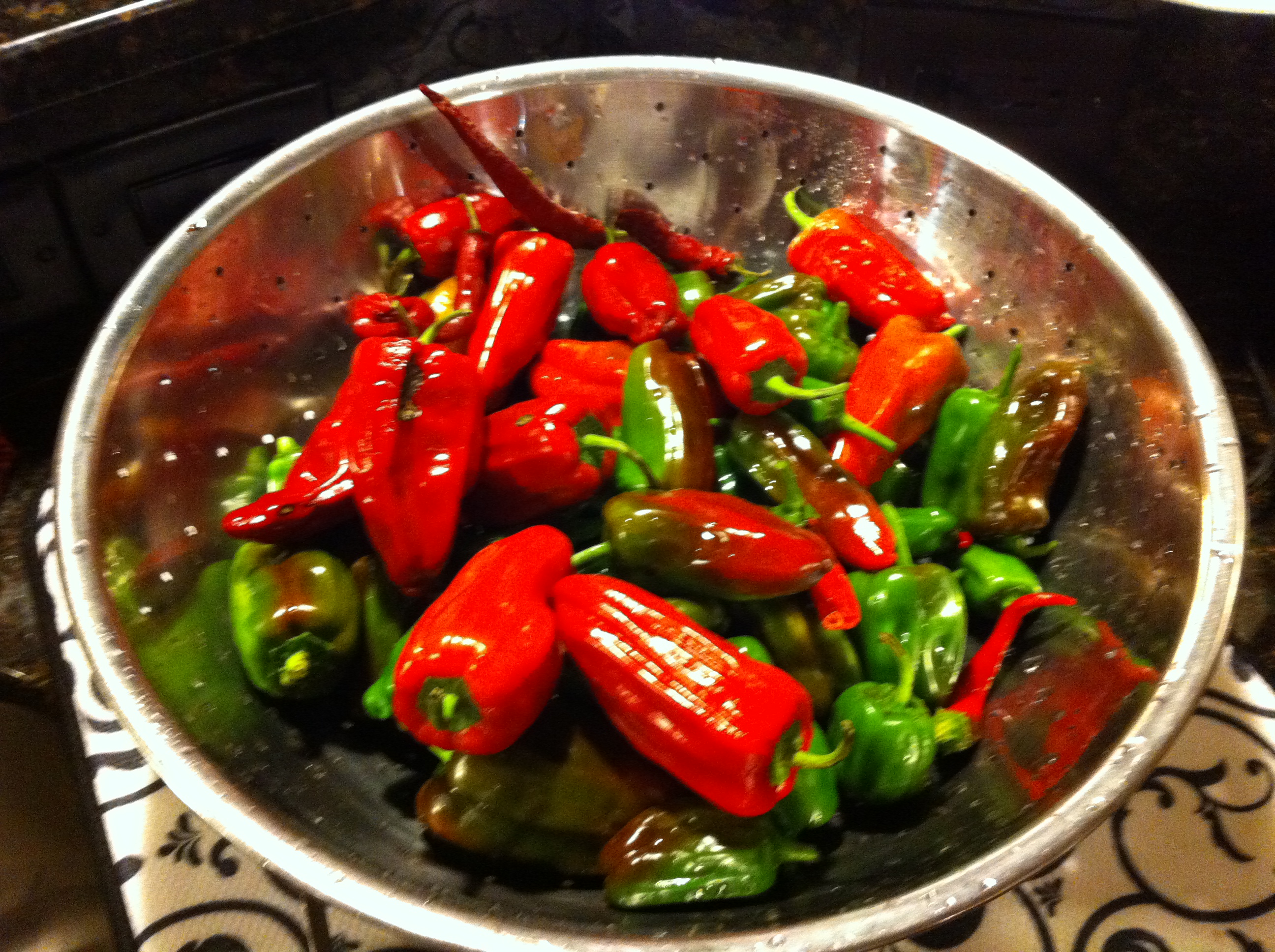
Peppers, 2013.


Posted in Blog Archive | Comments Off on Harvest

Moving Uncle Willard

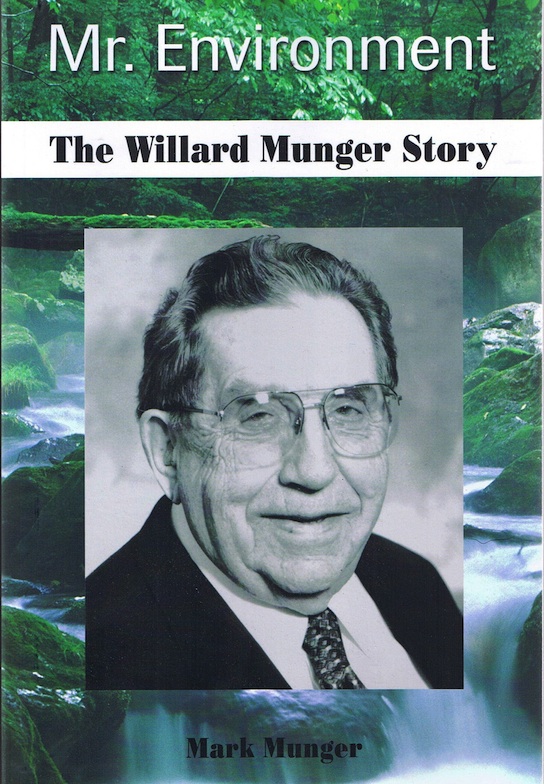
I’m not a businessman. I am a husband, father, grandfather, judge, outsdoorsman and, during my “spare” time, a pretty fair writer. But as the owner of a small press, I am as clueless as a Bedouin on skis when it comes to commerce. My blind spot when it comes to my art is that I am an optimist. With every new book released over the past thirteen years (9 in all),I have supreme confidence that each newly published title will be “the” book, the one the takes off, sells well, and solidifies me as a regional author. The sad reality is that isn’t what’s happened. I’ve been led by my cheery optimistic nature down a primrose path to cliffs overlooking a vast sea of self-published, remaindered books. My books. There is no better example of my lack of business acumen than the book that took the most blood, sweat, and tears of any of my projects: Mr. Environment: The Willard Munger Story.

Conceived after my uncle, Minnesota’s sentinel environmental lawmaker, passed away in 1999, as a loving tribute to a man who was both my personal mentor and an inspiration to thousands of Minnesotans, Mr. Environment took five years to research, write, edit, and publish. It had the longest gestation period of any of my books. When the manuscript was finally printed in March of 2009, my buddy Eddie and I drove my Pacifica to pick up 2,000 copies of the biography from Bang Printing in Brainerd.  We stood and watched cartons of my family’s legacy being loaded by forklift onto the bed of a rental truck, amazed at how much room 2,000 copies occupied. And then, it was on to Duluth to store the cartons in a rented storage building. I had no room for 2,000 books at my house and expected that the sales of the book would justify the monthly rent for commercial storage. But I was wrong about that too.

The book went on public display during a Duluth Symphony Orchestra concert where the DSO honored my uncle with selections from Sibelius and former Vice President Mondale spoke with and answered questions from the crowd about Willard’s life and legacy. Only two dozen copies were sold at the concert. I had anticipated, given the publicity the event generated in the local media, and glowing early reviews, selling at least fifty. Here’s a sample of the reviews that raised my hopes as to the commercial success of the book:

This weekend, I picked up a copy of the new Munger biography, Mr. Environment…and was pleased to find on its’ pages the Munger I’d hoped to hear one last time. (A)uthor Mark Munger has done a stellar job detailing the life of a legislator who was a pioneer in turning state policy into a force for environmental protection.

Minneapolis Star Tribune

With accolades like that popping up throughout the state, why wouldn’t an author be optimistic? Unfortunately, after the meager success at the DSO event, I came to realize my early visions of books flying off the table was unlikely.

The actual launch of the book took place at the Labor Temple in Duluth. There was a great crowd of my readers, family, and local Liberals and environmentalists on hand to listen to music by Sara Thomsen, hear me read from the biography, mingle, and buy books. Again, sales failed to meet expectations. Undaunted by these early signs of fiscal disaster, I soldiered on, lugging cartons of Mr. Environment and my other books to outdoor art and craft shows, environmental expos, and assorted other venues across Minnesota and Wisconsin. Sadly, the enthusiasm among the onservationists, and environmentalists who had, over the years after Willard’s death, urged me to write his story, didn’t acknowledge their urgings with book purchases. Letters and emails to the major environmental and conservation groups in Minnesota offering to attend meetings, talk about Willard, and sell copies of the biography fell on deaf ears. The lone exception to this silence was an invitation from the Duluth chapter of the Izaak Walton League. Other than one night standing in front of an appreciative crowd of Ikes at the Hartley Nature Center in Duluth, no other conservation group invited me to speak. Additionally, around the time the book was launched, the full impact of the recession arrived and venues, like the Apple Festival in Bayfield and the Festival of the Trees in Duluth dried up as sources for book sales. Also, Americans more and more began to buy their written content, both fiction and nonfiction, on eReaders, avoiding the impulse to buy regional books at art and craft events in favor of online purchasing.

In response, I did what any good capitalist would do: I slashed the price of the book. I had originally priced Mr. Environment at $25.00 per copy, a price in line with other books of its size, depth, and genre. I also enlisted my youngest son Jack to help me move the books from the storage building to an empty bedroom in the basement of our home. Chris, our third son, had moved out, freeing up space to store the books without incurring monthly rent. It took Jack and I the better part of a Saturday to load 1,600 copies of the biography into my Pacifica and our utility trailer and haul the books home. With the price reduced to $15.00, then to $10.00, and then finally, to $5.00 per copy, I again sent out information to all of the leading environmental and conservation groups in Minnesota. I also queried the entire DFL legislative caucus in both the Minnesota House and Senate. I sold less than a dozen copies to Liberal legislators and did not hear back from a single environmental/conservation group. Not a one. There was, despite all the prodding I’d received to write the book from conservation-type folks over the years, zero interest from them in actually buying the book. To say I was disappointed is putting it mildly.

Last spring, my father, Willard’s youngest brother and the only surviving Munger sibling, called me at work with an idea.

“What if you donated copies of the book to UMD? Willard loved the school, fought hard for its funding and improvement, and surely someone there would be interested in receiving copies of the biography to be given away to students?”

It’s been years since I took tax law in law school. But I still recall that it’s better to have income when you seek to take a charitable deduction and, given the utter lack of buyers for the book in the public marketplace of ideas, well, I wasn’t sold that donating the books was viable. But I talked to my accountant and he assured me it was a feasible plan. And so, I went to work convincing not only the University of Minnesota-Duluth (UMD), my alma mater, but also the University of Wisconsin-Superior (UWS) (where I teach Environmental Law and use the book as an optional text) to accept books as a donation. It took four months of arranging and wrangling but yesterday, with the help of my sons Matt, Chris, and Jack, UMD received 1,000 copies of the book and UWS received 250 to be distributed to students and faculty interested in the life and legacy of Minnesota’s Mr. Environment.

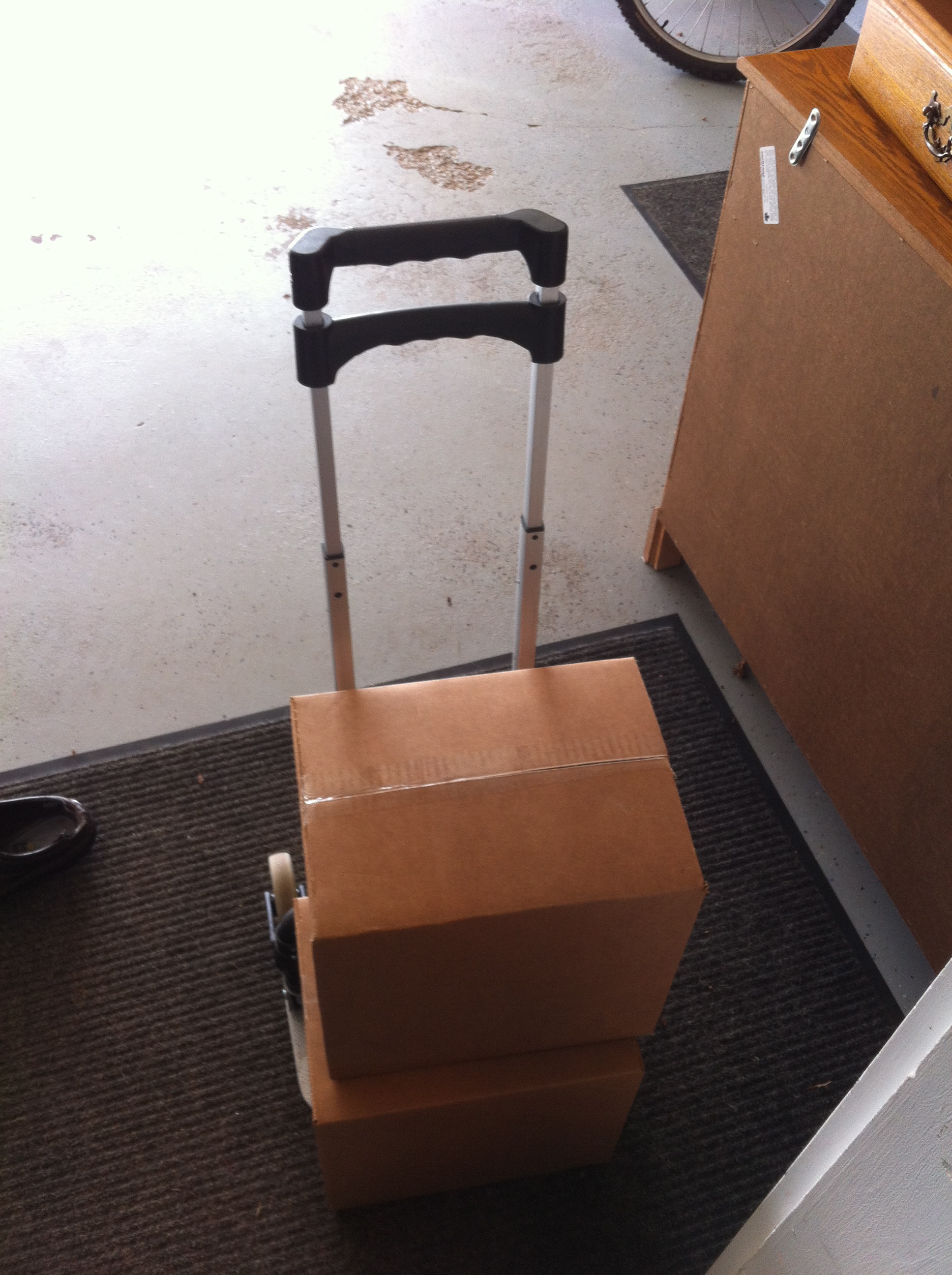
Moving Willard, 09/21/2013

My sons endured a bit of hand wringing and nervous twitching from me yesterday after I’d dragged 90 cartons of books from the basement into the bright autumnal sunshine. Matt rented a Uhaul trailer (providential, eh?) for the move and was supposed to be at the house by 9:00am. My wife Rene’ and I had folks coming for brunch to celebrate my mom’s 85th and Jack’s 16th birthdays at 10:00am, so Matt’s timely arrival was important to the schedule. Matt was late and my timetable fell apart but it all worked out. Even Dylan, my second son, in from the oil fields of North Dakota, stepped up and helped load the trailer. Though it was long past noon when Matt, Chris, Jack, and I  finally hit the road, we made it to the colleges and unloaded the books.

What 1,250 books looks like.

There’s an old saying, and I’m paraphrasing here,  about it being better to have tried and failed than never having tried at all. But I’m not so sure, after five years of writing my uncle’s story and four years of being unable to effectively market it, that I’m comforted by that sentiment. though I am happy that students at two public universities in the place Willard Munger called home will have the chance to learn that one man, of modest means and a limited education, can make a difference. In the end, maybe that’s more important than selling books.

I do know this: I will never again write a book simply because it’s pitched to me as a good idea. From now on, I’ll write only what my heart tells me to write. It seems I don’t have much of a head for the business end of things so I think it’s best that I keep my goals for my stories modest. I’ll be far better off following my muse and ignoring suggestions advanced by well meaning strangers.

Peace.

Mark

Mark

Posted in Books | Comments Off on Moving Uncle Willard