Couch Surfing

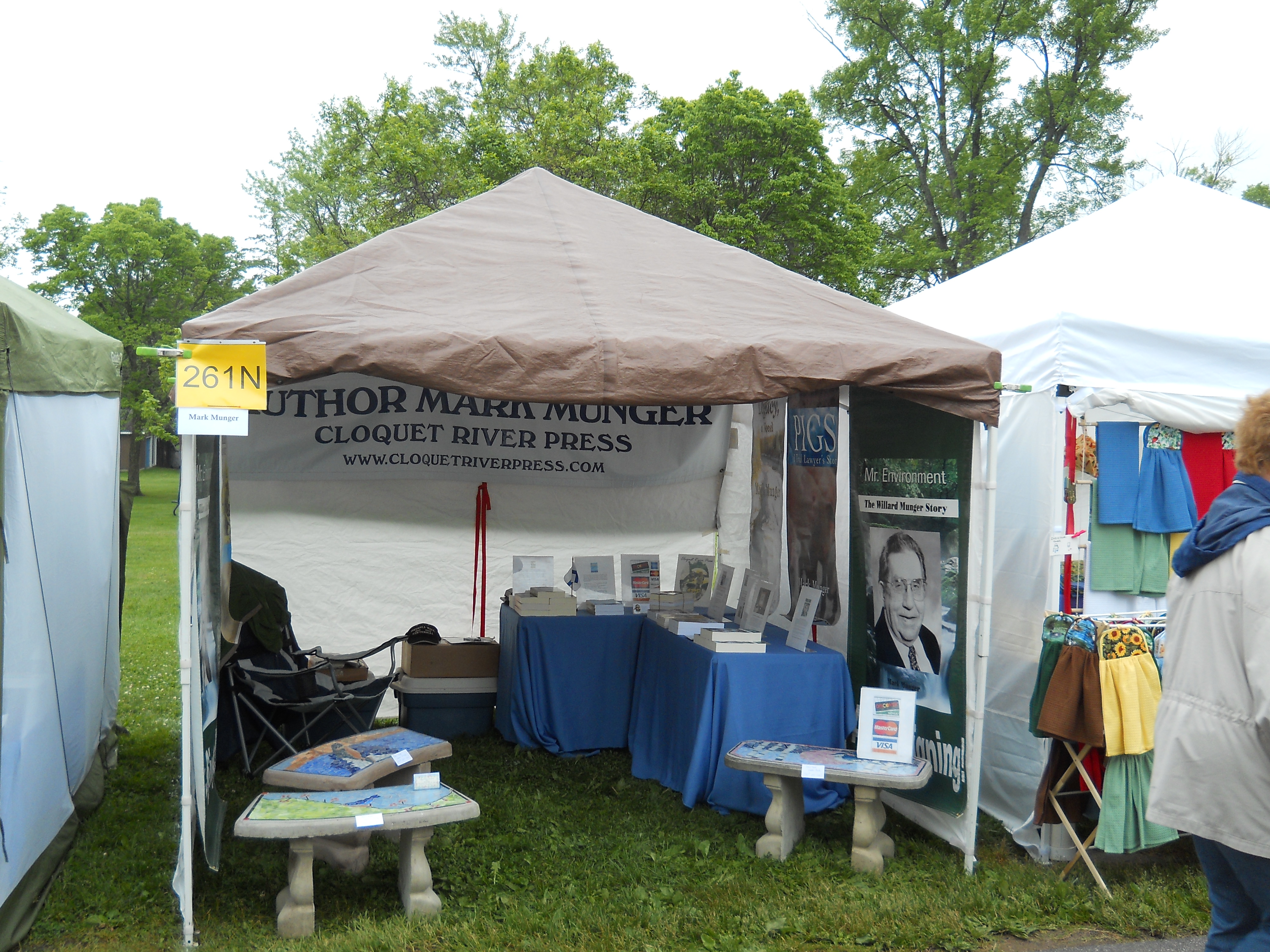
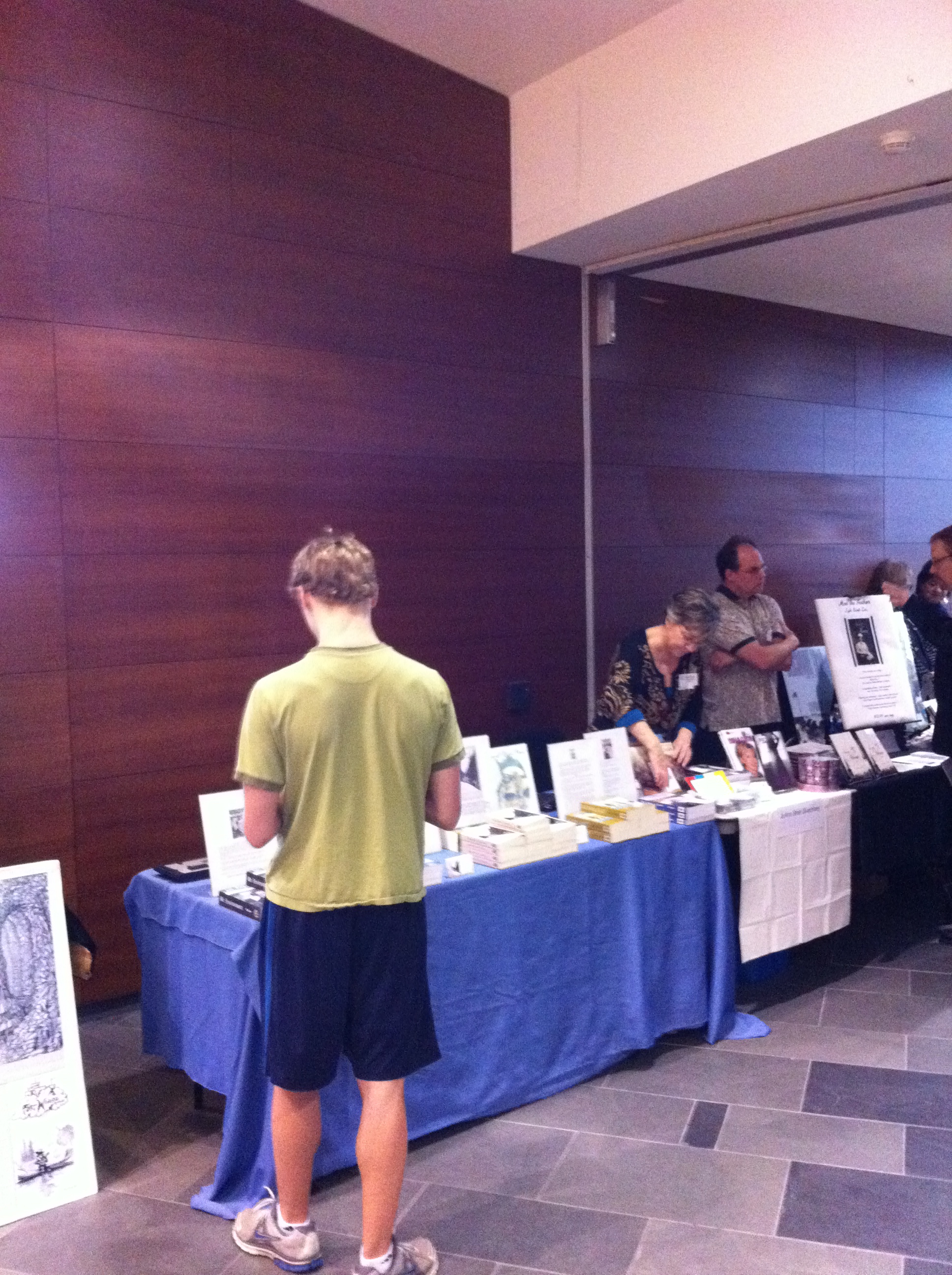
CRP Booth @ 2012 Living Green Expo

Ah, the life of a semi-famous novelist from Duluth. It’s Friday afternoon. I’ve just concluded four days of presiding over a complex and hard fought civil trial in my courtroom. I loaded the new Pacifica (not to be confused with the old Pacifica which is now living a new life in Williston, ND) with boxes of books, a few supplies, and my wife’s glass mosaic art (concrete benches and wrought iron tables) Thursday night and drove the packed van to work so I could bug out as soon as the trial ended for the day. So here I am, putting on more miles, intent upon trying to catch the public’s eye (and reach their collective hearts) with my latest book, Laman’s River, by spending the weekend selling my words in a booth at the Living Green Expo on the State Fairgrounds in St. Paul. Tires hum. The sky grays but the rain holds off as I encounter a line of stalled vehicles just north of the I-694 split. I make an executive decision and take the nearest exit ramp, intent upon finding an alternative route to the fairgrounds. Of course, even though the new Pacifica is equipped with GPS, I manage to get lost. Not to worry. We men are always steady in our belief of our innate directional abilities. I’m no exception to this rule. I weave and wind the van through Rosedale, eventually pulling into the site of the event. I spend an hour and a half setting up my booth. As I finish, the sky cries. By the time the Pacifica is heading down the steep grade of Montreal Avenue, rain is coming down in sheets of cool silver. Cars and trucks actually pull over and stop due to the lack of visibility. Not the author guy. I keep my hands on the wheel and my eyes on the road as I push south towards the Schostags’ home in Lakeville.

Saturday morning. I had a fitful night of sleep (mostly because of the three beers I drank with my wife’s brother-in-law, Al Schostag). I am half-rested and bleary eyed. I tromp upstairs. I stand naked in the shower, feeling the water’s warmth ease kinks in my neck and back, wondering why I insist on doing this author thing at an age when I should be looking into condos in Taos. In the quiet of the steamy bathroom, I dress for the day. I’ve decided to go with the hat. My eldest son and his wife, Lisa, bought me a straw Panama to wear at bookselling events. I have never worn it. Today, I decide, I will.

CRP Booth @ the 2012 Living Green Expo

The Expo

Traffic is steady. By noon, I have sold enough books so that my native pessimism (a light touch of dread, if you will) is disarmed.

If this keeps up, it’ll be a hell of a weekend.

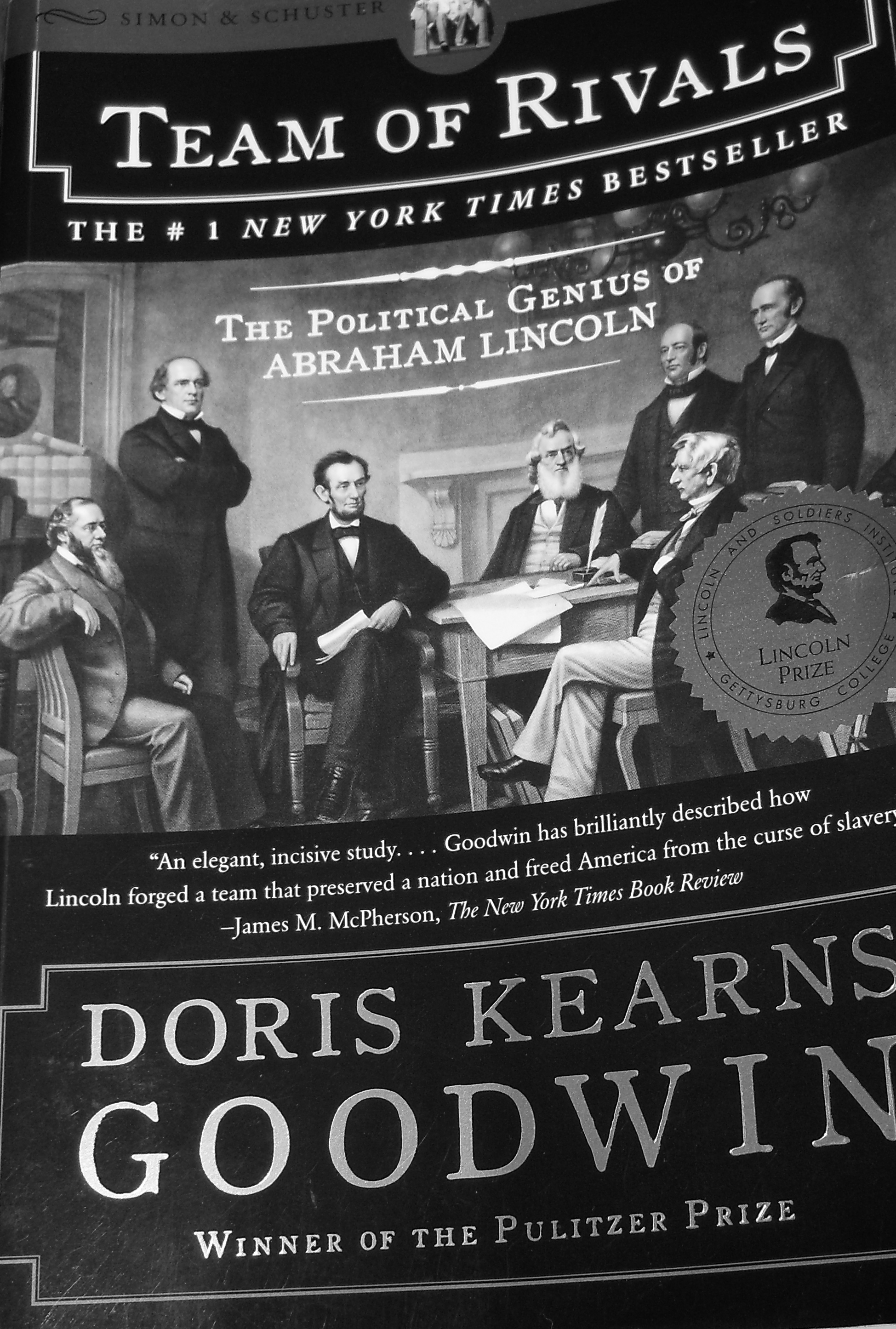
Of course, I got carried away. I’ve learned, over twelve years of playing the part of a regional fiction writer, that nothing comes easy. My work, while beloved by a small cadre of fans, has a heck of a time getting recognition from the press and critics when it’s not published by a big New York house and isn’t represented by an agent. Essentially, I live hand to mouth with each sale. That’s the deal I’ve made with the literary devil: I get to write what I want to write and put it out into the big wide world but there’s very little chance it will ever amount to much in the big stream of commerce that is America’s marketplace. I got excited when the first few books flew off the table. But it didn’t last. Though there are folks at the Expo, the rain is pouring down and few are buying. So I content myself with people watching and reading A Team of Rivals.

Another fitful night on the Schostags’ couch; this time, not caused by beer in the bladder but by horrific storms that pass over Lakeville after dark. Had it been high summer, with heat and humidity present, the winds that whipped through the Cities would likely have included a funnel cloud or two. But because it’s still spring, the storm simply pummels the house with rain. Wave after wave of rainwater pelts the sturdy house, beating a steady rhythm of storm throughout much of the night.

Sunday morning. Al makes a great breakfast, I say my goodbyes, and I’m off for a second day of selling. Again, patrons weave their way in and out of my booth but few copies of Mr. Environment get sold. Oh, I have plenty of talkers, environmental types who recognize my Uncle Willard’s face and name and want to applaud me for writing his life story. But few of them buy books. By the close of the show, my back sore from couch surfing and hauling my wife’s art, I’m happy to be back in the car, listening to American roots music on The Current, as I head north, towards home.

Peace.

Mark

 

Posted in Blog Archive | Comments Off on Couch Surfing

Breathe

Northern Crayfish


I’ve been pretty busy at work. Some of you gleaned this from the fact my name’s been mentioned of late in the local newspaper. In my “real” job, the one that pays the bills, that happens sometimes: I get cases assigned to me that someone at the newspaper thinks are “newsworthy”. But as I move into my 14th year as a judge, I’m feeling the weight of what I do for a living a bit more than I used to. I’ve heard that’s a natural progression. Maybe. But I find myself less and less willing, at the end of a hard day, to tend to things that need doing around the house. It’s driving Rene’, my long-suffering wife of thirty-three years, crazy.

So the other day, I ripped off my suit jacket, slacks, dress shirt, and tie (how I hate wearing a tie!) and slipped on my battered old paint-stained bluejeans and an old T-shirt. It was  sunny and warm outside and the leavings of winter (you know: old dog turds, bits of paper, scraps of wood, gravel from the road; that sort of stuff) needed to be raked into piles. So I walked out to our tool shed, pulled out a rake, and took a swipe at some physical labor. You know what? It felt good. Oh, I paid for it last night when my left shoulder, the one that’s been acting up since Jack and I got T-boned by a young lady on a bright Sunday morning (we were on our way to church: she, unfortunately, was still drunk from Saturday night) throbbed in bed. But being outside, with a rake in my hands, the sun shining bright, and birds flitting over the greening grass of our lawn, well, it was something I needed to do more than something that needed doing. When I was done with the raking, I walked over to stairs that slope down the riverbank to the Cloquet River. Kramer, our frail chocolate Labrador, stood behind me, scanning the flowage, unable, due to age and bad hips, to join me as I sat on a wooden tread of the stairs and watched black water move. Beneath the river’s undulating surface, in about two feet of water, I spotted a crayfish walking, not scuttling, slowly across the pebbled bed of the Cloquet. He or she or it (I’m uncertain as to the sexual nomenclature of crustaceans) didn’t do anything fancy during the fifteen minutes I watched quietly from the stairway. I saw no great episode of life and death. No bass zipped into my field of view to snatch up the shellfish for a quick dinner. No otter plunged to the shallows to pluck the crayfish and motor off. It was just me, and Kramer, and the little crayfish absorbing the sun and taking a breath.

Movement up river broke my meditation. I caught sight of a male wood duck, all alone, no mate in sight, drifting with the slow current. The duck stopped a dozen yards from the dog and me, his colors dazzling in the late afternoon sun, his peeping voice at odds with his ducky bill.


Male Wood Duck


It didn’t take long for the beautifully feathered bird to figure out I was there, gawking at him. He fluttered his short wings and scooted away, hell bent on finding his wife. Once the duck was out of sight, I rose slowly from the stairs, patted Kramer on the head, and ambled towards the house. I filled bird feeders with feed, put away the rake, and then decided, because my attempts to get Jack, our youngest, involved in my chores had failed, to pull out the trampoline and set it up. The rig was a gift to our third son, Chris, who’s now twenty-four, for making the honor roll when he was at Hermantown Middle School. The tramp has served all of our boys, their friends, and assorted nieces and nephews well over the past thirteen summers and is still in good shape. Oh, there’ve been a few broken bones (cousin Alex broke a wrist, I think) and some odd bruises and bumps, but mostly the kids have had a ball jumping and flipping for hours on end. During the hottest days of summer, one of Jack’s favorite things to do is to set up the lawn sprinkler under the tramp and jump through cold well water beneath the glaring sun. Anyway, it took a good hour or so to get the trampoline set up. That was the last of my chores, at least the ones on my list (as opposed to Rene’s list), which meant I had time to sit on a rocking chair on our covered front porch and read the newspaper.

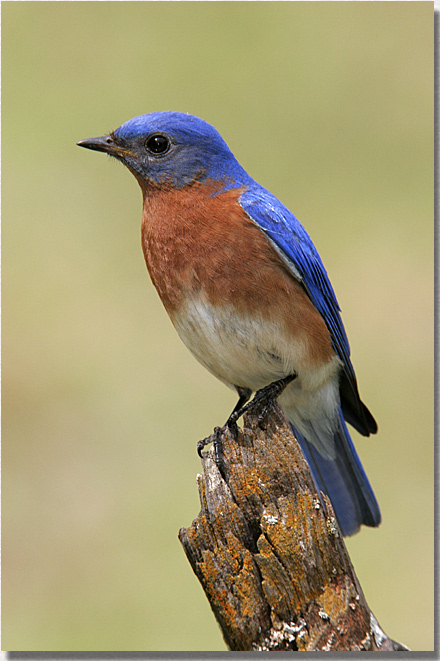
Eastern Bluebird

My work finished, paper in hand, I settled into the rocking chair intent upon focusing on the day’s news. But nature wasn’t quite done with me. My favorite bird, the male eastern bluebird, decided to make an appearance. About ten years ago, we started putting up bluebird houses. And the bluebirds decided, after some discussion in bluebirdeese, I am sure, that they liked what we’d done. So now, every year, pairs (at least two, sometimes three) of eastern bluebirds come back and nest in the little wooden birdhouses on posts next to our vegetable garden. And every year, little bluebirds are hatched, raised, and fledged at the edge of pasture on our place. I watched as the male bird, his bright blue backside most visible during flight, landed on the very tip top of a spruce near Rene’s dormant flower garden. The bird didn’t seem to mind my company. He too seemed content to pause, to take a moment, and breathe.

Peace.

Mark

Posted in Blog Archive | 4 Comments

You Will Cry


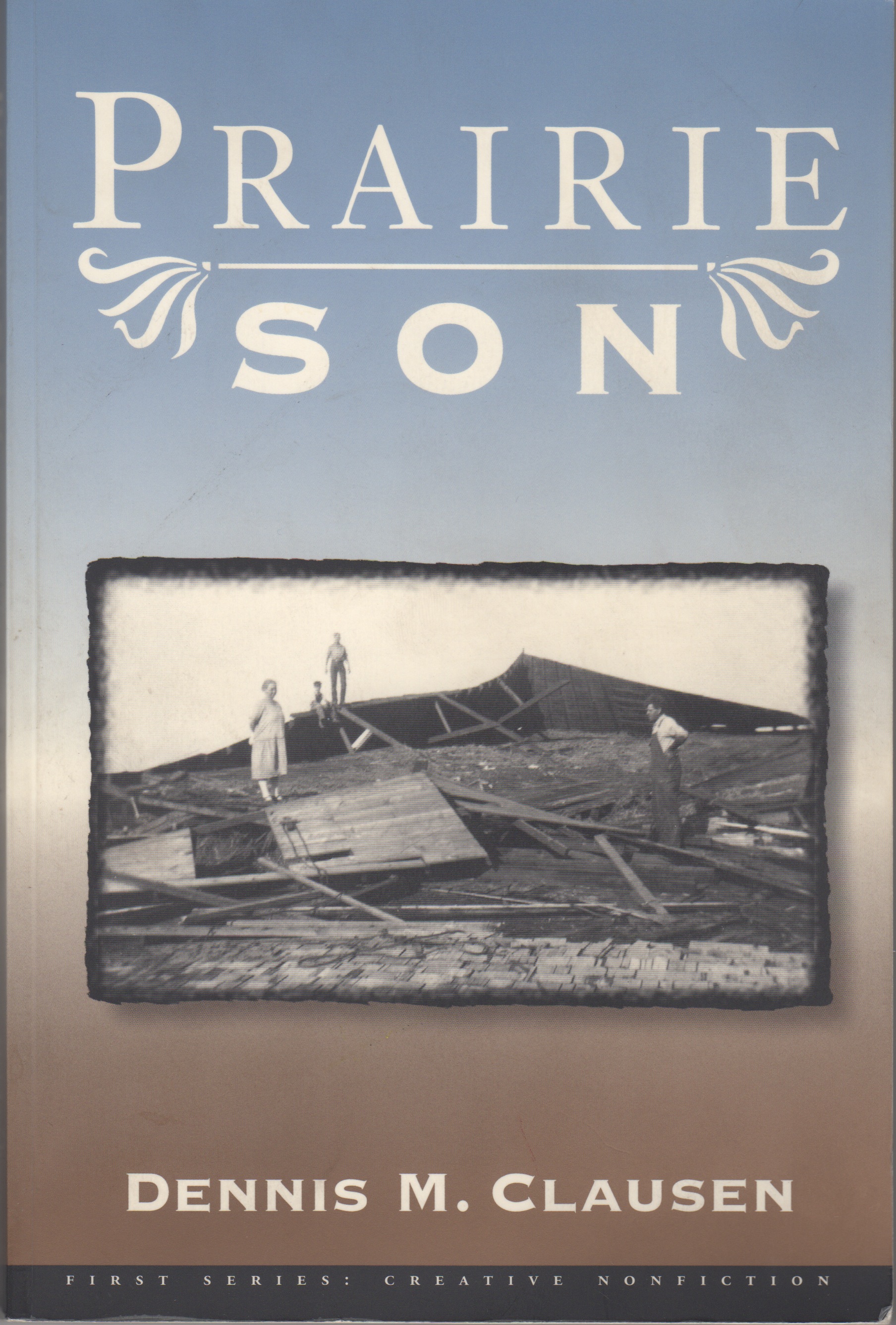
Prairie Son by Dennis M. Clausen (1999. Mid-list Press. ISBN 0922811393)

Ever wonder what it would be like to be utterly and totally alone in the world? Lloyd Clausen, the roustabout, laboring, job-changing father of the author of this terrific diary-turned-memoir-turned-novel lived that life during much of the 20th century. Set on the southwestern prairie of Minnesota (near Morris, though the closest town in the story is Alberta (pop. 142)), the author asked his father, as the old man was dying from cancer, to jot down stories of his youth and upbringing. Given that Lloyd Clausen had been adopted from an orphanage, was raised by what Dennis perceived to be a loving and devoted mother (his paternal grandmother), the intent of the exercise was to create a traditional family history. But when Dennis found yellow legal pads filled with his father’s scribbling after Lloyd’s passing, the author knew he had the makings of something far more intriguing and gut-wrenching than a lovingly portrayed narrative.

What took place after 1922 in the Clausen home was physical abuse and an utter and complete lack of love: That’s the environment that young Lloyd was dropped into by the Stevens County Human Services folks when the Clausens adopted the boy as an infant. Early in the story, we are provided a clear vision of what hell would look like for a scared, unloved, unwanted orphan. Lloyd’s (and the author’s) view of Lloyd’s parents softens a bit over time, not so much because the Clausens actually change due to the intervention of morality but more because outsiders, who learn of Lloyd’s plight (and his parents’ behavior towards him), step in to lend the boy love and, at times, protection. These characters range from illiterate farmers who protect Lloyd from a vengeful local minister to the neighborhood bully, who seeing himself in the down and out face of Lloyd Clausen, takes Lloyd’s part against a mob of nasty town boys.

The scene involving the reverend seeking Lloyd’s expulsion from the country schoolhouse is a memorable one:

“I was standing in the middle of the road,” he began in a halting and nervous tone of voice, “when Lloyd threw a rock at me…” Marcus continued to look in my direction for several seconds, staring directly into my eyes. Then he looked back at the school board. “No,” he said, “that’s not the way it happened at all. Lloyd and I were playing a game. It was my idea…”

“It was not your idea!” Reverend Reese shouted. He started to stand again, but several members of the school board glared at him, and he sat down.

“It was my idea,” Marcus repeated…”I threw a rock at Lloyd’s shoes. He threw one back at my shoes. We did this several times. Then one of the rocks hit something in the road, flew up, and hit me above the eye. It was an accident…”

“He’s trying to protect his friend!” Reverend Reese yelled…

“Reverend Reese,” the chairman said firmly, “I really think you had better sit down.” Then he glanced at the other school board members, all of whom nodded in his direction. “I don’t think we need to hear from anyone else regarding this matter.”

The members of the school board huddled together briefly at the front of the room. They returned to the table. “Lloyd,” the chairman said warmly, “the members of the school board apologize that you were suspended…You are innocent of the charges…”

Then he turned to Reverend Reese and said, “As for you, Reverend Reese, if the school board ever again hears that you have tried to blame this incident on Lloyd, we will go to your church council, and we will tell them the whole story. You tell people the truth about what happened to your son, or you will be looking for a new parish.”

The point of this scene is twofold: It establishes that there were role models in young Lloyd’s life who stepped in to assist him in times of trouble. But it also establishes the gritty truth about his father’s lovelessness: Lloyd’s father never said a word to the school board or the reverend in defense of his son. Why? Because as we learn, the boy who grew up to be Lloyd Clausen was adopted not as a son but as a hired hand; a boy to grow into a man and work the family farm as a colt grows into a stallion to pull a plow. The bitterness and bleakness of this awful reality is tempered by folks like the school board and Delores, Lloyd’s cousin (also adopted but treated as a natural child by her parents) who show Lloyd love and kindness along his journey to adulthood.

My only criticism of the book is that it is a bit disjointed. The format, short vignettes that don’t always flow together in a cohesive narrative, often read more like excerpts from a diary than a sell-paced memoir. Still, the story has heart and is well written: So much so, I can guaranty you won’t want to put it down and that you will shed a tear or two at the book’s conclusion.

4 1/2 stars out of 5.


Posted in Books | 1 Comment

Two Days in the Life…

Waiting for the Doors to Open

Saturday. I’m up at 5:00am and in the shower. By  5:45am, I’m on the road to the Bloomington Writers’ Festival. I’m nervous: I’m not only selling books at the festival; I’m also reading from Laman’s River for Bloomington cable access television and I’m a featured presenter at the conference. I’m about to embark on some serious multi-tasking and I don’t know if I’m up to it. I’m not behind the wheel of my 2008 Pacifica, my vehicle of choice. I’m driving Rene’s 2005 Toyota Matrix to take advantage of better gas mileage. It’s a down and back trip: I won’t be staying the night in the Cities. I can’t afford it.This writerly kick I am on has long ago eaten up the budget for motels. And there’s a George Clooney movie Rene’ wants me to watch with her  tonight. What the hell is it about George Clooney anyway? I mean, is he really that sexy to women of a certain age? I just don’t get it.

Anyway, after eating a rubber egg, cheese, and sausage muffin purloined from the shelves of a gas station in Cloquet and downing two cups of strong coffee and a bottle of orange juice, I finally, just south of Forest Lake, drive out of the perpetual fog that has been squatting on northern Minnesota for the past week. Ever since winter decided to vamoose, the Northland has been socked in with rain and fog. It’s a pleasure to finally be able to see the highway in front of me as I drive out of the foggy envelope. Don’t mistake what I’m saying here: There is no sun to speak of. Only more gray. But gray with perspective instead of claustrophobic closeness. When I pull in to the parking lot of the Bloomington Theater and Arts Center, where the conference is being held, I’m a few minutes ahead of schedule. The doors are manned by a smallish man, a volunteer, who has us wait until nine before allowing the milling crowd of weary eyed would be John Grishoms and J.K. Rowlings inside.

2012 Bloomington Writers' Festival


After the doors open, I pull my foldable two-wheeled dolly stacked with plastic bins and boxes into the building, register with another volunteer at the main table, and find my spot. I’m an old pro at setting up my books: Table cloth first, then the plastic placards holding images of each book and details about them, followed by neatly stacked copies of the books I have in print, finished off by two plastic business card holders full of my business cards. In less than twenty minutes, I’m ready to start selling. Of course, the public isn’t allowed in for another half hour, so I take full advantage of the down time and wander off to the room where I’ll be presenting my program. I spend a few minutes talking to a guy setting up the digital projector that I’ll be using in conjunction with my son Jack’s netbook. After talking to the guy, I’m confident that this experiment, which has me extremely nervous, will work out OK: I’m going to try to show aspiring historical novelists how I use the Internet to conduct research for my work. I’m doing it in real time, right there during my one hour lecture. Understand, I am not a tech nerd. I can adequately function in front of a keyboard for simple tasks like using the Internet, doing word processing, and the like. But I am not a computer guru. This is only my second attempt at using a computer during a lecture. The last time I tried it, it was a disaster. I am hoping history doesn’t, as some say, repeat itself.

Mark's Table at the Writers' Festival


There’s a slow but steady crowd at the conference. Many of the folks milling about are more interested in what you have to say as a presenter than what you’ve written as an author. I always sell enough books here to pay for gas but that’s usually about it. Today is no exception. Copies of my new mystery, Laman’s River, prove popular as do copies of Suomalaiset, my historical novel about Finns in NE Minnesota. I collect my complimentary box lunch and eat it at my table after doing my ten minute reading from the new book for cable access. The reading seemed to go well, with only a few minor stumbles as I tried to “set the mood” of the story so folks will want to buy the book. I even had a couple of fans in attendance.

Old friends from Moorhead, the Floms, surprise me, stopping by in the early afternoon with their daughter, Sarah, and her toddler son, Will. We catch up on our kids, I get to hold Will for a few snapshots, and then they’re gone. Another friend, John Helland stops by to chat as well. That’s one of the main benefits of these outings: Getting away from behind the keyboard and monitor and talking to folks who like and support your work. I keep checking my iPhone for the time. Eventually, I leave the table and pad off to the Rehearsal Hall where I am to give my lecture. The room is full, nearly thirty folks have paid money to hear me blather. Even though I teach college courses at UWS each semester, those courses are linked to my vocation as a judge. Today, I am speaking about my avocation, my hobby.

What gives me the right to talk to these folks? I’ve never won the Pulitzer. Hell, I’ve never even won a Northeast Minnesota Book Award, much less a Minnesota Book Award. Just who the hell do I think I am?

I feel a bit like a fraud as I stumble around the Internet while a roomful of strangers gawk at me. But I make it through the hour without a heart attack. I guess that’s something. I take a few questions and then return to my table to pack up my books and hit the road. A couple of the attendees from the class stop by to chat and buy books. They try to tell me that the hour was worthwhile. I listen, but my own take on my performance is less laudatory. Still, I smile and say “thank you” like Mom taught me.

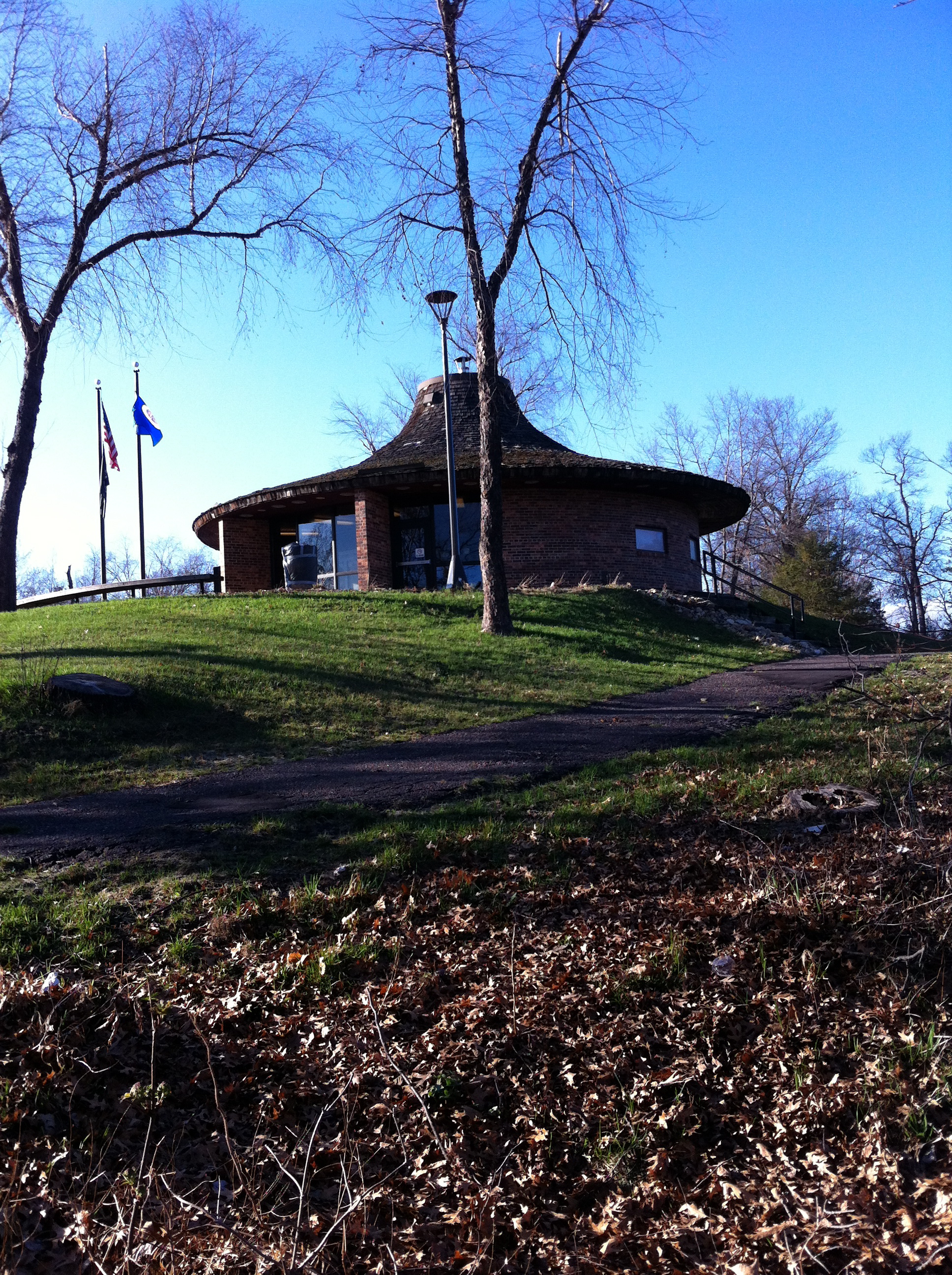
Goose Creek Wayside Rest

Goose Creek


On the road, I eat a bad meal at the McDonald’s in Forest Lake. By the Goose Creek wayside rest, I need to hit the john. I pull off, do my business, and then, because the sun is finally out and the warm air finally feels like spring, I decide to check out the creek itself. I’m not disappointed. I stand in a tangle of gnarled oaks along the creek bank and look out at tired hay stubble waiting to awaken after a false winter. Invigorated, I get back into the Matrix and head north on I-35.

Sunset on Pike Lake

By the time I make Pike Lake, just outside Duluth, the sun is setting. The colors of the sky beg for me to stop and consider them. I park at the state owned boat launch on the lake. I watch the orange globe of the sun disappear behind the trees of Pike Lake’s western shoreline.I put the Matrix in gear, knowing that “The Descendents” and Mr. Clooney are waiting for me at home.

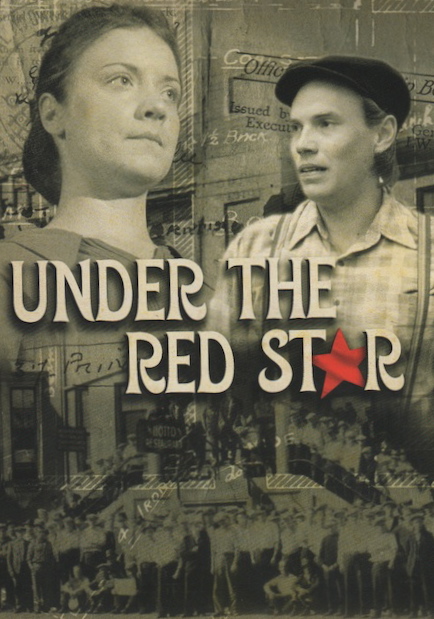
Sunday. Rene’ and I take separate cars to church. After an exhausting “there and back” trip to the Cities the day before, I am slated to have brunch at the Zinema2 theater complex in downtown Duluth. The director of a film I reviewed for the New World Finn newspaper (the film is Under the Red Star), Kelly Saxberg, her husband, Ron Harpelle, and a few other folks from Duluth’s Sister Cities program are gathering to talk about the film in advance of its Duluth debut. Brenda Denton, a local attorney, knowing my interest in all things Finnish, emailed me and invited me to brunch. So here I am, walking across Superior Street after spending an hour with God and family at Grace Lutheran Church, putting on my authorial hat once again.

The fact that I thoroughly enjoyed the film (giving it 4 out of 5 stars) likely helped garner the invite: I doubt Brenda would have asked me to come by so that Kelly and Ron (the co-producers of the movie) could throw hash browns at me across the table! ( I’ll post my review of the film in a day or so now that it’s been printed in NWF.) I sit down at the breakfast table next to Kelly and give her a copy of Suomalaiset with the hope that, one day, she’ll want to make a feature film out of Olli Kinkkonen’s story. I know, I know. It’s a pipe dream, a long shot, a one-in-a-million grasping at straws. But who knows? Stranger things happen in this world, right? We have a lively conversation about Kelly’s films, about the Finnish immigrant experience, and then, we head down to the theater. It’s apparent that the room assigned to the film is too small for the crowd: The event is moved to the larger of the complexes two movie theaters. And still, the larger space isn’t sufficient to hold all the folks who wander in. Ten minutes into the film and there are still people opening the doors, trying to find a seat. But it’s standing room only, a good sign for the movie’s long term impact and success.  After the credits, as attendees ask the director questions about the film and her work, I dash out to the Pacifica to retrieve a copy of Laman’s River.  One of the folks I had brunch with, Naomi Sundog Yaeger-Bischoff, the editor of the Budgeteer, is interested in my writing. I can’t pass up the chance to make another connection.

Better not pass up an opportunity for a review.

That’s thing about being a semi-famous novelist: You are always looking for an edge, some way of promoting your work so that folks will read what you have written. I retrieve the book, hand it to Naomi, and bid my new friends adieu. I still have a bathroom to paint and a garage to sweep before sitting down to dinner with Rene’ and Jack. And then, tomorrow, Monday morning, I’ll be up and ready to go to work. At my real job.

Peace.

Mark


Posted in Blog Archive | Comments Off on Two Days in the Life…

There’s Meat on These Bones


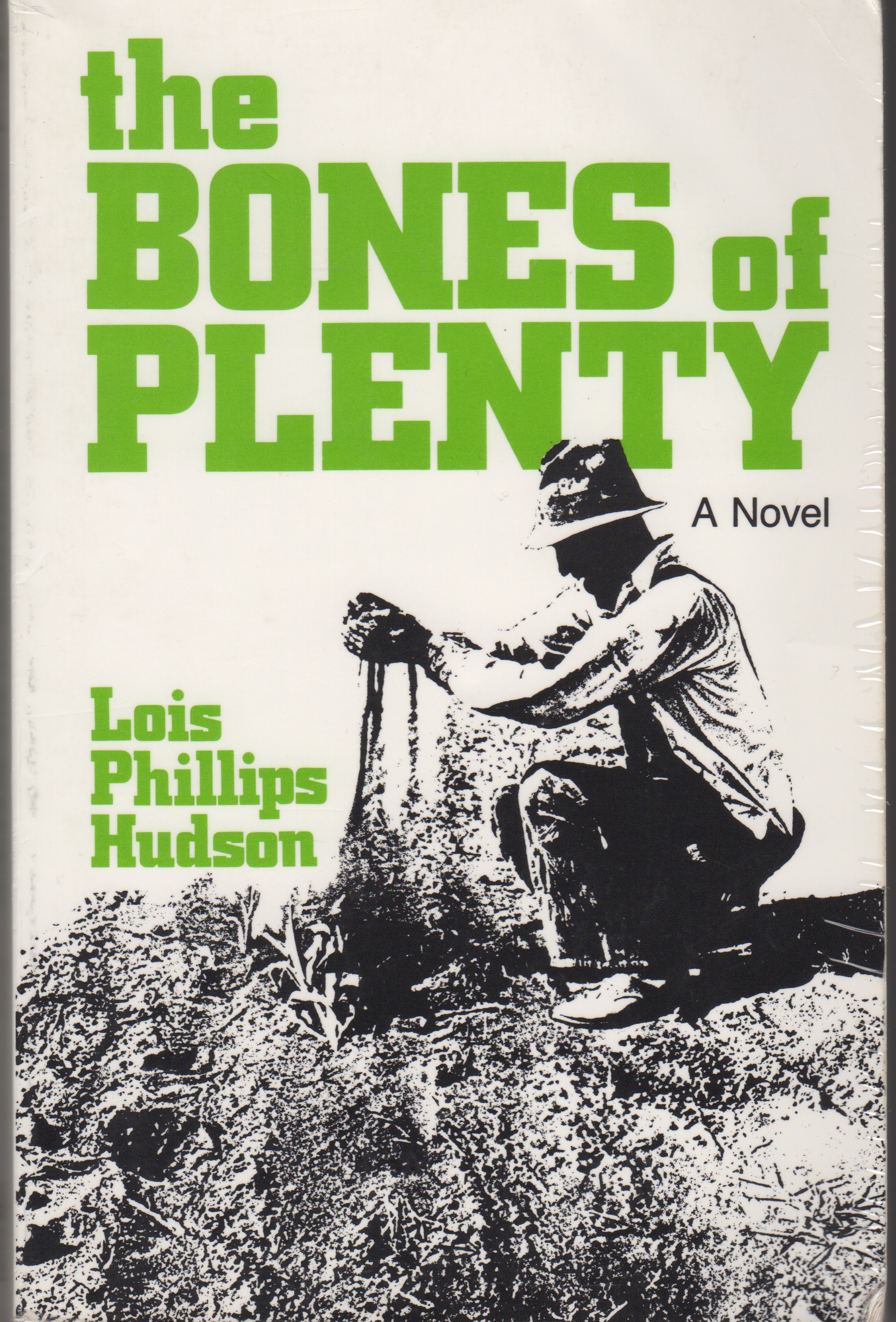
the Bones of Plenty by Lois Phillips Hudson (1962, 1984. Borealis Books. ISBN 0-87351-175-1)

One of the benefits of being asked to participate in Buffalo State University’s Rural Lit R.A.L.L.Y. blog discussion of bygone novels depicting America’s agrarian past is that, from time to time, you stumble onto something you’ve never read, never heard of, by an author you never even knew existed. As part of my affiliation with the Rural Lit blog site, the administrator of the blog sent me a used copy of the Bones of Plenty to read in preparation for an upcoming discussion. Similar in texture and tone to Minnesota author Herbert Krause’s epic tales about northwestern Minnesota (Wind Without Rain and The Thresher), Bones follows the successes and considerable failures of the tale’s red-headed protagonist, George Armstrong Custer (not the ill-fated general but a ND grain farmer named for the Indian fighter) during the Great Depression. It’s all here: the farm auctions where men from the surrounding community show up and bid so low, the sheriff escorting the banker gives up and leaves without completing the sale; the Jewish lender who, because he lost his neighbors’ life savings in speculative investments, vanishes under the cover of darkness; sickness, disease, and death; tragic farm accidents and dust storms that blot the sun.

At times poetic, Hudson allows George (and some lesser characters) to get a bit preachy, ranting for or against the men of power who control the strings of the populace’s existence to the point of distraction from the characters themselves. That’s the only real drawback to the writing and it is but a minor flaw. For the most part, Hudson, who was a professor at a number of colleges (see http://en.wikipedia.org/wiki/Lois_P._Hudson for details) hits the nail squarely on its prairie influenced head. The female protagonists in the story, including Lucy (the eldest of George and Rachel Custer’s two daughters); Rachel Custer (George’s long suffering wife); and her mother, Ruth; are all extremely complex personalities as drawn by this author. So too are the men: George has a temper and is prone to corporal punishment of Lucy in brutal and rash ways and routinely cuts his wife to the quick; but somewhere behind his deep seated mistrust of society and the system he is bound to (he’s a tenant farmer on someone else’s land), George Custer loves his daughters and Rachel, a college educated woman who gave up teaching school for a life of hardship she never envisioned.

In looking for novels by Hudson (she’s the sort of writer you want to hear more from), I was disappointed: The only other book available on Amazon.com by this author is Reapers of the Dust which appears to be a collection of essays about Hudson’s childhood in North Dakota. While such real-life snippets of turmoil and angst might be someone else’s “cup of tea”, I was hoping for more fiction from this forgotten chronicler of the prairie. Sadly, this appears to be the only novel Lois Hudson finished before her death in 2010.

And that, given the quality of the prose in Bones is all of our loss.

4 and 1/2 stars out of 5. Readily available on amazon.com.


Posted in Books | 2 Comments

Skiing with the Larsons

The Chernaks, the Mungers, and the Larsons.


We’re blessed with friends. That’s the one thing that I can say with certainty about my wife Rene’ and I. It’s been that way for a long while now, being blessed by friends. Many of our closest friends are folks we met in high school, at Duluth Denfeld. A few, like Jan and Bruce Larson, I met years before. In Jan’s case, it started at Piedmont Elementary in Duluth when we met in kindergarten. With Bruce, it started when a curious Baptist kid (that would be Bruce) started bugging his parents about where babies come from. Now, being that the Baptist church is fairly conservative, but wanting Bruce to know more than what he’d learn in hushed huddles during Boy Scouts, Bruce’s folks sent him to a sex education class run by Episcopalians. That’s where we met. When Rene’ and I started dating in 1976, she was welcomed into a crazy group of close and loving friends. She’s been one of us now for over thirty years.

Of course, the old friends aren’t our only friends. There are Fredenberg friends (folks we’ve met and grown to love out here where we live), family, work friends, and a whole host of other connections and friendships made over a lifetime. Some mine. Some Rene’s. But all important and sustaining. Still, the time we spend with folks like the Larsons and their relatives, the Chernaks, is a window to the past as we joke and laugh and, as we also reflect on our parents’ ages, a glance into the future. This past weekend, shortened as it was by Rene’ dealing with a flu bug (we couldn’t get up to the Larson cabin on Thomas Lake near Two Harbors until Saturday morning), was one of those get-togethers that sustains us in a world of sometimes seemingly unending uncertainty.

We were lucky. When we drove from our place on the Cloquet River to Thomas Lake early Saturday morning, it was snowing: Big, fat, fluffy early winter snow was coming down despite the fact that it was the third day of March. Let’s face it: This winter has been abysmal, a total bust. We’ve had little snow, temperatures that have been too warm, and gray sky after gray sky since November. Hell, our winter has been more like a Kansas winter than one spent in northern Minnesota. So to see snow piling up so late in the season, was, in a word, wondrous. When we arrived at the Larson cabin (which, when I was a Boy Scout and Jan’s dad, the legendary Arnie Erickson was my scoutmaster, was the “Erickson cabin”), the Larsons and the Chernaks were seated comfortably around a fire roaring in the cabin’s stone fireplace, sipping coffee and talking in low tones. Rene’ joined the crew while I hauled in our stuff and some groceries. We’ve been making this annual ski gathering for a decade or better and the ladies in the equation pretty much have it down pat as to who brings what. Bruce makes sure that there’s firewood aplenty, that the sauna is ready to go, that no water pipes have burst, and that the weekend will come off without a hitch. Me? I pretty much just show up.

The pleasantries exhausted, we knuckled down to some hard core political and philosophical discussions, beginning with my diatribe about Russ Limbaugh’s insensitive remarks about the young law student who testified before Congress, and moving on to the state of the economy in Ely, Minnesota, where Charlie and Sue Chernak hale from. By noon, Bruce had heard enough: it was time to hit the state ski trail a few miles from Thomas Lake.

Rene and Sue on the Mother Bear Trail.

Shit, I thought as I plodded along behind Bruce on my skis, I’m more out of shape than I thought.

Bruce and I generally take turns breaking trail. That’s the way it’s always been. And usually, we’re about even in our pace, with the women chatting and taking a more leisurely amble behind us. But this year, I could tell that the extra ten pounds I’d added over the Christmas holidays hadn’t come off: I struggled to keep up with Bruce as we glided silently through the snowy canopy of the forest. Charlie wasn’t with us in the trees: He was content to man the fire back at the cabin and stroke Bella, the Chernaks’ kind and gentle Golden Retriever as he sipped another cup of coffee, leaving the skiing to the rest of us.

I better get myself in shape if I want to be skiing with my grandchild.

It was a serious discussion, the one I had with myself, and one I will take to heart when I get back to that dust-covered treadmill in our bedroom in our house on the Cloquet River.

We were denied, Bruce and I were, our usual course, which is to split off from the women and take the esker trail to the right, a more difficult route. The groomer hadn’t gone up the esker and so, with some prodding from a gasping writer, Bruce agreed to take the easier spur to the left. We pushed on. The only wildlife we saw, or more correctly I saw, was a ruffed grouse which exploded from its hiding place under a spruce as Bruce and I passed by. Bruce never saw, never heard the bird: Likely the reason the Larson freezer is without grouse for table fare.

Bruce and Mark.

Bruce and I took a longer route but, inexplicably, we ended up at the junction with the main trail just as the girls arrived. From there, the five of us skied together on the last leg of the Mother Bear Trail back to the car.

We all knew what awaited us back at the cabin: An afternoon and evening of snacks and cold beer and a hot sauna followed by a nap and Sue’s homemade beef stew and more beer and a board game or two pitting the women against  the men. As usual, the men prevailed and Bruce and Charlie and I raised our arms in our fifty-something version of “The Wave” and sang Queen’s “We Are the Champions” as only old men can.

Thanks, friends, for another great memory.

Peace.

Mark

(Photos by Bruce Larson)


Posted in Blog Archive | 2 Comments

Better than Most


The Lincoln Lawyer by Michael Connelly (2005. Hachette Audio (audio version). ISBN 978-1-600247-2)

John Grisham’s latest efforts haven’t met with the same critical and fan success that his earlier works did. Grisham’s attempt at short fiction (Ford County Stories) was, as my review in the archives of this blog urges, poorly done compared to his other work. So picking up this legal thriller by yet another Grisham-wannabe for our ride back from Bozeman to Duluth after a recent ski trip, well, it was bound to be fraught with disappointment, right? I mean if the master of legal fiction is having trouble putting pen to paper, how can a newcomer to the genre like Connelly measure up. Am I right?

Turns out, The Lincoln Lawyer, with the exception of a minor plot implausibility or two, is a satisfying listen as an audio book. Calling biker clients to protect your ex-wife and daughter in the face of a serial killer (who is also, unfortunately, your client) when the ex is a DA rather than calling the police makes little sense. But that’s one of only a few minor diversions from a well constructed reality in this tale.

Micky Haller, the Irish American lawyer protagonist in this story is a very troubled man: He realizes, early on in the plot, that he blew it with a former client, a Hispanic named Hector, who is now doing life for something he didn’t do. Oh sure, Micky tries to rationalize away Hector’s fate by arguing (with himself) that the man was slated for the needle-that his work as a criminal defense lawyer saved the man from Death Row. But the nagging notion that Haller failed to recognize a truly innocent man, and now has confused sociopathic behavior with innocence in yet another client, haunts the lawyer.

The title is a clever twist being that Haller insists on being driven from scene to scene in the book by his hip-hop living African American driver in a Lincoln Town Car. He has a fleet of them, four to be exact, hence the title of the book. The dialogue is gritty and a bit tough for the ears of say, anyone under the age of twelve, but appropriate to the story. The characters, for the most part (the mother of the killer is a bit overdone and cartoonish as is her lawyer) are believable. Not better than say, The Verdict or The Firm, and certainly no To Kill a Mockingbird, The Lincoln Lawyer  is a compelling, well written piece of genre fiction.

4 stars out of 4.

Posted in Books | Comments Off on Better than Most

Sadly Beautiful


The Lovely Bones by Alice Sebold (2009. Hachette Audio Books (audio version). ISBN 978-1-60024-842-9)

Oh to have this talent. This is one of those books that, though deeply troubling in terms of its subject matter (the rape and murder of a 14 year old girl), is so beautifully constructed as to read (or sound) like a five hundred page poem. Most of you have likely seen the movie (starring Mark Wallberg as the grieving father and Stanly Tucci as the killer) or read the book in print. So why waste space here, on my blog, reviewing a book that nearly everyone knows something about?

First, as I started this review by saying, and as the title indicates, this is a magnificent work of great literary clarity and beauty. It is quite simply one of the best books of its time. The plot of the book, the dead girl, Susie Salmon (“like the fish”, she reminds us) looking down at the world she left behind from “her” heaven could have been maudlin and silly had some lesser writer thunk it up. Not so in the hands of Alice Sebold. The author is clearly a talented storyteller but also, and more important to a novel of this length and psychological depth, an excellent wordsmith. Her depictions of Mr. Harvey, the killer, and the Salmon family, including the feisty and determined younger sister (and potential victim) Lindsey Salmon, are all spot on. You will come to know each member of the Salmon family as intimately as your own kin. You will come to love and want to embrace the omnipresent Susie even though she is no longer with us. What could have been a card trick, a literary slight of hand had someone else attempted this tale becomes an American masterpiece.

Second, the audio version is read by Ms. Seboe, the author, and she acquits herself well in this effort. I’m not sure anyone would want me to read at them from my work, even if it were as polished and well crafted as this book, for nearly eleven hours. But Seboe’s voice has the perfect inflection and pitch to make this read a memorable one.

Finally, though I have read the book, watched the movie, and now listened to the novel as our Pacifica navigated through Montana on the way to Bozeman, I have to say that having my memory of Seboe’s hauntingly striking tale of love and loss reinforced by the audio version wasn’t overkill: It was sheer entertainment. I was not disappointed in hearing Susie Salmon’s tragic story one last time, from the author’s mouth. This is one of those rare flights of literary fancy that the author, in penning the book, got right and did not have the quality of her effort diminished by the movie or audio versions of her work.

5 stars out of 5. A stunningly gorgeous story.

Posted in Books | Comments Off on Sadly Beautiful

A Short, Well Written Ride


One for the Money by Janet Evanovich (1996. Simon and Schuster (Audio version). ISBN 978-0-7435-5208-0)

The first Stephanie Plum crime novel brings the young out-of-work Jersey girl into the limelight as a skip tracing bail bondswoman whose first client turns out to be an ex-cop on the lam. I’m an Evanovich virgin so I didn’t know quite what to expect from the author. And, as a spoiler alert, my taste tends to literary novels rather than genre fiction, Still, with the entire width of North Dakota facing my wife, our youngest son, and me on a recent ski trip to Montana, I had my better half pop the discs into the changer of my Pacifica as we roared onto the Great Plains. We weren’t disappointed.

Evanovich uses all the tools of a traditional literary writer, including finely wrought characterizations of Plum, Morelli, and a menacing boxer turned psychopath, to create a believable and palpable sense of urgency and anxiety. We care about Stephanie Plum, want her to succeed, despite her numerous rookie mistakes. There are enough twists and turns to keep the action moving and enough surprises to make the book memorable. All in all, my first foray into Evanovich’s world of crime and criminals was a satisfying visit.

4 stars out of 4.


Posted in Books | Comments Off on A Short, Well Written Ride

Ten Things Montana Taught Me…


The Blogster at Red Lodge, Montana.

What I learned after skiing five straight days last week with my fourteen year old son  and my wife in Montana.

First, as I get older, I don’t get better on skis. But as 14 year old’s get older, they do get better. Go figure!

Second, Montana beer is great beer. And it’s better than great after that first day of fighting moguls on black diamond runs from the top of Red Lodge Mountain to the chalet. Trust me. 57 year old legs and thighs fairly burn after the first three or four turns at 9,000 feet but after two Glacier Ales at the local pizza parlor (Pizano’s:  great pizza and fantastic staff), you forget the pain. Honest.

Mark and his second Glacier Ale of the night!

Third, my 2008 Pacifica (which I just bought with 61,000 miles on it to replace my 2005 Pacifica with 160,000 miles) has the same flaw that the 2005 version of the van had: It hates altitude to the point where it blows its coolant cap and dumps anti-freeze all over the parking lot. You’d think a vehicle that, when new, commanded a $40,000 price tag (not what I paid, trust me!) could handle altitudes commonly found in the American West. Here’s a tip for you Pacifica owners: Carry an extra cap and a gallon of anti-freeze with you anytime you go above 4,000 feet. You won’t regret it.

Fourth, when your wife suggests that she’s just fine gliding down the greens and blues at a ski hill, leave it at that. I followed this line of logic on this year’s sojourn to mountains and guess what? The arguments were nil!

Fifth, 15 inches of mountain snow is still 15 inches of snow. Add to that, the steepness of the bowls at Bridger Bowl and you have the makings of more muscle pain and agony between your thighs and calves. Again, don’t bother asking the 14 year old whether his thighs are on fire after a day of black diamonds and bumps: He’s oblivious, immortal, as only 14 year old boys can are.

Jack Bridger Munger at Bridger Bowl in the middle of a snow storm.

Sixth, hot tubs were likely invented by skiers. Old skiers. And they work.

Seventh, when you refill the coolant tank in your 2008 Pacifica after the cap has gone kaput, do it when the engine is COLD! That’s what the little fill level line is for. Not following instructions leads to two things: No heat in the car and a very serious rise in the heat gauge until you’re smart enough to shut the car off, let the engine cool down, and then fill the coolant tank to the proper level.

The eighth lesson I learned while skiing happened at Moonlight Basin, the newer, cheaper, less-well-known sister hill to Big Sky. Never, never keep skiing on a black diamond run after you’ve lost a ski, especially if you’re surrounded by trees. The result? You take a nice header avoiding a pine and smack your shin with the trailing ski. Metal edges are made out of metal for a reason.


Lone Tree Lift, Moonlight Basin.


Skiing in the mountains is as close as I’m ever going to get to sky diving. But I’m OK with that, and that’s the ninth thing I learned while out in The Treasure State: Be happy with who and what you are and don’t worry about things you haven’t done or may never get to do. The guy who organizes the annual Ski Hut excursion from Duluth to Bozeman, Montana, Wes Neustel, taught me that. Wes is still downhill skiing, in the mountains, at 92 years old. I don’t think he’s all that into hang gliding or sky diving. That Wes is steady and true on his skis, even into his tenth decade of life, seems like a great life lesson to me.

And finally, I learned that, even if the wallet is a bit thin on cash and things aren’t going exactly how you thought they should, a week with your wife and your son, skiing the Big Skies, is a good break from real life. Thanks, Rene’ and Jack for putting up with a tired, cranky old judge skiing on borrowed skis…


The Blogster at Bridger Bowl.


Peace.

Mark


Posted in Blog Archive | 2 Comments