Skiing with the Larsons

The Chernaks, the Mungers, and the Larsons.


We’re blessed with friends. That’s the one thing that I can say with certainty about my wife Rene’ and I. It’s been that way for a long while now, being blessed by friends. Many of our closest friends are folks we met in high school, at Duluth Denfeld. A few, like Jan and Bruce Larson, I met years before. In Jan’s case, it started at Piedmont Elementary in Duluth when we met in kindergarten. With Bruce, it started when a curious Baptist kid (that would be Bruce) started bugging his parents about where babies come from. Now, being that the Baptist church is fairly conservative, but wanting Bruce to know more than what he’d learn in hushed huddles during Boy Scouts, Bruce’s folks sent him to a sex education class run by Episcopalians. That’s where we met. When Rene’ and I started dating in 1976, she was welcomed into a crazy group of close and loving friends. She’s been one of us now for over thirty years.

Of course, the old friends aren’t our only friends. There are Fredenberg friends (folks we’ve met and grown to love out here where we live), family, work friends, and a whole host of other connections and friendships made over a lifetime. Some mine. Some Rene’s. But all important and sustaining. Still, the time we spend with folks like the Larsons and their relatives, the Chernaks, is a window to the past as we joke and laugh and, as we also reflect on our parents’ ages, a glance into the future. This past weekend, shortened as it was by Rene’ dealing with a flu bug (we couldn’t get up to the Larson cabin on Thomas Lake near Two Harbors until Saturday morning), was one of those get-togethers that sustains us in a world of sometimes seemingly unending uncertainty.

We were lucky. When we drove from our place on the Cloquet River to Thomas Lake early Saturday morning, it was snowing: Big, fat, fluffy early winter snow was coming down despite the fact that it was the third day of March. Let’s face it: This winter has been abysmal, a total bust. We’ve had little snow, temperatures that have been too warm, and gray sky after gray sky since November. Hell, our winter has been more like a Kansas winter than one spent in northern Minnesota. So to see snow piling up so late in the season, was, in a word, wondrous. When we arrived at the Larson cabin (which, when I was a Boy Scout and Jan’s dad, the legendary Arnie Erickson was my scoutmaster, was the “Erickson cabin”), the Larsons and the Chernaks were seated comfortably around a fire roaring in the cabin’s stone fireplace, sipping coffee and talking in low tones. Rene’ joined the crew while I hauled in our stuff and some groceries. We’ve been making this annual ski gathering for a decade or better and the ladies in the equation pretty much have it down pat as to who brings what. Bruce makes sure that there’s firewood aplenty, that the sauna is ready to go, that no water pipes have burst, and that the weekend will come off without a hitch. Me? I pretty much just show up.

The pleasantries exhausted, we knuckled down to some hard core political and philosophical discussions, beginning with my diatribe about Russ Limbaugh’s insensitive remarks about the young law student who testified before Congress, and moving on to the state of the economy in Ely, Minnesota, where Charlie and Sue Chernak hale from. By noon, Bruce had heard enough: it was time to hit the state ski trail a few miles from Thomas Lake.
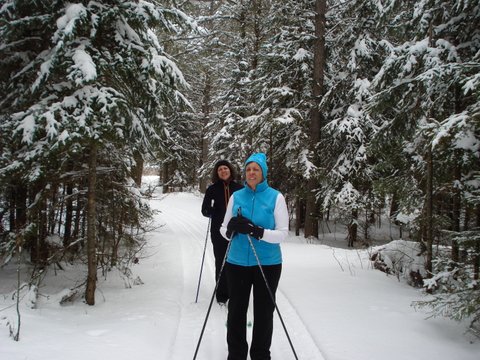
Rene and Sue on the Mother Bear Trail.

Shit, I thought as I plodded along behind Bruce on my skis, I’m more out of shape than I thought.

Bruce and I generally take turns breaking trail. That’s the way it’s always been. And usually, we’re about even in our pace, with the women chatting and taking a more leisurely amble behind us. But this year, I could tell that the extra ten pounds I’d added over the Christmas holidays hadn’t come off: I struggled to keep up with Bruce as we glided silently through the snowy canopy of the forest. Charlie wasn’t with us in the trees: He was content to man the fire back at the cabin and stroke Bella, the Chernaks’ kind and gentle Golden Retriever as he sipped another cup of coffee, leaving the skiing to the rest of us.

I better get myself in shape if I want to be skiing with my grandchild.

It was a serious discussion, the one I had with myself, and one I will take to heart when I get back to that dust-covered treadmill in our bedroom in our house on the Cloquet River.

We were denied, Bruce and I were, our usual course, which is to split off from the women and take the esker trail to the right, a more difficult route. The groomer hadn’t gone up the esker and so, with some prodding from a gasping writer, Bruce agreed to take the easier spur to the left. We pushed on. The only wildlife we saw, or more correctly I saw, was a ruffed grouse which exploded from its hiding place under a spruce as Bruce and I passed by. Bruce never saw, never heard the bird: Likely the reason the Larson freezer is without grouse for table fare.
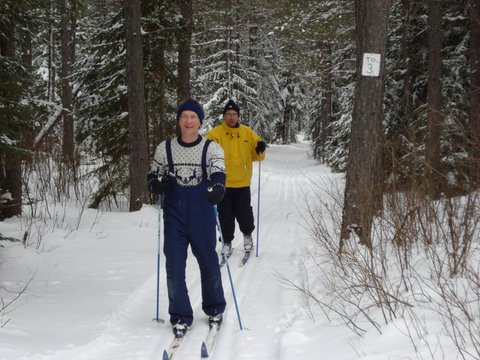
Bruce and Mark.

Bruce and I took a longer route but, inexplicably, we ended up at the junction with the main trail just as the girls arrived. From there, the five of us skied together on the last leg of the Mother Bear Trail back to the car.

We all knew what awaited us back at the cabin: An afternoon and evening of snacks and cold beer and a hot sauna followed by a nap and Sue’s homemade beef stew and more beer and a board game or two pitting the women against  the men. As usual, the men prevailed and Bruce and Charlie and I raised our arms in our fifty-something version of “The Wave” and sang Queen’s “We Are the Champions” as only old men can.

Thanks, friends, for another great memory.

Peace.

Mark

(Photos by Bruce Larson)
 

Posted in Blog Archive | 2 Comments

Better than Most


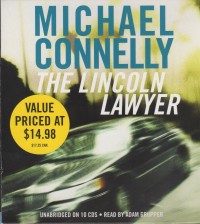
The Lincoln Lawyer by Michael Connelly (2005. Hachette Audio (audio version). ISBN 978-1-600247-2)

John Grisham’s latest efforts haven’t met with the same critical and fan success that his earlier works did. Grisham’s attempt at short fiction (Ford County Stories) was, as my review in the archives of this blog urges, poorly done compared to his other work. So picking up this legal thriller by yet another Grisham-wannabe for our ride back from Bozeman to Duluth after a recent ski trip, well, it was bound to be fraught with disappointment, right? I mean if the master of legal fiction is having trouble putting pen to paper, how can a newcomer to the genre like Connelly measure up. Am I right?

Turns out, The Lincoln Lawyer, with the exception of a minor plot implausibility or two, is a satisfying listen as an audio book. Calling biker clients to protect your ex-wife and daughter in the face of a serial killer (who is also, unfortunately, your client) when the ex is a DA rather than calling the police makes little sense. But that’s one of only a few minor diversions from a well constructed reality in this tale.

Micky Haller, the Irish American lawyer protagonist in this story is a very troubled man: He realizes, early on in the plot, that he blew it with a former client, a Hispanic named Hector, who is now doing life for something he didn’t do. Oh sure, Micky tries to rationalize away Hector’s fate by arguing (with himself) that the man was slated for the needle-that his work as a criminal defense lawyer saved the man from Death Row. But the nagging notion that Haller failed to recognize a truly innocent man, and now has confused sociopathic behavior with innocence in yet another client, haunts the lawyer.

The title is a clever twist being that Haller insists on being driven from scene to scene in the book by his hip-hop living African American driver in a Lincoln Town Car. He has a fleet of them, four to be exact, hence the title of the book. The dialogue is gritty and a bit tough for the ears of say, anyone under the age of twelve, but appropriate to the story. The characters, for the most part (the mother of the killer is a bit overdone and cartoonish as is her lawyer) are believable. Not better than say, The Verdict or The Firm, and certainly no To Kill a Mockingbird, The Lincoln Lawyer  is a compelling, well written piece of genre fiction.

4 stars out of 4.

Posted in Books | Comments Off on Better than Most

Sadly Beautiful


The Lovely Bones by Alice Sebold (2009. Hachette Audio Books (audio version). ISBN 978-1-60024-842-9)

Oh to have this talent. This is one of those books that, though deeply troubling in terms of its subject matter (the rape and murder of a 14 year old girl), is so beautifully constructed as to read (or sound) like a five hundred page poem. Most of you have likely seen the movie (starring Mark Wallberg as the grieving father and Stanly Tucci as the killer) or read the book in print. So why waste space here, on my blog, reviewing a book that nearly everyone knows something about?

First, as I started this review by saying, and as the title indicates, this is a magnificent work of great literary clarity and beauty. It is quite simply one of the best books of its time. The plot of the book, the dead girl, Susie Salmon (“like the fish”, she reminds us) looking down at the world she left behind from “her” heaven could have been maudlin and silly had some lesser writer thunk it up. Not so in the hands of Alice Sebold. The author is clearly a talented storyteller but also, and more important to a novel of this length and psychological depth, an excellent wordsmith. Her depictions of Mr. Harvey, the killer, and the Salmon family, including the feisty and determined younger sister (and potential victim) Lindsey Salmon, are all spot on. You will come to know each member of the Salmon family as intimately as your own kin. You will come to love and want to embrace the omnipresent Susie even though she is no longer with us. What could have been a card trick, a literary slight of hand had someone else attempted this tale becomes an American masterpiece.

Second, the audio version is read by Ms. Seboe, the author, and she acquits herself well in this effort. I’m not sure anyone would want me to read at them from my work, even if it were as polished and well crafted as this book, for nearly eleven hours. But Seboe’s voice has the perfect inflection and pitch to make this read a memorable one.

Finally, though I have read the book, watched the movie, and now listened to the novel as our Pacifica navigated through Montana on the way to Bozeman, I have to say that having my memory of Seboe’s hauntingly striking tale of love and loss reinforced by the audio version wasn’t overkill: It was sheer entertainment. I was not disappointed in hearing Susie Salmon’s tragic story one last time, from the author’s mouth. This is one of those rare flights of literary fancy that the author, in penning the book, got right and did not have the quality of her effort diminished by the movie or audio versions of her work.

5 stars out of 5. A stunningly gorgeous story.

Posted in Books | Comments Off on Sadly Beautiful

A Short, Well Written Ride


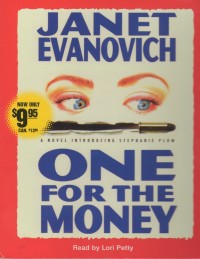
One for the Money by Janet Evanovich (1996. Simon and Schuster (Audio version). ISBN 978-0-7435-5208-0)

The first Stephanie Plum crime novel brings the young out-of-work Jersey girl into the limelight as a skip tracing bail bondswoman whose first client turns out to be an ex-cop on the lam. I’m an Evanovich virgin so I didn’t know quite what to expect from the author. And, as a spoiler alert, my taste tends to literary novels rather than genre fiction, Still, with the entire width of North Dakota facing my wife, our youngest son, and me on a recent ski trip to Montana, I had my better half pop the discs into the changer of my Pacifica as we roared onto the Great Plains. We weren’t disappointed.

Evanovich uses all the tools of a traditional literary writer, including finely wrought characterizations of Plum, Morelli, and a menacing boxer turned psychopath, to create a believable and palpable sense of urgency and anxiety. We care about Stephanie Plum, want her to succeed, despite her numerous rookie mistakes. There are enough twists and turns to keep the action moving and enough surprises to make the book memorable. All in all, my first foray into Evanovich’s world of crime and criminals was a satisfying visit.

4 stars out of 4.


Posted in Books | Comments Off on A Short, Well Written Ride

Ten Things Montana Taught Me…


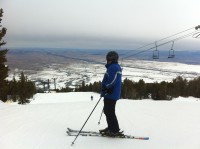
The Blogster at Red Lodge, Montana.

What I learned after skiing five straight days last week with my fourteen year old son  and my wife in Montana.

First, as I get older, I don’t get better on skis. But as 14 year old’s get older, they do get better. Go figure!

Second, Montana beer is great beer. And it’s better than great after that first day of fighting moguls on black diamond runs from the top of Red Lodge Mountain to the chalet. Trust me. 57 year old legs and thighs fairly burn after the first three or four turns at 9,000 feet but after two Glacier Ales at the local pizza parlor (Pizano’s:  great pizza and fantastic staff), you forget the pain. Honest.

Mark and his second Glacier Ale of the night!

Third, my 2008 Pacifica (which I just bought with 61,000 miles on it to replace my 2005 Pacifica with 160,000 miles) has the same flaw that the 2005 version of the van had: It hates altitude to the point where it blows its coolant cap and dumps anti-freeze all over the parking lot. You’d think a vehicle that, when new, commanded a $40,000 price tag (not what I paid, trust me!) could handle altitudes commonly found in the American West. Here’s a tip for you Pacifica owners: Carry an extra cap and a gallon of anti-freeze with you anytime you go above 4,000 feet. You won’t regret it.

Fourth, when your wife suggests that she’s just fine gliding down the greens and blues at a ski hill, leave it at that. I followed this line of logic on this year’s sojourn to mountains and guess what? The arguments were nil!

Fifth, 15 inches of mountain snow is still 15 inches of snow. Add to that, the steepness of the bowls at Bridger Bowl and you have the makings of more muscle pain and agony between your thighs and calves. Again, don’t bother asking the 14 year old whether his thighs are on fire after a day of black diamonds and bumps: He’s oblivious, immortal, as only 14 year old boys can are.

Jack Bridger Munger at Bridger Bowl in the middle of a snow storm.

Sixth, hot tubs were likely invented by skiers. Old skiers. And they work.

Seventh, when you refill the coolant tank in your 2008 Pacifica after the cap has gone kaput, do it when the engine is COLD! That’s what the little fill level line is for. Not following instructions leads to two things: No heat in the car and a very serious rise in the heat gauge until you’re smart enough to shut the car off, let the engine cool down, and then fill the coolant tank to the proper level.

The eighth lesson I learned while skiing happened at Moonlight Basin, the newer, cheaper, less-well-known sister hill to Big Sky. Never, never keep skiing on a black diamond run after you’ve lost a ski, especially if you’re surrounded by trees. The result? You take a nice header avoiding a pine and smack your shin with the trailing ski. Metal edges are made out of metal for a reason.


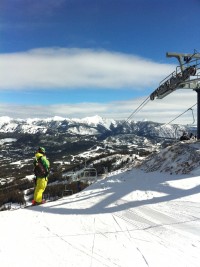
Lone Tree Lift, Moonlight Basin.


Skiing in the mountains is as close as I’m ever going to get to sky diving. But I’m OK with that, and that’s the ninth thing I learned while out in The Treasure State: Be happy with who and what you are and don’t worry about things you haven’t done or may never get to do. The guy who organizes the annual Ski Hut excursion from Duluth to Bozeman, Montana, Wes Neustel, taught me that. Wes is still downhill skiing, in the mountains, at 92 years old. I don’t think he’s all that into hang gliding or sky diving. That Wes is steady and true on his skis, even into his tenth decade of life, seems like a great life lesson to me.

And finally, I learned that, even if the wallet is a bit thin on cash and things aren’t going exactly how you thought they should, a week with your wife and your son, skiing the Big Skies, is a good break from real life. Thanks, Rene’ and Jack for putting up with a tired, cranky old judge skiing on borrowed skis…


The Blogster at Bridger Bowl.


Peace.

Mark


Posted in Blog Archive | 2 Comments

The Way to Write


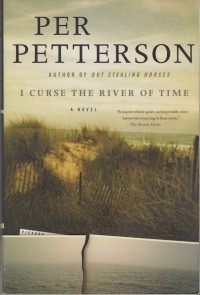
I Curse the River of Time by Per Petterson ( 2008. Translated 2010. Picador. ISBN 978-0-312-42953-9)

I got into Petterson’s prose ( I like how that phrase flows off the tongue) due to my pal, Dave Michelson’s insistence that I read Out Stealing Horses, Petterson’s best known novel. I fell for the Nordic vibe of Petterson’s writing style, a style that, in some subtle ways, reminds me of Icelandic legendary author, Harold Laxness. Though Petterson’s work tends to be more limited in terms of scope than say, Laxness’s iconic masterpiece, Independent People, there are similarities between the writers in terms of style and the Nordic poetry their writing evokes.

I Curse the River of Time is, however, to my mind, the least satisfying of the three Petterson novels I have read. This is not to say that the book was troubling, or short changed my expectations, in the same way American author Larry McMurty’s latest effort, When the Light Goes (see review below) did. Unlike McMurty, who, getting on in life, stumbled and fell (in a literary sense) writing When the Light Goes, into the common trap of aging male fiction writers who seem hell-bent to write about the sexual prowess of their male characters in the hope of reclaiming the author’s own youth, Petterson’s fall from literary grace is more subtle. I had particular difficulty sorting through scenes in the book that transitioned from the past to the past-past, as the protagonist related bits and pieces of a life lived as a Norwegian boy, young man, and middle-aged adult, in both Norway and Denmark. Beneath the story lies the contemporary whisper of the protagonist’s impending divorce, a circumstance that compels the first-person narrator to visit his aging mother who is dying of stomach cancer. Trouble is, at an earlier point in the narrative, she apparently also was diagnosed with stomach cancer, when her sons were young, only to find out that the diagnosis was apparently in error. Was the doctor wrong or did the present-day illness, the same illness discussed earlier in the book, simply lie dormant and symptomless for decades? I had a hard time following the time bending narrative of this book.

On the plus side, the language of Petterson’s prose is very poignant and poetic, the sort of rhythmic writing that compels a reader forward even if there is slight confusion in the plot. The scenes between the narrator and a young girl he beds (age appropriately, it seems) and the narrator and his wife as they court are very tastefully done and convey a sense of  longing and moral fiber in the narrator that seems to fall off and vanish in later scenes. A lesser work from a strong writer that, in the end, is satisfying enough to recommend as a good read.

4 star out of 4.


Posted in Books | Comments Off on The Way to Write

The Light Has Gone Indeed

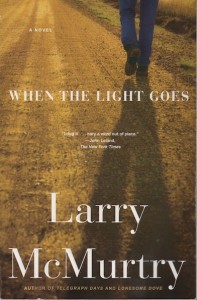
When the Light Goes by Larry McMurtry (2007. Simon and Schuster. ISBN 978-1-4165-3427-3) brings back the Duane Moore character from The Last Picture Show (see my review below) and Duane’s Depressed (which I haven’t read). When last I knew, Duane was off to fight the Korean War mainly because he’d run out of options to make a living and better himself in Thalia, Texas: a dusty, dirty, windy spit of a town located not far from the Oklahoma-Texas border. Turns out that Duane has made millions in the oil industry after returning to Thalia, settling down, getting married and having four kids. His wife of many years, Karla, is dead and gone, the result of a car accident. Duane, after sixty-plus years of hard living, has heart problems; both romantic and physical. Turns out, despite his aging, decaying body, he’s still something of a catch: Both his forty-something bisexual psychiatrist and the seemingly coy California girl his eldest son has hired to work in the oil company office want Duane in bed. What to do? Duane has had a heart attack and must tread lightly when it comes to physical activity, including the horizontal bop.That’s pretty much what this book is from page 1 to 195. I’ll give the author this: It’s a quick read but that’s due to the brevity of the tale, not because it’s a page turner.

I’ve written similar reviews regarding books penned by other late-in-life male authors including John Irving and James Harrison. My chief objection to the more recent work of these writers is their irrational obsession with sex. Not story, not character, not setting; just sex. Now, I’m no prude. I’ve used sexual content and scenes in any number of my novels and short fiction. Not always, but when the story merits a romantic, sexual lilt, I have no problem writing scenes that involve disrobing and the act of procreation. That’s not what’s going on here folks: The fading light that McMurtry so desperately laments isn’t Duane Moore’s physical prowess or sexuality. It’s the disappearance, the vanishing of great characters and dialogue, both of which can be found in The Last Picture Show and Lonesome Dove. The story here is predictable and without purpose. We’re left to follow the aimless, pointless wanderings of an old guy trying to figure out which younger lass to bed. Duane’s attempts at self-reflection (like sex between strangers) seems empty and forced. McMurtry certainly could have written a protagonist who is without morals, without empathy, without direction, the sort of character who would fit the role of an indulgent, aging male far better than Duane Moore. But he didn’t take that risk. He didn’t ring that bell. The author, in a very real sense, played it safe and the result is an uninspired and unimaginative story.

In sum, I found very little to like about this story or its characters. I’d save the $14.00 cover price and buy one of James McMurtry’s CDs instead. James is the very gifted musical son of the author who writes fantastic Texas-inspired songs that feature lonesome lyrics and finely mastered guitar. Don’t get me wrong, Larry McMurtry remains a man who still commands my respect: His authorship of  Lonesome Dove brought the oft-ridiculed genre of the Western into literary limelight. But the author who penned that tale, like the Duane Moore who inhabited Thalia at the time of The Last Picture Show isn’t to be found in the pages of When the Light Goes.

3 stars out of 5.

Posted in Books | Comments Off on The Light Has Gone Indeed

A New Way of Thinking

Recently, twenty Minnesota judges gathered at the pastoral Gainey Conference Center to participate in the Judicial Decision Making Conference. Also known as the “Literature and the Law” conference, the premise of the session is to read short works of fiction, including some classic works of literature and some-lesser known stories and plays, with an eye to self-discovery and reflection on what it means to be a judge and how one goes about the difficult and sometimes gut-wrenching job of judging others. I’d heard about the conference but when an invitation to attend popped up on my work computer one day, I thought, “What the hell. I’m a writer. I’m a judge. I might as well give it a go.” And so I did.

The seminar was held at the Gainey Conference Center, an estate just outside Owatonna now owned and maintained (superbly, I might add) by the University of St. Thomas. As is my usual custom, I loaded the address into Theresa (my Garmon navigational assistant) and, on Thursday morning at 6:00am, I drove from Duluth to Owatonna. Being the optimist I am, I thought Owatonna was just a tad south of Lakeville; just outside the southern ring of Twin City suburbs. I was wrong. It’s further than I thought. In fact, it’s south of Faribault. But I had plenty of time to make the opening session, which was due to start at 9:30am, until Theresa sent me on a wild goose chase. I swear that I inputted the correct address for the Gainey Center. So I’ll ascribe my late arrrival to the tendencies of women, including electronic surrogates, to get lost. It couldn’t have been me, the male in charge,who made the mistake, could it?

Despite my sidetracked route, I arrived just as each judge was making a brief introduction. And then, the sometimes intense, sometimes humorous, always humbling work of self-reflection and assessment began.

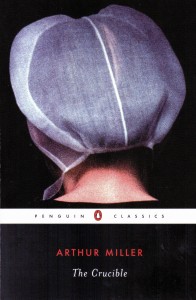
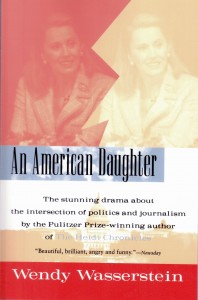
The two major works we read and discussed, included Arthur’s Miller’s astonishingly vivid depiction of the Salem Witch Trials, The Crucible, and a lesser known work by American playwright, Wendy Wasserstein, An American Daughter. The point of the readings (which also included four other pieces of varying lengths) was not to critique or assess story, or character or plot, but to delve into the inner thoughts, emotions, and decision making of the protagonists and minor players with an eye towards tying that conduct to what we, as judges do, every day when we decide cases. There we were: white, black, male, female, Christian, Jew, and agnostic, all seated around a circle of tables, trying to understand the reasons and emotions and driving forces behind our judicial decisions. It was, at least to this judge, cathartic to hear other jurists, some new to the job, but many with more experience than me, express the methodology and basis for what it is they do with the most delicate and important of our fellow citizens affairs: How we reason as we impact liberty, family, and property with our rulings.

For my money, The Crucible by Arthur Miller (1952 and 2003. Penquin. ISBN 978-0-14-243733-9) was the work of the conference. Why? First off, Miller’s attempt to link the McCarthyism of his day to the fear and hysteria of the witch hunts in colonial Salem is spot on. There are also (to a lesser degree) parallels between the mass delusion of Salem in the 1600s to Germany in the 1930s, but the greater and more appropriate link, in my view, is to the American experience during the 1950s when men and women were challenged by “Tail Gunner” Joe regarding their loyalties. The intensity of the play, followed by watching the very fine performances in the 1996 film version of the tale, are haunting and thought-provoking. Especially relevant to the attendees, I believe, is the character of Judge Danforth, the jurist who is bent upon “rooting out Satan” in Salem even if it means the mass execution of innocent men and women. Which, of course, it does. In many ways, reading and watching The Crucible  challenges a judge, including this judge, to reflect upon the quality and nature of evidence we hear and see in court and how one’s personal views, political, religious or otherwise, skew perceptions of truth.

Wasserstein’s play, on the other hand, which was included in our readings so as to challenge our judicial noggins regarding religion, gender, and orientation, never really struck a chord with me similar to what I experienced reading The Crucible. An American Daughter (1998. Harcourt Brace. ISBN 0-15-600645-6) is the tale of Dr. Lyssa Dent, a presidential nominee for the post of Surgeon General. Surrounding the privileged and somewhat aloof Dent are her husband, Walter; her father, a United States Senator; and a host of other “interesting” supporting characters. Dent has a secret in her past which threatens to derail her nomination. Patterned after the “Nannygate” scandals of the recent past, the secret is this: When the elitist Lyssa received a summons for jury duty, she tore it up and never served. This seemingly inconsequential act turns out to be the linchpin upon which Dr. Dent’s figurative lynching in the media takes place. The problem with this play is, unlike The Crucible, where there is an abundance of sympathetic victims to pique our interest and outrage at Danfroth’s pompous piety, An American Daughter provides the reader with no such characters with which to empathize. At the conference, I quipped that the play “Reads like a bad episode of Seinfeld.” I think that’s an apt assessment. The problem for me, and I think, for anyone trying to delve into the deeper meanings of  Wasserstein’s prose, is that, the thinness of the morality of all concerned blocks any such detailed consideration of motivation or character. The play just didn’t measure up in terms of being a catalyst for serious discussion about what it is we judges do in our professional lives.

Over two days, I was privileged to discuss, break bread, and share laughs with some of Minnesota’s most talented jurists. Some folks who hold the purse strings for judicial education seem to to believe that thoughtful consideration of decision making has no place in judicial education, that, to use a Joe Soucherayism, it is too Mysterian, too “touchy feely” to merit funding and attention. After two days at the bucolic Gainey Conference Center assessing how it is we judge’s think, I heartily disagree. There’s great value in such self-reflection and contemplation, value that cannot be obtained at mainstream “topic-based” legal or judicial seminars. I’ll make the Judicial Decision Making Conference an annual “must” because the opening of a jurist’s eyes is also the opening of a jurist’s soul.

The Gainey Conference Center


Peace.

Mark

Posted in Blog Archive | Comments Off on A New Way of Thinking

A Simple Story


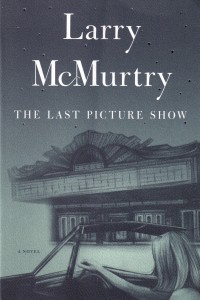
The Last Picture Show by Larry McMurtry (1966 and 1994. Simon and Schuster. ISBN 978-0-684-85386-4)

The title to this review isn’t meant to belie the fact that The Last Picture Show is, to a great degree, an American classic along the lines of The Heart is a Lonely Hunter  or To Kill a Mockingbird or East of Eden. Yet, unlike those books, which take on broad, larger-than-one-man-or-woman’s-existence-issues, McMurty’s tale of teenaged angst and maturation, while written in prose that calls to mind Carson McCullers , is more in line with The Graduate  or Catcher in the Rye in terms of the scope of story. There are no great debates contained within the pages of this novel, no rants or rages or discussions about race, gender, income inequality, or politics. And yet, the read is satisfying. Why? Because, as McMurtry would later reinforce in his the colossus-in-print Western to beat all Westerns, Lonesome Dove, Larry McMurtry is a first rate storyteller and a creator of memorable characters. As in Lonesome Dove, McMurtry  clearly understands the motivations and inner dialogue of both male and female characters inhabiting his worlds. And, there is much about life to be learned from language such as the following:

Duane was too bleary and sick to do more than grunt. His hair was plastered to his temples with sweat. “You drive,” he said.

By some miracle Sonny managed to wind his way through Matamoros to the Rio Grande-in daylight the water in the river was green. The boys stood groggily under the customs shed for a few minutes, wondering why in the world they had been so foolish as to come all the way to Mexico. Thalia seemed an impossible distance away. 

“I don’t know if I can make it,” Sonny said. “How much money have we got?”

They found, to their dismay, that their money had somehow evaporated. They had four dollars between them. There was the money that Sam, and Genevieve had given them, hidden away in the seat springs, but they had not planned to use that.

“I guess we can pay them back in a week or two,” Sonny said. “We’ll have to use it.”

This scene follows two young men (Duane and Sonny) having blown their cash on booze and whores in Matamoros, Mexico on a whimsical trip apart from their dull and unexciting lives in Thalia, Texas; a trip that Duane and Sonny thought would define their entry into the adult world. But, as McMurtry paints the picture, the wonders of Matamoros did not live up to expectations or lead to life-changing revelations of soul or spirit. In the end, Thalia is Thalia even if you’ve been to Mexico.

I read this book because I, like most of my generation, had seen the movie (gotta love a young Cybil Shepard!) years ago and thought it to be, on its own merit, an American classic. When I found out that McMurtry had reprised the character of Duane in a new novel, When the Light Goes, I wanted to read the new book but felt an obligation to read the original before doing so. After spending three days racing through The Last Picture Show, I can’t wait to go back to Thalia no matter how desolate the place may be.

5 stars out of 5. Not Lonesome Dove but then, what book is?

(Note: A Review of When the Light Goes will be forthcoming. I can only read so fast!)


Posted in Books | Comments Off on A Simple Story

Dumpster Diver

Not Exactly the Same Dumpster...But Close!


Most of you don’t know that, in addition to working as a full-time District Court Judge, writing novels, running a blog, working with Boy Scouts and confirmation-age kids, and being a dad and husband, I also teach. At UWS. This semester, it’s Environmental Law, which is a fairly sophisticated and demanding subject. I’m what is classified, within the University of Wisconsin system, as a “Senior Lecturer”. Now, I don’t know if you have to be AARP qualified to attain the designation as “Senior” when teaching undergrads, but if that’s the sole criteria, well, I meet it!

Anyway, Sunday evenings, I usually get ready for class by reading and outlining the selected text for the week from our course books, putting aside any relevant news articles of a conservation or environmental bent for class discussion, and setting aside any DVDs I’ll be using in class. My liturgical practice is to curl up on the sofa in my writing room, books and pen in hand, the computer tuned to MPR’s classical music station, Brahms, Bach, and Sibelius playing softly in the background, with the door to the great room shut, cozy as a caterpillar in a cocoon, as I prepare. That’s the way I’ve spent many, many Sundays the past three years and I truly enjoy the work. But not this Sunday. This Sunday, panic; mind-numbing, deep-roosted uncontrollable fear took the place of careful consideration and contemplation.

“I can’t find my text books!” I yelled.

Rene’, our 3rd son Chris, and our youngest son, Jack were all within earshot as I stepped from the study into the great room of our house in a funk.

“Did you leave them at work?” Rene’ asked.

“Nope.”

“Sure you’re not just overlooking them, Dad,” Chris offered.

At the suggestion I was less than diligent in my search, my blood began to boil.

“I guess I’d know if I looked or not, now wouldn’t I?”

“Chill, Dad. Chill.”

I shook my head and wrung my hands.

“That’s over two hundred dollars in books. They’re instructor copies. Provided by the publishers. I can’t afford to replace them and I need them for Tuesday’s class. Jack has Scouts tomorrow so tonight is the only night I can prep for class.”

“Are you sure you didn’t…”

I left Rene’ in mid-sentence. A thought, a horrible realization, dawned on me.

Oh shit! I said as I walked back into the writing room and stared at last year’s books. Those were supposed to get tossed with all those writing magazines I cleaned out of here last week. I bet I tossed this year’s books instead. Shit, I am an idiot.

I threw on my jacket, pulled gloves over my hands, and bolted out the door into the garage. Without a word of explanation to my dumbfounded family, I slammed the door, hit the remote garage door opener, climbed into Rene’s car, fired it up, and backed out of the garage.

I hope they’re still there.

I knew that Harold (the youngest member of our town board) was working at the Minno-ette, the neighborhood bait and convenience store. I whipped the Matrix into the lot, leaving it running as I dashed into the store.

“This is gonna sound weird, Harold,” I said through labored breath, “but do you have a key to the mixed paper dumpster at the recycling shed? I think I tossed some text books I need for a class I teach at UWS out along with some old magazines.”

Harold shook his head.

“Nope. Not any more. But Connie can open it for you.”

“Could you call her?”

Harold, being a nice guy and a diligent public servant did just that.

I drove over to the recycling center and waited. Within minutes, Connie (one of the recycling center attendants) and her husband arrived. I retold my tale of woe to Connie. She opened the dumpster. It was jam packed full of cardboard and magazines. I climbed the cold steel skeleton of the box and plunged in.

“You know,” Connie said thoughtfully as her husband shined a flashlight on my work, “I think they emptied this since you were here last.”

I ignored the nice woman’s observation. I didn’t want it to be true: I wanted to spy one copy of Poet’s and Writer’s Magazine  or The Sun amidst all that trash. Then I would know: The books can’t be far away. No one else in Fredenberg, I reasoned with some sense of sinful pride, reads Poet’s and Writer’s.

Connie was right. I was wrong. There were no textbooks anywhere to be found in the cold, silent depths of that steel box.

Dejected, I drove home. I parked the Matrix in the garage, buzzed the door closed, and headed into the house uncertain of how I was going to explain my lack of preparation to my class. Then it hit me:

Environmental Law books sent to the recycling shed… Isn’t recycling part of protecting our environment? This all must be a lesson from God; some bit of knowledge I’m supposed to comprehend and pass along.

When I figure out  the significance behind my dumpster diving, how it relates to the bigger scheme of things, I’ll let you and my students know.

Peace.

Mark


Posted in Blog Archive | Comments Off on Dumpster Diver