
Great Crime Fiction for a Cold Autumn Night!


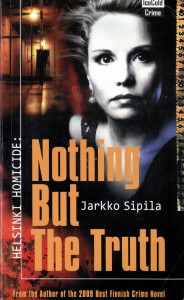
Nothing but the Truth by Jarkko Sipila (2006. Ice Cold Crime. ISBN 978-0982444931)

A low-level drug dealer is shot, execution style at the threshold of his seedy Helsinki dive. A neighbor, a single mother with a pre-teen daughter and an abusive ex-husband, sees the getaway car and driver. She hesitates to call the Helsinki police. “Why get involved?” her boss says, urging her to remain silent. In the end, Mari Lehtonen does the right thing: She steps forward and becomes the State’s key witness in a murder investigation. But can the police protect Mari from retaliation? This is the story behind Nothing but the Truth, the latest in the “Helsinki Homicide” series from Ice Cold Crime of Independence, Minnesota.

It’s interesting reviewing an author’s work in reverse chronological order. Previously, I read and reviewed Jarkko Sipila’s more recent titles, Against the Wall (2009) and Vengeance (2010). So here I am, reviewing an earlier novel by Mr. Sipila, Nothing but the Truth (2006. Gummerus (in Finnish). 2011. Ice Cold Crime (in English). ISBN 978-0-9824449-3-1). And while Sipila’s later works have been well written and concise, the sort of tight writing one wants in a beach read (which most crime novels tend to be), they lacked the revelation of character that, for me, sets a good book apart from its competition. After reading Nothing but the Truth this past weekend, I now know that Jarkko Sipila cares about the people who populate the Helsinki of his imagination. And in this reviewer’s humble opinion, that’s a huge plus.

The cast of characters in this earlier installment of the “Helsinki Homicide” series includes some of the same folks found in Sipila’s later work, including Kari Takamäki, (a Detective Lieutenant in the Helsinki Violent Crimes Unit) and Suhonen (an aging, hockey playing undercover detective in the same unit). Sipila clearly has a fondness for Suhonen’s lone-wolf personality: The author gives the shadowy detective center stage. But the writing (unlike the two other Sipila books I’ve read) doesn’t suffer from too much action and not enough humanity: Here, Jarkko Sipila gives us a full-blooded Suhonen, a character with a complete history and personality. Consider this fine bit of writing:

Salmela took the first rod and dropped the lure into the water. It fluttered along easily next to the boat. He let out the line about fifty feet, made a small loop, and clamped it with a spring-loaded clip that had a ring for the planer leader. Salmela let out the line till the ring reached almost to the planer, then he propped the rod up in the holder.

 Within five minutes, all four lines were in the water. “Once you get a hit, the fish will jerk the clip off the line and you just reel him in. That’s it. You take the first hit. I’ll take the next. Just remember to brace yourself when you take the rod out of the holder.”

 Suhonen began to suspect that this wasn’t a friend’s boat after all. Salmela seemed to know his way around it well enough. Or maybe he had more than borrowed it…

 So the burly undercover detective enjoys an occasional day off and, though not an avid salmon fisherman, will take up a rod and reel when invited? The cited passage humanizes Suhonen, puts flesh on the bones of his character, making us care about what it is he does for a living and how he does it. This is the sort of development of a protagonist that seemed to be lacking in the Jaarko Sipila books I read and reviewed earlier. The author clearly knows how to write: It’s simply a matter of applying his skills.

Similar nuance and care is shown in how Sipila reveals Mari Lehtanen’s past, her fears, her personality. It would an easy thing to portray her ex-husband, who clearly abused Mari during their marriage, as a stereotypical, beer-swilling bastard. But Sipila takes the time to show us more, to weave the complexities of humanity into these two characters making them believable and authentic.

Another nice touch (for this American lawyer-turned-judge) was the use of the Finnish court system as a setting for a portion of the narrative. Sipila (a crime reporter in Finland) had me scrambling to verify that Finland does indeed have: a jury system (generally one law judge and three lay judges (also called jurors) for most serious criminal cases); life sentences for murder convictions; and the same burden of proof as the U.S. criminal justice system. (Sipila got that last one wrong. On p. 94 of the book, the burden of proof for conviction in Finland is depicted as “clear and convincing evidence”, a lesser standard than “beyond a reasonable doubt”, the burden applicable in Finnish criminal courts. See Heuni: The European Institute for Crime Prevention and Control in Finland (2001) @ http://www.heuni.fi/uploads/mwlahyuvuylrx.pdf, and “A Comparison of Criminal Jury Decision Rules in Democratic Countries” by Ethan Lieb (Ohio State Journal of Criminal Law, Vol. 5:629, 2008)).

Despite this minor inaccuracy, the court scenes added much to the overall complexity and interest of the story: I’d love to see more from Jaarko Sipila in this vein. Learning something new, even from a “beach read” is never a bad thing!

For those readers who like full-throated, pedal-to-the-metal crime novels, Nothing but the Truth is a fast and furious read filled with memorable characters and plenty of action. Highly recommended.

4 and ½ stars out of 5.

(This review first appeared in the most recent edition of New World Finn. If you’re a drop of Finnish blood, or simply interested in Finnish art and culture, buy the newspaper. You can find it at: http://newworldfinn.com/.)


Posted in Books | 3 Comments

A Disappointing Novel from a Great Writing Teacher


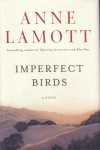
Imperfect Birds by Anne Lamott (2009. Riverhead. ISBN 978-1-59448-751-4)

Anyone who is a fiction writer has read (or should read) Ms. Lamott’s classic instructional memoir about creative writing, Bird by Bird. In 237 pages, Ms. Lamott captures the heart, soul, craft, and angst of creative writing and the writing life. I love the book and have used excerpts from it in many, many workshop and lecture settings during my modest career as a semi-famous regional novelist. The examples given, the writing style, the self-depreciating tone of the book are what make Bird by Bird such an exemplary resource.

So, never having read any of the author’s fiction, when I was looking for a “stocking stuffer” for my wife last Christmas (on Christmas Eve like all marginally diligent husbands) and I saw Imperfect Birds in hardcover, I snapped it up for Rene’. I was certain that, given Ms. Lamott’s credentials as a gifted writer (fully displayed in Bird by Bird), Rene’ would love the read. Recently, when I found myself  bookless, headed towards a hot bath, and  I spied the unread copy of Lamott’s novel on my wife’s nightstand, I picked up Imperfect Birds and brought it into the steam of the master bath. In the solitude that only a hot bath can provide, I began reading the story of Elizabeth, her daughter Rosie, and James, Elizabeth’s second husband and Rosie’s stepfather. As I settled into near scalding water, I was ready to be transported; physically, emotionally, and transcendentally by Ms. Lamott’s work.

It didn’t happen.

Why? I think the reason the book fell so flat for me, in terms of character, dialogue, and setting is that the novel’s 278 pages are nearly devoid of any sort of conflict: emotional or physical. Ostensibly the story of Rosie’s senior year in high school in Marin County, CA and her descent into drug use and casual sex, the writing seems to try a bit too hard to be “hip” and relevant. (As an example: Depictions of oral sex performed by teenagers (as rewards for friendship) don’t really add much to plot unless the author is willing to connect those soulless, desperate acts with something more meaningful. In the end, casual sex is, well, simply casual and not all that interesting.) Yes, there are snippets of conflict and anger and upset between Rosie and her parents throughout the book. But none of these scenes propel the plot or the characters to a place that challenges the reader. I won’t spoil the ending but, suffice it to say, after cruising along on idle for the entirety of the story, the engine of this novel’s plot never moves towards the red line.

Bottom line: Skip this novel and, if you are aspiring author (or just someone who loves to understand what makes writers tick) buy Bird by Bird instead. It’s shorter, cheaper, and a hell of a lot more compelling.

3 stars out of five.


Posted in Books | Comments Off on A Disappointing Novel from a Great Writing Teacher

Mr. Pheasant Welcomes Willard Home…

The Misguided Munger Pheasant…


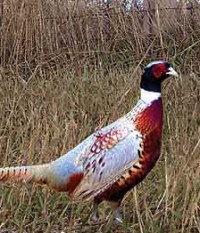
There are no ring-necked pheasants in northeastern Minnesota. Never were. It’s too cold, too filled with predators, too dangerous a place for a bird so colorful. And yet, there he is, strutting around our front yard like an undersized peacock. The bird is an aberration, an anomaly, that can only be explained this way: He’s here to welcome Representative Willard Munger to Fredenberg Township.

Willard, my long-departed uncle, was a great man. I didn’t coin that phrase: His friend and associate Ann Glumac did. Her comment, taken from an article she wrote at the time of Willard’s passing in 1999 (and included in the biography I wrote about my uncle) goes like this:

In the 20 years that I knew Willard, I loved him for his humanity, his humor, his high pitched laugh, his stories, and his dedication to family and friends. I also envied him for his steadfastness in fighting for principles in a world where black and white almost always blend to gray. I’ve been privileged to meet or work with many leaders and public figures, but Willard Munger is the only great man I have ever known.

(Mr. Environment: The Willard Munger Story by Mark Munger (c) 2009)

So how can a man who’s been playing gin rummy with the saints for over ten years be coming home, to the Munger farm in rural northeastern Minnesota, you ask? And why would a pheasant show up out of the blue to greet him? The answer is simple: providence.

You see, back when I decided to write the story of my uncle’s remarkable life as Minnesota’s quintessential conservationist, taking up the keyboard only when no one else seemed interested in doing so, I was encouraged by folks who, time after time after time at art and craft shows, or bookstores, or libraries where I was hawking my fiction, would come up and urge me to write about my uncle. Many of these folks were environmental types or former Liberal politicians. Some were just good people who loved Willard. I resisted the call to write his biography for five years after his passing: I felt ill-equipped, as his nephew and young ward, to write his story. I wanted someone else to do it, to chronicle Willard’s seventy-plus years in Liberal politics because I felt too close to the subject matter to do it justice. But then, as time passed and nothing was written about Willard and his beginnings as a Farmer-Laborite, or the battles he fought as a legislator on behalf of education and the environment, I began to research and write about my uncle. The result, Mr. Environment: The Willard Munger Story was published in 2009 to some fanfare and celebration. But the book has been, in a word, a tough sell despite all the urging and prompting I received to take it on as a project. It hasn’t sold like I expected and, two and a half years later, I have a mountain of unsold copies of the book waiting for buyers.

Yes, I know, it’s partially my own damn fault. I was (as I usually am) overally optimistic. I thought that folks living in Minnesota would be interested in learning about one of their own, about a guy born in a log cabin to poverty who grew up on the northern edge of in pheasant country (Friberg Township in Otter Tail County, northwestern Minnesota); lobbied FDR during the Great Depression; managed the campaigns of Liberal icons and Minnesota governors, Floyd B. Olson and Elmer Benson; built Liberty Ships during WW II after coming to Duluth; and served nearly 50 years in the Minnesota House of Representatives as the voice of the pheasants, deer, ducks, clean water and clean air. I was wrong: I printed way too many copies out of wide-eyed eagerness and love.

For the past two and a half years, cartons of the unsold biography have been stored in an unheated pole building owned by my friend Dave. Now, I have no problem paying the going rate for storage space and, up until yesterday, that’s exactly what I did. But last night, with the help of my sons Jack and Matt, the last carton of books was hoisted and carried into a vacant bedroom of our house on the banks of the Cloquet River. The books are stacked neatly, all 115 boxes of Mr. Environment (1,600 copies), in our basement, as I patiently sell them one by one to folks who care. I’ve got time. I’m not going anywhere. And neither, unless I get to work, are the books.

I’m convinced that the good Lord knew Willard was coming to stay at our house on the river. Why else would a regal bird, with no ties to the spruce, pine, and aspen forests of St. Louis County, be hanging around our place?

Peace.

Mark


Posted in Blog Archive | Comments Off on Mr. Pheasant Welcomes Willard Home…

Say Goodbye to the EZ-UP…

The author hunkered down in his tent at Chester Bowl.

Auf Wiedersehen. Adieu. Näkemiin. Arrivederci. Goodbye. All these words fit the philosophical place where I find myself on this Sunday morning as I type this blog.

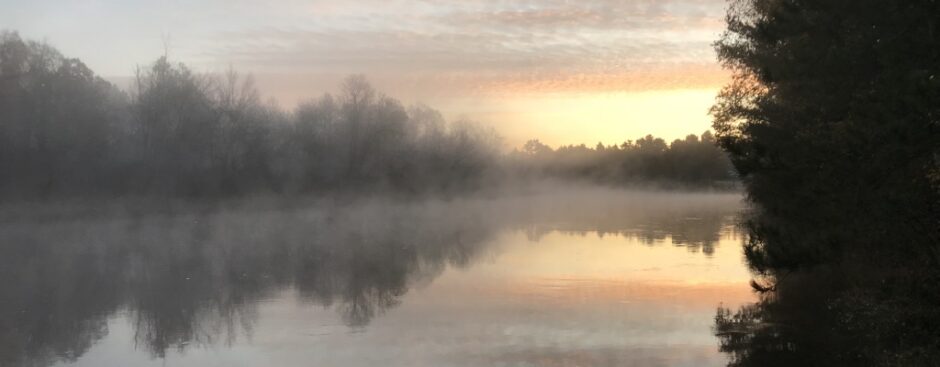
It’s drizzling outside. Soft, cold rain patters dying grass and slides over the steel siding of our farmhouse overlooking the Cloquet River. All night long, the residue of a tough week, a week spent in trial, a week spent moving 800 copies of Mr. Environment from a rented storage unit to a recently vacated bedroom in our home’s lower level (with another 800 copies awaiting similar transit), and a flurry of heavy lifting involving Rene’s concrete mosaic benches into the Pacifica for the Fall Festival in Duluth’s Chester Bowl, reminded me that this author stuff, at least the way I’ve been at it since I plunked my white EZ-Up tent down on the hard asphalt of ManyPenny Avenue at the Apple Festival in Bayfield ten Octobers ago, isn’t for the faint of heart or the weak of spine. Advil hasn’t dented the pain in my neck or the constant throbbing in my left heel, the result of too much weight, too much torque, too much lifting. After a fitful night spent on the couch trying to snare sleep, I yield: God (or common sense) has spoken.

Time to try a different approach.

Oh, yesterday at the Bowl was pleasant enough. I had some good conversations, heard familiar compliments about my writing, rekindled some friendships with readers, and chatted amiably enough with folks under a gray, autumnal sky. My sister and her family (including two of the cutest little girls in God’s creation) stopped by to say hello. Even the disaster of a little four year old trying to use one of Rene’s benches as a teeter-totter (which resulted in broken concrete and mosaic spilled over pavement) didn’t destroy the festive mood of the day. But I knew, before the day began, Chester Bowl would be the last outdoor art and craft festival. Not just for this year. Not just for this season. But forever. Last night’s fitful sleep only reinforced my decision.

I need to rethink how I market my work.

Oh, I’ll still do indoor arts and crafts shows, writers’ conferences, and try to get into bookstores, libraries, schools and the like for sales, lectures, readings, and signings. And I’ll still keep my fingers on the keyboard of my iMac churning out stories and blogs and Lord-knows-what-else. But the day of the EZ-Up is over. I met lots of fine folks, sold thousands of books, but there comes a time when all things, good, bad, or indifferent come to an end. I know that today, as I feel the bite of pain in my neck bending over the keyboard. Writing as a contact sport is beyond my reach and beyond my old body’s recuperative powers. I’ll need to find another path.

Peace.

Mark

Posted in Blog Archive | Comments Off on Say Goodbye to the EZ-UP…

A Book in Search of a Diet


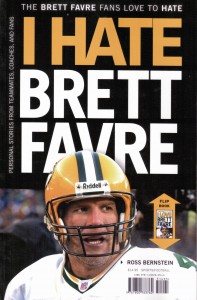
I Hate Brett Farve/I Love Brett Farve by Ross Bernstein (2009. Triumph Books. ISBN 978-1-60078-376-0)

Every once in a while there’s a neat concept or idea, the sort of gem of a thought that makes for a dandy short story, essay, or editorial, that someone tries to inflate into a  book. That’s how I see this latest effort from Minnesota’s best known sports author, Ross Bernstein. I’ve met Ross.He’s a pleasant guy and a good writer. I even have some of his other work, like Frozen Memories, a coffee table book chronicling a century of Minnesota ice hockey. His work on his encyclopedic books is flawless. The detail is great. His research is superb. His writing is crisp. I can’t say that about this latest project from Bernstein’s fingertips: It’s, in my view, simply a cute idea that’s been expanded beyond my interest in the subject matter.

Had this book attempted to be a biography, a chronicle of the Falcon/Packer/Jet/Viking quarterback Brett Favre’s hall of fame career, painting for the reader a clear picture of what makes Farve one of the most interesting sports figures of the later 20th and early 21st centuries, well, I know Bernstein would have done the story justice. But this book, simply a compendium of comments from sportswriters, fans, and players who “hate” Farve (generally the Packer side of the ledger) and similar material from the “love” side of things (representing naive Vikings supporters) is, as I’ve said, an unwarranted expansion of an inside joke into a blotted, repetitive series of quips from folks who really have better things to do than worry about Farve’s legacy.

I guess my real issue with this effort from a writer I respect is this: In a nation and world filled with so many real conflicts, many of which are tragic and have serious consequences, using the words “love” and “hate” when dealing with a professional sports figure is, in a word, silly. Grown men and women certainly have the right to enjoy watching a good game of football or whatever during their leisure time. But to get so wrapped up in a spectator sport (as many of the folks interviewed for this volume appear to be) that you actually burn a guy’s jersey in effigy? Well (and this comes from a life-long follower of most major sports in America), that’s simply nuts. To compile a book about it that simply repeats the insanity, provides little insight into Brett Farve the man, and really doesn’t add much to popular culture.

My son Jack bought me this book, personally signed, for Christmas two years ago. It took me that long to get up the gumption to get past the subject matter and dive in. I won’t say I lament reading the book: I will say Mr. Bernstein could have said what he needed to say in about 500 words: the length of this review.

2 and 1/2 stars out of 5.


Posted in Books | Comments Off on A Book in Search of a Diet

Bringing All of us to the Mountain


Two hours passed. The fog closed back in again making it safe to walk or sit aboveground. Kids talked, whittled, and dug elaborate shelves and steps in their holes. Several went down and helped Gambaccini and Jacobs dig graves for the dead NVA, simply for something to do. Many dozed, thankful to have nothing to do but wait in their holes. All of them looked at the sky every few minutes, like cultists waiting for deliverance. Two and a half more hours passed. Mellas crawled down to check on Goodwin. Goodwin was still waiting over his rifle. Mellas lay down beside him. Goodwin talked without taking his eye from the rear sight. “That little bastard’s just about to poke his head out that hole. I can feel it.”

(c) 2010, Karl Marlantes.

Matterhorn; A Novel of the Viet Nam War by Karl Marlantes (2010. Grove Press. ISBN 978-0-8021-4531-4)

The novel as therapy to heal. Once you have finished this mammoth work of fiction, which, in many ways, is the quintessential novel of the Marine experience in the Vietnam War, you realize that’s exactly what this book is: Therapy. We sent hundreds of thousands of our boys (and a few thousand girls in supporting roles) to fight in a war that made, in the end, absolutely no political, military, or strategic sense. Marlantes captures the larger frustrations about the Vietnam conflict after Nixon’s election in 1968 in the minutia: The day to day experience of Lieutenant Second Class Mellas, an Ivy League educated Marine Reserve Officer who has, unlike so many of the men drafted to fight and suffer, volunteered for his role. This is likely the grittiest, most realistic war novel ever written. One jacket blurb compares Matterhorn to All Quiet on the Western Front. That’s a comparison that hits the mark: Both the so-called Great War (WWI) and Vietnam share a certain political insanity, a sense of helplessness in the face of governmental decision-making, that is best depicted in the day-to-day terror confronting the line soldiers in the two stories.

The writing is crisp, raw, and real: Like finding a bevy of leeches sucking blood from your leg under your utility trousers in a shallow trench while you try to sleep; or shitting blood and water as you shiver in the cold mountain air of what is supposed to be a semi-tropical country waiting for a medal-crazed colonel to order you to re-take a hill that, a week earlier, that same colonel abandoned as having no strategic importance. There are a few scenes that drag (generally those away from combat, where the interactions between members of Bravo Company become more personal, more detailed). Some of this less harried dialogue is necessary to form character: some of it is simply extraneous. But the overall quality of the book is superb and, once you grasp Marlantes’s brilliance as a chronicler of war, you will forgive these minor lapses. Not since Tim O’Brien’s The Things They Carried took the reading nation by storm has a novel of Vietnam hit such a high and consistent note. On film, though I’m a fan of Platoon and The Deer Hunter, about the only movie that approaches the emotional content and the combat realism of Matterhorn is Mel Gibson’s terrifically underrated When We were Soldiers. Read this novel and then watch the movie and you’ll understand what I mean.

There are no straw men, no men of pure evil or pure virtue in this book. Marlantes has captured the nuances involved in depicting humanity at war with boldness. He also does not shy away from the complex politics or issues of race and economic status that, to this day, remain as questions regarding who goes to war for America and why they are sent. The racially charged scenes, the tension, and the results of the exchanges between Marines of black and white skin, are honestly and thoroughly examined. I remember being told in Platoon Leadership Class (PLC) at the Marine base in Quantico, Virginia, that “there is no color in the Marines but green”. Marlantes unveils the truth behind that myth by his depiction of the tensions percolating beneath the surface in the American military during the heady days of the Civil Rights Movement where men of disparate skin color eyed each other warily over the sights of their M-16s. Again, it is an open, honest, and, hopefully for Marlantes and other veterans of that godforsaken war, cathartic telling of the truth.

A big book which, at its core, is a simple story of one man, one platoon, one company, and one battalion of the United States Marine Corps during the Vietnam War. Outstanding.

5 stars out of 5.


Posted in Books | Comments Off on Bringing All of us to the Mountain

Heading to Hackensack with Lynn, Low, and Eddie

The road between Duluth and Hackensack, Minnesota takes me past small towns, lakes of all sizes, swamps, marshes, over the Mississippi, and finally, through the Leech Lake Reservation. It’s Saturday. The sun is up, but just barely, and, instead of driving my lumbering old 2005 Pacifica, I am behind the wheel of my wife’s nimble little 4×4 Toyota Matrix. My books are stacked in boxes and bins in the cargo space of the little car. But since I’m headed to an indoor event (praise the Lord: I’ve had enough of the E-Z Up for awhile), I’ve opted for fuel economy by borrowing her Matrix. I’ve got Pearl Jam playing loud on the CD changer. It’s a live album, something I picked up at Best Buy from the discount bin. “Daughter” comes on and I find my right foot (I’m a two footed driver-blame my mother) searching for the accelerator even though the cruise is set. Despite a tremendous urge to unleash the Toyota’s four cylinders, I refrain from breaking the law…much.

I’m headed to sell books at the Northwoods Art and Book Festival in tiny Hackensack (population 313), Minnesota: So far as I know, the only specifically art and book event in the state. I’ve done this show for at least six years: At times, I’ve been in my E-Z Up outside. I’ve been inside the community center with other crafters and artisans. And I’ve had a table inside the Congregational church (the “book arts” building) amidst other authors and publishers. The benefits of not being outside in my E-Z Up are many:

1. I don’t have to worry about rain;

2. I don’t have to set up the damn tent;

3. I don’t have to worry about wind; and

4. I don’t have to worry about hauling my own tables and chair.

So inside, which is the venue I’ve managed to snare this year, is better. Inside the church, where I can hob-knob with other authors, is the best.

As usual when driving to Hackensack, I miscalculate my drive time. The festival starts at nine. I want to arrive no later than 8:30. I arrive at 8:45am.

“Mark Munger, Cloquet River Press”, I tell the lady who stops the Matrix at the saw horses marking the entrance to the festival.

The woman dutifully wanders back to the information booth to retrieve my festival packet, which includes my registration. She ends up coming back to the Toyota empty-handed.

“Sorry, you don’t appear to be registered.”

She’s nice enough about it so I don’t protest too loudly. Instead, I pull out the email I received from the book arts coordinator confirming my slot. I hand it to the woman. She nods.

“I’ll take care of it. Just go on in and find Joanne. She’ll get you situated.”

I drive to the church. Some nice fellows (seems everyone in Hackensack is in a jovial mood due to the bright sun and the burgeoning beauty of the day) help me unload. I find Joanne. She shows me to my table. I set up my display.

The day starts slowly but, by the time I call home at noon, I’m selling books. Lots of books. Mostly to folks who’ve bought my work in the past and, surprise, surprise, want more Munger to read.

I need more of these shows to keep me going.

For the past two years, ever since printing Mr. Environment: The Willard Munger Story, my little excursion in the self-publishing world (Cloquet River Press) has taken a nosedive. Or maybe I should say, developed a nosebleed: It’s been nothing but red ink for the past two years. I’ve taken on too much: too many projects, too much debt, too much time away from family and friends, pursuing an inoculation of ego.

This author thing, I think as I hand a past customer a signed copy of Esther’s Race, is a lot like being a drug addict. Doesn’t help that I’m OCD (thanks again, Mom). Oh, compulsion is a good thing in some ways. It drives me to complete what seem (like Willard’s biography: a five year project) to be insurmountable tasks. That’s the plus side of being OCD. But the downside? I stare at it every time I take out the CRP account book. Red. Red. Red. I’m a terrible businessman. But despite the downsides (including the depression that comes from sitting alone in a booth selling no books to no one) I can’t stop. I simply can’t. I guess it’s these moments, when a reader stops by and says, “I loved The Legacy” or “Suomalaiset is the best book I’ve ever readthat compels me to continue. Just like drugs, when you’re on the upswing, you forget the downside. It’s fleeting. It’s momentary. But the high is very real.

I talk to other writers around me, reconnecting with folks I’ve met out in the area doing workshops for the JackPine Writers Group (see the “Links” section under “Writerly Orgs” for the JPW’s website) and the Park Rapids Library. I always learn a thing or two, particularly about marketing and selling books, when I talk to other authors. Some of the tips work out; some don’t. But the interaction is valuable and the company is great.

By the time the festival winds down, I’ve done better in one day in little Hackensack than I have at any other event this year. These folks, many of them Twin Citians spending a last summer weekend at the family cottage, are readers. Voracious readers. The kind of folks who make semi-famous, semi-finalist novelists smile.

I pack the Matrix. There are less boxes to stack in the car; a sign I’ve sold well at the festival. I give Rene’ a call, telling her I’m back on the road. I fumble with a jewel case and pull out one of my favorite “road” albumns: Canadian folk singer Lynn Miles’ Unravel:

I’ve been living up here by the hydro towers

Trying to feel my feet and regain my powers

Living on the flight path trying to feel the ground

Trying to break the chains that hold me to this town.
I’ve been watching the crows sitting on their wires

Listening to the muscle cars burning their tires

Thought I’d stick around for a month or so

Well I’ve been here for seven and this is what I know

You can read a lot of  books, don’t make you smart

Kiss a lot of fools, don’t mean you gotta heart…

(c) Lynn Miles, 2004

(See “Links” and the subcategory “Musicians” for a link to Lynn’s work)

By the time I turn onto the gravel drive leading to my home on the river, my mood has turned reflective. I’m listening to Duluth’s beloved slow rock band, Low.

It’s been a great day to be an author and a word junkie.

Peace.

Mark


Posted in Blog Archive | Comments Off on Heading to Hackensack with Lynn, Low, and Eddie

The Story Begins Anew (Conclusion)

High Falls, Baptism River, Tettegouche State Park


Day two. I wake after a hard sleep on a soft pad. I tug on my shorts, throw a shirt over my bare torso, clamp my Australian bush hat over my wild hair, pull hiking boots over bare feet, and stumble from the tent. After making the short trip to the Tettegouche Campground latrine, I fill pots with cold water and boil the water for coffee and oatmeal. My son hasn’t stirred despite all the noise I’m making.

Around the campground, other folks: couples and families, are stirring. Some are leaving their tents to take a morning shower. Others are revving up their $200,000 RVs for departure. But, despite all the humanity about the place, Tettegouche still holds plenty of appeal for someone like me, someone who enjoys the more primitive, the less refined. I clamber up a steep rock wall looming above our camp, a mug of freshly brewed instant coffee in hand, and sit on billion year old basalt looking out over the big lake, the Wisconsin shoreline a serpent to the east. There are no clouds in the sky and it promises to be a tough day to catch walleye on Tom Lake, our destination. Jack finally emerges from his sleeping bag (an unattractive butterfly if the bag is his cocoon): His hair is standing on end; his face is mushed from sleep; and his breath smells like roadkill. But, a cup of coffee, some hot oatmeal, a breakfast bar, a mug of Tang, and an apple later, followed by a trip to the shower ( and the application of a toothbrush) and my son is looking fine. After doing dishes, I too take my turn under the hot water of the camp shower. As I scrub away the dirt of our first day on the North Shore, I think back to how the state parks in Minnesota got hot water for their showers. Seems that the conservative members of the Minnesota House Natural Resources Committee chaired by my uncle Willard didn’t believe that campers needed such an extravagance. But Willard, like a good novelist, decided to show, rather than tell: He dragged a contingent of naysayers with him to the nearest park, spent the night in tents, and then, when the very tired and very hungry legislators were confronted by ice cold showers, he had his votes. (True story and you’ll find more like it in Mr. Environment: The Willard Munger Story. You can order a copy from the dashboard above. The book has been discounted to $15.00, $10.00 off the cover price!)

Once again, we’re early for check-in when we arrive at Judge Magney State Park north of Grand Marais.

“Hey,” I say to Jack.

“Ya.”

“Isn’t it a coincidence that a judge is staying at a park named for a judge.”

“Whatever.”

Apparently the irony isn’t as impactful as I thought.

Judge Magney State Park, a former WPA “Hobo Camp” from the 1930s, is smaller than Tettegouche but every bit as nice. We set up our tent, unroll our sleeping pads and bags, and head out to fish.

Tom Lake is windy. Jack isn’t happy when we unload the Grumman square stern, fire up the 2-horse Honda four-stroke, and begin crashing through waves.

“Let’s go back,” he whines.

“You’re kidding, right? It was an hour drive to get here.”

“I’m not fishing. Let’s go back.”

After raising three older boys, I know not to engage. I keep trolling, my nightcrawler and spinner deep in the cold waters of the lake. We work the shoreline. I catch two walleye the size of the chubs Jack caught on the trout stream. It’s too sunny for the fish to really be interested. After lunch in the boat and a couple more hours of trolling and drifting, we head back to the landing.

“That was a waste,” I complain as we hoist the canoe back on the luggage racks of the Pacifica.

“It’s a nice lake,” Jack says reflectively. “I’d fish it again on a cloudy day.”

Kid’s smarter than I am.

Devil’s Kettle, Brule River, Judge Magney State Park


Back at Judge Magney, Jack convinces me we need to hike the Superior Hiking Trail and find a place to fish the Brule River. We hike for an hour and find our spot. As night settles over us, we work a deep pool beneath a small waterfall and finally, after two days of no trout, Jack lands a couple of nice ten inch rainbows standing in the thick mist coming off cascading water. He also manages to hook and land a large mouth bass, which, given that we’re fishing a North Shore trout stream, is completely unexpected. As I study the fish, trying to figure out why it is where it is, Jack becomes excited.

“You’ve got a fish on,” he says, noticing my rod dancing under my arm.

I release the bass and turn my attention to my fly rod. The tip of the rod is indeed twitching. I set the hook and know immediately that this is not a ten inch brook trout.

“Holy crap,” I say as the rod bends in half.

The fish dives and I give it line. After a few minutes of playing the fish,  I work the it away from the rocks and ease it onto the shelf Jack is standing on.

“It’s a big bass,” my son says as the fish flops by his feet.

“No, it’s a brookie,” I correct my son. “And a damn nice one at that. Biggest one I’ve ever caught.”

Indeed. The trout is a beautiful 21″ coaster, likely a female getting ready for the fall spawning run. It is not a fish I want to keep.

“That is a big fish,” Jack says reverently.

“A legendary fish,” I reply as I pick it up. “Grab the camera.”

I try and hold the trout after releasing the hook from its hard palate but I cannot control the undulating mass of muscle and the brookie crashes to the rocky ground.

“Shit. I don’t want to hurt it. I want to put it back.”

I retrieve the fish. Jack aims the camera. The fish twists again and falls to the rocks.

“Shit. I do not want this fish to die.”

Eventually, after the photo is taken and after trying to revive the brookie in fast moving water, I give up: The fish is too far gone to release. I am not happy about keeping the fish and, had we been better prepared, I would have had a net handy. But it was a spur of the moment decision to follow Jack’s lead and fish the river. I lament the trout’s death but do not lament the excitement.

Thursday. We pack up camp and drive up the shoulders of the rolling Sawtooth’s into the interior of Cook County. Trout Lake is placid. There is no one else out fishing the tiny lake on this gorgeous Minnesota morning. We troll spinners and spoons and nightcrawlers in harnesses for brookies, lake trout, and rainbows. I have one strike. Other folks finally unload canoes and fish but all of us share the same bad luck. I have one strike but can’t hook the fish. And then, the blackflies, the curse of the Northland, find us. For the last hour of our time on the lake, as beautiful a little spot of sliver I’ve ever been on, the flies attack our bare ankles and shoulders mercilessly. No amount of DEET can dissuade the little buggers from landing and biting. We concede defeat and make for the landing.

On the way back down the hill towards the lake, we stop and spend the last couple hours of our trip on a tiny brook fishing for speckled trout. Intermittent clouds provide cover and we pull a few small brookies out of the unnamed stream. Jack finally has success and lands a half-dozen trout but keeps none. I keep one nice eight incher to go along with the big brookie from the Brule, which, when I gutted it, I discovered was a big male.

Still didn’t want to keep it. But at least it wasn’t  a female full of eggs.

I bust out of the bush a good half-hour before Jack does. I sit atop a big steel culvert disecting the gravel road and eat lunch as I watch the creek course towards Lake Superior. No black flies or mosquitoes bother me and the warm sun feels good on my stubbly face. I pull out my tattered copy of Wisconsin and Minnesota Trout Streams by Humphrey and Shogren and read up on all the rivers, streams, and creeks waiting for an old man and his son to visit.

Peace.

Mark


Posted in Blog Archive | Comments Off on The Story Begins Anew (Conclusion)

The Story Begins Anew (Part 1)


Vacation. That word conjures up a lot of images for folks. Thrilling descents on roller coasters, cotton candy, and shaking hands with Micky Mouse. Luxurious cruise ships docked in distant, exotic ports. Fine wine, elegant dinners for two, gawking at Picasso paintings, and falling in love with the Manhattan skyline. The list of choices for Americans away from work is endless. In my fifty-six years of life (nearly thirty-four working full-time) I’ve enjoyed my share of memorable respites from the daily grind. This week, I spent three days of a week off from work on Minnesota’s North Shore (that’s on Lake Superior for you non-Minnesotans) with my youngest son, Jack. He’s thirteen: the perfect age to learn how to fish the craggy, rocky streams of NE Minnesota for the wild and beautiful fish that is my favorite: Salvelinus fontinalis; the eastern brook trout (actually members of the char family and not true trout). So, with about a week of foresight, I planned a trip to my favorite stream on the Shore along with some side visits to small lakes tucked in the wilderness above the Sawtooth Mountains.

In the past, I’ve taken my older sons brook trout fishing. The streams I fish are not gushing, rushing, torrents of water like you envision after watching movies about trout fishing, like “A River Runs Through it”. Generally, what we’re working, when we trout fish the North Shore, are tiny little rivulets and brooks with the occasional modest stream thrown in for good measure. And, while I recognize that purists will balk at what I am about to say (think of the drunk movie star in “A River Runs Through It”), though I’ve tried my hand at fly fishing and I understand its poetry, I am, through and through, a worm man. That’s right: I fish for these beautiful bursts of color and energy with sinker, hook, and dew worm. I know, I know. It’s not as lyrical. It’s not what Ike Walton would do. Too bad. I only get out once a summer to pursue the brookies. I want to ensure at least a few fish, my favorite eating fish, for the frying pan. Worms ensure dinner. It’s that simple. It’s something Ernest Hemingway knew and applied when he fished for trout in the streams of his beloved Michigan.

Tuesday morning. We are up at the crack of dawn and, after a brief stop at the Two Harbors McDonald’s for breakfast on the fly, we’re back on the road. The old Pacifica handles the eighteen-foot Grumman square stern on the roof racks without a hitch. The cargo space of the van is loaded with a two-horse Honda four-stroke, gas, camping equipment, fishing equipment, food, and other supplies. Jack sits in the passenger seat and eats his McGriddle as I munch on an egg McMuffin. When we arrive at Tettegouche State Park just outside of Silver Bay, I’m apprehensive: We’re way too early for the 4:00pm check-in.

Now, you’d think a guy who wrote the book on the formation of Tettegouche State Park (see Mr. Environment: The Willard Munger Story) would have used and appreciated Minnesota’s 76 state parks (nearly one for every county in the state!) before he turned fifty-six years old. Not so. This is my first overnight stay in a Minnesota state park so I’m a bit apprehensive that my online reservation was messed up. Nope. Turns out making a reservation over the Internet worked out fine and dandy. And, because the folks ahead of us have already vacated the spot, we’re allowed to set up early. After a flurry of activity, we get back in the Pacifica and hit the road in search of trout.

When we arrive at the water’s edge, the day is too nice to be a good trout fishing day but we’ve come too far not to fish. We split up: Jack heading downstream and I upstream, our rods and a stockpile of worms, hooks, and sinkers in hand.

“Fish the edges of the fast water, at the ends of little rapids. The fish will be hiding there with the sun up like it is,” I say.

“OK, Dad.”

It’s high noon and there are no clouds in the sky. I dip my hand in rushing water: It’s cold, no more than 65 degrees, perfect for brook trout. But the sun being so high will be a problem. Still, a bad day on the river is better than any day in the office.

The river we’re on (really a stream but bearing the regal title of “river”) has the worst rocks for walking I’ve ever encountered. I stumble and bumble my way upstream, tossing my hook and worm from my fly rod into any water that looks trouty. I have one good strike but, given it’s been three years since I fished brookies, my reactions are slow and I miss the fish. I look back down river and see Jack has already tangled his line in a tree. I don’t offer any suggestions: At thirteen, he’s a veteran fisherman. I know he’ll figure it out.

The day progresses. I get lost in the rhythm of tossing worms under rocks, cut banks, downed trees, cedar boughs, and the like. It takes awhile but I finally find fish. Lots of fish. Nice ones too. The largest I take are twelve inches or so. I catch a couple of that size, big fish for this little water. The feel of a brookie on the hook hasn’t changed despite the distance of time: When I feel the line tighten and the slack start running against the current, I know what to do. I set the hook and the fight is on. The little char fight like the dickens and dance across the silver water into my hand. I lose a few. Catch a few dozen. I lose track of time but, in a moment of parental concern, realize that the predicted storm is at hand: Thunder is rumbling in the distance and a gray blanket is seeping into the valley. I begin my walk back downstream, the fish pouch of my fly vest full of fat, shimmering trout. Enough for dinner tonight and tomorrow night. Not paying attention and in a rush to make it back to the car, I stumble and fall a half-dozen times.

“Should have brought a walking stick,” I mutter as I examine my ring finger above my wedding band which now is twisted in a direction I’ve never seen it before.

I land on my rump, my knees, my shins. I’m wearing tennis shoes and bluejeans: I learned long ago that waders are an inconvenience in these streams: They are hot and ungainly and totally unnecessary for the waters we’re working.

“How did you do?” Jack asks when we meet up where I’d left him.

“Lots of fish,” I reply.

“Where were you, Dad? I started up the river to find you but gave up. You must have been a mile upstream.”

“I was.”

Jack is as wet and dirty as a thirteen-year-old can be.

“Get any fish?” I ask.

“Chubs. Hundreds of chubs.”

I smile as we walk up the hill towards the waiting Pacifica. The sky rumbles with renewed insistence.

“I’d better clean the fish. You pack the stuff away. It’s gonna pour.”

I hand Jack my rod and my fishing vest, dig into the tackle box, and remove a fillet knife.

“Chubs, eh? You were in slow water. You need to find the fast stuff on hot days like today.”

Jack doesn’t seem the least bit disappointed.

“One of them was this long,” he says, making a gap between his hands that’s at least a foot across.

“Too bad we can’t eat chubs,” I quip.

I squat near the stream and clean the fish. The yellow, blue, and red spots have faded as the life has left the brookies but they remain the most striking fish an angler can pursue in Minnesota. They are pallets of color and, on hook and line, the most robust of fighters for their size. By the time I’ve packed the gutted fish in a plastic bag and put them on ice in the cooler, the storm arrives and engulfs the Pacifica in a wall of cool rain as we drive back to Tettegouche.

We clean up a bit at the campground shower building before clambering into the tent. Rain continues to fall by the bucket. Our tent stays dry. I turn on our battery powered lantern intent upon reading while we wait for the rain to let up.

“How about a story?” I ask.

“Sure,” Jack says, his head resting on his pillow, his eyes shut.

I pull out Up North by Duluth outdoor writer, Sam Cook, and search for a fishing story. I hit gold.

“This one’s called, ‘The Trout Fisherman’.”

“Cool.”

At first it looked like a trail, not a worn path, but a meandering opening among the thimbleberries. The trail dissolved into forest, but that didn’t bother Enok Olson. Now he was coursing randomly through the aspen and large-leafed aster, stepping over deadfalls, and batting branches away from his face.

It didn’t seem that he was trying to find the stream so much as he was being drawn to it. Perhaps that’s the way it is when you’re almost 89, and brook trout streams have been drawing you to their banks for half a century…

“That was an awesome story,” Jack says as the storm lets up and we make ready to leave the tent and fry up the trout for dinner.

As I unzip the wet rain fly, I think about Enok Olson.

I hope that if I make it to 89 and I fall on my rump in a North Shore brook trout stream, I have the gumption to get back up.

Peace.

Mark

(Excerpt from Up North (c) Sam Cook, 1986)


Posted in Blog Archive | Comments Off on The Story Begins Anew (Part 1)

Christmas in August


The Judge Who Stole Christmas by Randy Singer (2005. Tyndale. ISBN 978-1-4143-3566-7)

I’m not much for Nicholas Sparks inspired sentimentality. So when someone (can’t remember who but, likely my wife) gave me a copy of Singer’s slender tome about an African American law student named Jasmine who fights for the town of Possum’s right to display the creche at Christmas in the town square, I was apprehensive. In fact, the book languished on my stack of “to reads” for a few years until, bored out of mine and with no other unread fiction to tackle, I picked it up.

Singer is a lawyer and at times, his lawyerlyness creeps into his prose. Crisp, genre diction gets bogged down by legalese and courtroom scenes that are, well, a tad predictable. Still, the story has its moments and a few of the characters, including Jasmine, struck a chord with me. Unfortunately, the male protagonist, Thomas Hammond (who plays Joseph in the creche) and his wife Theresa (who plays Mary) seem to be cut out of rather stiff cardboard: Not at all real, to quote the Velveteen Rabbit.

This is not to say that this “quick read” isn’t worth spending some time with. There are enough positives to be found in the plot and characters to make spending a weekend in Possum worth the effort.

3 and 1/2 stars out of 5.


Posted in Books | Comments Off on Christmas in August