Independent People – Review

Laxness

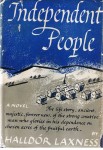
Independent People by Halldor Laxness (Knopf, 1946. ISBN (Newer Edition)978-0-8446-6949-6)

I never had the chance to break bread or have a glass of wine with Minnesota writer and Icelandic son Bill Holm. Though I was privileged to hear him read from his work and play a few piano tunes, I didn’t read any of Holm’s work until I picked up his essay collection, Eccentric Islands, a fine bit of work on its own but not the subject of this review.

Bill’s book praised to high heavens the seminal Icelandic novel, Independent People in such accolades that I was compelled to search out a used hardcover copy of the novel on the Internet. Holm himself, along with another of his Icelandic-writer pals, boasted about perusing the web to locate cheap copies of Laxness’ prose gem; the cheaper the better, was the way Holm described the competitive search for used copies of the book. The pair would then give the copies away to anyone who seemed remotely interested in reading a novel by an Icelander. Hundreds of copies of Independent People were apparently rescued from the shredder and handed out by Holm and company as a means of promoting Laxness’ work.

To the story. Bjartur, a lowly freeholder who has struggled his whole adult life to obtain a bit of craggy Icelandic farmland upon which to raise sheep and a family, is a darkly forlorn and seemingly unfeeling beast. As the protagonist of this epic saga of man against nature, other men, and himself, Bjartur is stubborn, determined, and steadfast, all to the detriment of his wives and children.

The writing contains a bit of Scandinavian mysticism and large doses of tragedy and angst. The book is similar in tone and feel to the great novels of Minnesota writers Herbert Krause and Ole Rolvaag, whose books chronicled farmers struggling to survive in seemingly inhospitable places.

Though the language may seem a tad awkward at first, there is a lyric quality to Laxness’ prose that sings of the Vikings and old Norse sagas. Bill Holm was right. Independent People is a must read for anyone interested in the great literature of Scandinavia.  4 1/2 stars out of 5.(Portions of this review first appeared in the Duluth News Tribune Sunday “Scrapbook” section).

Posted in Books | Comments Off on Independent People – Review

The Work of Wolves – Review

Wolves


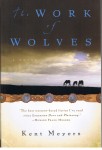
The Work of Wolves by Kent Meyers (2004, Harvest Books. ISBN978-0-15-603123-4)

I picked up this novel in a nice little bookstore in Hill City, SD when I was on vacation in the Black Hills. Other than the bookstore, Hill City has little to offer a visitor after 5:00pm on a week night. Even restaurants seem to shut down once the work day is over. Any way, I love finding local fiction when I am out and about and The Work of Wolves intrigued me. I wasn’t disappointed.

Ostensibly the story of horse trainer Carson Fielding (a teenager at the beginning of the story who buys his first horse from a wealthy neighbor) and Carson’s later interactions with his father, his mother, the neighbor, and the bleak South Dakota landscape they all share, the book contains three primary subplots: Carson’s story, which involves Carson returning to the rich man’s ranch to train horses and teach the rancher’s young wife to ride (amongst other things); the story of a German exchange student’s discovery of family secrets as he accompanies Carson and two Sioux warriors on a quest; and the awakening of Earl Walks Alone to his Lakota culture during that same quest (rescuing the horses Carson trained).

Meyers, who teaches writing at Black Hills State University in Spearfish, draws us into a world of fictional characters set, not in the easily appreciated landscape of the Black Hills, but in the bleak desolation of the adjacent Badlands.This modern fable is filled with Native mysticism, young love and tension. My only criticism of the book is that, at times, Meyers’ lets his obvious gift for expressive narrative get in the way of the story by overly describing (rather than letting the reader discover) the inner machinations of his characters. I also thought that the German student’s subplot was out of place in the context of the main story, but would have made for a fine novella or novel in its own right had it been more fully developed. Still, a good read full of vibrant dialogue, characters and settings. 4 stars out of 5.

Posted in Books | Comments Off on The Work of Wolves – Review

Mormonism for Dummies

Mormon

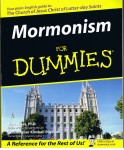
Mormonism for Dummies by Jana Riess and Christopher Kimball Bigelow (2005, Wiley Publishing, Inc., ISBN 0-7645-7195-8)

Faith. Such a thin armor against the uncertainties of this world and what comes next. It would be easy to assail the faith of those who follow the Angel Moroni’s story, as reported and written by Joseph Smith in 1830, as the stuff magicians and con-men feed the spirit weary and soul hungry. If that’s what you’re looking for, an indictment of the Mormon faith, an assault on the origins, practices and beliefs of the Church of Jesus Christ of the Latter-day Saints, this book isn’t for you. Read my review of  Jon Krakauer’s expose below if that’s what you’re after. But if you are interested in learning, in a bare-bones sort of way, the history, tenets and practices of the one truly American religion, the fastest growing religion in the world, then Mormonism for Dummies is a good place to start.

Written with a sense of wry humor, easily paced and informative, this is really a beginner’s guide to the essence of Mormonism. It is not a treatise and certainly no critique, avoiding all but scant mention of many of the troubling aspects of Mormon history and the faith Joseph Smith claims to have founded with divine assistance. Still, all and all, a good place to begin. 3 Stars out of 5.

Posted in Books | Comments Off on Mormonism for Dummies

and the Wilderness Shall Blossom: Henry Benjamin Whipple – Review

Whipple

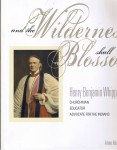
and the Wilderness Shall Blossom: Henry Benjamin Whipple by Anne Beiser Allen (2008, Afton Press, ISBN 978-1-890434-75-5)

This book was a mistake from its inception: But don’t take that statement to mean this isn’t a thoroughly planned, well researched, and finely executed biography. It is indeed all of those things. But, much like Kirby Puckett, the famed Minnesota Twins outfielder (whose size and body shape seemed wholly unsuited to be a Hall of Fame ballplayer) this book is just plain packaged wrong. Someone, maybe the Episcopal Diocese of Minnesota, maybe Bishop Jelinek, maybe the author, maybe the publisher, convinced the design team at Afton Press (or the design team at Afton Press convinced them) to issue this biography in, of all formats, a coffee table book! No. No. No. The story of Bishop Henry Whipple is the story of Minnesota’s statehood, the formation of Christian missions to the Sioux and the Ojibwe throughout the Midwest, and, above all else, the story of a wholly remarkable churchman; a person many Minnesotans have no idea paddled our streams,  walked our forest trails, and fished our bountiful lakes during the last half of the 19th century. Well, he did. And damn it (Can I say that when critiquing a bishop’s biography?) his story should have come out in a 6×9 trade paperback at a price of $25.00 or less so every man, woman and child in this state can own a copy. At $45.00 per copy and printed in a size that’s too big to hold while shivering in a deer stand or relaxing in a beach chair, and the Wilderness Shall Blossom is a ponderous, heavy, ungainly work that is beautiful as a centerpiece on your coffee table but impossible to haul into bed to read before lights out. I loved the content. Loved the photos and layout. Someone, and I don’t know who, decided to create a work of art out of the dust, dirt, miles and tears of Bishop Whipple’s life. I think the good bishop would have been happier had the publisher given Minnesotans a less expensive and less physically arduous volume. Well written and precise, the content is 5 stars out of 5. The design is 3 stars out of 5 at best.  I’d lean towards the content and rate the total package to be 4 and 1/2 stars out of 5.

Posted in Books | Comments Off on and the Wilderness Shall Blossom: Henry Benjamin Whipple – Review

A Prayer for Own Meany – Review

Owen1

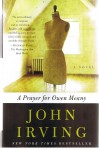
A Prayer for Owen Meany by John Irving (2009, Ballantine Books Edition, ISBN 978-0-345-41797-8)

An apology to John Irving. I read, Until I Find You, his last published book until his recently released hardcover novel, Last Night in Twisted River. Or at least, I attempted to read Until I Find You. The book frustrated me to no end. Replete with references to a young boy of ten being bedded by older women and similar implausibilities (both moral and physical), the book caused me, for the first and only time in my over fifty years as a reader (beginning with Tip and the classic sequel, Tip and Mitten sometime around 1959), to pitch Irving’s piece of crap into a trash can. Didn’t offer it up to some other poor schmoe. Didn’t take it back to the bookstore so it could be foisted on some unknowing patron as a “quality” used book. I chucked Until I Find You, plain and simple. And then I wrote scathing reviews of the thing for both the Amazon and Barnes and Noble websites. I think my diatribe is still up on Amazon but I believe the editorial staff at barnesandnoble.com (probably fans of Irving’s) never let my review out of the box. In any event, I was told by others who came across my expose’ of Mr. Irving’s prose that I should have read A Prayer for Owen Meany instead. You know what? Those folks were right.

At first, I didn’t really appreciate the depth and breadth of Owen’s story, as related by his best friend, Johnny Wheelwright. In fact, the early paragraphs revealing Owen’s physical, spiritual, and mental attributes seemed a bit creepy. But then I grew to love the little guy; grew to accept the capital letters that Irving uses to depict Owen’s high pitched, juvenile screech; “The Voice”. It is a voice, indeed, for the ages. The plot is complex. The characters, endearing. The ending, though a tad predictable in result, has enough suspense and surprise to compel you to race to the last page. Overall, I must bow to Mr. Irving’s talent. I agree: This is indeed a terrific novel, an American classic. 5 stars out of 5.

Posted in Books | Comments Off on A Prayer for Own Meany – Review

Brigham Young – Review


Brigham Young by M.R. Werner (1925;  Hyperion, ISBN0-88355-254-x)

The quintessential biography of Mormonism’s second president, self-proclaimed Moses, and most ardent polygamist, Brigham Young is written in somewhat antiquated language but is a well-researched, even-handed depiction of both the beginning of the Mormon faith before Young’s involvement, and Young’s own long life. Though an older work, having been written just at the outer edge of  the era during which “unofficial polygamy” was practiced by the church hierarchy (after President Wilford Woodruff’s revelation in 1890 banned polygamy and allowed Utah to become a state) and not cited by John Krakauer in his expose’ of Mormonism reviewed below, Werner’s use of original speeches, revelations, discourses, and sermons of early Mormon prophets, leaders, and seers, is impressive. A bit of a wandering tome at times, but all in all, a fair rendition of a man and the beginning of a truly American religion. 4 stars out of 5.

Posted in Books | Comments Off on Brigham Young – Review

True Compass: a memoir – Review


True Compass: a memoir by Edward M. Kennedy (2009; Twelve, ISBN 978-0-446-53925-8)

OK. True confession time again. As a life-long Democrat, I grew up with a picture of President John F. Kennedy hanging in the den of my family’s little two bedroom suburban rambler in the Piedmont Heights neighborhood of Duluth. I was eight years old when I attended President Kennedy’s last speech in Minnesota at the University of Minnesota-Duluth Gymnasium in September of 1963, a little over a month before he was assassinated. I don’t remember much of the event other than I was bored to tears; we (my mom and I) were on a bench seat way up near the rafters of the gym while my dad, a local DFL leader, was down by the stage with the other dignitaries; and that I fell asleep somewhere during the message. I wasn’t an R.F.K fan; I was, of course, a Humphrey man in 1968, just like my dad. And the events on Chappaquiddick Island in 1969, even though I was only 13, turned me off to Teddy’s political ambitions. But, as this wonderfully paced family saga turned memoir reveals, I was wrong to judge the youngest Kennedy so harshly.

True Compass shares iconic faith with Tim Russert’s memoir reviewed below and does so in a similar vein: tying the principles and beliefs of the largest Christian denomination to the actions of the individuals occupying the memoir. Above all, through the tragedies endured by Senator Kennedy individually and as the titular head of the Kennedy clan, this is indeed a story of great faith centered around a rock of Catholic belief named Rose.

Beyond being a story of an American political dynasty, True Compass is also a fascinating study of the United States Senate and how it used to work (in a bipartisan fashion) before the advent of gross partisanship which began with Watergate, was exacerbated by successive Republican administrations, and which culminated in the weird and senseless attempted impeachment of Bill Clinton over a lie and a few drops of semen on a dress. Kennedy’s book is a historical record, a love story of a boy for his family, and a gift to all of us. In the end, Senator Kennedy should be forgiven for his indiscretions and praised for his service to our country. 5 stars out of 5.

Posted in Books | Comments Off on True Compass: a memoir – Review

The Blue Hour: A Life of jean Rhys – Review

The Blue Hour: A Life of jean Rhys by Lillian Pizzichini (2009; Norton, ISBN 978-0-393-05803-1)

Sometimes, a good biography can read like a great novel. That’s the case with The Blue Hour. I would use the adjective “great” to modify “biography” but to me, a “great” biography (one that dots all the i’s and crosses all the t’s) is the result of painstaking research which reveals a compelling story. But it’s difficult for a “great” biography to replicate the storytelling of a “great” novel simply because biography generally avoids narrative nonchalance in favor of concrete truth. This book proves that a good biography, one that relies more upon storytelling and less upon abject fact, when enlivened by curt dialogue and the melodrama of everyday life, can triumph.

Ella Gwendoline Rees Williams, the impoverished-mysterious- troubled- alcoholic- depraved writer we know as Jean Rhys walks off the pages of this fine book into your living room, parlor, or wherever it is that you happen to be entrenched while reading this can’t-put-it-down work. You won’t like Jean much despite her feline attractiveness and initial charm. In fact, much of the time, you will be yelling: “Why are you so damned self-absorbed? Why don’t you care for those who profess to love you? Why can’t you be a mother to your children?” Mental illness as a defense, you say? Sustained. Alcoholic abuse as an excuse, you plead? Surely true. An unfeeling mother and a clueless father? Again, the evidence is with you. But that is only the beginning of this psychological peeling away of the layers to Jean Rhys, a 20th century writer who, in many ways, is the female equivalent of Hemingway: A man she met once, briefly, but remembered as the gentleman who helped her put on her coat.

If you’re a non-writer, read this book to understand what it’s like to be tormented by the unwritten stories in your head. If you’re a writer, read this book and say: “Thank God, that isn’t me.” 5 stars out of 5.

Posted in Books | Comments Off on The Blue Hour: A Life of jean Rhys – Review

Banned in Britain – Beating the Liberal Elite

Banned in Britain: Beating the Liberal Elite by Michael Savage (2009; Savage Productions, Inc., ISBN 978-4276-3401-6)

Even an unabashed Liberal shouldn’t be afraid to learn something new. That’s why, when a Republican colleague of mine on the bench in Duluth gave me a copy of conservative talk show host Mike Savage’s Banned in Britain for Christmas as a gag gift (signed copy, no less!), I put it in my stack of “to do’s” and eventually got around to reading it.

Ostensibly, the book is a chronicle of Savage’s battle to redeem his “good name” in Great Britain after being placed on the “undesirables” list by the Home Secretary of Great Britain, Jacqui Smith. This distinction means that Savage is unwelcome in jolly old England. The reasons given for Savage’s dishonor include his penchant for politically dangerous diatribe and fostering violence amongst his listeners in the United States against various groups, including followers of Islam. While there is no doubt that; 1.  Savage is a smart man (he has a Phd); 2. He shouldn’t be banned from traveling to Great Britain simply because his ideas might be unpopular with Liberals; and; 3. He has never been charged (at least he asserts that he hasn’t) with any crime in the United States; those points are made in the first few chapters of this overblown letter to the editor. This poorly written rant should have been submitted as an op-ed piece to the New York Times or the Washington Post, where, despite Savage’s paranoia about “mainstream media” it would have generated significant sympathy amongst true Liberals. Sadly, Savage chose to self-publish this poorly edited and poorly written volume instead.

Beyond repeating his mantra, that conservatives need to protect America’s borders, culture, and language (that line must appear at least twenty times in the book), Savage’s prose is more or less a political scream against Barack Hussein Obama (yes, he always uses President Obama’s Islamic middle name to drive home his distaste for the man); an expression of disdain for the Republicants; and a mixed bag of Xenophobia, disguised prejudice, and poorly written sentences and paragraphs.  There is precious little here for anyone trying to really understand Savage’s anger and rage against all things Liberal beyond, “We are the true Americans and they are not.”

Dr. Savage urges his loyal listeners and readers to buy his books to support his fight against his being banned in Britain. I think the ban should be upheld, though on humanitarian grounds: No one in England, Wales, Scotland, or Northern Ireland should have access to this over-extended, badly executed (entire paragraphs and sections are repeated, as if Savage’s audience isn’t smart enough to figure out a cut and paste job when they see it) vitriolic sermon.

I’ll concede that the main premise of the book (and some of Savage’s observations about both major political parties) are spot on. The other fifty thousand words, however, are a complete waste of time. 1 star out of 5.

Posted in Books | Comments Off on Banned in Britain – Beating the Liberal Elite

The Shack: Where Tragedy Confronts Eternity – Review

The Shack: Where Tragedy Confronts Eternity by Wm. Paul Young (Windblown Media; 2007, ISBN 978-0-9647292-3-0)

Whew! My wife handed me The Shack two days ago. I stuck up my nose at it because I knew the book by its reputation: it’s a cultural phenomenon and I , as a contrarian, rarely stoop to the level of reading anything remotely successful as a pop cultural phenomenon. Well, I started reading the thing and, like a voyeur drawn to the slight parting of a curtain in an attractive co-ed’s dorm, I couldn’t stop leering; couldn’t let go of Mackenzie’s pain, his loss, his search for truth, and, in the end, his quest for his own soul. There is much to be admired about the terse, compact writing prevalent in this novel. There is more still to be admired in the courage displayed by author Young as he enters the personal hell of his protagonist, and in so doing, drags the reader beneath turbulent water like a loving, but mischievous big brother pulling his sibling into the deepest reaches of a desolate, forbidding, mountain lake.

There are a few flat philosophical bobs and weaves to the story. A bit of over reliance by Young upon mystique and mystery; the sort of literary slight of hand that I’m not normally fond of (being the concrete, black and white writer that I am). But the Trinity composed of a Queen Latifah look alike; a flighty Asian spiritress; and a benevolent Jerry Seinfeld turned carpenter; is experienced, more than read.  These three characters, by themselves, without the added attraction of great pacing, snappy dialogue, and emotive writing, are worth your tithe of time.

The easiest way to describe the brand of Christianity announced by Queen Latifah-as–God in The Shack is to consider the point made near the end of the book (no spoiler alert here!): Whereas, we too often live our lives as human beings dependent upon fulfilling expectations (ours and those of others); we should devote our lives to looking forward with expectancy.

This book is not ratable because my self-created system only goes up to five stars: A must read for anyone of faith; anyone of little faith; anyone searching for faith; anyone of no faith; just anyone.

Posted in Books | Comments Off on The Shack: Where Tragedy Confronts Eternity – Review