The Hour I First Believed by Wally Lamb

The Hour I First Believed by Wally Lamb (2008:Harper. ISBN 978-0-06-039349-6)

$7.95? For a Wally Lamb novel in hardcover? How could I pass it up? I couldn’t. So when I saw remainder copies of Lamb’s latest book, The Hour I First Believed on the bargain table at Barnes and Noble in Duluth, well, I couldn’t resist. I mean, I absolutely loved Lamb’s classic, I Know this Much is True which I read a few years back.

A Wally Lamb novel. For under eight bucks. What could go wrong?

And it didn’t hurt that the subject matter of the book, at least as set out in the jacket blurb, was the Columbine massacre. You remember. The day Dylan Klebold and Eric Harris decided to end the lives of teachers and students at their high school in Littleton, Colorado. The day that, for some of us, true innocence died. The subject matter, how a teacher and his nurse wife (Caelum and Maureen Quirk) survive (or don’t survive: don’t want to spoil the story) the assault on the school they work at, intrigued me. I’d been through the Department of Justice’s “Safe Schools” training in San Antonio a few years ago and much of what we reviewed, in terms of school safety protocol, has been cobbled together by the experts in the aftermath of tragedies at Columbine, Paduca, and Virginia Tech.

On to the book. The Columbine story is chillingly retold through the eyes of Caelum, who was at a family funeral when the shooting started. Lamb walks through a fictional account of the immensity of evil and slaughter that manifested from two seemingly inconsequential young men that day in Littleton. In the sections dealing with Columbine, Lamb is at the peak of his powers as a fiction writer and factual reporter; weaving truth and emotion into a seamless pattern of reality that seems too real to be merely a tale. And yet, there it is: A fictional account of the murders and the cowardice and the terror and the heroism that befell a quiet suburb of Denver that fateful day.

Lamb is equally adept at delving into the emotional wreckage the tragedy causes Caelum and other survivors. Amidst the retelling of the cold, brutal reality of students hunting down and executing fellow students, Lamb builds marital and psychological tension until the reader is nearly overcome by surrogate emotion. Again, the  work on the page is masterful.

And then, the whole thing goes south. We are dragged into an endless parade of circumstances and histories tied to the Quirk family’s ancestry. On and on, Lamb chronicles past secrets, deeds, events, and mischief; all of which demonstrates Lamb’s ability to organize bins of facts into a parade of existence, but does nothing to advance the main storyline. I want more of Maureen. I want more of the inner turmoil, the attempts at reconciliation and resolution between Maureen and her husband. And I don’t give a damn about the secrets hiding in Caelum’s past because, guess what? They aren’t relevant to the main theme of this imperfectly crafted mess.

The eight bucks? About half the cost of a good trade paperback these days. That seems fair because half a book is about all I got. 3 stars out of 5.

Posted in Books | Comments Off on The Hour I First Believed by Wally Lamb

Finland and the Holocaust – Review

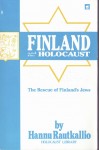
Finland and the Holocaust by Hannu Rautkallio (1987: Holocaust Library. ISBN 978-0-89604-121-9)

My wife Rene’, our son Jack,and I visited the Holocaust Museum this past August in D.C. As you’d expect, it was a moving, distressing, enlightening experience. While there, I found Finland and the Holocaust in the museum gift shop. Given my interest in all things Finnish, and given that I am contemplating a sequel to Suomalaiset melding the histories of Finland and Estonia during the Great Depression and WWII (including the post war period), the book looked interesting. That’s a pretty lame adjective, I’ll give you: “interesting”. Too bad the book doesn’t measure up to that meager adjective.

Dr. Rautkallio obviously knows how to research and how to write. The problem is, he’s no storyteller. So what I found, as I read the book, is a collection of data, accompanied by numerous footnotes, regarding the experience of Jews in Finland during WWII. The most compelling information, the trial of Valpo (state police) commander Anthoni, isn’t chronicled in this work. Though the author references the post-war trial of Mr. Anthoni on many, many occasions, one is left to wonder what the Finnish state ultimately decided regarding Anthoni: Was he complicit in the extradition of a handful of Jews (including a mother and her child) who’d sought asylum in Finland, returning them to certain death at the hands of Finland’s “co-belligerent” Nazi Germany,or was he simply following Finnish law? That question is never answered.

Additionally, I was disappointed by the scope of the work. The book spent much of its 268 pages dealing with Dr. Cohen, a German Jew who escaped the Holocaust by removing himself and his family to Finland. His story is interwoven with the story of the eight Jews deported by Anthoni to German authorities in Estonia. But the title of the book, Finland and the Holocaust leads one to believe that a larger story will be told. It isn’t and that’s severely disappointing.

Well researched and concisely written, the book reads more like a PhD thesis than a text for general public consumption. 2 and 1/2 stars out of 5.

Posted in Books | Comments Off on Finland and the Holocaust – Review

Sometimes Madness is Wisdom – Review

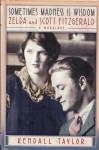
Sometimes Madness is Wisdom by Kendall Taylor (2001: Ballatine Books. ISBN 0-345-44715-8)

I’m no different than most white, middle-class Americans. I am titillated and intrigued by personal train wrecks. Well, it turns out, in the literary world, there’s no bigger interpersonal calamity than the marriage of Zelda Sayres and F. Scott Fitzgerald. Trust me: If you’re looking for a story of sweetness, kindness, affection, and mature love, avoid this book. But if you, like me, are interested in what makes madness so prevalent in artists, then, by all means, buy this book. Read this book. You won’t be disappointed.

Kendall Taylor spares no detail in this engaging look at the marriage of one of the Jazz Age’s dominant literary figures to a woman of equal, if not, greater artistic talent. This, in nearly all ways, is Zelda’s story. But having said that, while it would be easy to portray F. Scott’s manipulative, downgrading and deceptive control over his wife’s talent (without any effort to impose restraint on Zelda’s personally destructive behavior) as inherently evil, the author avoids a simplistic evaluation of the psychological warfare waged between bouts of lust and affection in this tragic marriage.  Zelda is not inherently good and abused. Scott is not inherently evil and the abuser. Much more subtle forces are at work in this relationship than can be reduced to such simple labels.

Still, for a man revered by Minnesota literary pundits (Garrison Keillor broadcasts his show from the “F. Scott Fitzgerald Theater” located in Fitzgerald’s hometown, St. Paul), the story told by Ms. Taylor is fascinating. Much of the material Fitzgerald included in his acclaimed fiction had its genesis in either Zelda’s personality or her writing. Author Taylor makes a convincing argument that some of the most memorable dialogue and scenes in F. Scott’s classics weren’t his at all, but purloined bits and pieces of Zelda’s diaries and journals. Taylor observes that, when Zelda (battling latent schizophrenia which Scott’s controlling personality would eventually exacerbate into full blown mental illness) was on the cusp of literary greatest in her own name, Scott intervened. What resulted, once Mr. Fitzgerald inserted his controlling fingers into the editorial pie, was an uninspired rendition of Zelda’s life and struggles with sanity. In short, the husband managed to delete the life force from his wife’s book just as he had eliminated it from her life. Her novel, Save Me the Waltz was assured a footnote in the story of Scott and Zelda. The early drafts of the book seen by trusted friends met with rave reviews. The final draft, which went into limited publication, was a mere shell of a story; disjointed and edited in such a way as to conceal any ring of truth to Zelda’s writing. Save Me the Waltz was quickly forgotten, just as F. Scott had hoped it would be.

A sad but thoroughly facinating look at a couple who embodied the ecstasy and the excesses of the Jazz Age. Now, can someone explain to me why we named a theater in honor of Scott? 5 stars out of 5.

Posted in Books | Comments Off on Sometimes Madness is Wisdom – Review

Ford Country Stories by John Grisham – Review


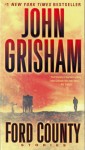
Ford County Stories by John Grisham (2010: Dell. ISBN 978-0-307-57620-0)

Two stories. In a book of seven pieces of short fiction, legendary legal genre writer John Grisham gives his fans, including me, two decent stories. That’s what, like 29%? That’s less than Delmon Young’s 2010 batting average with the insipid Minnesota Twins. Come on John, we expect better from a guy who’s written over twenty legal thrillers and one pretty fair literary novel (A Painted House, which remains one of  my favorites). Am I right, Grisham fans? Oh, wait. Maybe it’s me who’s the problem. Here’s why.

When I see “short stories”stenciled across a book’s cover, I think Faulkner. I think D.H. Lawrence. I think Hemingway or O’Connor. You know, literary fiction dispensed in smaller, albeit wondrous, doses. While waiting for a jury to come in at the conclusion of a recent trial, I was bookless. I saw Ford County on the shelf of the local grocery store and decided to give it a go. Well, Ford County ain’t Faulkner (nor any of those other aforementioned authors) to state the obvious. The problem for me, the reader with expectations of literary fiction, is that my hopes were immediately dashed to small bits by the first story.

Blood Drive is a silly mess of a tale with the pedigree of a freshman (OK, maybe sophomore) English composition piece. While packed full of action, there’s little  that’s memorable in the piece other than flurry. In addition, I ended up disliking all the major characters in the story. Not a strong start for this short story collection, not by a long shot.

The second tale in the collection, Fetching Raymond, reminds me of Flannery O’Connor’s finest. Every word, every act of the characters, every subtle gesture, reeks of the South.

This is good, I remember thinking with a twinge of jealousy as I read the story.

That said, Grisham hasn’t really reinvented himself here either; the plot is one he’s used before with similar success. Not once. But twice. I won’t reveal the details here: Read it for the writing and think about where you’ve come across nearly identical plotting in past Grisham novels.

That’s pretty much it until the last piece. You’ll wade through four examples of mundane writing before you arrive at the one true diamond in this collection. Funny Boy glitters from all facets. There’s great dialogue, finely drawn characters, and just enough angst to pull at your heart strings. The best thing about the story? Grisham didn’t phone it in like he did for most of the rest of this grouping. That’s too bad: If he’d have stayed away from his genre, as he does in his final stab at the American short story in Ford County, he would have hit the ball as solid as a Delmon Young bomb. Instead, we’re left with a Nick Punto squib single.

2 stars out of 5. A true disappointment.

Posted in Books | Comments Off on Ford Country Stories by John Grisham – Review

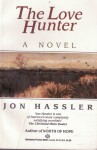
The Love Hunter – Review

The Love Hunter by Jon Hassler (1981: Ballantine. ISBN 0-345-35017-0) and Staggerford by Jon Hassler (1986: Ballantine. ISBN 0-345-33375-6)

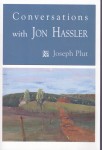
I re-read both of these Hassler classics during a recent craft show to pass the time between customers. I was prompted to re-explore Hassler because I’d read and reviewed (see below) a new book, Conversations with Jon Hassler. Since Hassler’s passing from a MS-type disorder, he seems to have also passed out of the consciousness of Minnesota readers, for, despite some awfully fine writing which resulted in good reviews and significant sales, Jon Hassler remains a “regional writer” in many respects. To honor his memory, I chose to revisit two very different books from his significant body of work.

Staggerford (despite the edition date used in this review) is the earlier of the two. And, in some ways, that pedigree shows. While I must admit to laughing so hard during the craft show while reading Staggerford that I nearly fell off my chair, Hassler’s use of academia as a setting tires quickly even in this early work. Why not write about a farmer and his family cultivating the fields around Staggerford rather than another rendition of teachers/counselors/principals struggling with the educational system? Hassler (over his long career in letters) sadly limited himself as a writer by sticking to his own chosen profession,  that of teacher, as the setting for many (not all) of his novels. The weariness of  this choice doesn’t leap to mind if Staggerford, Hassler’s first book, is the only one you read. But after two or three novels about the inner political turmoil of educators, Hassler pretty much exhausts one’s patience in terms of schools as a setting for his work.

And then there is the climactic scene, a Rambo-meets-Tonto sort of confrontation between the National Guard and disgruntled Indians. Two things trouble me about the way Hassler ends Staggerford. First, his characterization of Indians seems extremely stereotypical and lacking in nuance. Second, the arrival of the military and the resulting scenes seem strained and surreal; not at all in keeping with the gist of the story. Hassler, at his best, is about character and internal conflict; not about guns, parading soldiers, and external chaos. While others laud this book as one of Hassler’s best, I heartily disagree. The writing, as always, is topnotch but the total package disappoints. 3 stars out of 5.

The Love Hunter, on the other hand, is a Minnesota classic: As good or better than anything Sinclair Lewis or F. Scott Fitzgerald wrote. Period. This is a gifted fiction writer working his magic. Hassler’s on his “A” game in depicting  the love triangle between Chris MacKensie and his two best friends (who also happen to be husband and wife) Larry and Rachel Quinn. And though Hassler sticks with education as the backdrop for the story, the business of teaching plays virtually no role in the plot or scope of the book: It is Chris’ lust for Rachel and the steady failing of Larry’s health which forms an ominous stage for what unfolds.

The plot, from beginning to end, is believable, suspenseful, and tightly wrought. The dialogue is excellent. The settings in Canada are unbelievably authentic. This is Hassler’s masterpiece and it’s a book well worth reading and reading again.

5 stars out of 5. A MUST READ!

Posted in Books | Comments Off on The Love Hunter – Review

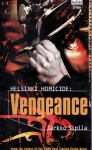
Helsinki Homicide: Vengeance – Review


Helsinki Homicide: Vengeance by Jarkko Sipila (2009: Ice Cold Crime. ISBN 978-0-9824449-1-7)

This is the second book I’ve read by Finnish journalist-turned-crime fiction writer, Jarkko Sipila. For anyone with an interest in how the Finnish police and investigative system works (as compared to the U.S. equivalent) these books, featuring Suhonen, a lone-wolf undercover detective of the Helsinki police force, hold great interest. The plots are rather simple: The writing, as is typical in most genre fiction, concise. These are plot driven, rather than character driven tales, perfect for a quick read on the airplane from Detroit to Helsinki or on the beach.

Sipila writes like the journalist he is: Anyone looking for deep, complex character development won’t find it here. That’s my major criticism of the  two Suhonen books I’ve read thus far: I want to know more about the man, about his personal life, his love interests, his past. Suhonen could easily be a great literary detective; a Finnish Sam Spade or Sherlock Holmes. But he doesn’t rise to such comparisons because he’s incomplete on the page.

For readers who like fast paced action and clearly defined demarcations of good and evil, this series, including Vengeance, is a great choice.

3 and 1/2 stars out of 5.

Posted in Books | Comments Off on Helsinki Homicide: Vengeance – Review

Overburden: Modern Life on the Iron Range – Review

Overburden: Modern Life on the Iron Range by Aaron Brown (2008: Red Step Press. ISBN 978-098007890-9)

For a young person, Aaron Brown possesses extraordinary powers of reflection and observation. He also happens to be one hell of a writer. This collection of new essays and recycled newspaper and radio pieces (from Brown’s work as a journalist, editor, and commentator) merits, overall, a big thumbs up. At times, the writing demands two thumbs up but, as in many collections (my own included) Brown doesn’t sustain excellence throughout all of his material. Mostly, he hits that mark. Once in a while, he doesn’t. In some ways, the fact that every story isn’t remarkable reminds me of the vinyl albums I collected in my youth: Not every cut was a favorite. But “filler” songs, like “filler” stories aren’t all bad; they allow the listener/reader to grasp genius when it appears.

Take some of Brown’s insights. His description of the competition between Range towns, despite their overall closeness in geographical terms, is one of many gems in this book.

At the same time, the strange strung-out geography of the Range creates pockets of isolation, so much so that someone in Town A takes offense at being compared to the rabble in Town B, even when everyone involved is wearing a Polaris snowmobile jacket and steel-toed work boots.

Only a native son of the Range could write such a truth and not end up, well, being kicked in the arse by a guy wearing steel-toed boots. Here’s another:

As Gilbert’s centennial approached…townsfolk wanted to stage…”Whorehouse Days”…City leaders balked…To date, you can still see defiant “I am a Whorehouse Days Supporter” bumper stickers on Iron Range vehicles.

Many of Brown’s observations concern the intersection of tradition and outside influence, as this excerpt discussing a now-closed Jamaican eatery situated on the main street of Gilbert, reveals.

When they filmed North Country on the Iron Range, Oscar-winning actress Charlize Theron hung out at the Whistling Bird. For me this cements its place as a strange portal between the Iron Range and high society, where Hollywood and hematite collide.

While some of the older material from Brown’s newspaper career and his work at KAXE radio merit attention, they are not, taken in their totality, the “meat” of this banquet. It’s Brown’s original essays, such as “Bobby Zimmerman Doesn’t Live Hear Anymore” (a fairly long and creative look at why it is Dylan isn’t “all that” to Hibbingites) and “Bedtime”(the last piece in the book, a short homily to the author’s native landscape) that really sing.

The point is to live a story. To be a hero who, despite flaws and mistakes, tries to do good…And then, most importantly, we must tell the story. To our kids. To someone. We are a people of stories. Stories need settings, though, and there is no setting quite like the Iron Range…”

Indeed. Might I suggest, dear readers, that you pick up my novel, Suomalaiset: People of the Marsh and read it for some insights into the Iron Range’s past. Then buy a copy of this fine collection to gain an understanding of what the future holds for all those who call the Iron Ranges of Minnesota their home.

4 1/2 stars out of 5.

Posted in Books | Comments Off on Overburden: Modern Life on the Iron Range – Review

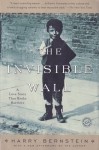
The Invisible Wall – Review

The Invisible Wall by Harry Bernstein (2008: Ballantine. ISBN 978-345-49610-2)

When I began reading The Invisible Wall, given the time frame described in the book (pre-WWI), and given we are now nearly a century after the Great War, I was a bit confused. The book is billed as autobiographical but it wasn’t released until 2007.  How could this be? The author would have to be, what, like nearly a hundred? Is this a faux memoir? A novel? A combination of the two? In the end, having read the book’s Afterword, I understand: This is an accurate depiction of the neighborhood in Manchester, England where Mr. Bernstein grew up. The title comes from the ethnic and religious line of demarcation that divided Bernstein’s side of the street (occupied by Jews) from the opposite side of the same street (occupied by Christians). Insofar as story and plot, think Angela’s Ashes but with a kosher twist. There’s a long suffering wife, an alcoholic abusive husband, and intelligent but under appreciated children, all living together in industrial squalor, all of which replicate the tone and setting of the Irish classic. But whereas Frank McCourt’s best book gives a long and very detailed depiction of the inner landscape of the author’s life in Ireland, Bernstein’s work is more externally directed, more focused on the circumstances and setting than the internal turmoil he experienced. Still, this is a fine piece of reporting which, though thinner gruel than McCourt’s character-driven effort, ultimately satisfies.

But what of my concerns regarding the timing of the book’s release? Was the basis of this book a diary, kept in secret by Mr. Bernstein, found by one of his children, and then published posthumously? Or could it indeed be a work compiled by a man nearly a century old?

It is the later which is the truth: Harry Bernstein began writing this memoir in his 90’s, after his wife of 67 years died and he needed a task to curb loneliness. It was released, after being rejected by all the American publishers Bernstein approached (his family moved to the U.S. in 1922) by a British publisher as the author turned the ripe young age of 97. I’ll write that out for the slower of my readers: ninety-seven. I’ll write it in caps so those who are of dim sight can appreciate the significance of the number: NINETY-SEVEN!

Though not as engaging as McCourt’s classic expose of an immigrant’s inner life, in the end, Bernstein’s descriptions of his religious and ethnic upbringing save the memoir from being branded a cheap knock-off. There are scenes that make you laugh; innumerable scenes that piss you off (most of your anger will be aimed at Harry’s father); and some truly gut wrenching scenes involving Harry and his siblings as they amble their way through the seamy Manchester landscape. There’s enough here to make both fiction and nonfiction readers happy. Not a masterpiece but a well-cobbled book which reminds us that not all authors start out as twenty-something whippersnappers with MFA’s. Other authors have found audiences late in life: Norman McLean (at age 74 for A River Runs Through It) and Sig Olsen (whose first book was published at age 57) come immediately to mind. But no other success story I am of aware of reaches the levels of “gee whiz” that Harry Bernstein’s does: He’s still working with two sequels to The Invisible Wall already in print and his pen still scribbling on paper at the age of 100. 4  stars out of 5.

Posted in Books | Comments Off on The Invisible Wall – Review

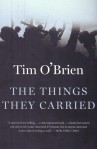
The Things They Carried – Review

The Things They Carried by Tim O’Brien (1990: Mariner. ISBN 978-0-618-70641-9)

I tend to write large. This may be a sign of insecurity or confirmation of my verbose nature. When I say large, I mean “big”; as in 100,000 plus word novels. My shortest work is my novel-in-progress, Laman’s River, a murder mystery. It’s present configuration has it weighing in right around 80,000 words; A slender volume by Munger standards. Great writing doesn’t have to be War and Peace or East of Eden or Cloudsplitter; all very thick reads. Great writing can be slender and still carry a wallop. The Things They Carried by Minnesotan Tim O’Brien is one of those meager offerings that proves size doesn’t matter.

Weighing in at just over 230 pages, O’Brien’s novel/memoir (really linked stories based upon his own service as an infantryman in Vietnam) Things is a remarkable, exceptional piece of prose. Part autobiography, part war novel, part writer’s memoir, there’s a reason that it won O’Brien acclaim and a Pulitzer nomination: It’s one great book. This passage is just a sampling of the fine writing you’ll find on every page, in every paragraph, throughout the book:

The things they carried were largely determined by necessity. Among the necessities or near-necessities were P-38 can openers, pocket knives, heat tabs. wristwatches, dog tags, mosquito repellent, chewing gum, candy, cigarettes, salt tablets, packets of Kool-Aid, lighters, matches, sewing kits, Military Payment Certificates, C rations, and two or three canteens of water. Together, these items weighed between 12 and 18 pounds…Ted Lavender, who was scared, carried tranquilizers until he was shot in the head outside the village of Than Khe in mid-April…

I can’t understand why it took me twenty years to read this novel. Maybe it was my experience reading O’Brien’s In the Lake of the Woods, which, though not a bad book, was more in the vein of genre fiction and not “my cup of tea”. Or maybe I was smitten with jealousy at all the attention O’Brien garnered when this book was released in 1990 (just as I was beginning to work on my first book, The Legacy). Whatever. This is our generation’s Red Badge of Courage. Read it and understand what young men go through when old men send them off to fight. It’s an essential book, listed by the New York Times as one of the most influential books of the  20th century. 5 stars out of 5.

Posted in Books | Comments Off on The Things They Carried – Review

Raid and the Blackest Sheep – Review

Raid and the Blackest Sheep By Harri Nykanen (Originally Published by WSOY in 2000 as Raid jan Mutempi Lammas; English translation by Peter Ylitalo Leppa. Published by Ice Cold Crime, 2010. ISBN 978-0-9824449-2-4)

For a non-Finnish author (Suomalaiset: People of the Marsh) who has only visited Helsinki and Turku on one wintery occasion (with a side trip to Tallinn to boot) reading English translations of Finnish genre fiction can be a bit daunting when the Finnish landscape, both urban and rural, is an essential character in the story. Thankfully, both author Nykanen and translator Leppa work in concert in this latest offering from Minnesota-based publisher, Ice Cold Crime to make the final journey of an old thief and his young apprentice memorable.

Nygren, the mastermind of a host of notorious fictional crimes in Sweden and Finland, is dying. Cancer has riddled the man, a character of extremely complex and not readily decipherable motivations, compelling him to return to his homeland from self-imposed exile across the Gulf of Bothnia, to settle old scores and to right some old wrongs. But unlike journeys undertaken by protagonists in many contemporary novels (Inman in the American historical novel Cold Mountain comes to mind when reading Nykanen’s story), the old man in this tale does not go it alone.

I’ve not read Nykanen’s other work involving the “gun for hire” assassin Raid because, sadly, I do not read nor speak Finnish. The jacket blurb on Raid and the Blackest Sheep proclaims Raid, the main character in a long line of Nykanen’s previous work, to be the Finnish equal of Dirty Harry. Though predictably playing on the archetype of a taciturn, quietly contemplative, physically adept Finnish male, Raid is indeed reminiscent of the Eastwood character, or perhaps, more succinctly, the close-lipped, dourly humorous detective Sam Spade as played by Humphrey Bogart. The difference, of course, is that while both those characters stood on the police side of the divide between good and evil, Raid is clearly not a cop. Nor is he necessarily morally pure as he goes about his task of chamfering Nygren from Helsinki to Rovaniemi.

But the title is misleading. This isn’t Raid’s stage (other than as background): It’s a story about an old man’s last journey; a story of redemption; a story of nuanced faith and uncertainty about what awaits us after death. Far more complex in character and plot than typical “pot boilers”, Raid and the Blackest Sheep crosses the literary divide between genre and literary fiction and does so without losing the snappy dialogue and sense of humor that makes crime fiction such a favorite with readers.

If you’re looking for a fast-paced, quick read which still satisfies your hunger to be amazed by story, structure, plot, and craft, Raid the Blackest Sheep is a book to fit the bill. My only criticism? The last chapter is wholly irrelevant and unnecessary. Nykanen and his story would have been far better served, in this humble American author’s opinion, if the tale ended with Chapter 21. Personal taste? Perhaps. Still, don’t let this observation deter you from buying a copy of this adroit, tightly woven story of an old man on his final pilgrimage. That’s the beauty of reading: You get to make your own decision, once having finished this finely tuned tale, as to whether my observations are spot on or off the mark.

Highly recommended. 4 and ½ stars out of 5. (This review first appeared in the December 2010 issue of New World Finn).

Posted in Books | Comments Off on Raid and the Blackest Sheep – Review